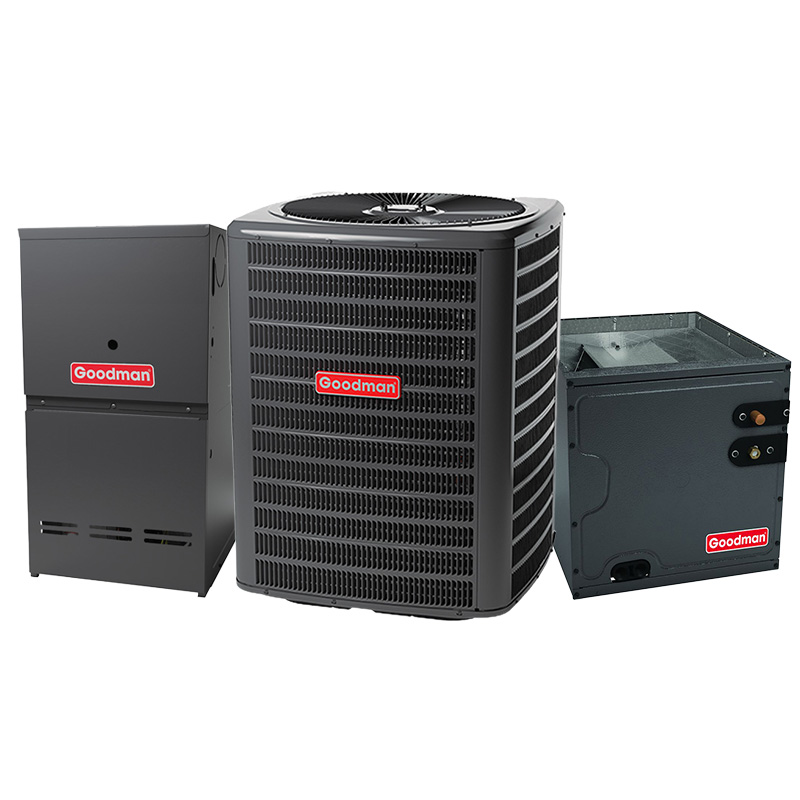
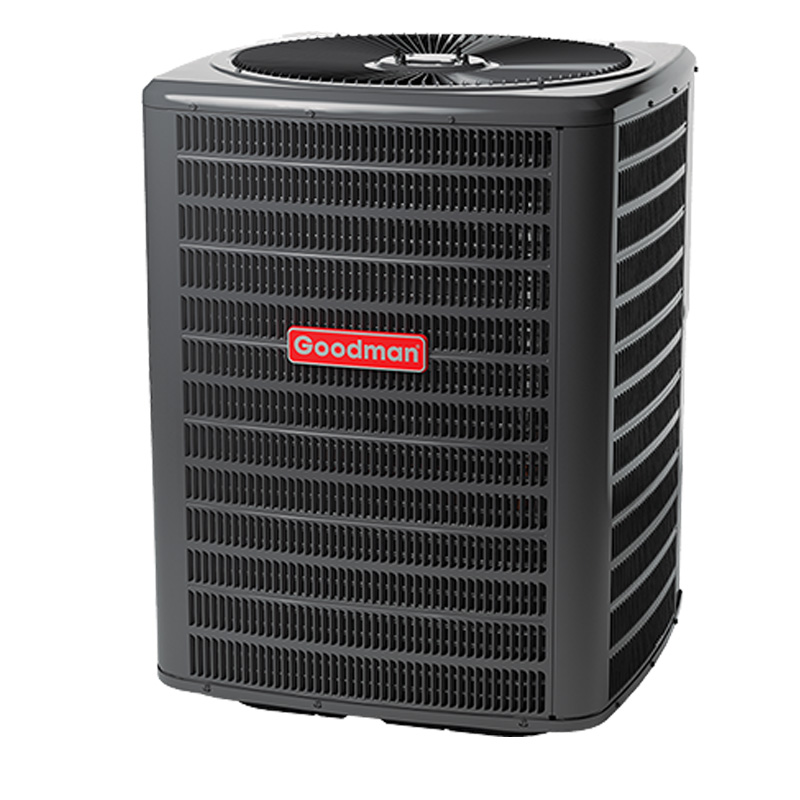
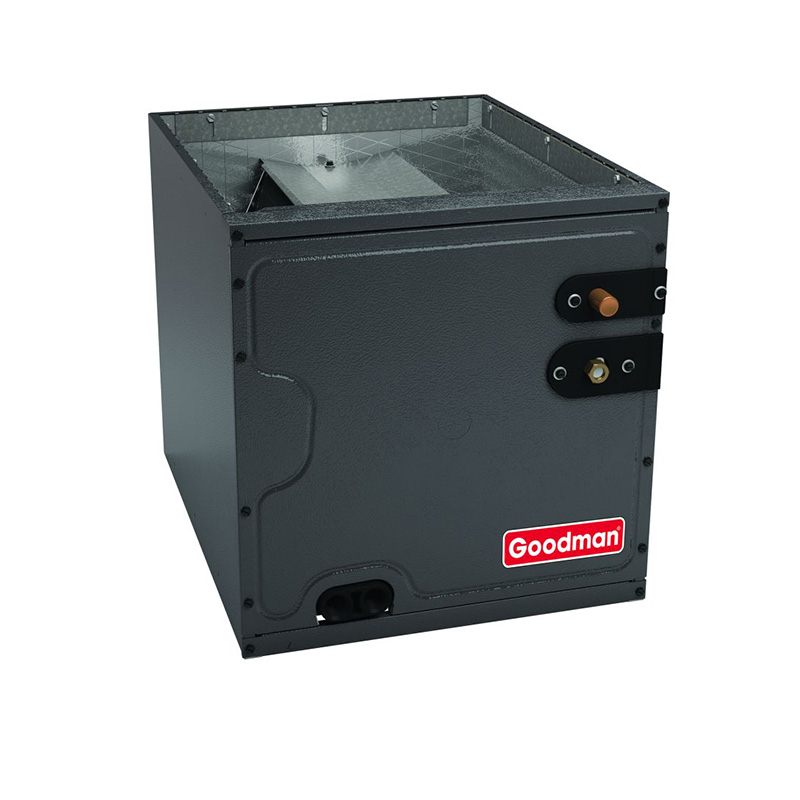
Goodman 4 Ton AC And 100000 BTU 80% AFUE Gas Furnace System | 15.2 SEER2 AC | Multi-Speed ECM Low NOx Furnace | Downflow | R32
View on AC Direct see your lowest price →Check current price on AC Direct →
Key features
- 4-ton cooling capacity rated at 15.2 SEER2 for baseline mid-efficiency performance
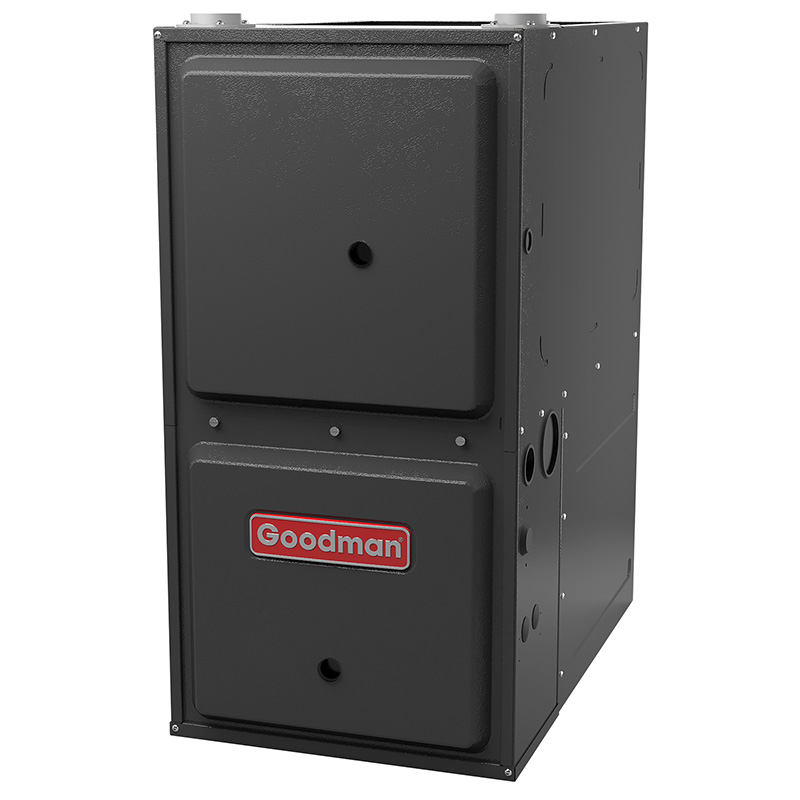
- 100,000 BTU 80% AFUE gas furnace in a downflow configuration
- Multi-speed ECM blower motor for quieter operation and improved humidity control
- R-32 refrigerant with lower global warming potential than R-410A
- Low NOx burner design to meet stricter regional air quality requirements
- Goodman price positioning typically 15 to 25 percent below comparable Trane, Carrier, and Lennox systems
About this system
The Goodman 4-ton, 15.2 SEER2 AC paired with a 100,000 BTU 80% AFUE downflow gas furnace is a straightforward entry into the mid-efficiency split-system market. The 4-ton cooling capacity suits homes roughly in the 2,000 to 2,600 square foot range depending on insulation, climate, and duct layout, though a proper Manual J load calculation is always the right starting point. At 15.2 SEER2, this system clears the federal minimum threshold for most northern regions and lands solidly in the baseline-to-mid tier, meaning operating costs will be noticeably lower than an older 13 or 14 SEER unit but measurably higher than a 17 or 18 SEER2 two-stage or variable-speed system running in a hot climate year after year.
The furnace side uses a multi-speed ECM blower motor, which runs at lower speeds during steady-state operation and ramps up as needed, offering better dehumidification and quieter operation than a single-speed PSC motor. The 80% AFUE rating means 20 cents of every dollar in gas goes up the flue, making it adequate for mild-to-moderate heating climates but less compelling where natural gas prices are high or winters are severe, where a 96% AFUE unit would pay back the price difference faster. The downflow configuration sends conditioned air downward and is most common in closet or platform installations where ductwork runs under the floor, so verify this matches your current or planned duct layout before ordering. R-32 refrigerant carries a lower global warming potential than legacy R-410A and is increasingly common in new residential equipment.
This Goodman system delivers functional mid-efficiency heating and cooling at a price that undercuts major premium brands by a meaningful margin, making it a reasonable choice for budget-conscious buyers who prioritize upfront cost and are prepared for the realistic likelihood of component repairs after year 7. It is not a top-of-class efficiency or reliability choice, but when properly installed and maintained, it will do the job it is sold to do. The ECM motor and R-32 refrigerant are genuine improvements over baseline equipment, though the 80% AFUE furnace and single-stage cooling leave efficiency on the table.
Overall score is the average of the five ratings above.
What we like
- Lower upfront cost compared to Carrier, Trane, and Lennox systems of similar capacity and efficiency
- Multi-speed ECM blower provides better comfort and dehumidification than a basic PSC motor
- R-32 refrigerant is a modern, lower-GWP choice increasingly favored in new installs
- Low NOx burner helps meet tighter air quality regulations in California and other strict-standards states
- Downflow configuration suits common closet and platform installations with under-floor duct systems
Trade-offs
- Dual-run capacitors are the most frequently reported failure point, typically requiring a 300 to 600 dollar repair
- Evaporator coil leaks appear in a meaningful share of owner reviews and can be a costly mid-life repair
- Compressor lifespan averages 10 to 14 years versus 15 to 20 years common in premium brands
- 80% AFUE means 20% of fuel is wasted, making this furnace a poor fit for cold climates or high-gas-cost regions
What homeowners and pros say about Goodman
Homeowners who have lived with a Goodman system for several years tend to split into two camps. Those who had a smooth, professional installation and kept up with maintenance often report years of trouble-free operation and point to the lower purchase price as real money saved. Those who ran into problems more commonly describe the frustration of repair bills creeping up in the 7-to-10-year range, a pattern consistent with Goodman’s ConsumerAffairs score of roughly 2.5 out of 5, a platform where dissatisfied owners are significantly more likely to post than satisfied ones. On Google dealer review pages, which capture a wider cross-section of buyers, Goodman-installed systems average around 3.8 out of 5, with affordability being the most frequently cited reason for a positive experience.
HVAC technicians tend to view Goodman as workable equipment that demands more from the installer than a premium brand. They note that the dual-run capacitor is the single most common service call on these systems, usually a quick and relatively inexpensive fix but one that recurs in some units. Evaporator coil leaks are a more serious concern that shows up in owner accounts at mid-life, and pros are candid that Goodman compressors average 10 to 14 years in real-world use compared to 15 to 20 years on Trane or Carrier hardware. The consistent advice from experienced technicians is to invest in a quality installation from a contractor who is meticulous about refrigerant charge and static pressure, because a well-installed Goodman will outperform a carelessly installed premium system every time.
Sources: ConsumerAffairs Goodman owner reviews, AHRI Directory of Certified Product Performance, U.S. DOE appliance and equipment efficiency standards, Goodman product specification sheets.
What it costs to run
At 15.2 SEER2, cooling this 4-ton system for a typical 1200-hour cooling season at the U.S. average electricity rate of $0.17/kWh works out to roughly $644 per year in cooling, about $87 less per year than a minimum-efficiency 13.4 SEER2 unit of the same size. Your real cost depends on your climate and local rate.
Method: (48,000 BTU/hr ÷ 15.2 SEER2) × 1200 hours ÷ 1000 × $0.17/kWh. Rate source: U.S. EIA average; cooling hours: moderate-climate estimate.
How it compares
| Brand | Comparable model | SEER2 | Stage | Price position |
|---|---|---|---|---|
| Goodman | This system (4-ton 15.2 SEER2 / 100K BTU 80% AFUE Downflow) | 15.2 | Single-stage | Value pick |
| Carrier | Comfort Series (24ACC6 AC + 58SC Furnace) | 15.2 | Single-stage | Typically 15 to 25 percent more than this Goodman system |
| Trane | XR15 AC + S9X1 Furnace | 15.2 | Single-stage | Typically 15 to 25 percent more than this Goodman system |
| Lennox | Merit Series (14ACX AC + ML180 Furnace) | 15.2 | Single-stage | Typically 15 to 25 percent more than this Goodman system |
Competitor rows are comparable single-stage units at similar efficiency; price is relative position, not a quote.
Questions about this system
Is downflow the right configuration for my home, and can I convert it?
Downflow furnaces discharge air from the bottom and are designed for closet or platform installations where supply ducts run under the floor. If your current system is upflow or horizontal, this unit will not work without significant duct modifications. Confirm your existing layout before purchasing, and ask your installer whether conversion is practical for your space.
Why does this system use R-32 instead of R-410A, and does that affect service costs?
R-32 has a global warming potential roughly 68 percent lower than R-410A, and manufacturers are moving to it as regulatory pressure on high-GWP refrigerants increases. It requires technicians to be certified to handle mildly flammable refrigerants, so confirm your service contractor is comfortable working with R-32, as not all shops have updated their equipment and training yet.
What is the realistic repair history on a Goodman system like this one?
The most commonly reported early repair is a failed dual-run capacitor, typically a low-cost fix in the 300 to 600 dollar range. Evaporator coil leaks show up in a meaningful share of owner accounts at mid-life. ConsumerAffairs reviewers note repair costs climbing after roughly year 7, and compressor lifespan tends to run 10 to 14 years on average, shorter than premium brands. Maintenance and install quality are the biggest variables in how long the system runs before a major repair.
Should I upgrade to a 96% AFUE furnace instead of this 80% AFUE unit?
In climates with cold winters and high natural gas prices, a 96% AFUE furnace can pay back its higher purchase cost in reduced fuel bills over several years. In mild heating climates or where gas is inexpensive, the payback period stretches out and the 80% unit may make more financial sense. Run the numbers for your specific climate zone and current gas rate before deciding.
Does Goodman's warranty cover parts and labor, and what do I need to do to keep it valid?
Goodman typically offers a 10-year parts warranty on registered systems, but labor is not covered, meaning you pay the technician's time on any warranty repair. Registration must be completed within a set window after installation, usually 60 days, and the system must be installed by a licensed HVAC contractor. Read the specific warranty documentation for this model to confirm registration requirements and any conditions that could void coverage.
Specifications
| Cooling capacity | 4 Ton |
| Efficiency | 15.2 SEER2 |
| Furnace output | 100000 BTU |
| Furnace efficiency | 80% AFUE |
| Configuration | Downflow |
| Refrigerant | R-32 |