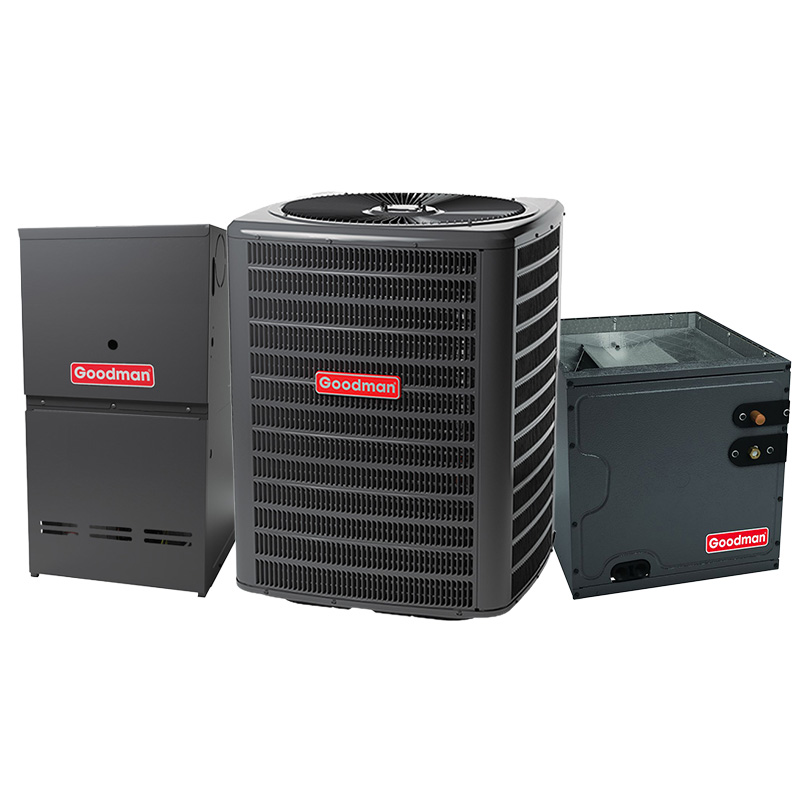
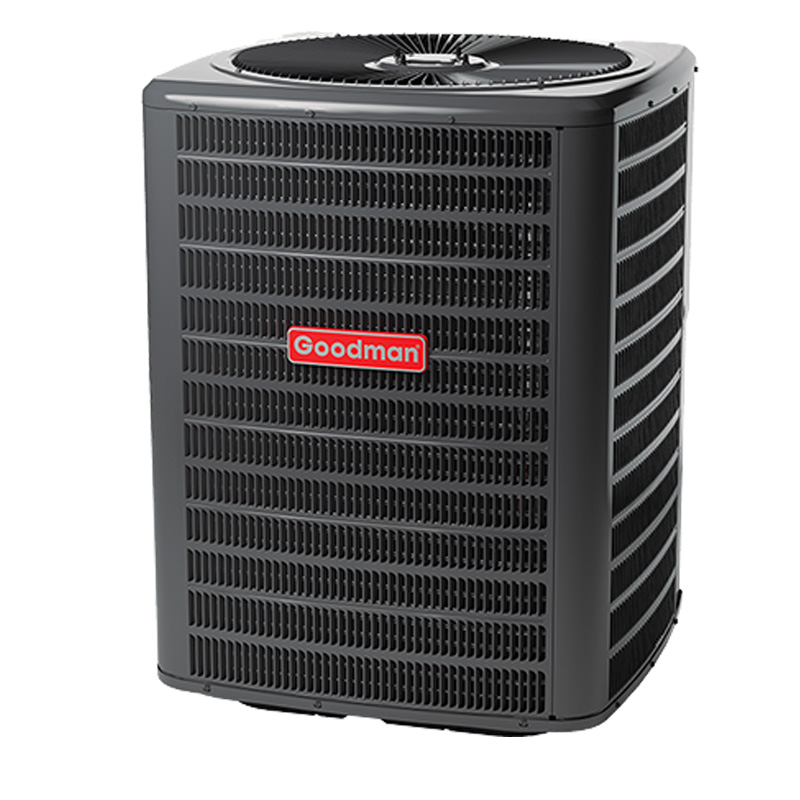
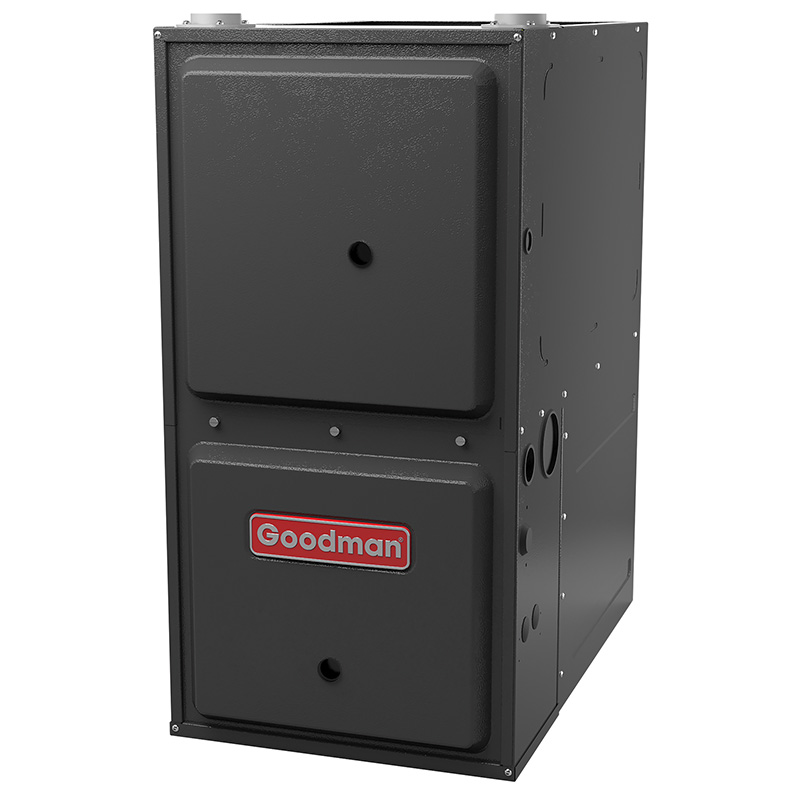
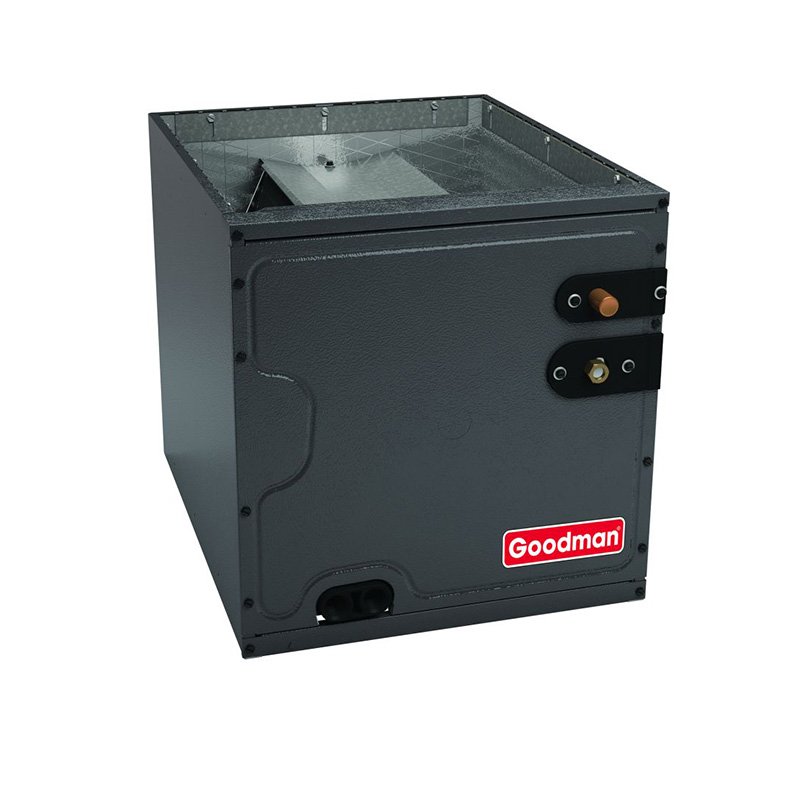
Goodman 4 Ton AC And 100000 BTU 80% AFUE Gas Furnace System | 14.5 SEER2 AC | Multi-Speed ECM Low NOx Furnace | Downflow | R32
View on AC Direct see your lowest price →Check current price on AC Direct →
Key features
- 4-ton cooling capacity at 14.5 SEER2, meeting current federal minimum efficiency standards
- 100,000 BTU output at 80% AFUE, suitable where Category I venting is already in place
- Multi-speed ECM blower motor reduces electricity use and improves humidity control versus single-speed PSC motors
- Downflow configuration designed for main-floor installs that supply conditioned air through floor registers
- R-32 refrigerant with lower global-warming potential compared to the R-410A it succeeds
- Low NOx burners meet California and other strict emissions regulations
About this system
The Goodman 4-ton, 14.5 SEER2 air conditioner paired with a 100,000 BTU 80% AFUE gas furnace in a downflow configuration is a workhorse combination built for larger homes, typically in the 2,000 to 2,800 square foot range depending on climate and insulation. The downflow orientation makes it a natural fit for homes where the air handler sits on the main floor and pushes conditioned air down through floor registers, a common layout in slab-on-grade construction across the South and Southwest. R-32 refrigerant offers a lower global-warming potential than the R-410A it replaces, and is becoming the new baseline for split systems.
On the cooling side, 14.5 SEER2 meets the new federal minimum for most of the country and delivers a meaningful efficiency step up from legacy 13 SEER equipment, though it sits at the entry tier rather than the upper end of available efficiency ratings. The furnace runs an 80% AFUE rating, meaning 80 cents of every dollar of gas consumed becomes usable heat, which is standard for single-stage 80% units and a practical choice where venting a 90%+ condensing furnace would require new PVC flue work. The multi-speed ECM blower motor is a genuine upgrade: it adjusts airflow to match system demand, runs quieter than a single-speed PSC motor, and draws considerably less electricity during fan-only operation, which adds up over a full heating and cooling season.
This Goodman system delivers reliable baseline performance at a price point 15 to 25 percent below comparable Carrier, Trane, and Lennox equipment, making it a reasonable choice for cost-conscious buyers who prioritize upfront savings over premium longevity. The ECM furnace motor and R-32 refrigerant are genuine forward-looking features at this price tier. The main trade-offs are a shorter expected compressor lifespan and documented failure modes, including capacitor failures and evaporator coil leaks, that buyers should budget for after the first several years.
Overall score is the average of the five ratings above.
What we like
- Significantly lower purchase price than Carrier, Trane, or Lennox systems at comparable efficiency
- Multi-speed ECM motor improves comfort, reduces blower electricity draw, and aids humidity management
- Low NOx burners expand where this furnace can legally be installed, including California
- R-32 refrigerant is more environmentally responsible and increasingly supported by HVAC service networks
- Downflow design integrates cleanly into slab-on-grade homes without requiring ductwork modifications
Trade-offs
- Compressor lifespan averages 10 to 14 years versus 15 to 20 years typical for premium-brand compressors
- Evaporator coil leaks appear in a meaningful share of owner reports, particularly in the mid-life range
- Dual-run capacitor failures are the most commonly reported repair, typically occurring after year 7 and costing $300 to $600
- Overall reliability is more sensitive to install quality than premium brands, so technician selection matters more here than elsewhere
What homeowners and pros say about Goodman
Homeowners who have lived with Goodman equipment long enough to have an opinion tend to split along a familiar line. Those who had a skilled installer do the work and committed to annual maintenance generally report years of uneventful operation and point to the lower purchase price as money they kept in their pocket. Those who ran into trouble more often describe the experience on complaint-heavy channels: ConsumerAffairs aggregates Goodman ratings at roughly 2.5 out of 5, and the recurring thread is repair costs that start climbing noticeably around year seven, particularly around the dual-run capacitor and evaporator coil. Google dealer reviews, which skew toward buyers who had a more complete customer experience, land closer to 3.8 out of 5, with affordability consistently the most cited reason for satisfaction.
HVAC technicians tend to describe Goodman in practical rather than enthusiastic terms. They note that the brand’s performance ceiling is genuinely tied to installation quality more than is the case with Trane or Lennox, meaning a rushed or under-charged install will show up in the equipment’s record faster. The documented failure modes they encounter most are dual-run capacitor failures, which are low-cost fixes when caught promptly, and the occasional evaporator coil leak in older units. Compressor longevity is the more significant long-term consideration: Goodman compressors are generally cited as averaging 10 to 14 years, against 15 to 20 years for premium brands, which matters if you plan to be in the home for two decades. For the right buyer and the right installer, it is a workable system at a fair price; it is not the choice to make when longevity is the top priority.
Sources: ConsumerAffairs Goodman owner reviews, AHRI Directory of Certified Product Performance, U.S. DOE appliance and equipment efficiency standards, Goodman product specification sheets.
What it costs to run
At 14.5 SEER2, cooling this 4-ton system for a typical 1200-hour cooling season at the U.S. average electricity rate of $0.17/kWh works out to roughly $675 per year in cooling, about $56 less per year than a minimum-efficiency 13.4 SEER2 unit of the same size. Your real cost depends on your climate and local rate.
Method: (48,000 BTU/hr ÷ 14.5 SEER2) × 1200 hours ÷ 1000 × $0.17/kWh. Rate source: U.S. EIA average; cooling hours: moderate-climate estimate.
How it compares
| Brand | Comparable model | SEER2 | Stage | Price position |
|---|---|---|---|---|
| Goodman | GSXH504810 + GCVC8010 | 14.5 | Single-stage | Value pick |
| Carrier | Comfort 14 (24ACC4) | 14.3 | Single-stage | 15 to 25 percent higher than Goodman |
| Trane | XR14c | 14.3 | Single-stage | 20 to 30 percent higher than Goodman |
| Lennox | Merit ML14XC1 | 14.3 | Single-stage | 20 to 30 percent higher than Goodman |
Competitor rows are comparable single-stage units at similar efficiency; price is relative position, not a quote.
Questions about this system
Is a downflow furnace harder to install than an upflow model, and can my contractor handle it?
Downflow furnaces require the air handler to sit above the supply plenum with airflow directed downward, which is standard in slab-on-grade homes but less common in homes with basement or attic installations. Any licensed HVAC contractor should be familiar with the configuration, but confirming your home's existing duct layout before ordering prevents costly modifications.
Why does Goodman use R-32 refrigerant, and will it be easy to service?
R-32 replaces R-410A as the industry moves toward refrigerants with lower global-warming potential following EPA regulatory changes. R-32 requires technicians to use compatible equipment and be certified to handle it, but it is becoming standard across the industry and major supply houses increasingly stock it.
The furnace is rated 80% AFUE. Should I be looking at a 90%+ unit instead?
An 80% AFUE furnace makes the most sense when your existing flue is a Type B metal vent, because upgrading to a 90%+ condensing furnace would require new PVC venting that can add significant labor cost. In very cold climates where the furnace runs frequently, the 10-point AFUE gap can become meaningful over many years of gas bills, so it is worth calculating payback if you are in Climate Zone 6 or colder.
What are the most likely repairs I should plan for over the first 10 years?
The most commonly reported failure point on Goodman AC systems is the dual-run capacitor, typically a straightforward repair in the $300 to $600 range that often shows up after year 7. Evaporator coil leaks are also documented in a meaningful share of owner reviews and can be more costly to address, so keeping the system on an annual maintenance plan helps catch refrigerant loss early.
Is a 4-ton system the right size for my home, or should I have a load calculation done?
Ton sizing depends on your climate zone, square footage, insulation levels, window area, and home orientation, not square footage alone. Installing an oversized system causes short-cycling, poor humidity control, and accelerated wear, while an undersized system runs continuously in peak conditions. A Manual J load calculation from your installer is the only reliable way to confirm that 4 tons is correct for your specific home.
Specifications
| Cooling capacity | 4 Ton |
| Efficiency | 14.5 SEER2 |
| Furnace output | 100000 BTU |
| Furnace efficiency | 80% AFUE |
| Configuration | Downflow |
| Refrigerant | R-32 |