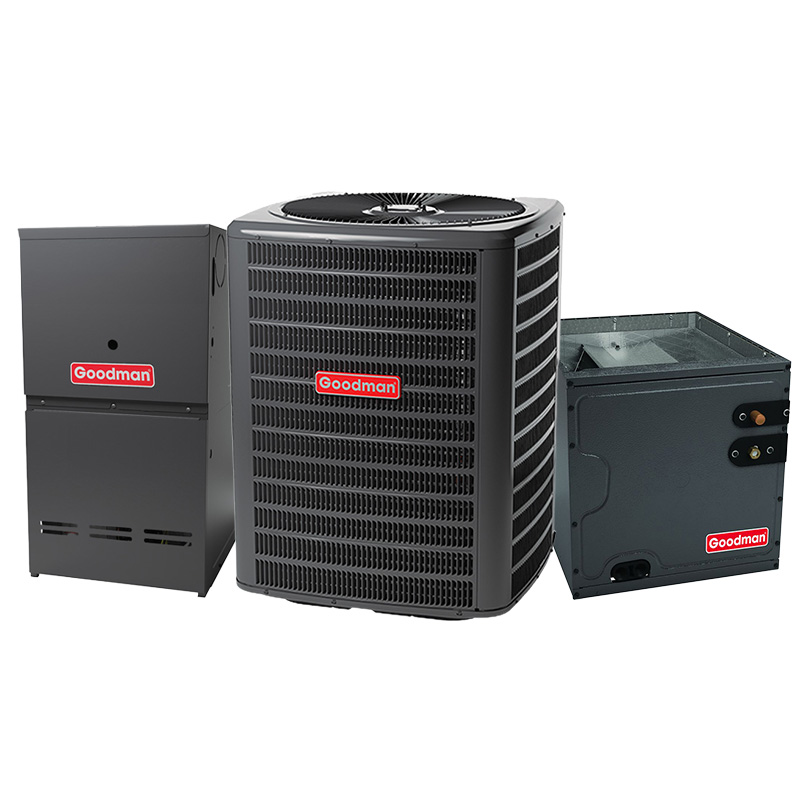
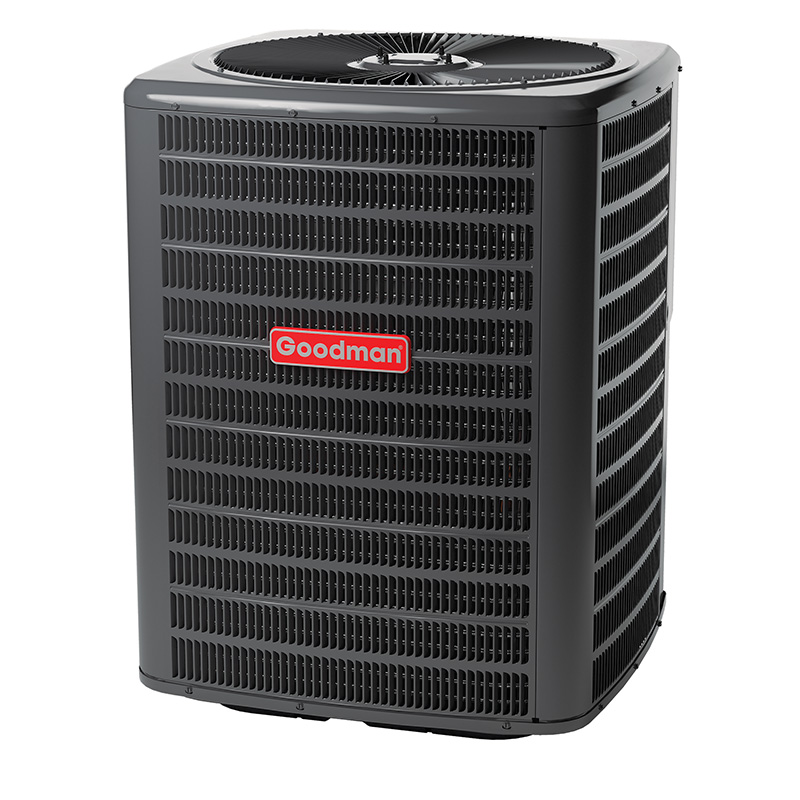
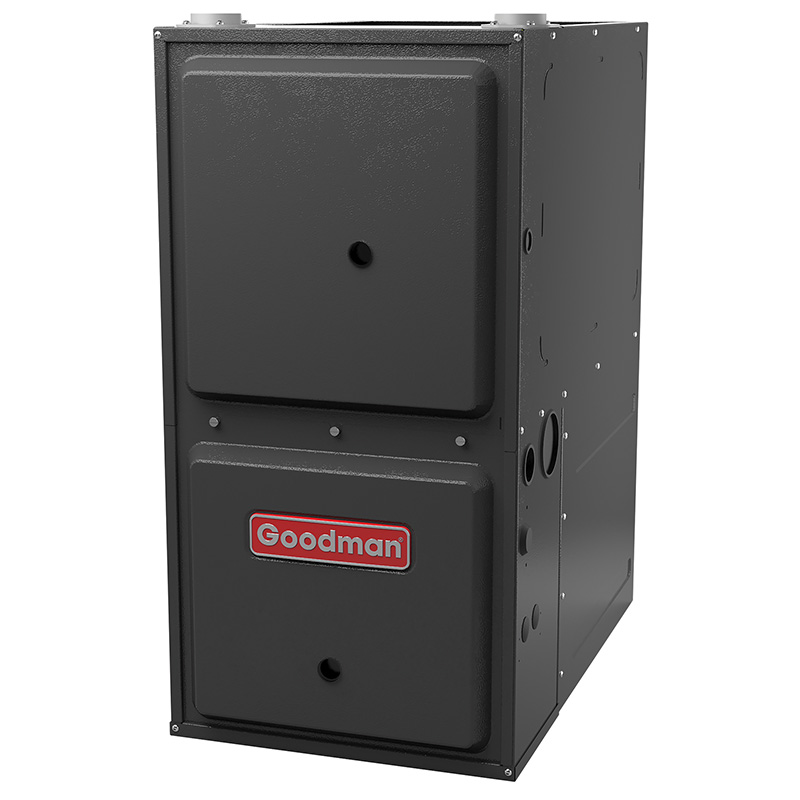
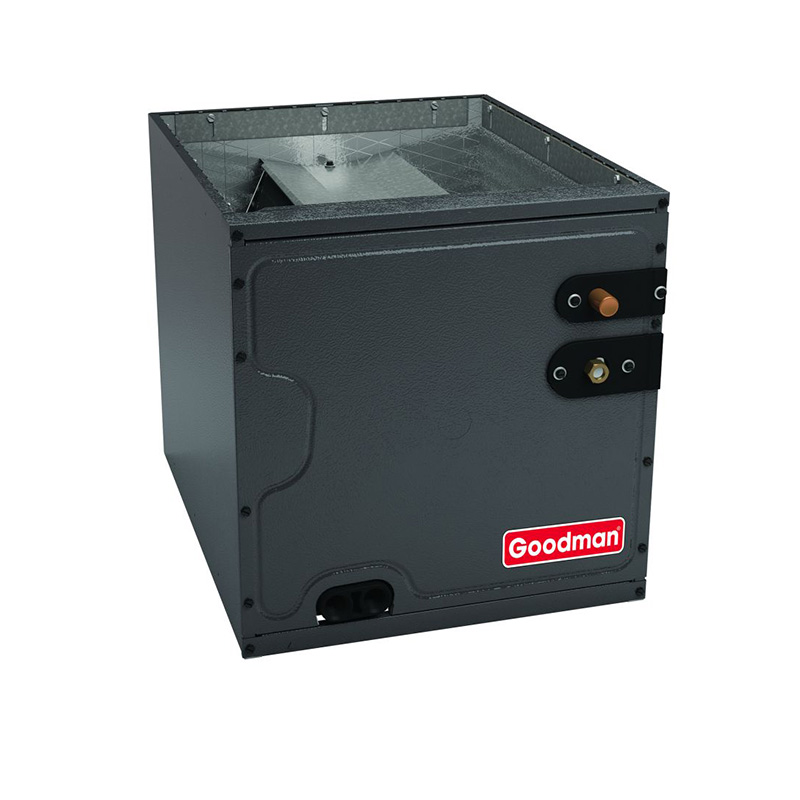
Goodman 4 Ton AC And 100000 BTU 80% AFUE Gas Furnace System | 15.2 SEER2 AC | Multi-Speed ECM Low NOx Furnace | Downflow | R32
View on AC Direct see your lowest price →Check current price on AC Direct →
Key features
- 4-ton cooling capacity with 15.2 SEER2 efficiency rating
- 100,000 BTU output, 80% AFUE single-stage gas furnace
- Multi-speed ECM blower motor for improved comfort and lower fan energy use
- Downflow air discharge configuration for platform or closet installs
- R-32 refrigerant with lower global warming potential than R-410A
- Low NOx burner design to meet stricter regional emissions requirements
About this system
The Goodman 4-ton, 15.2 SEER2 split system pairs a 4-ton R-32 air conditioner with a 100,000 BTU, 80% AFUE multi-speed ECM gas furnace in a downflow configuration. The 4-ton capacity targets homes in the 1,800 to 2,400 square foot range, depending on climate zone, insulation quality, and window load. A proper Manual J load calculation is strongly recommended before purchase, because oversizing a 4-ton unit leads to short cycling, humidity problems, and premature wear regardless of brand. The downflow configuration means the furnace discharges conditioned air downward, making it the right fit for installations in upper-floor closets or platforms where ductwork runs beneath the unit.
The 15.2 SEER2 rating sits just above the federal minimum efficiency threshold for most U.S. regions, which means operating costs are reasonable but not low. Buyers expecting meaningful energy savings over an older 10 SEER system will see them; buyers comparing this to 18 or 20 SEER2 equipment will not. The 80% AFUE furnace is the more budget-oriented choice in the two-tier AFUE market: 20 cents of every dollar spent on gas goes up the flue. In mild climates or homes with shorter heating seasons, that trade-off is often acceptable. The multi-speed ECM blower motor improves comfort and dehumidification compared to a single-speed PSC motor and reduces blower electricity consumption. R-32 refrigerant has a lower global warming potential than R-410A and is increasingly common in new equipment as the industry phases out older refrigerants.
This Goodman bundle delivers a functional, code-compliant split system at a noticeably lower upfront cost than comparable Carrier, Trane, or Lennox equipment. The 15.2 SEER2 and 80% AFUE specs are honest entry-level numbers, not standout performers, so buyers gain on purchase price and give back some ground on long-term efficiency and, potentially, component longevity. Install quality is the single biggest variable in how long this system holds up.
Overall score is the average of the five ratings above.
What we like
- Purchase price runs 15 to 25 percent below comparable Carrier, Trane, and Lennox systems
- Multi-speed ECM blower improves dehumidification and comfort over basic single-speed units
- R-32 refrigerant is lower-GWP and increasingly well-supported by technicians
- Low NOx furnace meets stricter regional air quality rules without a premium price
- Downflow configuration fills a specific install need that not every system covers
Trade-offs
- 80% AFUE means meaningful heat loss up the flue; a 96% AFUE furnace pays back in colder climates
- Dual-run capacitor failures are the most common documented repair, typically around year 5 to 8
- Evaporator coil leaks and early refrigerant loss appear in a meaningful share of owner reviews, often linked to install quality
- Compressor lifespan averages 10 to 14 years versus 15 to 20 years reported for premium-brand compressors
What homeowners and pros say about Goodman
Homeowners who bought Goodman equipment tend to divide into two camps, and both camps show up clearly in the available ratings. On Google dealer reviews, where Goodman averages around 3.8 out of 5 stars, the most common praise centers on price: buyers report getting a functional, professionally installed system for significantly less than competing bids from Carrier or Trane dealers. On ConsumerAffairs, where the brand sits closer to 2.5 out of 5, the recurring frustration is repair frequency and cost in the back half of a system’s life, with complaints clustering around year 7 and beyond. That gap between the two ratings channels reflects a real dynamic: Goodman equipment often performs adequately for the first several years, then begins to show component wear at a faster rate than premium brands.
HVAC technicians who work on Goodman equipment regularly point to the dual-run capacitor as the most predictable failure point, a repair that is quick and typically costs between 300 and 600 dollars but adds up if it recurs. Evaporator coil leaks are a documented issue in owner reviews, and a minority of owners report refrigerant loss within the first year, which technicians generally attribute to install or charge problems rather than a manufacturing defect. Compressor longevity is the longer-term concern: Goodman compressors average roughly 10 to 14 years, compared to the 15 to 20 years commonly cited for premium-brand units. For this specific 4-ton downflow system, technicians consistently emphasize that a careful, well-commissioned install, including proper refrigerant charge, verified airflow, and correct drain configuration, is the most important factor in how long the equipment holds up.
Sources: ConsumerAffairs Goodman owner reviews, AHRI Directory of Certified Product Performance, U.S. DOE appliance and equipment efficiency standards, Goodman product specification sheets.
What it costs to run
At 15.2 SEER2, cooling this 4-ton system for a typical 1200-hour cooling season at the U.S. average electricity rate of $0.17/kWh works out to roughly $644 per year in cooling, about $87 less per year than a minimum-efficiency 13.4 SEER2 unit of the same size. Your real cost depends on your climate and local rate.
Method: (48,000 BTU/hr ÷ 15.2 SEER2) × 1200 hours ÷ 1000 × $0.17/kWh. Rate source: U.S. EIA average; cooling hours: moderate-climate estimate.
How it compares
| Brand | Comparable model | SEER2 | Stage | Price position |
|---|---|---|---|---|
| Goodman | GSXH504810 + GCVC8010 | 15.2 | Single-stage | Value pick |
| Carrier | Comfort 24ACC636 + 58SB0B10 | 15.2 | Single-stage | 15 to 25 percent higher than this Goodman bundle |
| Trane | XR15 4TTR5048 + S9X1 80% | 15.2 | Single-stage | 20 to 30 percent higher than this Goodman bundle |
| Lennox | Merit ML15XC1-048 + ML195UH110 | 15.2 | Single-stage | 20 to 30 percent higher than this Goodman bundle |
Competitor rows are comparable single-stage units at similar efficiency; price is relative position, not a quote.
Questions about this system
Is 15.2 SEER2 enough to meet the federal minimum efficiency standards in my region?
15.2 SEER2 meets or exceeds the federal minimum for most U.S. climate regions as of 2023, though the Southeast region has a higher minimum for cooling equipment. Check the current DOE regional standard for your state before purchasing to confirm compliance.
Why does this use a downflow furnace, and can I substitute an upflow model?
Downflow means the furnace draws return air in at the top and discharges heated or cooled air downward into the duct system below. It is designed for specific install locations such as upper-floor platforms or closets with floor-level ductwork. Swapping to an upflow or horizontal furnace requires a different cabinet and coil configuration and is not a simple substitution.
What is the most likely repair I should budget for over the first ten years?
Dual-run capacitor failure is the most commonly reported issue on Goodman AC units and typically costs between 300 and 600 dollars to repair. Evaporator coil leaks are a secondary concern and are documented in owner reviews, sometimes appearing within the first few years.
Does the R-32 refrigerant make servicing harder or more expensive than R-410A?
R-32 requires technicians to use compatible recovery equipment and follow A2L refrigerant handling procedures, since it is mildly flammable. Most modern HVAC shops are equipped for it, but it is worth confirming your service contractor has R-32 certified technicians and recovery equipment before committing.
Should I add an extended warranty on a Goodman system?
Goodman's standard registered warranty covers parts for 10 years, which is competitive, but ConsumerAffairs reviews note repair costs rising after roughly year 7 even when parts are covered, because labor is not included. An extended labor warranty from a reputable local dealer can reduce out-of-pocket exposure during those later years and is worth pricing out at install time.
Specifications
| Cooling capacity | 4 Ton |
| Efficiency | 15.2 SEER2 |
| Furnace output | 100000 BTU |
| Furnace efficiency | 80% AFUE |
| Configuration | Downflow |
| Refrigerant | R-32 |