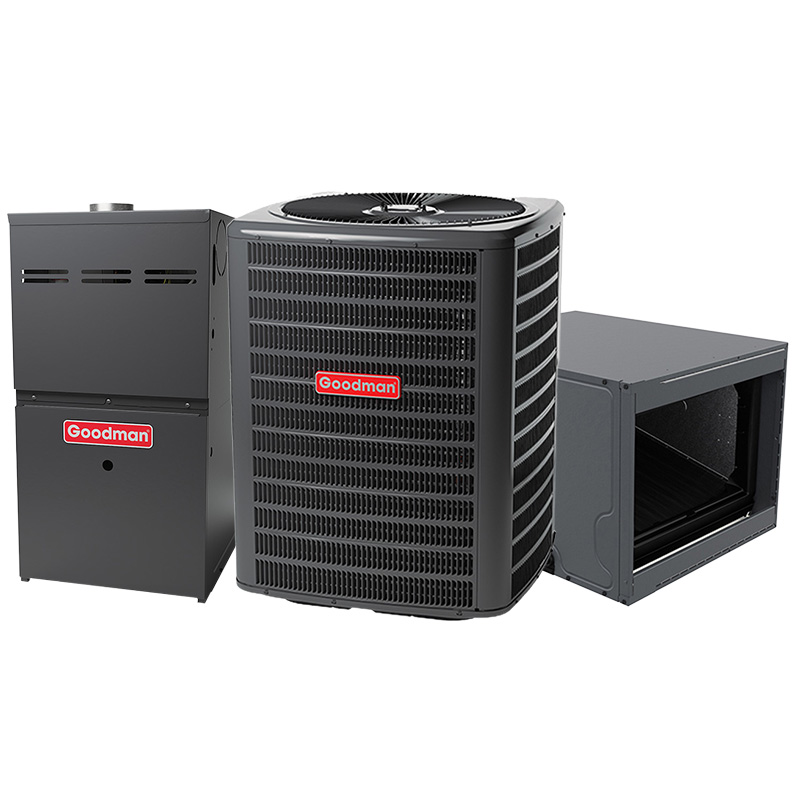
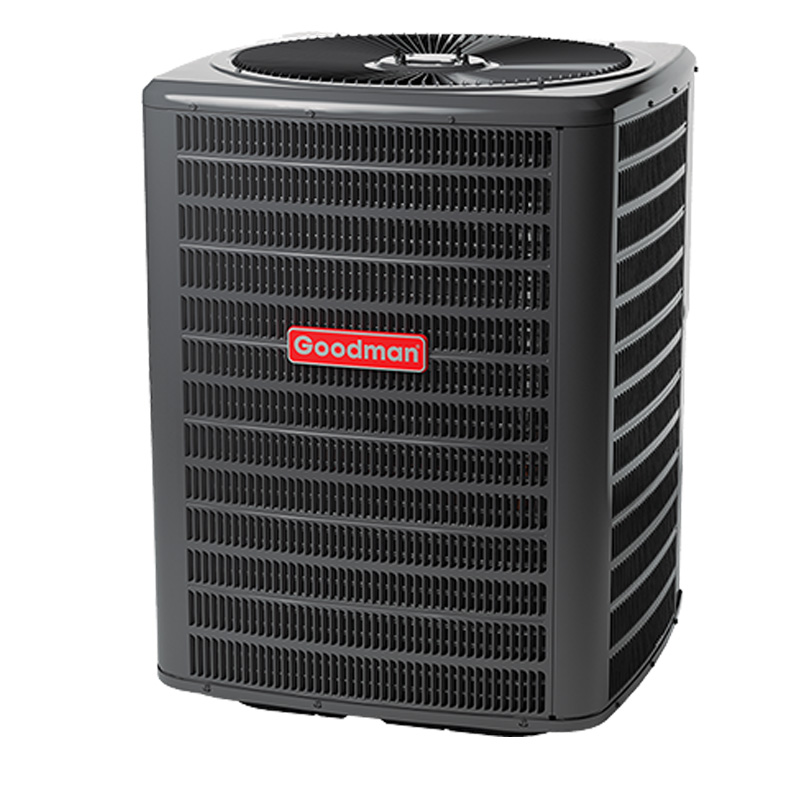
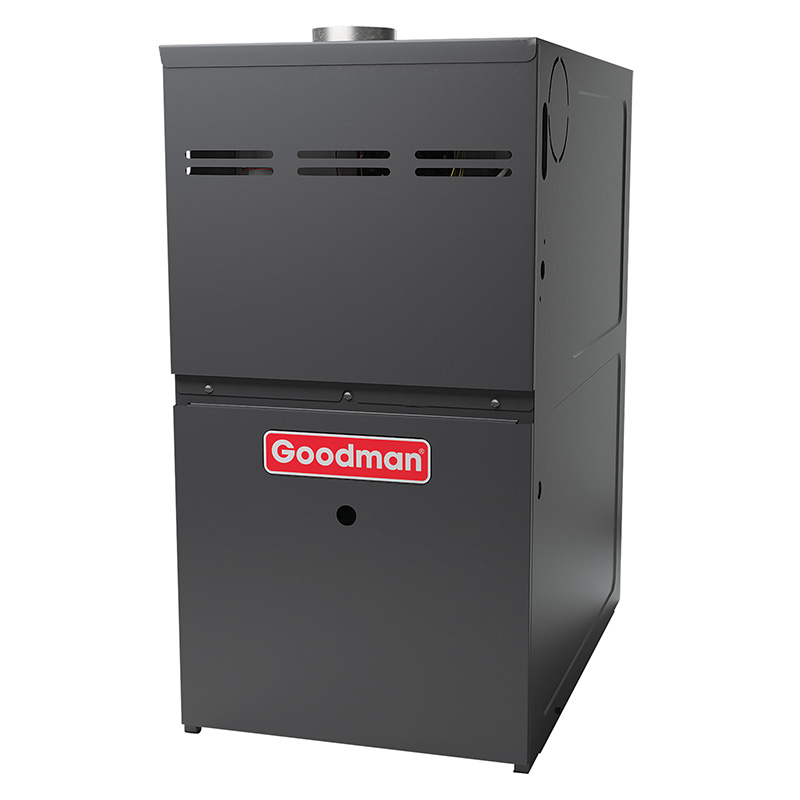
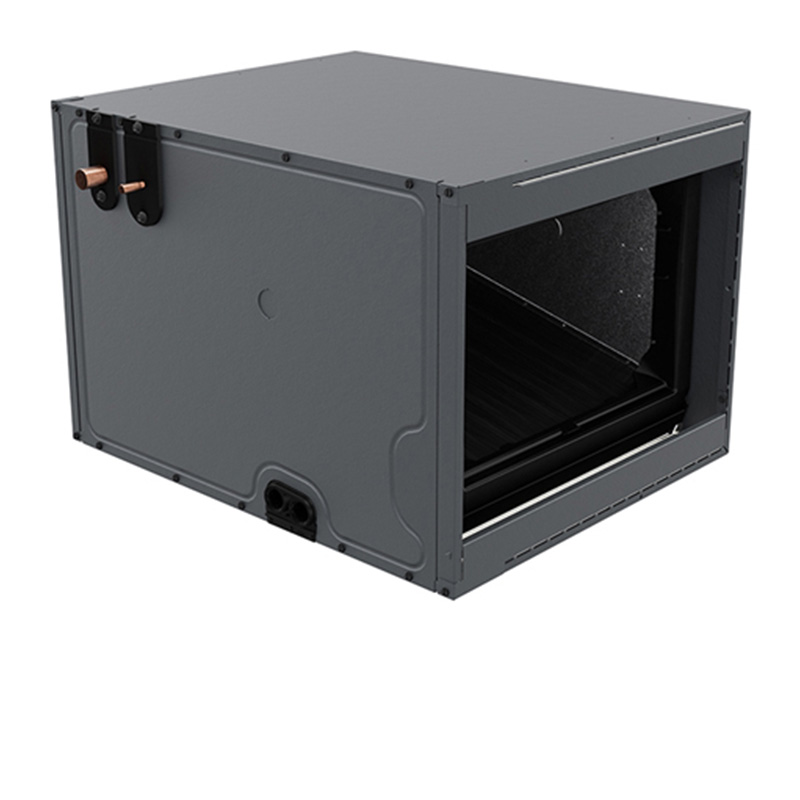
Goodman 4 Ton AC And 100000 BTU 80% AFUE Gas Furnace System | 14.5 SEER2 AC | Multi-Speed ECM Low NOx Furnace | Horizontal | R32
View on AC Direct see your lowest price →Check current price on AC Direct →
Key features
- 4-ton R-32 AC rated at 14.5 SEER2, meeting federal minimum efficiency for most U.S. regions
- 100,000 BTU 80% AFUE gas furnace with multi-speed ECM blower motor
- Horizontal configuration for attic, crawlspace, or side-mount utility closet installs
- Low-NOx combustion design, compliant with California and other strict air quality districts
- R-32 refrigerant with lower global warming potential than R-410A
- ECM blower motor reduces fan electricity consumption versus standard PSC motors
About this system
The Goodman 4-ton, 14.5 SEER2 split system pairs a R-32 refrigerant air conditioner with a 100,000 BTU, 80% AFUE multi-speed ECM gas furnace configured for horizontal installation. That configuration makes it a practical fit for homes where the air handler sits in a crawlspace, attic, or utility closet on its side rather than upright in a basement. At 4 tons, it is sized for roughly 1,800 to 2,400 square feet depending on your climate zone, insulation, and window load, though a proper Manual J calculation should always drive that decision.
The 14.5 SEER2 rating clears the federal minimum for most U.S. regions without reaching into the premium efficiency tier, which means you get a modest reduction in operating costs compared to older 14 SEER equipment without paying for a two-stage or variable-speed compressor. The furnace side runs at 80% AFUE, meaning 80 cents of every dollar in gas goes to heat, which is the entry-level efficiency tier for new furnaces. The ECM blower motor does improve airflow consistency and cut fan electricity use compared to a standard PSC motor, and the low-NOx combustion design meets California air quality standards. R-32 refrigerant has a lower global warming potential than R-410A and is increasingly common in new residential equipment.
This system is a workable budget-friendly choice for homeowners who need a horizontal-mount configuration and want to keep upfront costs down, but it enters the deal with the limitations that come with 80% AFUE, single-stage cooling, and Goodman's documented mid-life reliability record. Install quality will determine more about how this system performs over its lifespan than almost any spec on the sheet.
Overall score is the average of the five ratings above.
What we like
- Priced roughly 15 to 25 percent below comparable Carrier, Trane, and Lennox systems
- Horizontal configuration is a genuine niche need that this system fills without forcing a custom workaround
- ECM blower motor improves airflow consistency and reduces fan energy use compared to PSC motors
- Low-NOx furnace meets strict California and regional air quality requirements
- R-32 refrigerant is a forward-looking choice with better environmental profile than R-410A
Trade-offs
- 80% AFUE is entry-level furnace efficiency; a 96% AFUE unit would cut gas bills meaningfully over the system's life
- Single-stage cooling and heating means the system runs at full capacity or not at all, reducing comfort consistency and humidity control compared to two-stage or variable-speed competitors
- Compressor lifespan of roughly 10 to 14 years is shorter than the 15 to 20 years seen from premium brands, and evaporator coil leaks appear in a meaningful share of owner reviews
- Capacitor failures are the most commonly reported repair on Goodman AC equipment, typically appearing after year 7 and costing between $300 and $600 per service call
What homeowners and pros say about Goodman
Homeowners who comment on Goodman equipment tend to split along a clear line: those who had a smooth installation and few problems in the first several years are generally satisfied with the value, while those who hit repair costs after year 7 or 8 feel the savings evaporated quickly. On ConsumerAffairs, Goodman sits at roughly 2.5 out of 5, a score shaped heavily by the platform’s complaint-driven audience and by a recurring pattern of rising repair bills in the back half of the system’s life. Google dealer reviews land higher, around 3.8 out of 5, where the most consistent praise is affordability and the most consistent criticism is responsiveness when something goes wrong. Neither number tells the full story on its own.
HVAC technicians who work on Goodman equipment regularly point to a few specific patterns worth knowing before you buy. Dual-run capacitors are the single most commonly reported failure point on the AC side, showing up after roughly year 7 and usually costing between $300 and $600 to replace, which is manageable but worth anticipating. Evaporator coil leaks appear in a meaningful share of owner reviews and are a more serious repair. Compressor longevity tends to run 10 to 14 years on Goodman units, compared to 15 to 20 years typically reported for premium brands. A small minority of owners also report refrigerant leaks in the first year, which technicians typically attribute to installation or initial charge issues rather than a factory defect. The consistent message from the trade is that Goodman’s outcome is more install-dependent than most brands, so choosing a skilled, licensed contractor matters more here than with higher-tier equipment.
Sources: ConsumerAffairs Goodman owner reviews, AHRI Directory of Certified Product Performance, U.S. DOE appliance and equipment efficiency standards, Goodman product specification sheets.
What it costs to run
At 14.5 SEER2, cooling this 4-ton system for a typical 1200-hour cooling season at the U.S. average electricity rate of $0.17/kWh works out to roughly $675 per year in cooling, about $56 less per year than a minimum-efficiency 13.4 SEER2 unit of the same size. Your real cost depends on your climate and local rate.
Method: (48,000 BTU/hr ÷ 14.5 SEER2) × 1200 hours ÷ 1000 × $0.17/kWh. Rate source: U.S. EIA average; cooling hours: moderate-climate estimate.
How it compares
| Brand | Comparable model | SEER2 | Stage | Price position |
|---|---|---|---|---|
| Goodman | 4-Ton 14.5 SEER2 R-32 Horizontal with 100K BTU 80% AFUE ECM Furnace | 14.5 | Single-stage | Value pick |
| Carrier | Comfort 14 (24ACC4) with 80% AFUE 59SC2 Furnace | 14.3 | Single-stage | Roughly 20 to 25 percent above this Goodman system |
| Trane | XR14c with 80% AFUE S8X1 Furnace | 14.3 | Single-stage | Roughly 20 to 30 percent above this Goodman system |
| Lennox | Merit ML14XC1 with 80% AFUE ML180 Furnace | 14.3 | Single-stage | Roughly 25 to 35 percent above this Goodman system |
Competitor rows are comparable single-stage units at similar efficiency; price is relative position, not a quote.
Questions about this system
Why is this system listed as horizontal, and can it also be installed vertically?
The horizontal designation means the air handler is specifically configured to lie on its side, which is required for attic and crawlspace installations where upright mounting is not possible. Some Goodman models are convertible, but you should confirm with your installer whether this specific unit supports vertical orientation before purchasing, as forcing the wrong configuration can affect drainage and airflow.
Is R-32 refrigerant harder or more expensive to service than R-410A?
R-32 is mildly flammable, which means technicians need A2L certification to service it, and some older recovery equipment may not be compatible. Most HVAC shops are updating their tools as R-32 becomes more common, but it is worth confirming your service contractor is equipped before the system goes out of warranty.
The furnace is 80% AFUE. How much money am I leaving on the table compared to a 96% AFUE unit?
On a 100,000 BTU furnace, roughly 20,000 BTU per hour goes up the flue instead of into your home. In a cold climate running the furnace heavily, the annual gas cost difference between 80% and 96% AFUE can be meaningful over a decade, though the upfront price gap between tiers varies. A higher-efficiency condensing furnace also requires a different venting setup, which adds installation cost and complexity.
What is Goodman's warranty on this system, and what do I need to do to activate it?
Goodman typically offers a 10-year parts warranty on registered equipment, including the compressor and heat exchanger, provided you register online within a set window after installation. Failure to register usually drops coverage to 5 years, so registration is not optional if you want full protection. Labor is not covered under the manufacturer warranty; that falls to your installer or a separate service contract.
How concerned should I be about the capacitor failure reports on Goodman AC units?
Dual-run capacitor failure is the most commonly documented repair on Goodman cooling equipment, and it tends to show up after roughly year 7. The repair itself is usually straightforward and runs between $300 and $600 with a service call, so it is not a catastrophic failure, but it is worth budgeting for at least one capacitor replacement over the system's life and ensuring your service contract or home warranty covers it.
Specifications
| Cooling capacity | 4 Ton |
| Efficiency | 14.5 SEER2 |
| Furnace output | 100000 BTU |
| Furnace efficiency | 80% AFUE |
| Configuration | Horizontal |
| Refrigerant | R-32 |