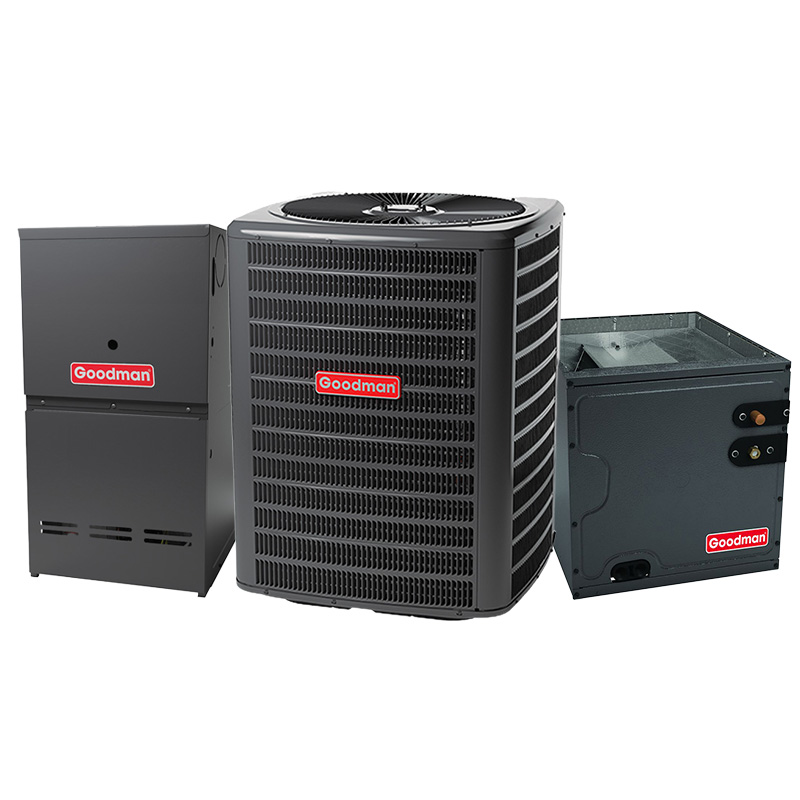
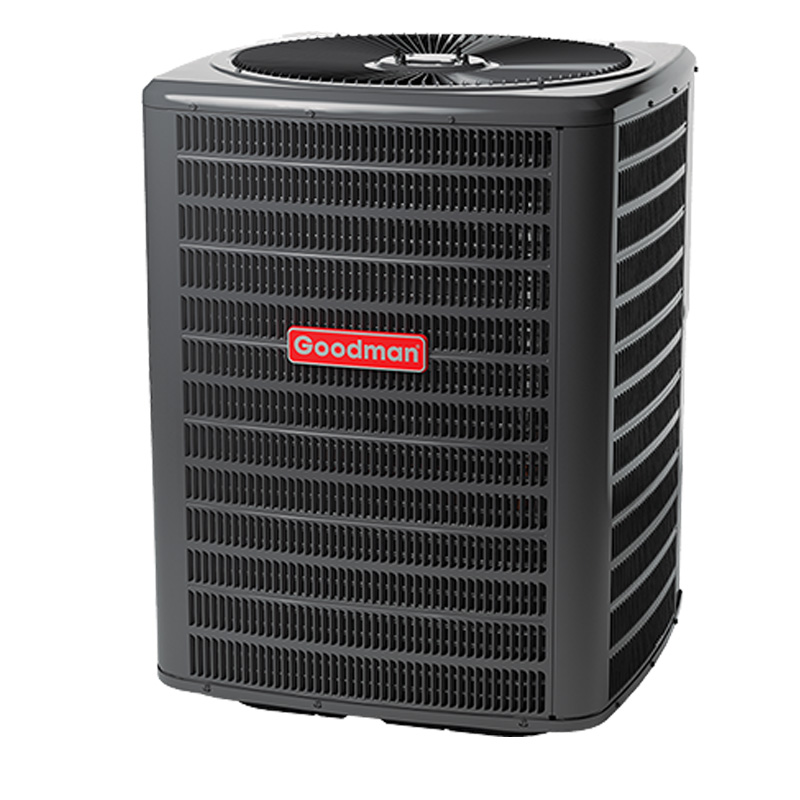
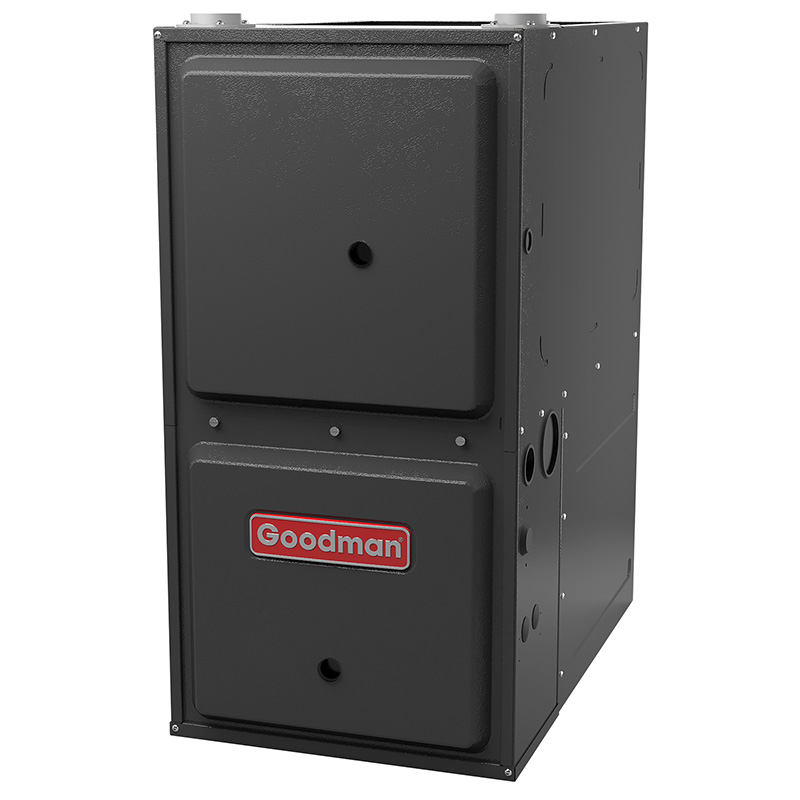
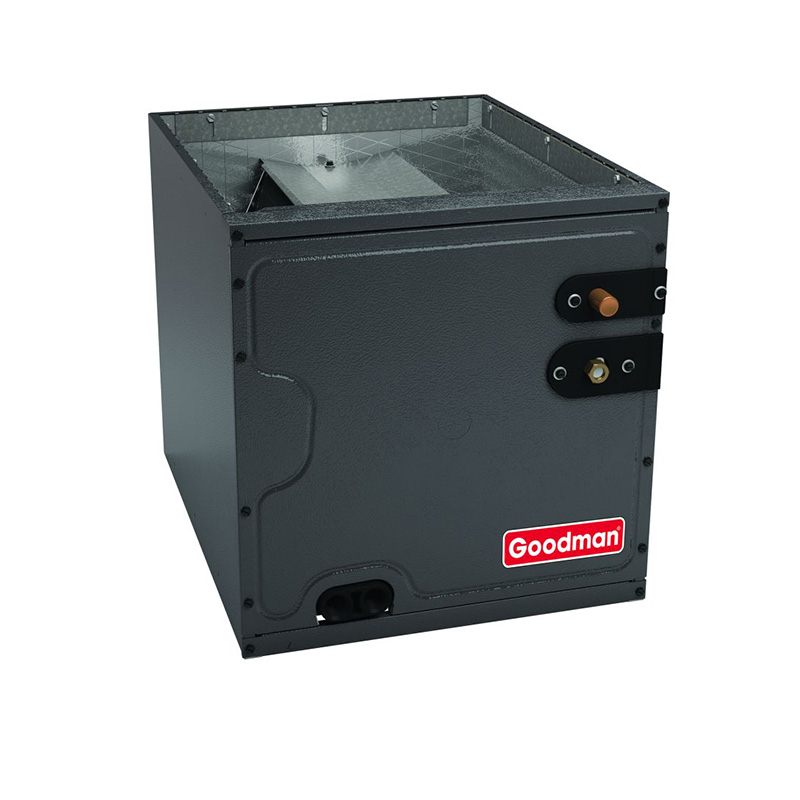
Goodman 4 Ton AC And 80000 BTU 80% AFUE Gas Furnace System | 15.2 SEER2 AC | Multi-Speed ECM Low NOx Furnace | Downflow | R32
View on AC Direct see your lowest price →Check current price on AC Direct →
Key features
- 4-ton cooling capacity at 15.2 SEER2 efficiency
- 80,000 BTU gas furnace rated at 80% AFUE
- Multi-speed ECM blower motor for quieter, more efficient airflow
- Downflow configuration for attic or upper-closet installations
- R-32 refrigerant with lower global warming potential than R-410A
- Low NOx combustion design to meet stricter regional emissions standards
About this system
This Goodman bundle pairs a 4-ton, 15.2 SEER2 central air conditioner with an 80,000 BTU, 80% AFUE gas furnace in a downflow configuration, making it a practical fit for homes where the air handler sits in an upper-floor closet or attic and supply air flows downward into the living space. The R-32 refrigerant charge keeps the global-warming-potential footprint lower than older R-410A systems, and the multi-speed ECM blower motor on the furnace runs more quietly and at lower wattage than single-speed PSC motors, contributing to more even temperature distribution throughout the home.
At 15.2 SEER2, this system clears the current federal minimum efficiency threshold for most U.S. climate regions and sits in the entry-to-mid tier of the efficiency spectrum. Homeowners who run their systems heavily through long cooling seasons may eventually want to weigh a higher SEER2 rating, but for moderate climates or budget-conscious buyers replacing an aging 13 or 14 SEER system, the efficiency gain is real and the upfront cost stays manageable. The 80% AFUE furnace means one-fifth of the gas burned is lost as exhaust, which is a straightforward trade-off compared to 96% or 98% condensing units but comes with a simpler venting setup and lower equipment cost.
This Goodman system delivers honest, code-compliant performance at a price point that undercuts premium brands by 15 to 25 percent, making it a reasonable choice for budget-conscious homeowners who prioritize upfront savings. The trade-offs are real: compressor longevity and coil reliability trail what Carrier, Trane, or Lennox owners typically experience, and long-term satisfaction depends heavily on the quality of the installing contractor. Buyers who can secure a skilled installer and plan for possible capacitor or coil service after year seven will get fair value here.
Overall score is the average of the five ratings above.
What we like
- Meaningfully lower purchase price than comparable Carrier, Trane, or Lennox systems
- Multi-speed ECM blower improves comfort and reduces electricity use versus single-speed motors
- R-32 refrigerant is more environmentally responsible than the R-410A it replaces industry-wide
- 15.2 SEER2 meets current federal minimums and improves on older 13-14 SEER systems
- Low NOx furnace design satisfies air-quality regulations in California and other strict-emissions regions
Trade-offs
- 80% AFUE loses 20% of fuel as exhaust heat, a noticeable efficiency gap versus 95%+ condensing furnaces in cold climates
- Compressor lifespan averages 10 to 14 years, shorter than the 15 to 20 years seen in premium-brand equipment
- Dual-run capacitor failures and evaporator coil leaks are documented recurring issues that add service costs over time
- A minority of owners have reported refrigerant leaks within the first year, typically tied to installation quality rather than manufacturing
What homeowners and pros say about Goodman
Homeowners who chose Goodman largely echo the same theme visible across the brand’s Google dealer reviews, which average around 3.8 out of 5 stars: the price was the deciding factor, and most buyers feel they got what they paid for in the early years. The more critical feedback surfaces on ConsumerAffairs, where the brand sits near 2.5 out of 5, and the pattern there is consistent. Complaints cluster around the period after roughly year seven, when repair costs begin to feel disproportionate to what was saved upfront. Dual-run capacitor failures come up repeatedly in these accounts and are generally described as an annoying but manageable fix. Evaporator coil leaks are a more serious recurring grievance, and a smaller number of owners report refrigerant leaks within the first year, most of which trace back to installation problems rather than factory defects.
HVAC technicians tend to have a more nuanced view of Goodman than the review scores alone suggest. Many working pros point out that the equipment is fundamentally functional and that a well-commissioned Goodman system, properly sized and carefully charged, will run reliably for a reasonable service life. Their consistent caution is about compressor longevity: Goodman compressors tend to average 10 to 14 years in the field, compared to the 15 to 20 years that premium-brand compressors more commonly reach. For a 4-ton downflow system like this one, which is often tucked into an attic or tight closet where service access is harder, technicians emphasize that the quality of the original installation matters even more than the equipment itself. Buyers who vet their installer as carefully as they vet the equipment tend to report better outcomes.
Sources: ConsumerAffairs Goodman owner reviews, AHRI Directory of Certified Product Performance, U.S. DOE appliance and equipment efficiency standards, Goodman product specification sheets.
What it costs to run
At 15.2 SEER2, cooling this 4-ton system for a typical 1200-hour cooling season at the U.S. average electricity rate of $0.17/kWh works out to roughly $644 per year in cooling, about $87 less per year than a minimum-efficiency 13.4 SEER2 unit of the same size. Your real cost depends on your climate and local rate.
Method: (48,000 BTU/hr ÷ 15.2 SEER2) × 1200 hours ÷ 1000 × $0.17/kWh. Rate source: U.S. EIA average; cooling hours: moderate-climate estimate.
How it compares
| Brand | Comparable model | SEER2 | Stage | Price position |
|---|---|---|---|---|
| Goodman | This system (4-ton 15.2 SEER2 AC + 80K BTU 80% AFUE ECM Furnace, Downflow, R-32) | 15.2 | Single-stage | Value pick |
| Carrier | Comfort Series (24ACC6 AC + 58SB0 80% AFUE Furnace) | 15.2 | Single-stage | Typically 15 to 25 percent more than Goodman |
| Trane | XR15 AC + S8B1 80% AFUE Furnace | 15.2 | Single-stage | Typically 15 to 25 percent more than Goodman |
| Lennox | Merit Series (13ACX AC + ML180 80% AFUE Furnace) | 15.2 | Single-stage | Typically 15 to 25 percent more than Goodman |
Competitor rows are comparable single-stage units at similar efficiency; price is relative position, not a quote.
Questions about this system
Is a downflow furnace going to work in my house, or do I need a different configuration?
Downflow furnaces are designed for installations where the unit sits above the conditioned space and pushes air downward, typically in an attic, upper-floor closet, or over-garage utility room. If your current furnace blows air upward from a basement or crawlspace, you need an upflow unit instead, so confirm your existing duct orientation before ordering.
Why does this system use R-32 instead of R-410A?
R-32 has a global warming potential roughly 68% lower than R-410A and is part of the industry-wide shift away from older refrigerants under updated EPA and international regulations. It also performs efficiently at the pressures common in residential split systems. Note that R-32 requires technicians with updated certification and compatible service equipment.
What does 80% AFUE actually mean for my gas bill compared to a 96% furnace?
At 80% AFUE, 80 cents of every dollar spent on gas becomes usable heat; the other 20 cents exits through the flue. A 96% AFUE furnace loses only 4 cents per dollar. In a cold climate with high gas use, that 16-percentage-point gap can add up to meaningful annual savings, though in mild climates the payback period on the more expensive high-efficiency unit stretches out considerably.
What are the most likely repair costs I should plan for over the life of this system?
Dual-run capacitor failure is the most commonly reported issue with Goodman AC equipment and is generally a low-cost repair in the 300 to 600 dollar range. Evaporator coil leaks show up in a meaningful share of owner reviews and are more expensive to address. Goodman compressors average 10 to 14 years before replacement, so budgeting for a service event in that window is prudent.
Does Goodman's warranty cover parts and labor, and do I need to register the system?
Goodman's standard warranty covers parts for a set term, but labor costs are not included, meaning any repair bill will carry a technician fee on top of parts. Registration within a specified window after installation is typically required to activate the full warranty period; missing that window usually reduces coverage. Confirm current registration requirements with your installer at the time of purchase.
Specifications
| Cooling capacity | 4 Ton |
| Efficiency | 15.2 SEER2 |
| Furnace output | 80000 BTU |
| Furnace efficiency | 80% AFUE |
| Configuration | Downflow |
| Refrigerant | R-32 |