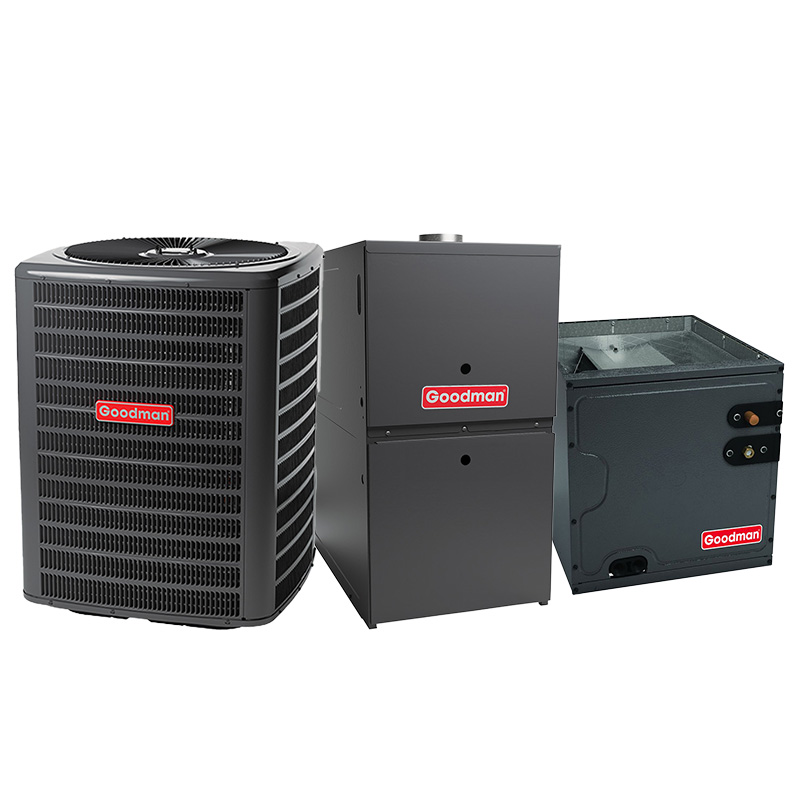
Goodman 4 Ton AC And 80000 BTU 80% AFUE Gas Furnace System | 17.5 SEER2 Two Stage AC | Variable Speed Two Stage Furnace | Upflow | R32
View on AC Direct see your lowest price →Check current price on AC Direct →
Key features
- 17.5 SEER2 two-stage compressor for better humidity control and part-load efficiency
- 80,000 BTU two-stage gas furnace rated at 80% AFUE
- Variable-speed ECM blower motor for quieter, more consistent airflow
- Upflow configuration fits standard basement and utility-closet duct layouts
- R-32 refrigerant with lower global-warming potential than R-410A
- Matched system qualifies for manufacturer warranty when installed by a registered Goodman dealer
About this system
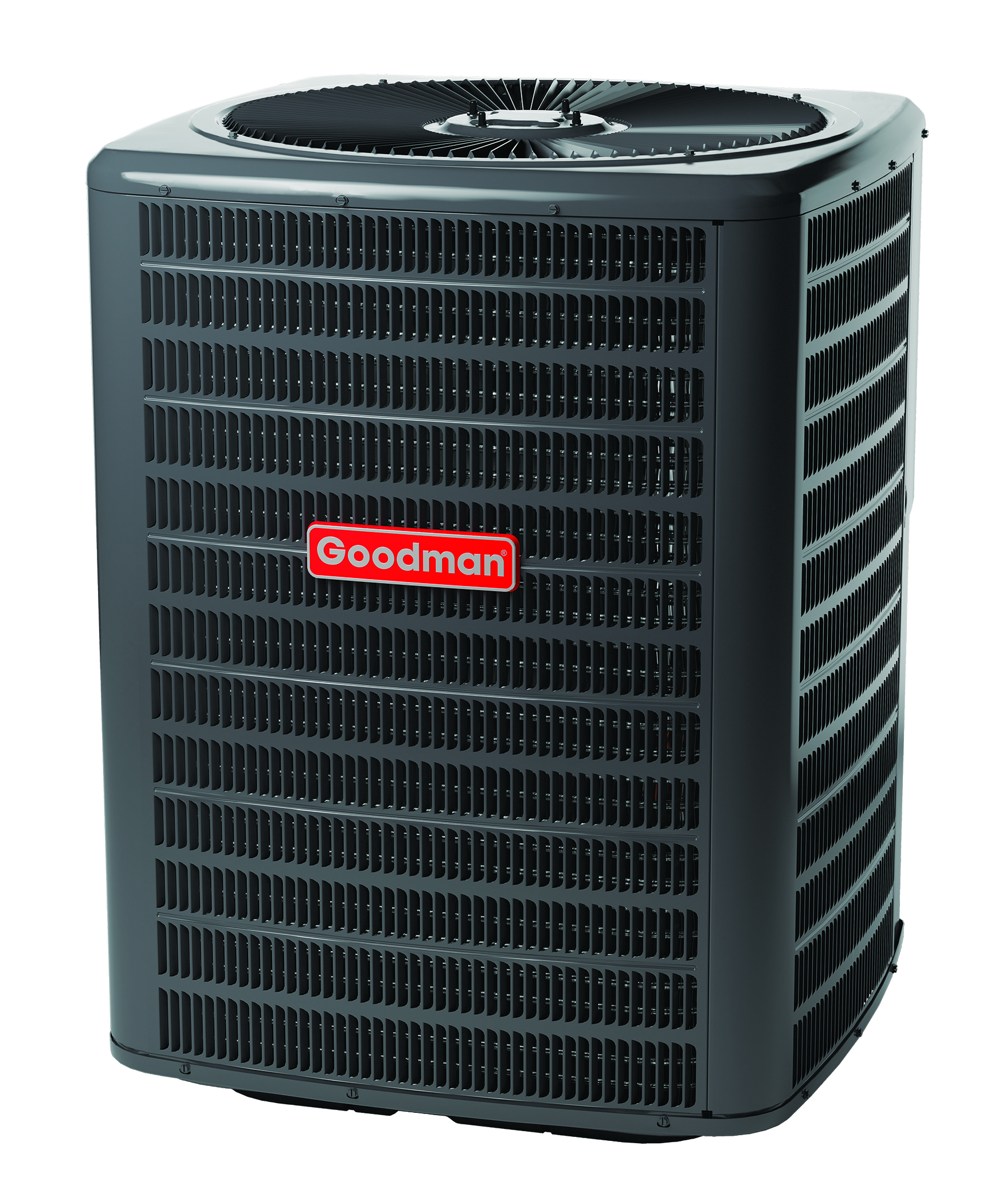
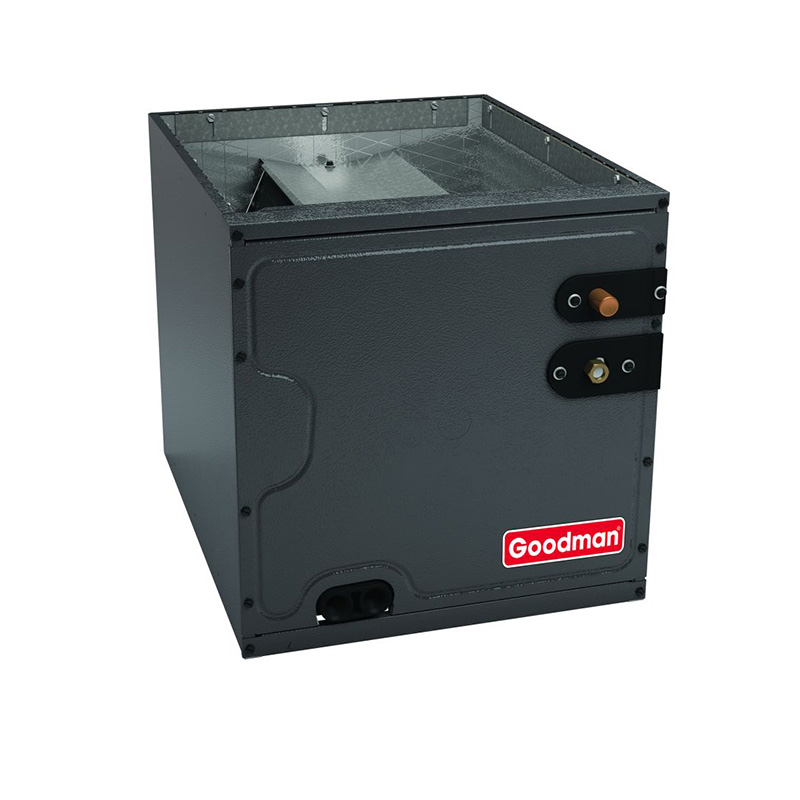
The Goodman 4-ton, 17.5 SEER2 two-stage air conditioner paired with an 80,000 BTU 80% AFUE two-stage variable-speed gas furnace is a mid-efficiency combo aimed at homeowners who want noticeably better comfort than entry-level single-stage equipment without paying premium-brand prices. The two-stage compressor runs at a lower capacity on mild days, which reduces short-cycling, holds indoor humidity better, and trims operating costs compared to a single-stage unit of the same tonnage. The variable-speed air handler motor adds another layer of comfort by modulating airflow continuously rather than blasting on and off, and it runs quietly at lower speeds during long, steady-state cycles.
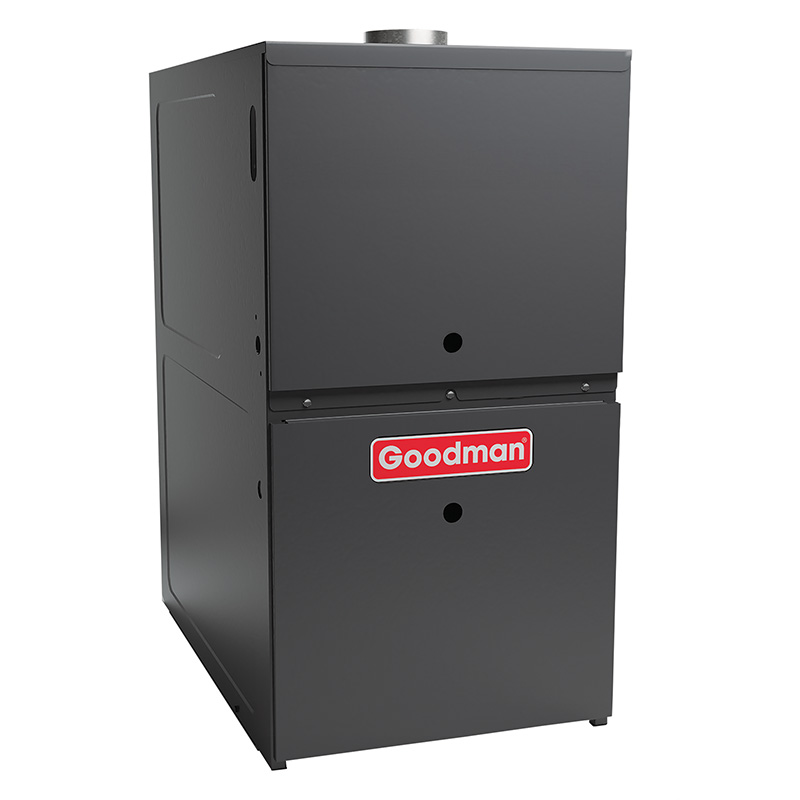
The furnace side delivers 80% AFUE, meaning 80 cents of every dollar spent on gas becomes usable heat. That is the federal minimum for most northern climates and a reasonable choice where heating loads are moderate or where gas prices are low enough that a 95-plus AFUE furnace would take many years to pay back the price premium. The upflow configuration works with the most common duct layouts, where the furnace sits in a basement or utility closet and air rises into overhead duct runs. R-32 refrigerant carries a lower global-warming potential than the R-410A it replaces and is increasingly the industry standard, though it does require technicians who are certified to handle it.
This system suits a 2,000 to 2,600 square foot home in a mixed heating and cooling climate where the homeowner wants two-stage comfort at a value price point. It is not the right fit for someone who prioritizes maximum long-term reliability over upfront savings, or for a very cold region where a higher-AFUE furnace would pay for itself within a reasonable timeframe.
This Goodman combo delivers genuine two-stage comfort and respectable efficiency at a price roughly 15 to 25 percent below comparable Trane, Carrier, or Lennox systems, making it a credible choice for budget-conscious buyers. The trade-off is a shorter expected compressor lifespan, a documented tendency toward capacitor and evaporator coil issues after several years, and warranty coverage that leans heavily on install quality and dealer registration. If the savings are invested in a skilled installer and a service agreement, the system can perform well; if corners are cut on installation, those savings evaporate quickly.
Overall score is the average of the five ratings above.
What we like
- Two-stage cooling reduces humidity better than single-stage and cuts short-cycling
- Variable-speed blower improves comfort and operates quietly at low speeds
- Priced 15 to 25 percent below Trane, Lennox, and Carrier equivalents
- R-32 refrigerant is current industry standard with lower environmental impact
- Matched AC and furnace combination simplifies sizing, compatibility, and warranty registration
Trade-offs
- Compressor lifespan averages 10 to 14 years versus 15 to 20 for premium brands
- Dual-run capacitor failures are the most commonly reported issue, typically surfacing after year 7
- Evaporator coil leaks appear in a meaningful share of owner reports and can be costly to repair
- 80% AFUE furnace is the lowest legal efficiency tier in northern climates and offers limited long-term fuel savings versus 95-plus AFUE alternatives
What homeowners and pros say about Goodman
Homeowners who purchase Goodman equipment tend to fall into two camps based on their experience. Those who had a skilled installer and a solid service relationship often report years of uneventful operation and point to the lower purchase price as a win. Those who ran into trouble frequently cite repair costs that began climbing after year 7, which aligns with Goodman’s ConsumerAffairs score of roughly 2.5 out of 5, a channel where complaints about out-of-warranty repair bills are the recurring theme. On Google dealer reviews, where the full ownership picture is broader, Goodman scores closer to 3.8 out of 5, with affordability consistently cited as the strongest selling point.
HVAC technicians tend to describe Goodman as serviceable equipment whose longevity depends heavily on who put it in. The most documented failure points are dual-run capacitors, which are a low-cost fix when caught early, and evaporator coil leaks, which can be more involved. Compressor lifespan on Goodman units typically runs 10 to 14 years in real-world reports, shorter than the 15 to 20 years more commonly seen on Trane, Carrier, or Lennox compressors. A small share of owners report refrigerant issues within the first year, which technicians generally attribute to installation or initial charge errors rather than manufacturing defects. The consistent professional advice is to spend the savings on an experienced installer and, if possible, a preventive maintenance plan.
Sources: ConsumerAffairs Goodman owner reviews, AHRI Directory of Certified Product Performance, U.S. DOE appliance and equipment efficiency standards, Goodman product specification sheets.
What it costs to run
At 17.5 SEER2, cooling this 4-ton system for a typical 1200-hour cooling season at the U.S. average electricity rate of $0.17/kWh works out to roughly $560 per year in cooling, about $171 less per year than a minimum-efficiency 13.4 SEER2 unit of the same size. Your real cost depends on your climate and local rate.
Method: (48,000 BTU/hr ÷ 17.5 SEER2) × 1200 hours ÷ 1000 × $0.17/kWh. Rate source: U.S. EIA average; cooling hours: moderate-climate estimate.
How it compares
| Brand | Comparable model | SEER2 | Stage | Price position |
|---|---|---|---|---|
| Goodman | GLXS4BA48 + GCVC80 (this system) | 17.5 | two-stage / variable-speed | Value pick |
| Carrier | Comfort 17 (24ACC7) | 17 | two-stage | Typically 15 to 25 percent more than this Goodman system |
| Trane | XR17 | 17 | two-stage | Typically 15 to 25 percent more than this Goodman system |
| Lennox | Merit 17ACX | 17 | two-stage | Typically 15 to 25 percent more than this Goodman system |
Competitor rows are comparable single-stage units at similar efficiency; price is relative position, not a quote.
Questions about this system
Does the warranty require a licensed installer or dealer registration, and what happens if I use an independent technician?
Goodman's full limited warranty, including the lifetime compressor coverage on registered units, requires installation by a licensed HVAC contractor and registration within a specific window after install. Using an unregistered or non-licensed installer typically drops coverage to a shorter base warranty. Confirm the registration process with your installer before the job starts.
Is R-32 refrigerant harder to find or more expensive to service than R-410A?
R-32 is increasingly common as the industry moves away from R-410A, but not every technician carries it yet. It requires a certified technician and specific handling procedures due to its mildly flammable classification. Service availability is improving quickly, but in rural areas you may want to confirm your local technicians stock it before buying.
How often do the dual-run capacitors tend to fail, and what does that repair usually cost?
Capacitor failure is the most frequently reported Goodman repair, with many owners seeing it surface after roughly year 7. The repair is relatively inexpensive, typically in the 300 to 600 dollar range including labor, and a skilled technician can usually complete it in under an hour. Keeping a service agreement can reduce the surprise cost.
Will a 4-ton unit be the right size for my home, and can I oversize for better cooling?
A 4-ton system is generally appropriate for roughly 2,000 to 2,600 square feet, depending heavily on insulation, window area, climate zone, and ceiling height. Oversizing is a common mistake that causes short-cycling, poor humidity removal, and faster wear on the compressor. Have a Manual J load calculation done before purchase.
Should I upgrade to a 96% AFUE furnace instead of this 80% AFUE model to save on heating bills?
Whether that upgrade pays off depends on your local gas prices, how many heating degree days your climate sees, and how long you plan to stay in the home. In a cold northern climate with high gas costs, a 96% AFUE furnace can recoup its price premium in 5 to 10 years. In a milder climate with low gas costs, payback may stretch beyond 15 years, making the 80% unit the more practical choice.
Specifications
| Cooling capacity | 4 Ton |
| Efficiency | 17.5 SEER2 |
| Furnace output | 80000 BTU |
| Furnace efficiency | 80% AFUE |
| Configuration | Upflow |
| Refrigerant | R-32 |