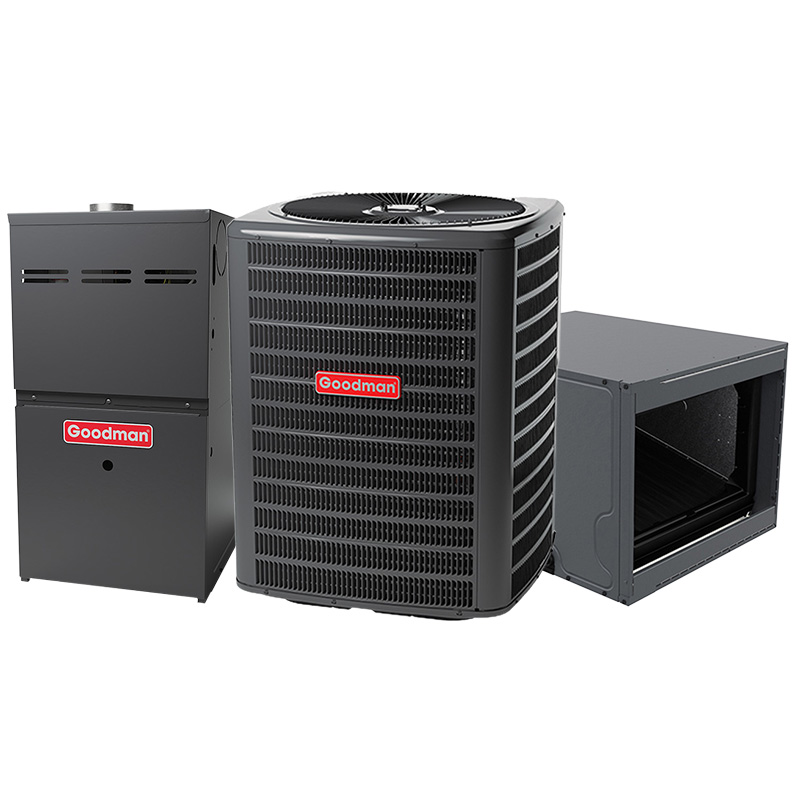
Goodman 4 Ton AC And 80000 BTU 80% AFUE Gas Furnace System | 14.5 SEER2 AC | Multi-Speed ECM Low NOx Furnace | Horizontal | R32
View on AC Direct see your lowest price →Check current price on AC Direct →
Key features
- 4-ton / 14.5 SEER2 central AC sized for roughly 2,000 to 2,600 sq ft
- 80,000 BTU furnace at 80% AFUE with multi-speed ECM blower motor
- Horizontal configuration for attic, crawlspace, or side-load installations
- R-32 refrigerant, lower global warming potential than R-410A
- Low NOx burner meets California SCAQMD and similar regional standards
- Matched system designed for single-zone ducted split installation
About this system
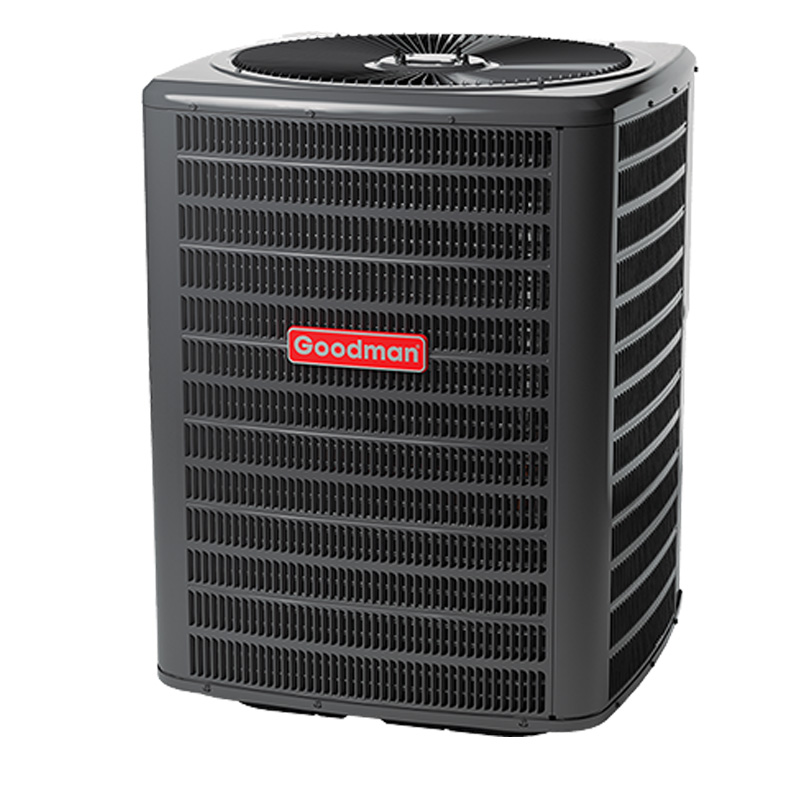
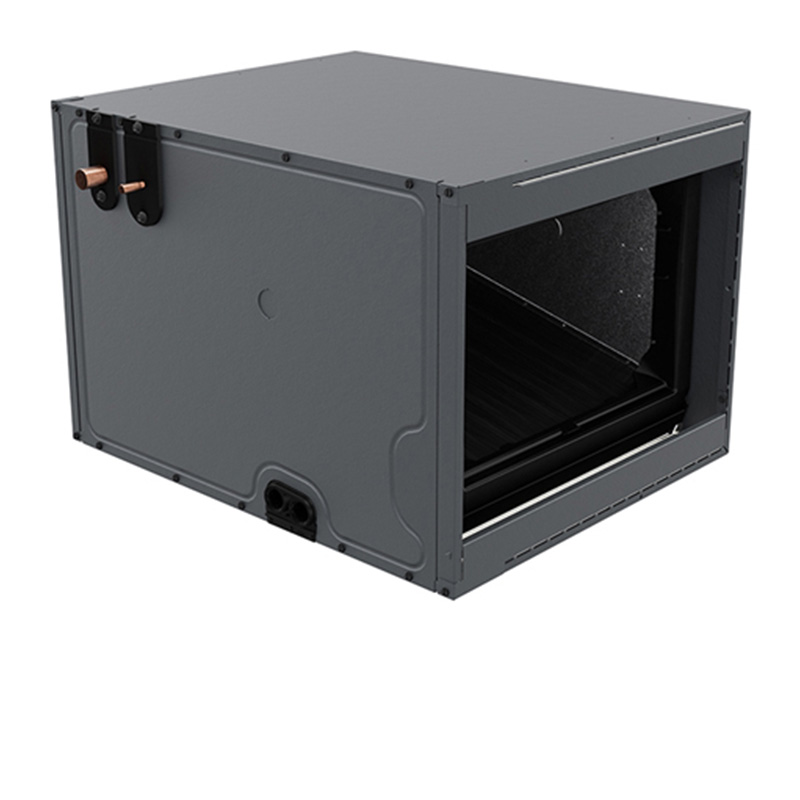
This Goodman bundle pairs a 4-ton, 14.5 SEER2 central air conditioner with an 80,000 BTU, 80% AFUE gas furnace in a horizontal configuration, making it a practical fit for homes in the 2,000 to 2,600 square foot range that have attic or crawlspace air handlers rather than a traditional upright closet installation. The horizontal orientation is a real installation constraint, so confirm your mechanical space before ordering. The AC runs on R-32 refrigerant, a lower-global-warming-potential replacement for the older R-410A, and that matters for long-term serviceability as the industry shifts away from older refrigerants.
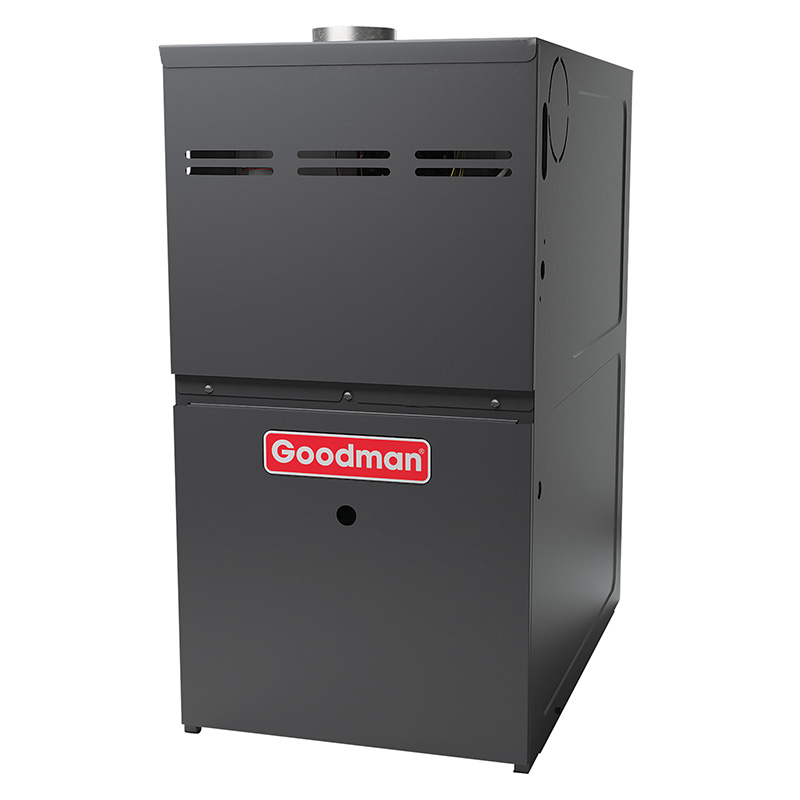
The furnace side uses a multi-speed ECM blower motor, which draws less electricity than a standard PSC motor and moves air more quietly at lower speeds. At 80% AFUE, roughly 20 cents of every dollar spent on gas exits through the flue, which is baseline efficiency for a non-condensing furnace. Homeowners in cold climates running gas heat heavily through winter may want to weigh a 96% AFUE unit instead. The Low NOx designation meets California and other strict regional air-quality rules, broadening where this unit can legally be installed. Together, this system represents an entry-level-to-mid-tier efficiency package at a price point roughly 15 to 25 percent below comparable equipment from Trane, Carrier, or Lennox.
This Goodman combo delivers a straightforward 14.5 SEER2 and 80% AFUE package at a price that undercuts major premium brands by a meaningful margin. It is a workable choice for budget-conscious buyers who can secure a skilled installer, but the brand's documented history of capacitor failures, evaporator coil leaks, and shorter average compressor lifespan means total ownership costs can close the gap on that upfront savings over time. Buyers who can stretch their budget toward higher-efficiency or premium-brand equipment may find better long-term economics.
Overall score is the average of the five ratings above.
What we like
- Purchase price sits 15 to 25 percent below comparable Trane, Carrier, and Lennox systems
- R-32 refrigerant improves long-term parts availability as the industry moves away from R-410A
- Multi-speed ECM blower reduces electricity use and improves comfort compared to single-speed PSC motors
- Low NOx certification opens installation eligibility in California and other strict-emissions regions
- Horizontal configuration covers installation scenarios where vertical units simply will not fit
Trade-offs
- 80% AFUE is minimum-tier heating efficiency; high gas-use climates will pay a premium in fuel bills versus 95-96% AFUE alternatives
- Dual-run capacitors are the most frequently reported failure point, and evaporator coil leaks appear in a meaningful share of owner reports
- Compressor lifespan averages 10 to 14 years versus 15 to 20 years typical of premium brands, raising long-term replacement risk
- Performance is heavily dependent on installer quality, and a minority of owners report refrigerant leaks within the first year tied to installation or initial charge issues
What homeowners and pros say about Goodman
Among the consumer review platforms, Goodman’s reputation splits predictably by channel. On ConsumerAffairs, which skews toward owners filing complaints, the brand averages roughly 2.5 out of 5, and the recurring concern is repair costs that start climbing after about year 7. Google dealer reviews sit higher, around 3.8 out of 5 across dealer locations, where the most common positive note is straightforward: the equipment was affordable and the dealer made installation easy. Neither number is a reason to dismiss or unconditionally trust the brand. They reflect a product that trades on price and depends heavily on who installs it.
HVAC technicians frequently point to the same documented failure patterns when discussing Goodman in the field. Dual-run capacitors are the single most common service call, which is manageable since replacement typically runs 300 to 600 dollars all in. Evaporator coil leaks are a more frustrating failure, appearing in enough owner reports to be a recognized pattern rather than a fluke. Compressor longevity averages 10 to 14 years across the brand, shorter than the 15 to 20 years technicians associate with Trane, Carrier, or Lennox equipment. On this specific horizontal system, a small but documented share of owners has reported refrigerant leaks in the first year, most often traced back to installation quality or initial charge rather than a factory defect. That is a useful reminder that the installer’s skill is not a footnote for Goodman equipment, it is a core part of the value equation.
Sources: ConsumerAffairs Goodman owner reviews, AHRI Directory of Certified Product Performance, U.S. DOE appliance and equipment efficiency standards, Goodman product specification sheets.
What it costs to run
At 14.5 SEER2, cooling this 4-ton system for a typical 1200-hour cooling season at the U.S. average electricity rate of $0.17/kWh works out to roughly $675 per year in cooling, about $56 less per year than a minimum-efficiency 13.4 SEER2 unit of the same size. Your real cost depends on your climate and local rate.
Method: (48,000 BTU/hr ÷ 14.5 SEER2) × 1200 hours ÷ 1000 × $0.17/kWh. Rate source: U.S. EIA average; cooling hours: moderate-climate estimate.
How it compares
| Brand | Comparable model | SEER2 | Stage | Price position |
|---|---|---|---|---|
| Goodman | GSXH504810 + GMVM8 (this system) | 14.5 | Single-stage | Value pick |
| Carrier | Comfort 14 (24ACC4) | 14.3 | Single-stage | 15 to 25 percent higher than this system |
| Trane | XR14 | 14.3 | Single-stage | 20 to 30 percent higher than this system |
| Lennox | Merit ML14XC1 | 14.3 | Single-stage | 20 to 30 percent higher than this system |
Competitor rows are comparable single-stage units at similar efficiency; price is relative position, not a quote.
Questions about this system
Is a horizontal furnace the same unit as a standard upflow furnace, just flipped on its side?
No. A horizontal furnace is purpose-built or factory-configured for side-discharge airflow and has a drain pan and burner orientation suited to lying on its side. You cannot simply tip a standard upflow unit over. Confirm the model listed is factory-rated for horizontal installation before purchase, and have your installer verify the flue and condensate routing for your specific space.
Will my existing HVAC technician be able to service R-32 refrigerant, or do I need a specialist?
R-32 requires EPA Section 608 certification, which most licensed HVAC technicians already hold. However, R-32 is mildly flammable (A2L classification), so your technician needs specific R-32 handling training and compatible recovery equipment. Ask your service provider before assuming they are set up for it, especially in areas where R-32 is still relatively new.
What does the Goodman warranty actually cover on this system, and are there conditions?
Goodman typically offers a 10-year parts warranty when the system is registered within 60 days of installation by a licensed contractor. Failure to register usually drops coverage to 5 years. The warranty covers parts but not labor, which can be a significant out-of-pocket cost if a compressor or coil fails outside a service plan.
How worried should I be about the capacitor and coil failure issues I've read about with Goodman?
Dual-run capacitor failure is the most commonly reported issue and is relatively inexpensive to fix, typically in the 300 to 600 dollar range including labor. Evaporator coil leaks are more serious and can be costly, especially if refrigerant has been lost. Neither failure mode is universal, but they appear frequently enough in owner accounts that budgeting for one repair in the first decade is a reasonable precaution.
Is 14.5 SEER2 going to meet my state's minimum efficiency requirement?
As of January 2023, federal minimum SEER2 requirements in the Southwest and Southeast United States are 15.2 SEER2 for split systems in those regions, while Northern states require 13.4 SEER2. A 14.5 SEER2 unit meets the Northern minimum but falls below the Southern regional minimum for new installations. Check your local jurisdiction's rules before purchasing, as some states have stricter standards still.
Specifications
| Cooling capacity | 4 Ton |
| Efficiency | 14.5 SEER2 |
| Furnace output | 80000 BTU |
| Furnace efficiency | 80% AFUE |
| Configuration | Horizontal |
| Refrigerant | R-32 |