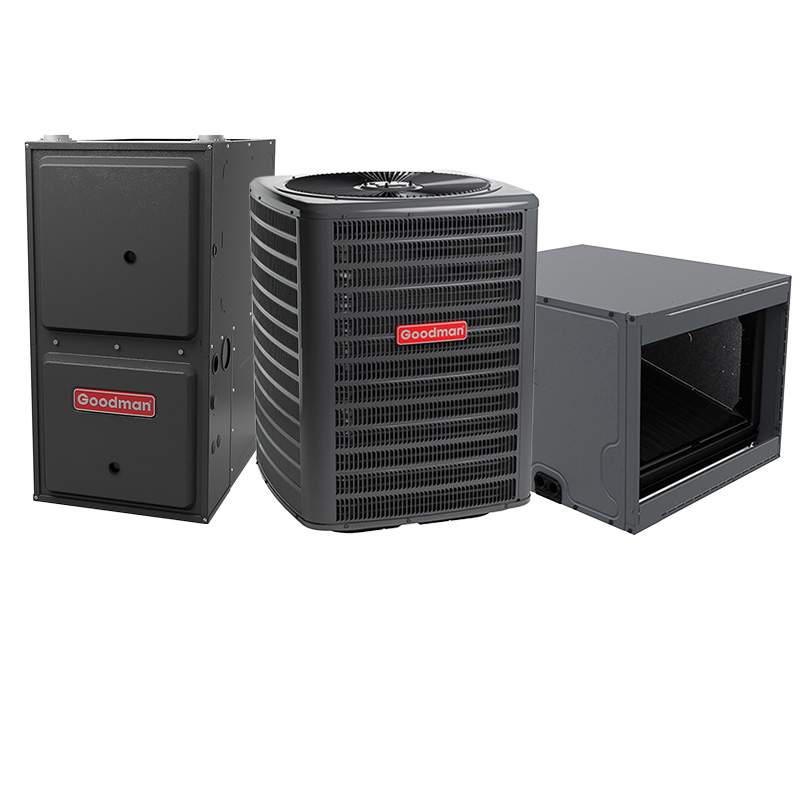
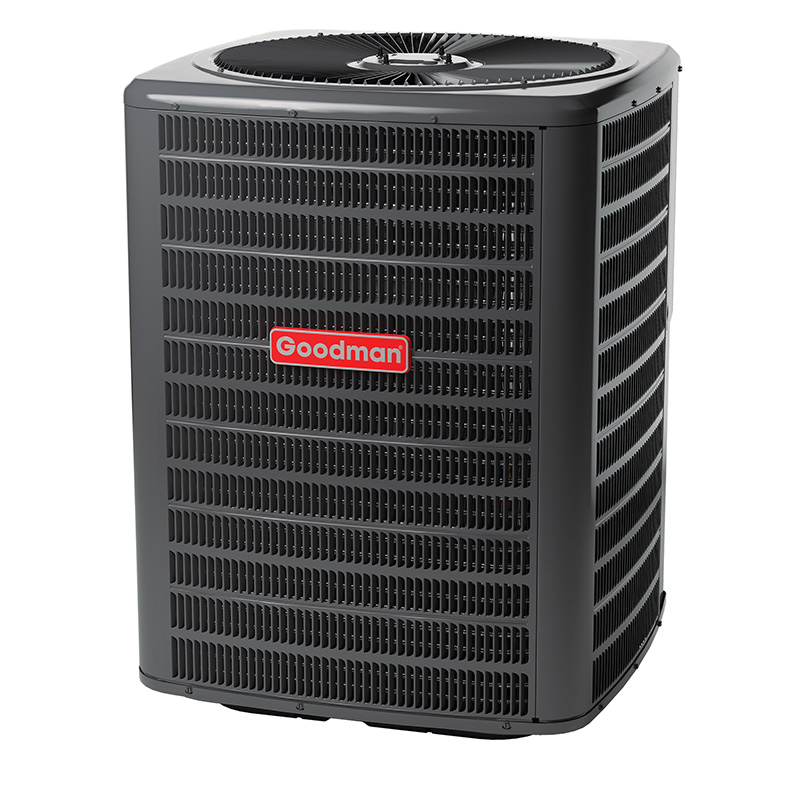
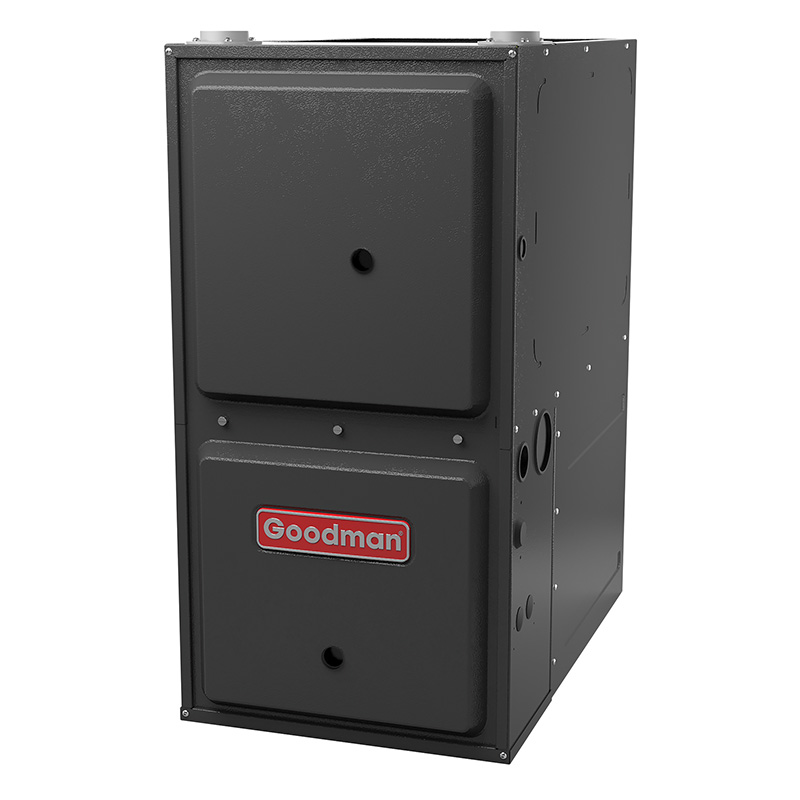
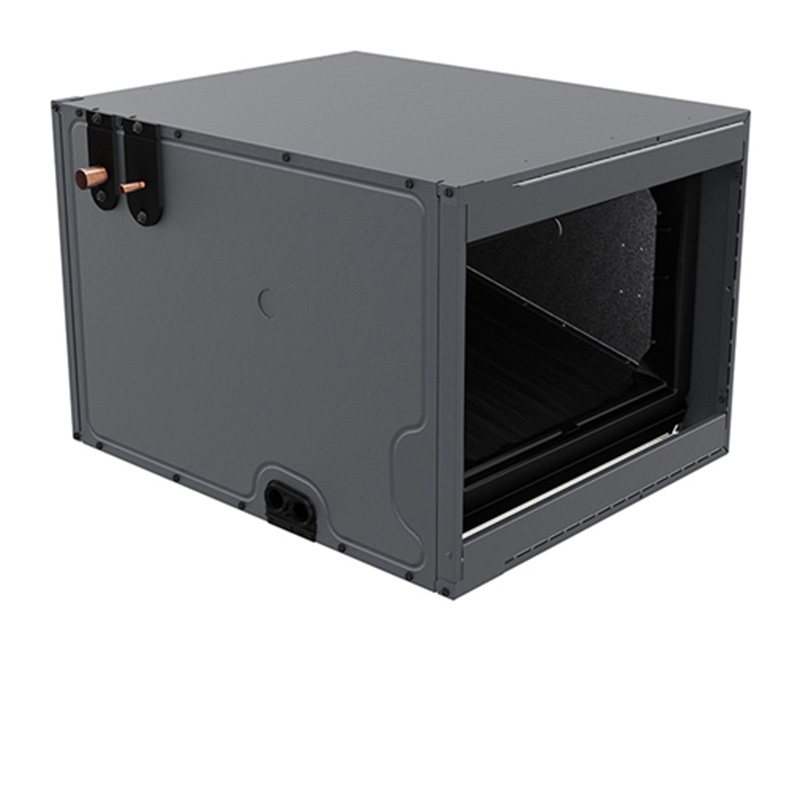
Goodman 4 Ton 15.2 SEER2 R32 AC System with 80,000 BTU 80% AFUE Gas Furnace – California & Colorado Ultra Low NOx, Horizontal, Multi-Speed ECM
View on AC Direct see your lowest price →Check current price on AC Direct →
Key features
- 15.2 SEER2 efficiency rating meets current federal minimums for all U.S. regions
- R-32 refrigerant with significantly lower global warming potential than R-410A
- Ultra Low NOx burner factory-certified for California (CARB) and Colorado regulations
- Horizontal configuration designed for attic, crawlspace, or closet installations
- Multi-speed ECM blower motor for improved humidity control and lower blower energy use
- 80,000 BTU 80% AFUE furnace provides straightforward, code-compliant heating efficiency
About this system
The Goodman 4-Ton 15.2 SEER2 R-32 system pairs a mid-efficiency central air conditioner with an 80,000 BTU 80% AFUE gas furnace in a horizontal configuration, making it a practical choice for homes with attic or crawlspace installations where upflow units simply won’t fit. At 4 tons, it’s sized for roughly 1,800 to 2,400 square feet depending on local climate, insulation quality, and window area. The 15.2 SEER2 rating lands at the lower end of today’s efficiency spectrum but meets federal minimums and qualifies in all U.S. regions, keeping upfront equipment cost lower than stepping up to 17 or 18 SEER2 two-stage systems.
Two details set this particular bundle apart from a standard Goodman bundle. First, it runs on R-32 refrigerant, which has a global warming potential roughly 68 percent lower than the R-410A it replaces and is increasingly the industry standard as R-410A is phased down. Second, the Ultra Low NOx burner meets the strict California Air Resources Board (CARB) and Colorado emissions standards, so it ships legal and ready to permit in those states without a burner swap. The multi-speed ECM blower motor improves humidity control and reduces blower electricity use compared to a single-speed PSC motor, a meaningful real-world comfort upgrade even if the SEER2 headline number looks modest.
This system suits budget-conscious buyers in mid-climate zones who need a compliant, installable unit today and are comfortable with the trade-offs of a value brand: lower sticker price, solid short-term reliability when installed correctly, and the understanding that components like capacitors and evaporator coils may need attention as the system ages past the seven-year mark.
This Goodman bundle delivers a compliant, competently specified system at a price point that is hard to match from premium brands, and the R-32 refrigerant and Ultra Low NOx burner make it genuinely future-ready for regulated states. The trade-off is a compressor lifespan and component durability record that trails Trane, Carrier, and Lennox, and long-term satisfaction is heavily tied to installation quality rather than the equipment itself. Buyers who vet their installer carefully and budget for possible capacitor or coil service after year seven will likely get solid value; those expecting set-it-and-forget-it performance for 18 to 20 years may want to step up.
Overall score is the average of the five ratings above.
What we like
- Priced 15 to 25 percent below comparable Trane, Carrier, and Lennox equipment
- R-32 refrigerant is lower-impact and aligns with the industry's refrigerant transition
- Ultra Low NOx burner ships ready to permit in California and Colorado without modification
- Multi-speed ECM motor improves comfort and reduces blower energy versus single-speed PSC units
- Horizontal configuration fills a real gap for homes where vertical units cannot be installed
Trade-offs
- 80% AFUE furnace is the lowest efficiency tier available and will cost more to operate than 95%+ AFUE alternatives in colder climates
- Compressor lifespan averages 10 to 14 years versus 15 to 20 years typical of premium brands
- Evaporator coil leaks and dual-run capacitor failures are the most documented recurring repair issues as units age
- A minority of owners have reported refrigerant leaks within the first year, typically traced to install or charge quality rather than the unit itself
What homeowners and pros say about Goodman
Goodman’s reputation among homeowners is genuinely mixed and worth understanding before buying. On ConsumerAffairs, Goodman scores around 2.5 out of 5, though that platform draws a disproportionate share of frustrated owners and skews negative across most appliance brands. The recurring theme there is not early catastrophic failure but rather repair costs that start climbing after roughly year seven, particularly around the dual-run capacitor and, in some cases, evaporator coil integrity. On Google dealer reviews, where the sample includes buyers across the satisfaction spectrum, Goodman systems score closer to 3.8 out of 5, with affordability cited most often as the reason owners are glad they bought one.
HVAC technicians tend to say something similar from the service side: Goodman equipment is not poorly made for its price tier, but it rewards good installation and penalizes shortcuts more than premium brands do. Technicians point to dual-run capacitors as a predictable, inexpensive maintenance item and note that refrigerant leaks reported in the first year are almost always a charge or line-set issue rather than a factory defect. The more meaningful long-term concern is compressor longevity, which averages 10 to 14 years on Goodman equipment compared to 15 to 20 years on Trane or Carrier compressors. For this specific R-32 horizontal bundle, the early installer feedback on R-32 systems is broadly positive, with no new failure patterns emerging beyond the capacitor and coil issues already associated with the brand’s broader lineup.
Sources: ConsumerAffairs Goodman owner reviews, AHRI Directory of Certified Product Performance, U.S. DOE appliance and equipment efficiency standards, Goodman product specification sheets.
What it costs to run
At 15.2 SEER2, cooling this 4-ton system for a typical 1200-hour cooling season at the U.S. average electricity rate of $0.17/kWh works out to roughly $644 per year in cooling, about $87 less per year than a minimum-efficiency 13.4 SEER2 unit of the same size. Your real cost depends on your climate and local rate.
Method: (48,000 BTU/hr ÷ 15.2 SEER2) × 1200 hours ÷ 1000 × $0.17/kWh. Rate source: U.S. EIA average; cooling hours: moderate-climate estimate.
How it compares
| Brand | Comparable model | SEER2 | Stage | Price position |
|---|---|---|---|---|
| Goodman | 4-Ton 15.2 SEER2 R-32 with 80k BTU 80% AFUE Horizontal Ultra Low NOx | 15.2 | Single-stage | Value pick |
| Carrier | Comfort Series 24ACC636 with 58MVC | 15.2 | Single-stage | Typically 15 to 25 percent more than this Goodman bundle |
| Trane | XR15 with S8X1 80% AFUE furnace | 15.0 | Single-stage | Typically 15 to 25 percent more than this Goodman bundle |
| Lennox | Merit Series ML14XC1 with ML180 | 15.2 | Single-stage | Typically 15 to 25 percent more than this Goodman bundle |
Competitor rows are comparable single-stage units at similar efficiency; price is relative position, not a quote.
Questions about this system
Is this system actually legal to install in California and Colorado, or do I need to order a special burner kit?
This specific configuration ships with the Ultra Low NOx burner already installed and certified to meet CARB standards in California and the equivalent Colorado Air Quality Control Commission requirements. No field conversion or additional kit is needed, but always confirm your local jurisdiction's current NOx limits with your installer before pulling a permit.
Why does this bundle use R-32 instead of R-410A, and does that change anything about service calls?
R-32 is replacing R-410A across the industry as part of a federally mandated phase-down of high global warming potential refrigerants. It requires technicians to use R-32-rated equipment and recovery cylinders, so confirm your installer is certified and equipped to handle R-32 before booking. Refrigerant cost and availability are currently comparable to R-410A in most markets.
What does the multi-speed ECM blower actually change day to day compared to a standard motor?
An ECM blower runs at lower speeds for longer cycles during mild conditions rather than blasting on and off at full speed. This distributes conditioned air more evenly, helps the system remove more humidity during cooling season, and uses noticeably less electricity than a single-speed PSC motor over the course of a year.
What are the most likely repairs I should budget for over the life of this system?
The dual-run capacitor is the most commonly reported failure on Goodman equipment and is typically a low-cost fix in the $300 to $600 range including labor. Evaporator coil leaks show up in a meaningful share of owner reports as systems age, and those repairs are more significant. Budgeting for an annual maintenance visit is the most effective way to catch capacitor degradation before it becomes a no-cooling emergency.
The 80% AFUE furnace is included in this bundle. Should I consider upgrading to a higher-efficiency furnace instead?
In mild-winter climates like much of California, an 80% AFUE furnace is a reasonable match for the heating load. In colder climates or homes with high heating bills, a 95% or 96% AFUE two-stage condensing furnace will pay back the cost difference in fuel savings within a few years and is worth the additional investment. Your installer can run a fuel cost comparison based on your actual heating degree days.
Specifications
| Cooling capacity | 4 Ton |
| Efficiency | 15.2 SEER2 |
| Furnace output | 80,000 BTU |
| Furnace efficiency | 80% AFUE |
| Configuration | Horizontal |
| Refrigerant | R-32 |