Goodman 4 Ton Heat Pump Package Unit – 15.2 SEER2, Horizontal Discharge, R32
View on AC Direct see your lowest price →Check current price on AC Direct →
Key features
- 15.2 SEER2 efficiency rating, meeting current federal minimums with moderate energy savings
- Horizontal discharge configuration designed for mobile homes, manufactured housing, and crawl-space installs
- R-32 refrigerant with lower global warming potential than legacy R-410A systems
- All-in-one package unit combines compressor, evaporator coil, and air handler in a single cabinet
- 4-ton capacity suited to roughly 1,800 to 2,400 square feet depending on load conditions
- Single-stage compressor operation provides straightforward, low-complexity mechanical design
About this system
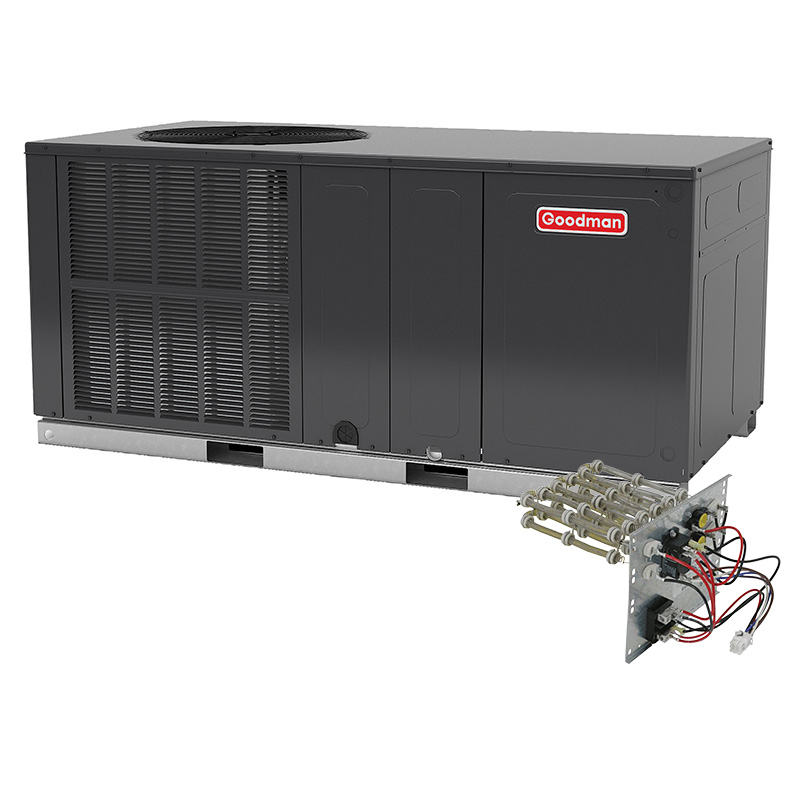
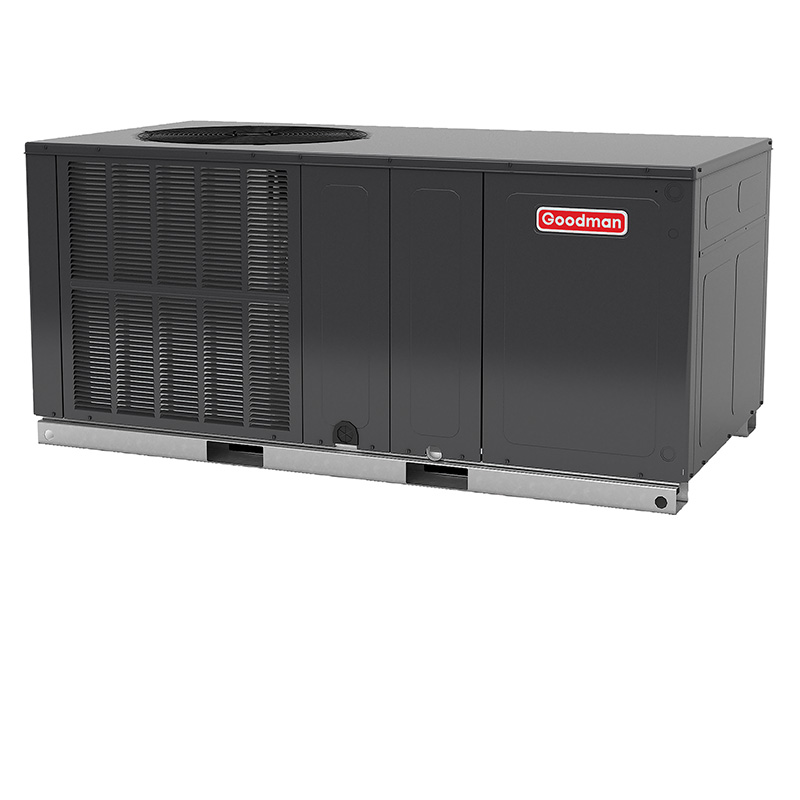
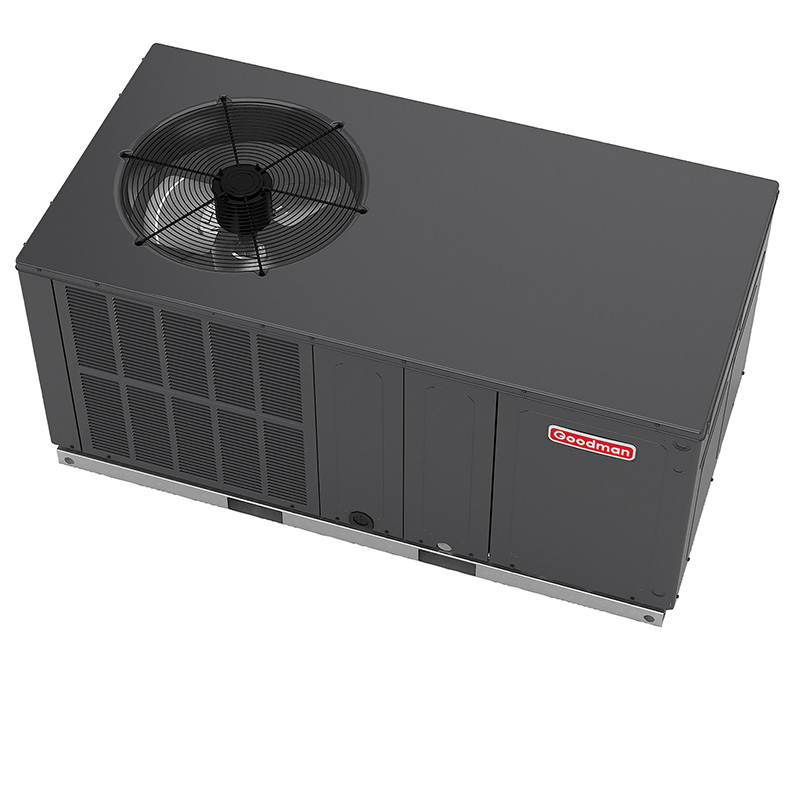
The Goodman 4-ton horizontal-discharge heat pump package unit is a self-contained system that houses the compressor, coil, and air handler in a single cabinet, making it a practical choice for mobile homes, manufactured housing, crawl-space installations, and commercial light-duty applications where ductwork runs horizontally out of the unit. At 15.2 SEER2, it clears the federal minimum efficiency threshold for most U.S. climate regions and lands in the entry-to-mid tier of today’s market, meaning it will cost less to run than an older 13 or 14 SEER system but will not match the operating savings of a 17 or 18 SEER2 variable-speed unit. The R-32 refrigerant is a meaningful forward-looking detail: R-32 has a lower global warming potential than the R-410A it replaces, and parts availability for R-32 systems is expected to remain strong as the industry transitions away from older refrigerants.
A 4-ton package unit is sized for homes roughly in the 1,800 to 2,400 square foot range, depending on climate, insulation, and window load, though proper Manual J load calculations should always drive the final sizing decision. Horizontal discharge suits installations where airflow must be directed to the side rather than upward, which is common in mobile homes where the unit sits beneath the structure. This configuration limits some installation flexibility compared to a vertical-discharge unit, so confirming the ductwork orientation before purchase is essential. Goodman prices this unit noticeably below Trane, Carrier, and Lennox equivalents, which is its core value proposition and the main reason buyers choose the brand.
This Goodman package unit delivers on its core promise of affordable, code-compliant comfort for horizontal-discharge applications, and its R-32 refrigerant keeps it relevant as the industry moves on from R-410A. The trade-off is a compressor lifespan and reliability record that trails premium brands, and long-term costs depend heavily on how well it is installed and maintained. Buyers who prioritize upfront savings over long-run durability and who have access to a skilled installer will get reasonable value here.
Overall score is the average of the five ratings above.
What we like
- Priced 15 to 25 percent below comparable Trane, Carrier, and Lennox units, reducing initial outlay
- R-32 refrigerant is lower-GWP and aligns with the industry's regulatory direction
- Horizontal discharge is specifically engineered for mobile home and crawl-space applications where competitors offer fewer options
- Single-cabinet design simplifies installation in constrained spaces and reduces refrigerant line-set complexity
- 15.2 SEER2 improves operating costs over older sub-14 SEER systems still common in replacement scenarios
Trade-offs
- Compressor longevity averages 10 to 14 years versus 15 to 20 years for premium-brand equivalents, raising long-term replacement risk
- Dual-run capacitor failures are the most frequently reported repair, typically appearing after the warranty period
- Evaporator coil leaks appear in a meaningful share of owner reports and can be costly to address after warranty expires
- Single-stage operation runs at full capacity or not at all, which is less efficient and less comfortable than two-stage or variable-speed alternatives
What homeowners and pros say about Goodman
Homeowners who choose this Goodman package unit most often point to the lower purchase price as the deciding factor, and dealer Google reviews bear that out with a roughly 3.8 out of 5 average where affordability is the most common praise. Those who report satisfaction tend to be buyers who had a skilled installer handle the job and who went in with realistic expectations about a value-tier brand. The picture is less flattering on ConsumerAffairs, where Goodman sits around 2.5 out of 5, a channel that skews toward people with complaints, but the recurring theme there is worth noting: repair costs that climb noticeably after around year seven, once the standard warranty coverage thins out.
HVAC technicians who work on Goodman equipment regularly describe dual-run capacitor failures as the most routine call they get on these units, a repair that is usually straightforward and lands in the 300 to 600 dollar range but is a cost some owners did not anticipate. Evaporator coil leaks show up in a meaningful share of owner accounts as well, and those are a more expensive proposition. On the compressor side, technicians note that Goodman compressors typically average 10 to 14 years in service versus 15 to 20 for premium brands, which matters when evaluating total cost of ownership over a full replacement cycle. A minority of first-year owners have reported refrigerant leaks, which technicians attribute to installation or initial charge issues rather than a factory defect pattern. The takeaway from the field is consistent: this unit can perform well for its price point, but the install must be done right and owners should plan for maintenance costs in the back half of the system’s life.
Sources: ConsumerAffairs Goodman owner reviews, AHRI Directory of Certified Product Performance, U.S. DOE appliance and equipment efficiency standards, Goodman product specification sheets.
What it costs to run
At 15.2 SEER2, cooling this 4-ton system for a typical 1200-hour cooling season at the U.S. average electricity rate of $0.17/kWh works out to roughly $644 per year in cooling, about $87 less per year than a minimum-efficiency 13.4 SEER2 unit of the same size. Your real cost depends on your climate and local rate.
Method: (48,000 BTU/hr ÷ 15.2 SEER2) × 1200 hours ÷ 1000 × $0.17/kWh. Rate source: U.S. EIA average; cooling hours: moderate-climate estimate.
How it compares
| Brand | Comparable model | SEER2 | Stage | Price position |
|---|---|---|---|---|
| Goodman | 4-Ton Horizontal Package Heat Pump, 15.2 SEER2, R-32 | 15.2 | Single-stage | Value pick |
| Carrier | WeatherMaster 50XC Series | 15.2 | Single-stage | Typically 15 to 25 percent more than Goodman |
| Trane | Precedent WCH Series | 15.0 | Single-stage | Typically 15 to 25 percent more than Goodman |
| Lennox | HP14 Packaged Heat Pump Series | 15.2 | Single-stage | Typically 15 to 25 percent more than Goodman |
Competitor rows are comparable single-stage units at similar efficiency; price is relative position, not a quote.
Questions about this system
Will this unit work with my mobile home's existing horizontal ductwork?
Yes, the horizontal-discharge configuration is specifically designed for that application. You should verify that the existing duct dimensions, static pressure, and cfm ratings match the unit's airflow requirements before ordering, and have an HVAC technician confirm the duct connection points align with your existing setup.
What does switching to R-32 refrigerant mean for me as the homeowner?
R-32 is a lower-global-warming-potential refrigerant that the industry is actively adopting, so certified technicians and parts should remain widely available for the foreseeable future. One practical note: R-32 is mildly flammable, which means service work must be done by a technician with A2L refrigerant certification, so confirm your local HVAC companies are equipped before committing.
How worried should I be about the capacitor and coil failure reports for Goodman?
Dual-run capacitor failures are the most commonly reported issue and are generally inexpensive to fix, typically in the 300 to 600 dollar range, but they tend to show up after year seven when the factory warranty may have lapsed. Evaporator coil leaks are less common but more expensive, so an extended labor warranty or service agreement is worth pricing out at the time of installation.
Is 15.2 SEER2 efficient enough, or should I pay more for a higher-efficiency unit?
15.2 SEER2 is the entry point for current federal standards and represents a real improvement over older 13 or 14 SEER units, but it will not deliver the operating-cost savings of a 17 or 18 SEER2 variable-speed system. The payback period for a higher-efficiency upgrade depends on your local electricity rates, run hours, and how long you plan to stay in the home.
How much does installation quality actually affect how long this unit lasts?
HVAC technicians consistently identify install quality as the single largest factor in Goodman longevity, more so than with premium brands that have tighter factory tolerances and more robust components. A correctly sized refrigerant charge, proper airflow setup, and clean electrical connections at installation meaningfully reduce the risk of early compressor stress and refrigerant-related failures.
Specifications
| Cooling capacity | 4 Ton |
| Efficiency | 15.2 SEER2 |
| Configuration | Horizontal |
| Refrigerant | R-32 |