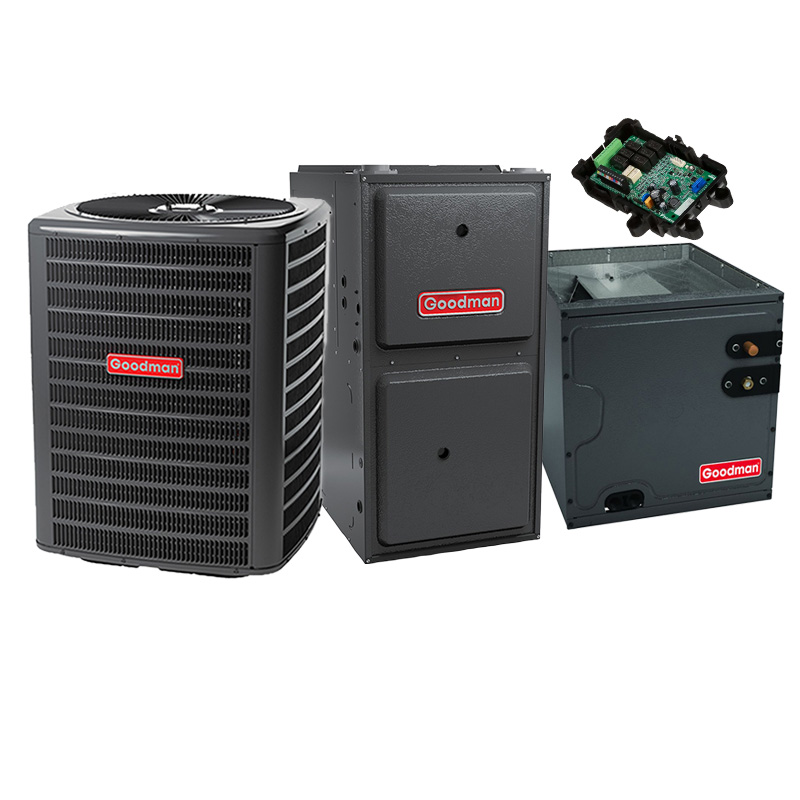
Goodman 5 Ton 13.4 SEER2 100000 BTU 96% AFUE Gas Furnace With R32 Air Condenser and Coil System – Upflow
View on AC Direct see your lowest price →Check current price on AC Direct →
Key features
- 5-ton cooling capacity with 13.4 SEER2 efficiency rating
- 100,000 BTU, 96% AFUE gas furnace for high-efficiency heating
- R-32 refrigerant with lower global warming potential than R-410A
- Upflow configuration designed for basement and crawl-space installs
- Single-stage compressor operation for straightforward, lower-cost cooling
- Factory-matched coil and condenser for simplified system certification
About this system
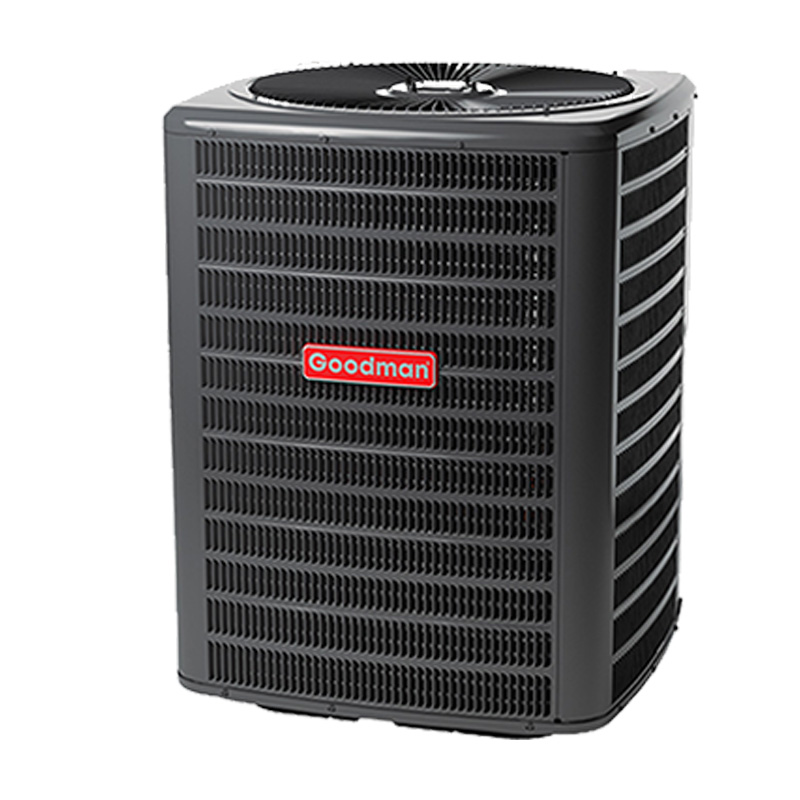
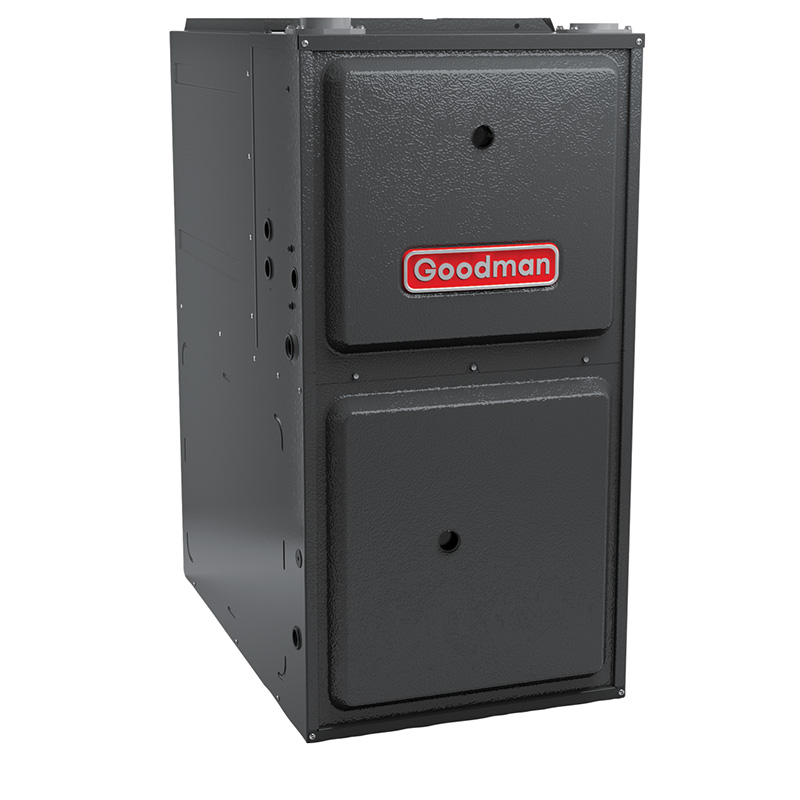
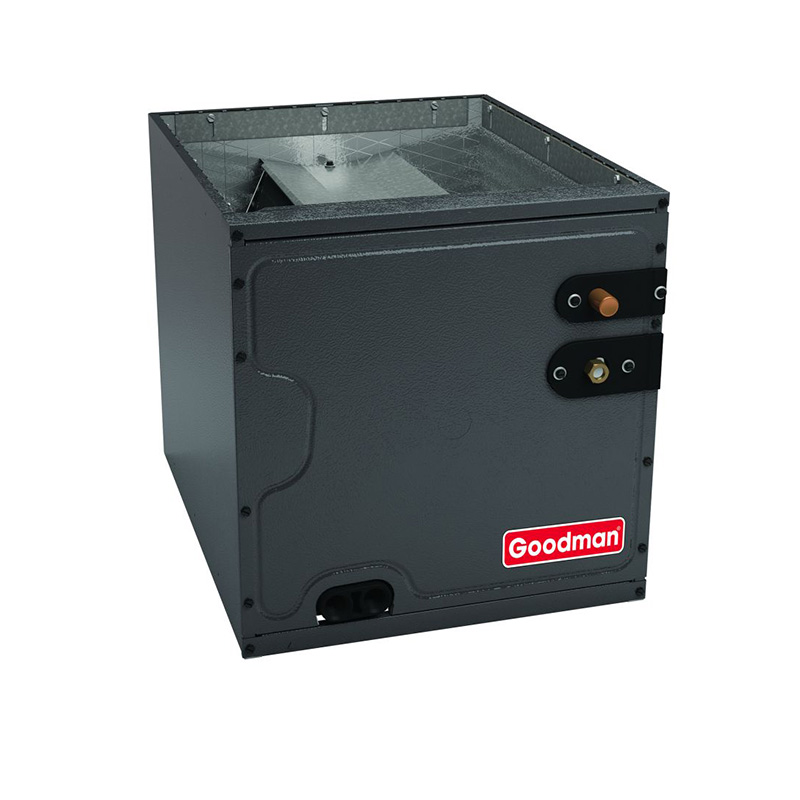
This Goodman bundle pairs a 5-ton, 13.4 SEER2 R-32 air condenser and matched evaporator coil with a 100,000 BTU, 96% AFUE upflow gas furnace. Together they cover larger homes, typically in the 2,500 to 3,500 square-foot range depending on climate zone and insulation, and the upflow configuration suits basement or crawl-space installations where supply air rises through floor registers. The 13.4 SEER2 rating sits at the current federal minimum threshold for new equipment, meaning it clears the bar but does not earn high marks for energy savings on its own. The 96% AFUE furnace is a genuine efficiency highlight: it recovers 96 cents of heat from every dollar of gas burned, which is solidly high-efficiency territory and will reduce heating bills compared with any 80% unit.
R-32 refrigerant is a notable spec here. It carries a lower global warming potential than the R-410A it replaces and is increasingly the industry standard as manufacturers phase out older blends. For homeowners, the practical difference is future serviceability: R-32 systems will be easier and less expensive to recharge as R-410A supplies tighten. Single-stage cooling means the compressor runs at full capacity whenever it runs, which keeps upfront costs down but can leave humidity control feeling less precise than two-stage or variable-speed alternatives on mild days. Buyers trading comfort refinement for budget headroom will find this bundle a reasonable fit; buyers prioritizing humidity control or ultra-quiet operation should weigh the step up.
This Goodman system delivers genuine heating efficiency and current-code cooling at a price point that undercuts comparable Carrier, Trane, and Lennox bundles by roughly 15 to 25 percent. The 96% AFUE furnace is a real asset, but the minimum-threshold 13.4 SEER2 rating and single-stage cooling mean long-term energy savings and comfort refinement are limited. Buyers who invest in quality installation and keep up with capacitor and coil maintenance can get solid value; those expecting premium-brand durability at this price should temper expectations.
Overall score is the average of the five ratings above.
What we like
- 96% AFUE furnace provides high-efficiency heating and real gas bill savings
- R-32 refrigerant improves long-term serviceability as R-410A phases out
- Factory-matched system simplifies installation and equipment certification
- Upfront cost is meaningfully lower than comparably sized Carrier, Trane, or Lennox bundles
- Widely stocked by distributors, making parts and service techs easier to find
Trade-offs
- 13.4 SEER2 is the federal minimum and offers limited cooling efficiency advantage over older systems
- Single-stage cooling provides less precise humidity control on mild or humid days
- Compressor lifespan averages 10 to 14 years, shorter than the 15 to 20 years typical of premium brands
- Documented failure modes include dual-run capacitor failures, evaporator coil leaks, and a minority of refrigerant leaks in the first year that are often tied to install quality
What homeowners and pros say about Goodman
Homeowners who have purchased Goodman equipment tend to sort into two camps fairly quickly. Those who hired experienced installers and kept up with annual maintenance often report years of trouble-free operation and point to the lower purchase price as straightforward savings. Those who ran into problems more frequently cite repair bills that climbed after around year seven, which tracks with what shows up on ConsumerAffairs, where Goodman holds roughly 2.5 out of 5 stars on a channel that skews toward complaint-driven reviews. The recurring frustration there is not catastrophic early failure but rather the accumulation of smaller repair costs, particularly dual-run capacitor replacements and, in a harder-to-predict share of cases, evaporator coil leaks that require more significant service.
HVAC technicians tend to be candid about where Goodman sits in the market. The most common observation is that install quality drives outcomes more for Goodman than it does for Trane or Carrier, where a slightly imperfect install still tends to perform adequately. On a properly charged and correctly sized install, technicians generally expect the compressor on a unit like this to reach somewhere in the 10 to 14 year range before needing attention, which is shorter than the 15 to 20 years that premium-brand compressors often achieve. Google dealer reviews average around 3.8 out of 5 across locations, with affordability cited most often as the reason buyers chose Goodman and with satisfaction tilting positive when the installing contractor is experienced with the brand. The refrigerant leak reports that show up in a minority of first-year reviews are almost universally attributed to charge issues at installation rather than to the equipment itself, which underscores why contractor selection matters as much as brand selection at this price point.
Sources: ConsumerAffairs Goodman owner reviews, AHRI Directory of Certified Product Performance, U.S. DOE appliance and equipment efficiency standards, Goodman product specification sheets.
What it costs to run
At 13.4 SEER2, cooling this 5-ton system for a typical 1200-hour cooling season at the U.S. average electricity rate of $0.17/kWh works out to roughly $913 per year in cooling, about $0 less per year than a minimum-efficiency 13.4 SEER2 unit of the same size. Your real cost depends on your climate and local rate.
Method: (60,000 BTU/hr ÷ 13.4 SEER2) × 1200 hours ÷ 1000 × $0.17/kWh. Rate source: U.S. EIA average; cooling hours: moderate-climate estimate.
How it compares
| Brand | Comparable model | SEER2 | Stage | Price position |
|---|---|---|---|---|
| Goodman | GLXS6BN60 / GMVC96 bundle (this system) | 13.4 | Single-stage | Value pick |
| Carrier | Performance 13 / 14 Series (24ACC / 58STA bundle) | 13.4-14.3 | Single-stage | Typically 15 to 25 percent more than this Goodman bundle |
| Trane | XR13 / S9V2 bundle | 13.4-14.0 | Single-stage | Typically 15 to 25 percent more than this Goodman bundle |
| Lennox | Merit 13ACX / ML196 bundle | 13.4-14.0 | Single-stage | Typically 15 to 25 percent more than this Goodman bundle |
Competitor rows are comparable single-stage units at similar efficiency; price is relative position, not a quote.
Questions about this system
Will a 5-ton system actually be right for my house, or is bigger always better?
Bigger is not always better. An oversized system short-cycles, which reduces humidity removal and increases wear. A proper Manual J load calculation by your installer is the only reliable way to confirm 5 tons is correct; it is appropriate for many larger homes but not a universal fit at that square footage.
What does 13.4 SEER2 mean for my electric bill compared with what I have now?
13.4 SEER2 is the current federal minimum for new equipment in most regions. If you are replacing a system from the early 2000s rated at 10 SEER or below, you will see a meaningful reduction in cooling energy use. If you already have a 14 or 15 SEER system, the difference will be modest.
Is R-32 refrigerant safe and easy to service if the system needs a recharge?
R-32 is mildly flammable, which requires technicians certified for A2L refrigerants, but it is increasingly standard and most HVAC companies are already equipped to handle it. Its lower global warming potential also means it faces fewer supply restrictions going forward, which should keep recharge costs reasonable.
How likely is it that the capacitor or coil will need early replacement, and what does that cost?
Dual-run capacitor failures are the most commonly reported issue across Goodman systems and typically run between 300 and 600 dollars as a service call. Evaporator coil leaks appear in a meaningful share of owner reports and are more expensive to address. Keeping the unit on a maintenance schedule helps catch coil issues before refrigerant is fully lost.
Does Goodman's warranty actually cover parts and labor, or just the equipment itself?
Goodman's registered limited warranty covers parts for an extended period on registered equipment, but labor is not included, which means repair costs after the first year fall on the homeowner or a separate labor warranty purchased through the installer. Always register the equipment promptly after installation to activate the full coverage term.
Specifications
| Cooling capacity | 5 Ton |
| Efficiency | 13.4 SEER2 |
| Furnace output | 100000 BTU |
| Furnace efficiency | 96% AFUE |
| Configuration | Upflow |
| Refrigerant | R-32 |