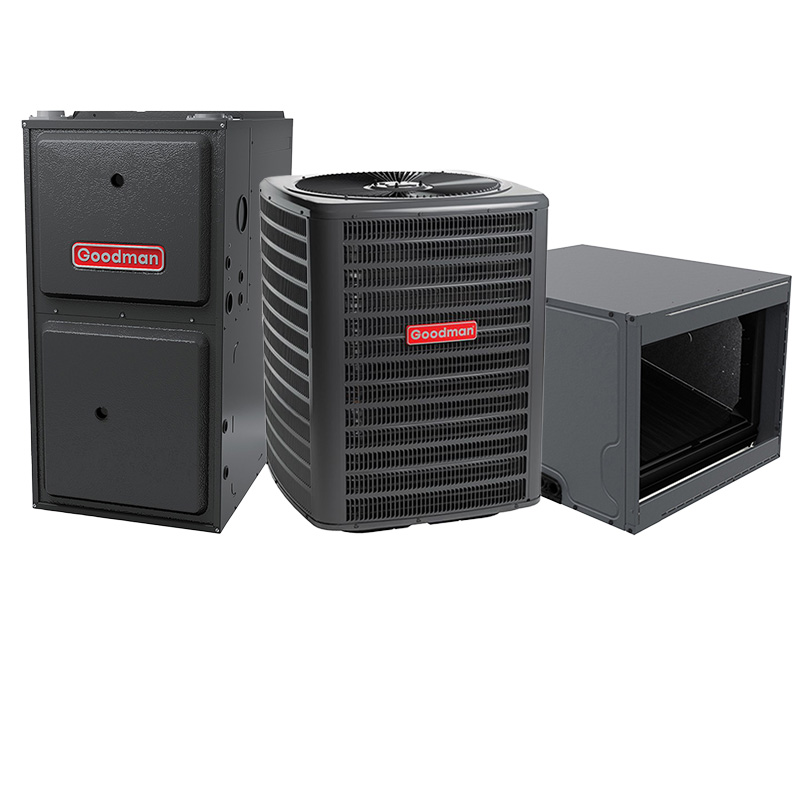
Goodman 5 Ton 13.4 SEER2 120000 BTU 96% AFUE Multi-Speed ECM Gas Furnace System – Horizontal | R32
View on AC Direct see your lowest price →Check current price on AC Direct →
Key features
- 5-ton capacity with 13.4 SEER2 cooling efficiency, meeting current federal minimum standards
- 120,000 BTU, 96% AFUE condensing gas furnace for high-efficiency heating with minimal flue losses
- Horizontal configuration designed for attic, crawlspace, and side-installation applications
- Multi-speed ECM blower motor reduces electrical draw and improves comfort over single-speed PSC units
- R-32 refrigerant with lower global warming potential than legacy R-410A systems
- Goodman factory warranty covers the compressor and heat exchanger, with parts coverage on registered units
About this system
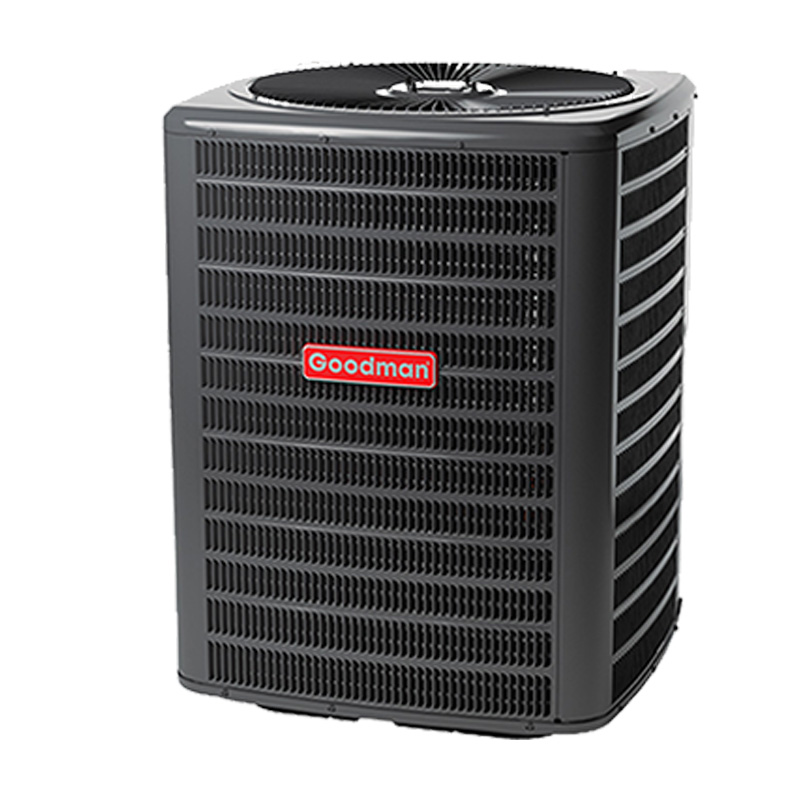
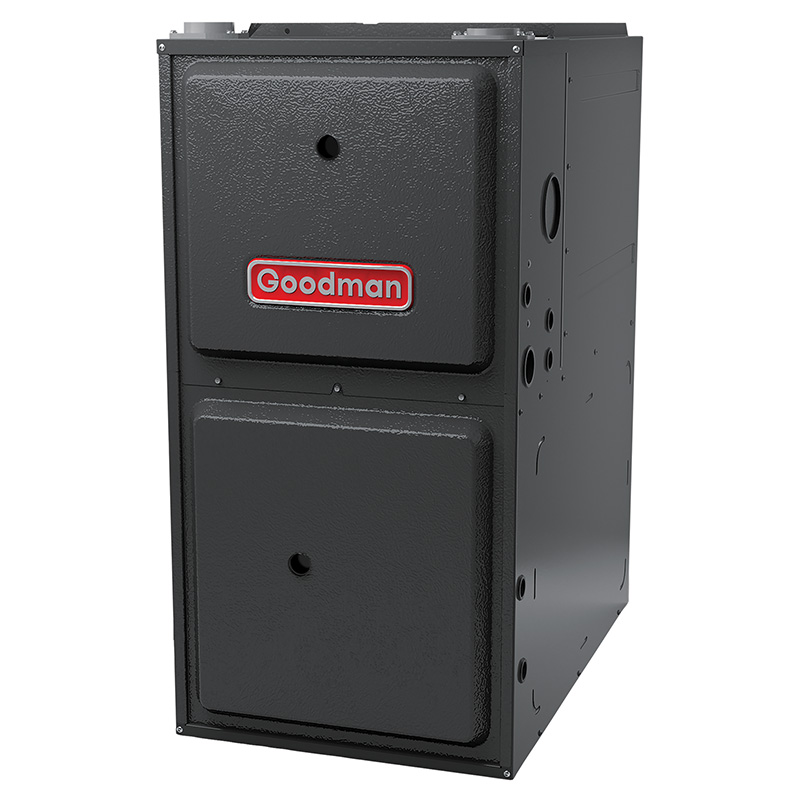
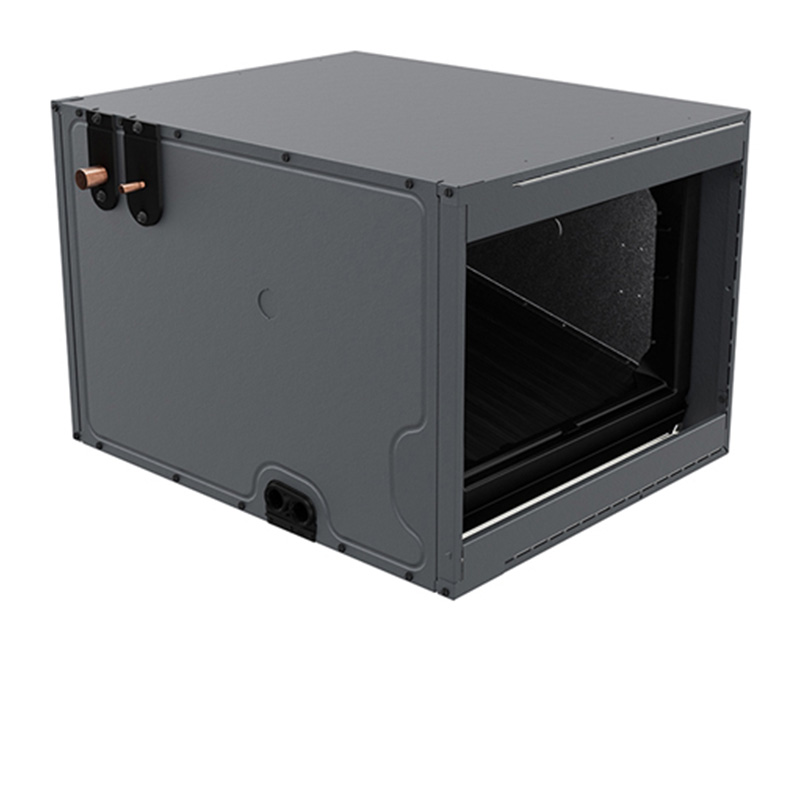
This Goodman five-ton, 13.4 SEER2 combination system pairs a 120,000 BTU, 96% AFUE gas furnace with a horizontal-configuration air handler and an R-32 refrigerant-based condensing unit. The horizontal layout is specifically built for attic, crawlspace, or side-closet installations where vertical clearance is limited, making it a practical choice for ranch-style homes, mobile homes, or any structure where a standard upflow furnace simply will not fit. At five tons it is sized for larger spaces, typically homes in the 2,400 to 3,200 square foot range depending on local climate, insulation quality, and window load.
The 96% AFUE rating means only four cents of every dollar spent on gas is lost as exhaust, which puts this furnace solidly in the high-efficiency condensing tier and qualifies it for many utility rebate programs. The multi-speed ECM (electronically commutated motor) blower reduces electricity consumption compared to a standard PSC motor and allows the system to ramp airflow up or down based on demand rather than running at one fixed speed. R-32 refrigerant has a lower global warming potential than the R-410A it replaces, and the higher pressure characteristics of R-32 mean contractors handling this system need specific training and equipment. Buyers should confirm their installing technician is certified and equipped for R-32 before scheduling the job.
This system delivers solid, code-compliant efficiency at a price point meaningfully below Carrier, Trane, and Lennox equivalents, making it a legitimate option for budget-conscious buyers who prioritize upfront cost. The horizontal configuration fills a real gap for homes where vertical installation is not possible, and the 96% AFUE furnace is genuinely efficient. The trade-off is a brand track record that shows higher-than-average repair frequency after year seven and documented failure modes that buyers should factor into long-term cost estimates.
Overall score is the average of the five ratings above.
What we like
- Priced 15 to 25 percent below comparable premium-brand systems, reducing upfront cost substantially on a large five-ton install
- 96% AFUE condensing furnace qualifies for utility rebates in many regions and cuts seasonal heating bills versus 80% AFUE alternatives
- Horizontal configuration is one of the few options for attic and crawlspace installations at this capacity
- ECM multi-speed blower improves comfort, reduces fan energy use, and supports better humidity control compared to fixed-speed motors
- R-32 refrigerant future-proofs the system as R-410A phases down under EPA regulations
Trade-offs
- Dual-run capacitors are the most frequently reported failure point across owner reviews, typically requiring a service call within the first decade
- Evaporator coil leaks appear in a notable share of owner reports, a failure mode that can be expensive and disruptive to repair
- Compressor lifespan averages 10 to 14 years in documented experience, shorter than the 15 to 20 years commonly seen on premium-brand compressors
- R-32 requires specifically trained and equipped technicians, narrowing your pool of qualified service contractors in some markets
What homeowners and pros say about Goodman
Homeowners researching Goodman online encounter a wide gap between two review channels, and understanding why matters for setting expectations on this system. On ConsumerAffairs, Goodman scores around 2.5 out of 5, a figure that reflects the complaint-heavy nature of that platform and a recurring pattern of repair costs rising after roughly year seven of ownership. Google dealer reviews tell a different story, averaging around 3.8 out of 5 across locations, where affordability and contractor responsiveness draw the most consistent praise. For a five-ton horizontal system like this one, the upfront savings versus a Trane or Carrier equivalent are real and meaningful, but they come with the understanding that Goodman’s documented failure modes are worth planning around rather than dismissing.
HVAC technicians who work on Goodman equipment regularly point to the dual-run capacitor as the brand’s most predictable repair call, a component that typically runs $300 to $600 to replace and often surfaces within the first decade. Evaporator coil leaks appear in a meaningful share of owner accounts and represent a more involved repair. Compressor longevity is the sharpest long-term concern: reported experience puts Goodman compressors at an average of 10 to 14 years, compared to 15 to 20 years for premium brands, a difference that can affect the total cost of ownership calculation considerably on a large system like this. Installers consistently emphasize that proper commissioning, correct refrigerant charge, and clean ductwork connections matter more with Goodman than with more forgiving premium equipment, because the margin for sloppy installation is narrower when the components are already leaning toward the budget end of the spectrum.
Sources: ConsumerAffairs Goodman owner reviews, AHRI Directory of Certified Product Performance, U.S. DOE appliance and equipment efficiency standards, Goodman product specification sheets.
What it costs to run
At 13.4 SEER2, cooling this 5-ton system for a typical 1200-hour cooling season at the U.S. average electricity rate of $0.17/kWh works out to roughly $913 per year in cooling, about $0 less per year than a minimum-efficiency 13.4 SEER2 unit of the same size. Your real cost depends on your climate and local rate.
Method: (60,000 BTU/hr ÷ 13.4 SEER2) × 1200 hours ÷ 1000 × $0.17/kWh. Rate source: U.S. EIA average; cooling hours: moderate-climate estimate.
How it compares
| Brand | Comparable model | SEER2 | Stage | Price position |
|---|---|---|---|---|
| Goodman | 5-Ton 13.4 SEER2 / 120,000 BTU 96% AFUE Horizontal ECM System (R-32) | 13.4 | Multi-speed | Value pick |
| Carrier | Performance 13 / 14 Series (24ACC6 condensing unit with 58TP furnace) | 13.4-14.0 | Single-stage | Typically 15 to 25 percent more than Goodman |
| Trane | XR13 / XR15 Series (XR condensing unit with S9X1 furnace) | 13.4-15.0 | Single-stage | Typically 15 to 25 percent more than Goodman |
| Lennox | Merit Series (13ACX condensing unit with ML196 furnace) | 13.4-14.0 | Single-stage | Typically 15 to 25 percent more than Goodman |
Competitor rows are comparable single-stage units at similar efficiency; price is relative position, not a quote.
Questions about this system
Is 13.4 SEER2 efficient enough to qualify for federal or utility rebates?
13.4 SEER2 meets the current federal minimum for most northern U.S. climate zones, so it satisfies code but may fall just below the SEER2 thresholds required for some utility rebate programs, which often start at 15 or higher. The 96% AFUE furnace is more likely to qualify for gas-utility heating rebates, so check your local utility's specific requirements before purchasing.
Can any HVAC contractor install this system, or does R-32 require special certification?
R-32 requires technicians to have specific training and equipment because it operates at higher pressures than R-410A and has different flammability characteristics. Not all contractors are currently equipped for R-32 service, so confirming your installer's certification before committing to this system is essential, particularly for future service calls.
What does the horizontal configuration mean, and how do I know if my home needs it?
Horizontal means the air handler is oriented on its side, with airflow moving horizontally through the unit rather than upward or downward. This is designed for installations in low-clearance attics, crawlspaces, or utility closets where a standard upflow or downflow furnace would not physically fit. If your current system is already horizontal or your equipment space is tight, this configuration is likely appropriate.
Goodman has mixed reviews online. What are the most common problems I should budget for?
The most frequently documented failure mode is the dual-run capacitor, which typically costs $300 to $600 to diagnose and replace and is a common repair across the brand's product line. Evaporator coil leaks appear in a meaningful share of owner reviews and are more expensive to address. Compressor lifespans average 10 to 14 years based on reported experience, which is shorter than premium competitors, so budgeting for a potential compressor replacement or system replacement in that timeframe is realistic planning.
Does Goodman's warranty on this system require professional registration, and what does it actually cover?
Yes, Goodman's full warranty terms, including extended parts coverage on the compressor and heat exchanger, are conditional on registering the unit within a set window after installation, typically through the Goodman website or your contractor. Without registration, coverage reverts to a shorter base warranty, so confirming registration happens immediately after install is important. Parts coverage does not include labor, which is a meaningful out-of-pocket cost if a repair is needed outside a service agreement.
Specifications
| Cooling capacity | 5 Ton |
| Efficiency | 13.4 SEER2 |
| Furnace output | 120000 BTU |
| Furnace efficiency | 96% AFUE |
| Configuration | Horizontal |
| Refrigerant | R-32 |