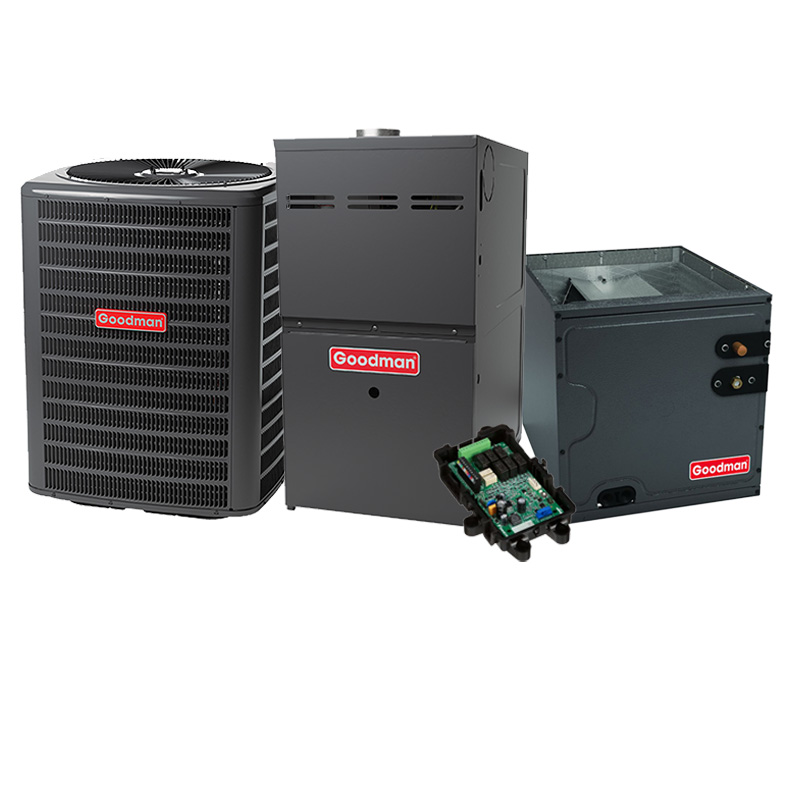
Goodman 5 Ton 13.4 SEER2 60000 BTU 80% Two-Stage Variable Speed Gas Furnace With R32 AC Condenser And Coil System – Horizontal
View on AC Direct see your lowest price →Check current price on AC Direct →
Key features
- 5-ton cooling capacity with 13.4 SEER2 efficiency rating under the current federal test standard
- 60,000 BTU two-stage gas furnace at 80% AFUE for steadier heat output on mild days
- Variable-speed blower motor for quieter operation and improved humidity management
- Horizontal cabinet configuration for crawl space, attic, or side-discharge installations
- R-32 refrigerant with lower global warming potential than outgoing R-410A systems
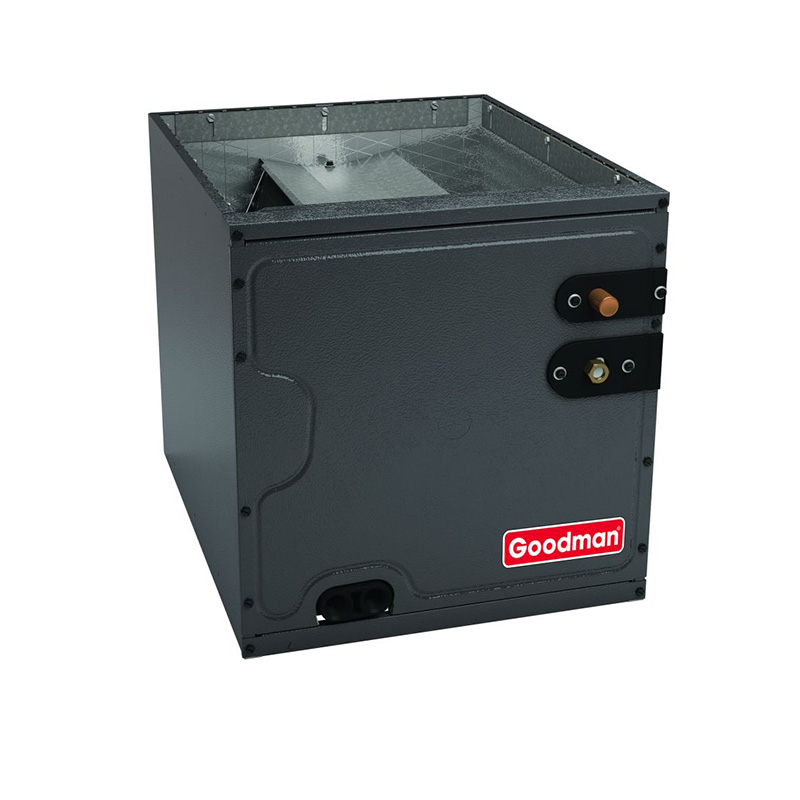
- Matched evaporator coil included, factory-tested for compatibility with condenser and furnace
About this system
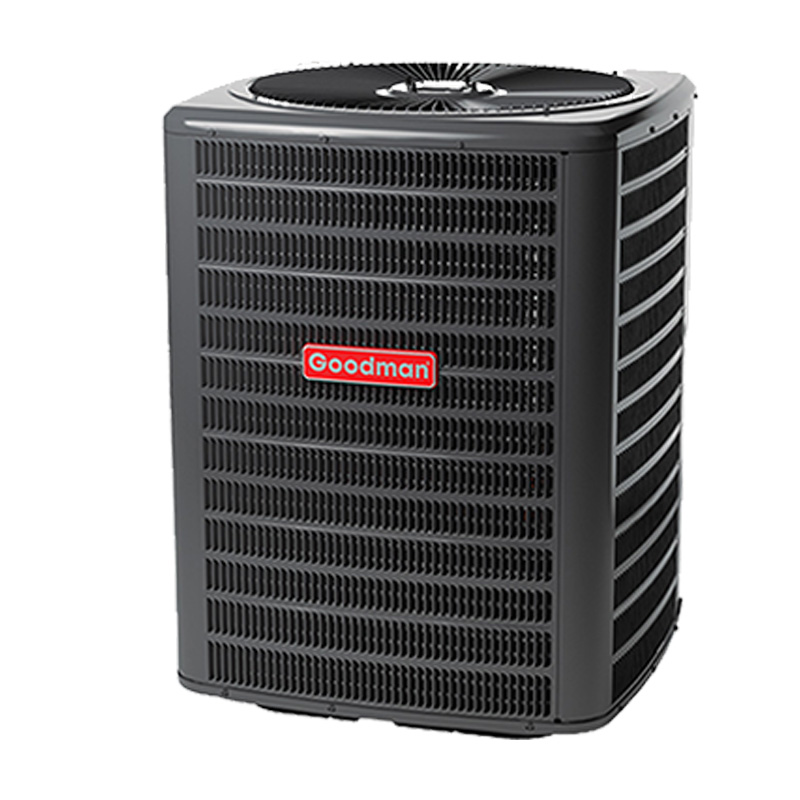
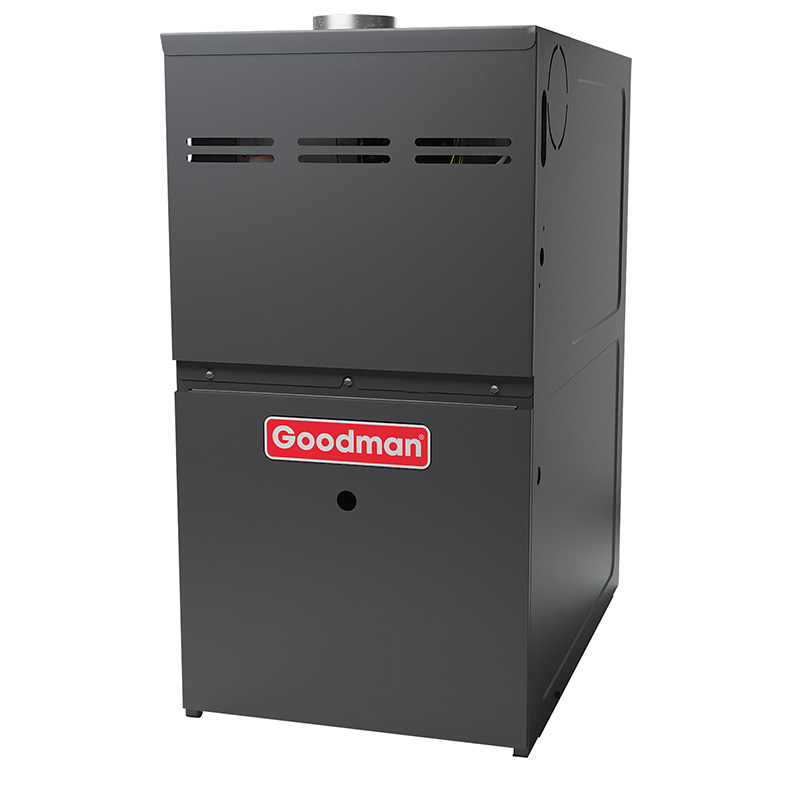
This Goodman horizontal system pairs a 5-ton, 13.4 SEER2 R-32 air conditioner condenser and matched evaporator coil with a 60,000 BTU, 80% AFUE two-stage, variable-speed gas furnace. The horizontal configuration is specifically suited to homes where the air handler lives in a crawl space, attic, or utility closet that cannot accommodate an upflow or downflow cabinet. If your ductwork enters and exits the unit from the side rather than the top or bottom, this is the orientation you need, and choosing the wrong one is a costly mistake to fix after installation.
The two-stage furnace and variable-speed blower are the standout specs here. Two-stage heating means the furnace runs at a lower capacity on milder days, cycling less often and maintaining steadier temperatures than a single-stage unit. The variable-speed blower adjusts airflow continuously, which improves humidity control in summer and reduces the temperature swings and noise associated with older on-off fans. R-32 refrigerant carries a lower global warming potential than the R-410A it is replacing across the industry, and it is the direction most manufacturers are heading, so parts availability should hold up well over the system’s life. At 13.4 SEER2, efficiency sits at the federal minimum tier for larger split systems, which is honest to acknowledge: operating costs will be higher than a 16 or 17 SEER2 system, and the gap grows noticeably in climates with long cooling seasons.
This system is a practical fit for homeowners replacing aging equipment in houses with existing horizontal ductwork, particularly those working within a tighter budget who still want the comfort upgrade of two-stage operation. Larger homes in the 2,200 to 2,800 square foot range with moderate cooling loads in mixed climates are where a 5-ton, 80% AFUE combination tends to make sense. If you are in a very hot climate and run the air conditioner six or more months a year, the efficiency gap relative to higher SEER2 options becomes harder to ignore over a ten-year ownership window.
This Goodman horizontal system delivers a genuine comfort upgrade over single-stage equipment at a price point that undercuts comparable Carrier, Trane, and Lennox systems by 15 to 25 percent. The two-stage furnace and variable-speed blower are real benefits, but 13.4 SEER2 is the lowest efficiency tier available, and Goodman's documented repair history after year seven means budgeting for maintenance is not optional. For buyers who need horizontal configuration and have a firm budget, it earns its place; for those in hot climates or who want premium longevity, the trade-offs deserve careful consideration.
Overall score is the average of the five ratings above.
What we like
- Two-stage furnace operation reduces temperature swings and short-cycling compared to single-stage units
- Variable-speed blower improves summer dehumidification and runs noticeably quieter at low stage
- Horizontal orientation directly solves an installation constraint that most other configurations cannot
- R-32 refrigerant positions the system with current industry direction, supporting future serviceability
- Purchase price runs 15 to 25 percent below comparable Carrier, Trane, and Lennox systems
Trade-offs
- 13.4 SEER2 is the federal minimum efficiency tier, meaning higher operating costs than mid- or high-efficiency alternatives over the system's life
- Dual-run capacitor failures are the most commonly documented repair, typically arising within the first several years and costing 300 to 600 dollars to fix
- Evaporator coil refrigerant leaks appear in a meaningful share of owner accounts and can become costly repairs outside the warranty window
- Compressor lifespan averages 10 to 14 years versus 15 to 20 years for premium brand compressors, shortening the expected replacement cycle
What homeowners and pros say about Goodman
Homeowners who have lived with Goodman equipment share a fairly consistent picture. On Google dealer reviews, where the brand averages around 3.8 out of 5 across installer locations, the most frequent praise centers on the initial cost and the fact that the units work as expected when a skilled technician handles the installation. The flip side shows up on ConsumerAffairs, where Goodman sits at roughly 2.5 out of 5, and the recurring complaint is repair bills that start climbing after about seven years of service. For this horizontal system specifically, buyers should know that dual-run capacitor failure is the most commonly documented repair across the Goodman line, typically a straightforward fix in the 300 to 600 dollar range but one that appears with some frequency. Evaporator coil refrigerant leaks are a more serious concern reported in owner accounts, and they are worth discussing with your installer before deciding on a service plan.
HVAC technicians tend to view Goodman with a certain pragmatism. They acknowledge the value the brand delivers at purchase and are generally familiar with the parts, which are widely available. The caution they consistently raise is that installation quality determines outcomes more with Goodman than with premium brands, because the tolerances for improper refrigerant charge and poor startup procedures appear tighter. The compressor lifespan data supports some of that concern: Goodman compressors tend to average 10 to 14 years in the field, compared to 15 to 20 years for Carrier, Trane, and Lennox equivalents. For this two-stage, variable-speed horizontal system, the advice from experienced installers is consistent: hire a contractor who will verify charge by weight, pressure test the coil before startup, and register the warranty on your behalf. Those steps do not guarantee a trouble-free run, but they close the gap between what Goodman can deliver at its best and what the complaint channels suggest happens at its worst.
Sources: ConsumerAffairs Goodman owner reviews, AHRI Directory of Certified Product Performance, U.S. DOE appliance and equipment efficiency standards, Goodman product specification sheets.
What it costs to run
At 13.4 SEER2, cooling this 5-ton system for a typical 1200-hour cooling season at the U.S. average electricity rate of $0.17/kWh works out to roughly $913 per year in cooling, about $0 less per year than a minimum-efficiency 13.4 SEER2 unit of the same size. Your real cost depends on your climate and local rate.
Method: (60,000 BTU/hr ÷ 13.4 SEER2) × 1200 hours ÷ 1000 × $0.17/kWh. Rate source: U.S. EIA average; cooling hours: moderate-climate estimate.
How it compares
| Brand | Comparable model | SEER2 | Stage | Price position |
|---|---|---|---|---|
| Goodman | 5 Ton 13.4 SEER2 Two-Stage Variable Speed Horizontal System | 13.4 | Two-stage | Value pick |
| Carrier | Comfort Series (24ACC636) | 13.4 | Single-stage | Typically 15 to 25 percent more than the Goodman |
| Trane | XR13 Series | 13.4 | Single-stage | Typically 15 to 25 percent more than the Goodman |
| Lennox | Merit Series ML14XC1 | 13.4 | Single-stage | Typically 15 to 25 percent more than the Goodman |
Competitor rows are comparable single-stage units at similar efficiency; price is relative position, not a quote.
Questions about this system
Why does this system have to be installed horizontally, and can I install it upflow instead?
The furnace cabinet in this configuration is designed with drain pan orientation, flue connections, and airflow direction set up for horizontal operation. Installing it in an upflow or downflow position would compromise drainage, potentially void the warranty, and could create safety issues with the venting. If your mechanical room allows a vertical unit, you would need to order the correct cabinet orientation from Goodman's lineup.
Is 13.4 SEER2 going to cost me significantly more to run than a higher-efficiency system?
Yes, the gap is real. Compared to a 16 SEER2 system of the same tonnage, you can expect meaningfully higher annual cooling costs, with the difference growing in climates where the air conditioner runs heavily from May through September. The upfront savings on the unit purchase can offset that over time in moderate climates, but in hot regions the payback math often favors spending more upfront for higher efficiency.
What does the two-stage furnace actually change in day-to-day comfort compared to a single-stage unit?
On most days the furnace runs at its lower stage, which means longer, quieter cycles that maintain more even temperatures throughout the house rather than blasting heat and shutting off. It only steps up to full capacity on the coldest days. Combined with the variable-speed blower, most homeowners notice fewer cold spots and less noise than they experienced with older single-stage equipment.
Goodman's ConsumerAffairs ratings are low. Should I be worried about reliability?
Goodman scores around 2.5 out of 5 on ConsumerAffairs, which is a complaint-heavy channel, and around 3.8 out of 5 on Google dealer reviews where affordability is frequently praised. The documented failure points to plan for are dual-run capacitor failures, which are common but inexpensive to fix at 300 to 600 dollars, and evaporator coil refrigerant leaks, which are more serious. Repair frequency does appear to climb after roughly year seven according to owner accounts, so a service agreement after the factory warranty ends is worth considering.
Does this system come with a warranty, and what does it actually cover?
Goodman typically offers a 10-year parts warranty on registered systems, covering components including the compressor, heat exchanger, and coil. Registration must be completed within a specified window after installation to qualify for the full term; unregistered units typically receive a shorter coverage period. The warranty covers parts but not labor, so out-of-pocket repair costs still apply for service calls, which is a real consideration given the documented capacitor and coil failure modes.
Specifications
| Cooling capacity | 5 Ton |
| Efficiency | 13.4 SEER2 |
| Furnace output | 60000 BTU |
| Configuration | Horizontal |
| Refrigerant | R-32 |