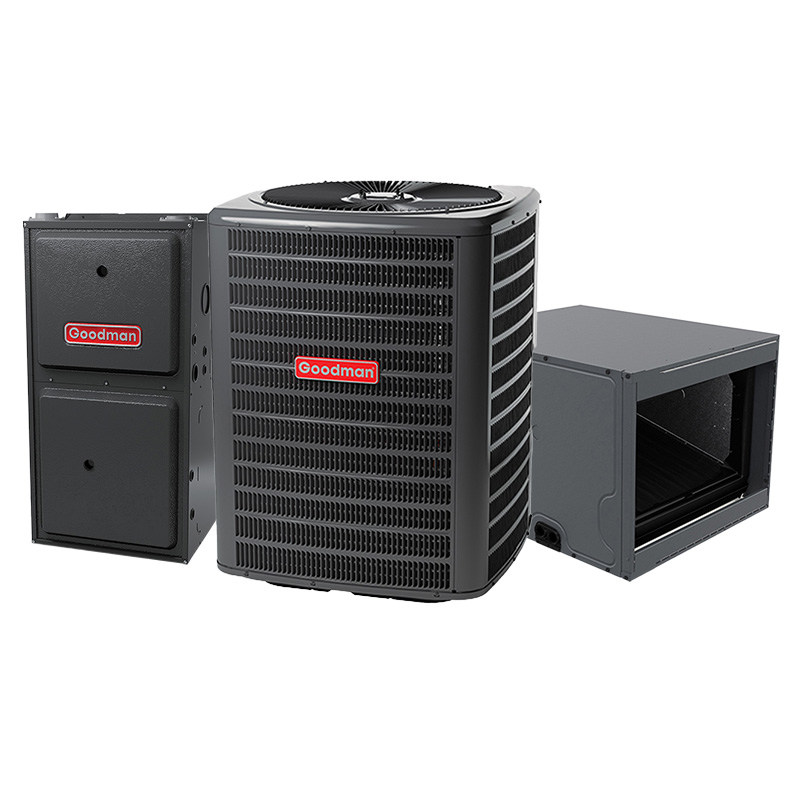
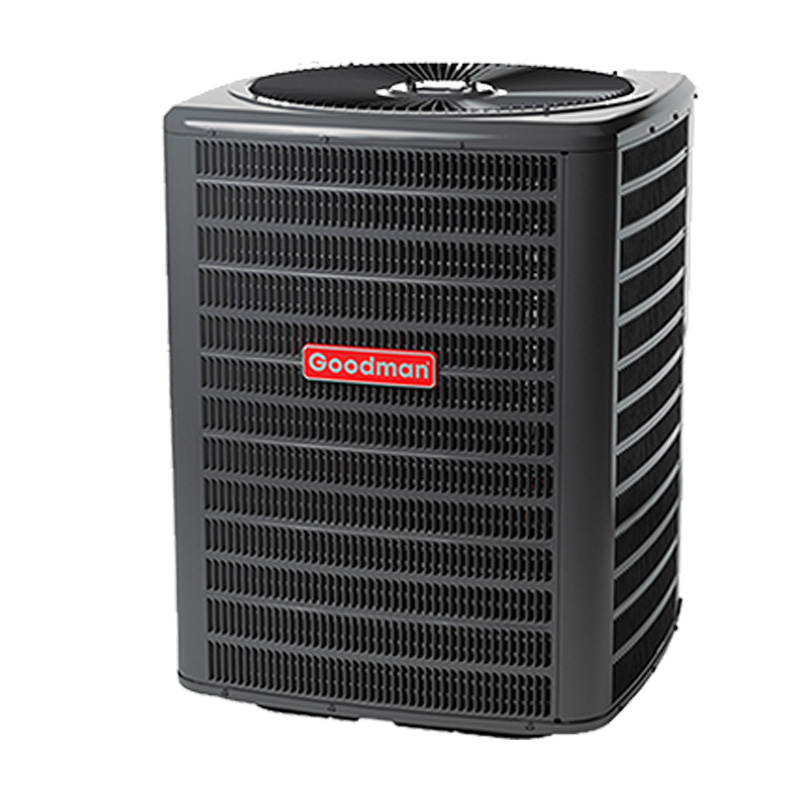
Goodman 5 Ton 13.4 SEER2 AC With 100000 BTU 96% AFUE 2-Stage Variable-Speed ECM Gas Furnace System – Horizontal | R32
View on AC Direct see your lowest price →Check current price on AC Direct →
Key features
- 5-ton cooling capacity with 13.4 SEER2 efficiency rating
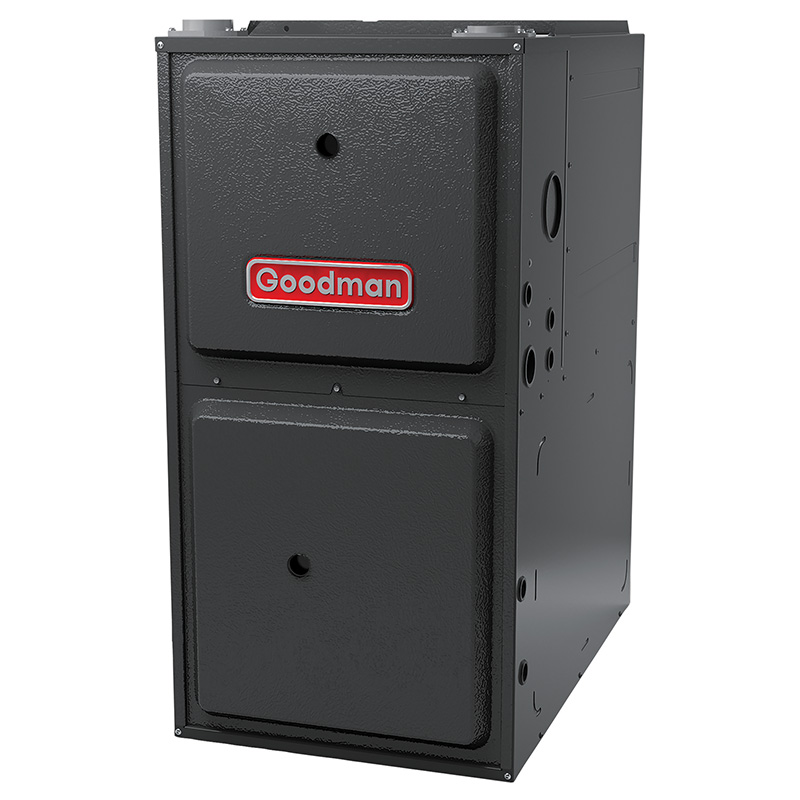
- 100,000 BTU 96% AFUE 2-stage gas furnace for precise heating control
- Variable-speed ECM blower motor for quieter, more consistent airflow
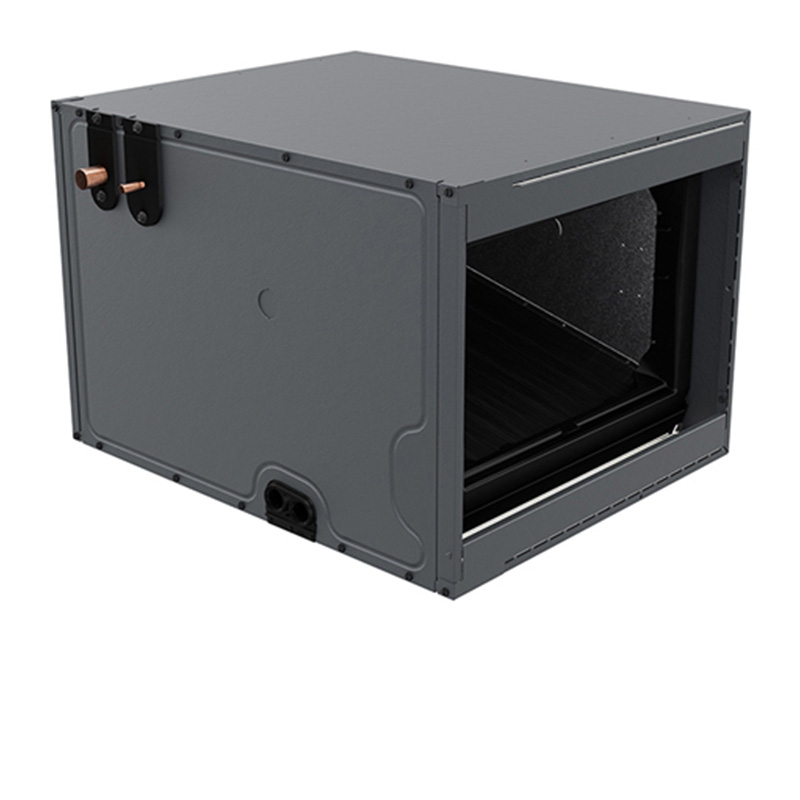
- Horizontal configuration designed for attic or crawlspace installations
- R-32 refrigerant with lower global warming potential than R-410A
- 2-stage furnace operation reduces temperature swings and fuel use on mild days
About this system
This Goodman 5-ton combination system pairs a 13.4 SEER2 air conditioner with a 96% AFUE, 2-stage, variable-speed ECM gas furnace in a horizontal configuration, making it a practical fit for attic installs, crawlspace setups, or any application where a vertical cabinet simply will not fit. The R-32 refrigerant charge is a forward-looking choice: R-32 has a lower global warming potential than the R-410A it replaces and is increasingly common as the industry moves away from older refrigerants. At 5 tons and 100,000 BTU of heating output, this system is sized for larger homes, typically in the 2,400 to 3,000 square-foot range depending on climate zone, insulation, and local load calculations.
The 2-stage furnace operation means the system runs at a lower firing rate on mild days and steps up only when demand calls for it, which improves comfort, reduces temperature swings, and keeps fuel bills lower than a single-stage unit of equal AFUE. The variable-speed ECM blower motor reinforces that efficiency story on the air-handler side, running slowly and quietly for long stretches rather than blasting on and off. That said, 13.4 SEER2 sits at the regulatory minimum tier for most regions, so efficiency-focused buyers in hot climates may want to weigh the value of a higher-SEER2 option before committing. This system suits buyers who prioritize upfront savings and need a horizontal-specific package that a premium brand would price considerably higher.
This system offers a solid feature set at a price point that undercuts comparable Trane, Lennox, and Carrier equipment by 15 to 25 percent, making it a reasonable choice for budget-conscious buyers who understand they are trading some long-term reliability headroom for upfront savings. The 2-stage furnace and ECM blower are genuine comfort upgrades over single-stage alternatives at this price tier, but Goodman's documented failure patterns, particularly around capacitors, evaporator coil leaks, and compressor longevity, mean the true cost of ownership depends heavily on how well the system is installed and maintained. Buyers who secure a skilled installer and budget for periodic service calls will get considerably more out of this system than those who treat it as set-and-forget.
Overall score is the average of the five ratings above.
What we like
- Priced 15 to 25 percent below comparable premium-brand systems for equivalent features
- 2-stage furnace firing reduces fuel consumption and improves temperature consistency
- Variable-speed ECM blower runs quietly and supports better humidity control
- R-32 refrigerant is more environmentally responsible than R-410A and increasingly well-supported by technicians
- Horizontal configuration is purpose-built for attic and crawlspace installs where vertical units cannot be used
Trade-offs
- Compressor lifespan averages 10 to 14 years versus 15 to 20 years for premium brands, raising long-term replacement cost questions on a 5-ton unit
- Dual-run capacitor failures are the most commonly reported issue, and while repairs are relatively low cost, they add up over time
- Evaporator coil leaks appear in a meaningful share of owner reports and can be expensive to address
- 13.4 SEER2 is the minimum efficiency tier and may result in higher operating costs compared to higher-SEER2 alternatives in hot or cooling-dominated climates
What homeowners and pros say about Goodman
Homeowners who post about Goodman tend to split along a clear fault line. Those whose installs went smoothly and who perform routine maintenance often report years of trouble-free operation and point to the lower purchase price as a genuine win. Those who run into problems frequently cite repair costs that felt disproportionate to the original savings, a pattern that aligns with Goodman’s ConsumerAffairs score of roughly 2.5 out of 5, a complaint-heavy channel where frustration with post-warranty repair expenses is the recurring thread. Google dealer reviews tell a more balanced story, averaging around 3.8 out of 5 across hundreds of reviews per location, with affordability cited most often as the reason buyers chose Goodman in the first place.
HVAC technicians tend to have a nuanced view of the brand. Many note that the most commonly documented failure point, the dual-run capacitor, is an inexpensive and quick repair rather than a catastrophic one, typically running $300 to $600 with labor. More costly are evaporator coil leaks, which appear in a meaningful share of owner reports and can require significant labor and refrigerant charges to resolve. Compressor longevity is the longer-term concern pros raise most often: Goodman compressors tend to average 10 to 14 years in field experience, compared to 15 to 20 years for premium-brand competitors, which matters more on a 5-ton unit where replacement costs are higher. The consistent professional advice is that a careful, experienced install and a willingness to service the system on schedule are the two factors that most determine whether a Goodman unit performs closer to its potential or toward the lower end of owner experience.
Sources: ConsumerAffairs Goodman owner reviews, AHRI Directory of Certified Product Performance, U.S. DOE appliance and equipment efficiency standards, Goodman product specification sheets.
What it costs to run
At 13.4 SEER2, cooling this 5-ton system for a typical 1200-hour cooling season at the U.S. average electricity rate of $0.17/kWh works out to roughly $913 per year in cooling, about $0 less per year than a minimum-efficiency 13.4 SEER2 unit of the same size. Your real cost depends on your climate and local rate.
Method: (60,000 BTU/hr ÷ 13.4 SEER2) × 1200 hours ÷ 1000 × $0.17/kWh. Rate source: U.S. EIA average; cooling hours: moderate-climate estimate.
How it compares
| Brand | Comparable model | SEER2 | Stage | Price position |
|---|---|---|---|---|
| Goodman | This system (5T 13.4 SEER2 / 96% AFUE 2-Stage ECM Horizontal R-32) | 13.4 | Two-stage furnace / single-stage AC | Value pick |
| Carrier | Performance 13 (24ACC3) with 58TP 96% AFUE furnace | 13.4 | Single-stage | Typically 15 to 25 percent more than this Goodman system |
| Trane | XR13c with S9V2 96% AFUE furnace | 13.4 | Single-stage | Typically 15 to 25 percent more than this Goodman system |
| Lennox | Merit 13ACX with ML196 96% AFUE furnace | 13.4 | Single-stage | Typically 15 to 25 percent more than this Goodman system |
Competitor rows are comparable single-stage units at similar efficiency; price is relative position, not a quote.
Questions about this system
Why does this system use R-32 refrigerant and will it be hard to service?
R-32 is a single-component refrigerant with a lower global warming potential than R-410A, and it is becoming standard as the HVAC industry phases out older blends. Most certified HVAC technicians are already equipped or quickly becoming equipped to handle R-32, so service availability is not a significant concern in most metro and suburban markets.
Is a horizontal configuration the same system as a standard upflow unit, just installed on its side?
No. Horizontal-specific air handlers and furnaces are designed and certified for horizontal orientation, with drain pan placement, heat exchanger positioning, and airflow engineered for that install direction. You should not install a standard upflow furnace on its side; use the horizontal-rated unit as listed here.
What are the most likely repair costs I should budget for over the first 10 years?
Dual-run capacitor replacement is the most commonly reported Goodman failure and typically costs between $300 and $600 including labor. Refrigerant leaks, particularly evaporator coil issues, are a secondary concern and can run substantially higher depending on whether the coil needs to be replaced. Budgeting for one or two service calls beyond routine maintenance in the first decade is a realistic expectation.
Does the 2-stage furnace actually save money compared to a single-stage 96% AFUE unit?
Both carry the same 96% AFUE rating, but the 2-stage unit runs at a lower firing rate during milder weather rather than cycling fully on and off, which reduces short-cycling losses and can improve comfort. Real-world fuel savings compared to a single-stage unit are modest but measurable, and the comfort improvement from reduced temperature swings is generally more noticeable than the gas bill difference.
What warranty does Goodman provide on this system and is there anything I need to do to activate it?
Goodman typically offers a 10-year parts limited warranty on registered equipment, but registration must be completed within a set window after installation, usually 60 days, to receive the full term rather than a shorter unregistered default. It is important to confirm registration requirements at time of install and to keep documentation, since warranty claims on items like the compressor or heat exchanger depend on that record being in place.
Specifications
| Cooling capacity | 5 Ton |
| Efficiency | 13.4 SEER2 |
| Furnace output | 100000 BTU |
| Furnace efficiency | 96% AFUE |
| Configuration | Horizontal |
| Refrigerant | R-32 |