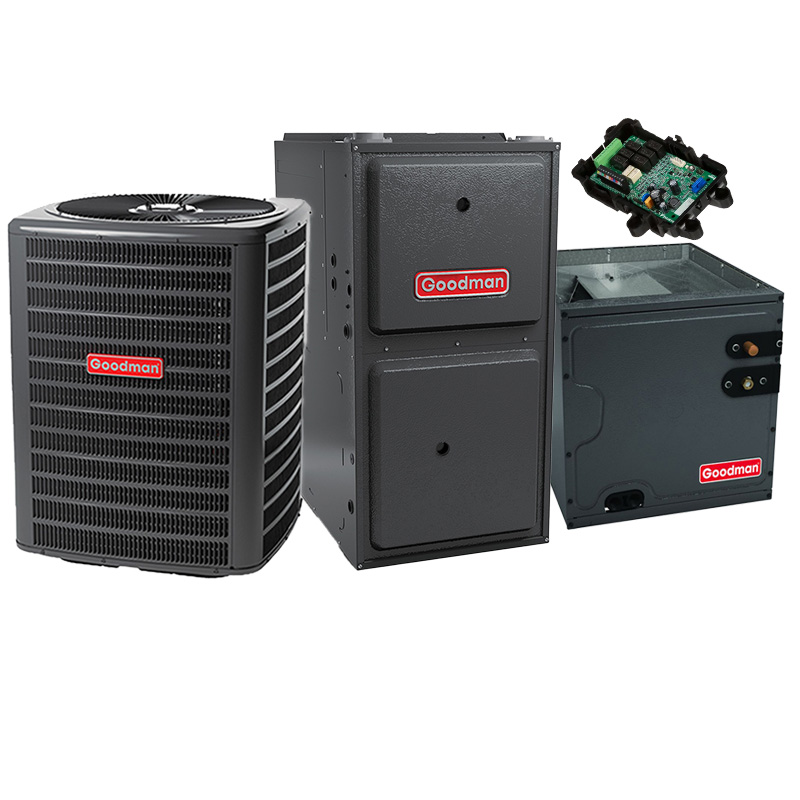
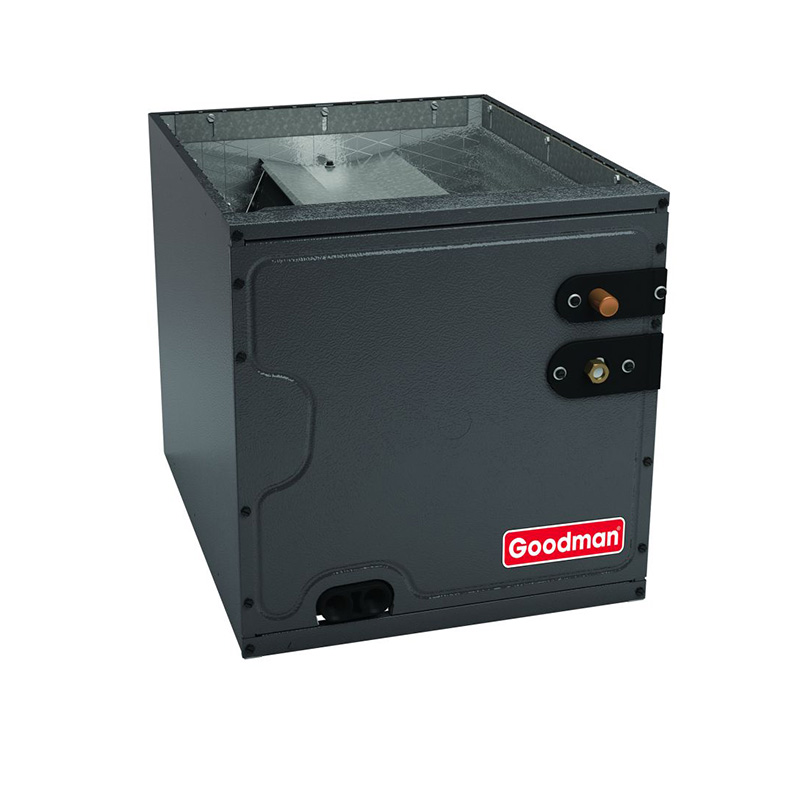
Goodman 5 Ton 13.6 SEER2 100000 BTU 96% AFUE Two-Stage Gas Furnace With R32 Air Condenser and Coil System – Upflow
View on AC Direct see your lowest price →Check current price on AC Direct →
Key features
- 5-ton cooling capacity suited for larger homes, roughly 2,500 to 3,500 sq ft depending on climate and insulation
- 13.6 SEER2 efficiency rating meets current federal standards with room above the minimum floor
- 96% AFUE two-stage gas furnace converts 96 cents of every fuel dollar into heat
- R-32 refrigerant with lower global warming potential than R-410A, aligned with current EPA phase-down rules
- Two-stage furnace operation reduces short-cycling, improves humidity control, and lowers wear on components
- Upflow cabinet design compatible with basement or closet installations where supply ducts run overhead
About this system
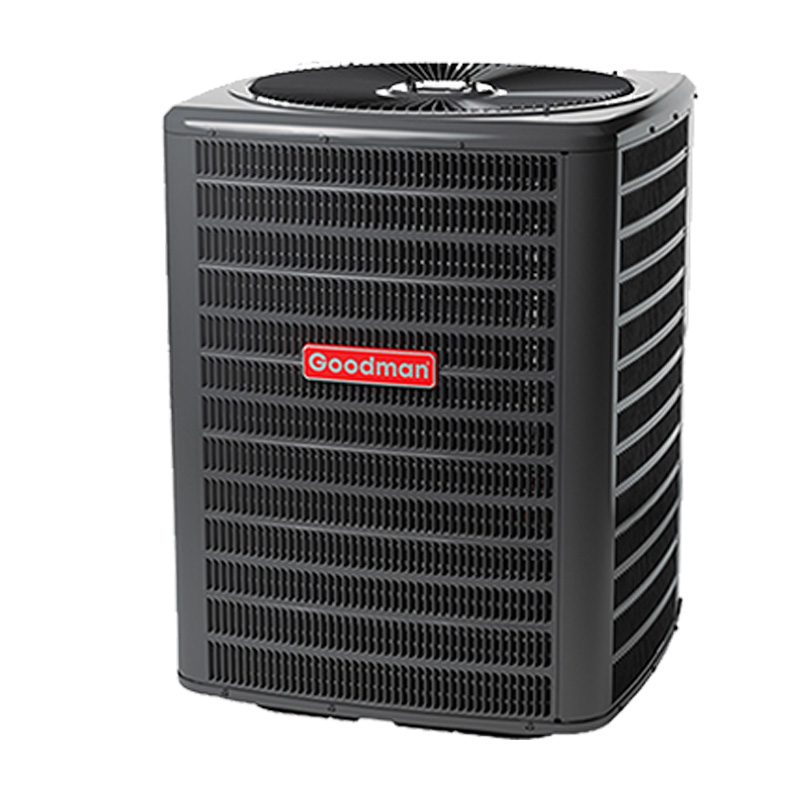
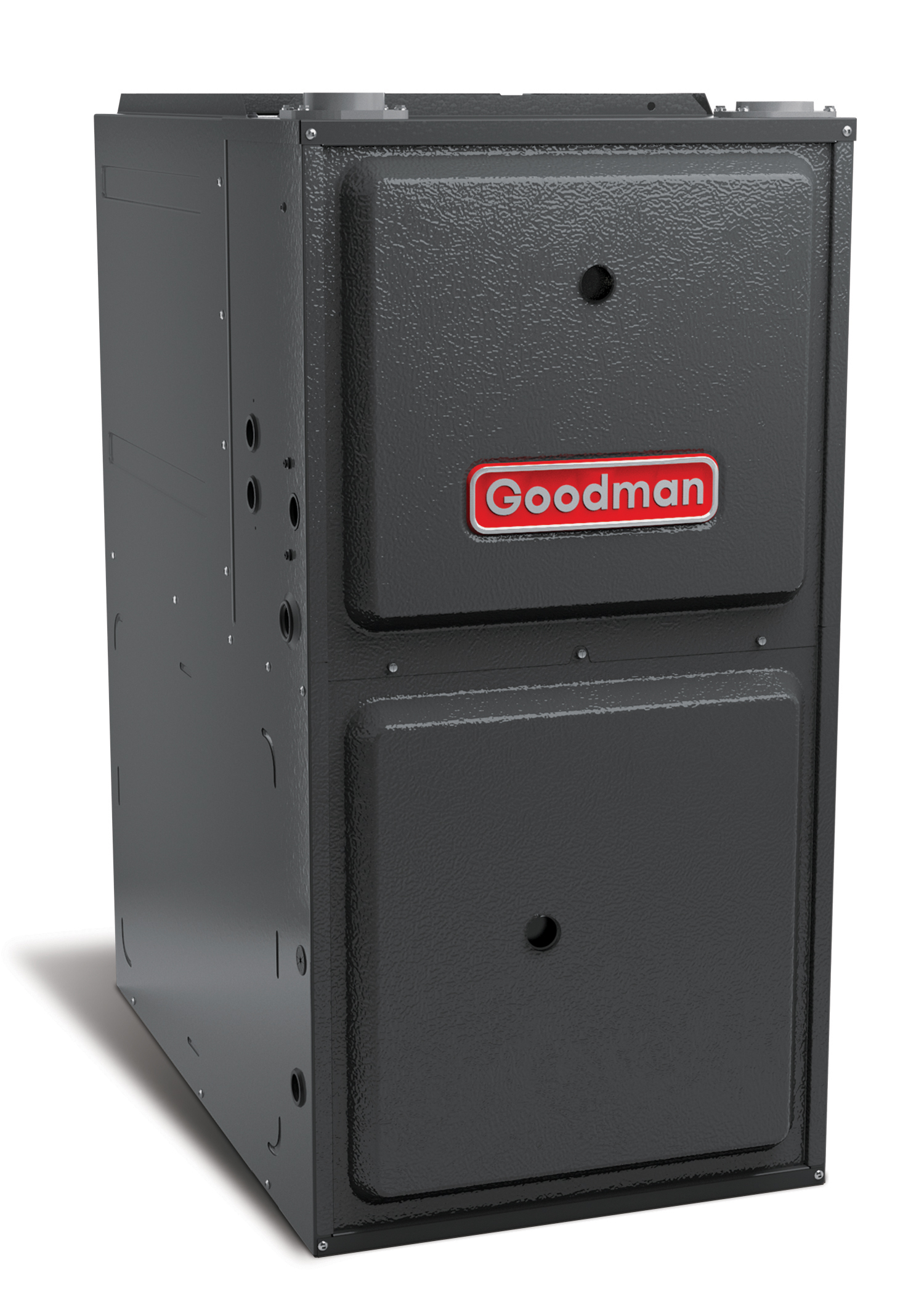
This Goodman system pairs a 5-ton R-32 air condenser with a 100,000 BTU, 96% AFUE two-stage gas furnace in an upflow configuration, making it a strong candidate for larger homes in the 2,500 to 3,500 square foot range that need both serious cooling capacity and efficient winter heating. The 13.6 SEER2 rating clears the current federal minimum with a modest margin, and the 96% AFUE furnace means nearly all of the gas consumed is converted to usable heat, which is a meaningful running-cost advantage over 80% AFUE equipment. Two-stage operation on the furnace allows the system to run at a lower output on milder days, improving comfort, extending run times for better humidity control, and reducing the on-off cycling that stresses components.
R-32 refrigerant is a forward-looking choice here. It carries a lower global warming potential than the older R-410A it replaces and is becoming the industry standard as R-410A is phased down under EPA regulations. The upflow cabinet orientation is the most common configuration in homes with a basement or utility closet where air is drawn in at the bottom and discharged upward into the duct system. This is not a particularly complex install for an experienced technician, but because Goodman’s real-world longevity tracks closely with installation quality, choosing a licensed contractor who pressure-tests, properly charges, and commissions the system is not optional, it is essential.
This Goodman bundle delivers a capable, code-compliant system at a price point that undercuts Carrier, Trane, and Lennox by a meaningful margin, and the 96% AFUE two-stage furnace is a genuine efficiency asset for cold-climate owners. The trade-off is a brand track record that shows higher rates of capacitor failures, evaporator coil leaks, and compressor replacements after year seven than premium competitors, so budget for maintenance and treat the warranty as a tool you will likely use.
Overall score is the average of the five ratings above.
What we like
- Priced roughly 15 to 25 percent below comparable Carrier, Trane, and Lennox systems, lowering the upfront barrier for larger homes
- 96% AFUE furnace is near the top of available efficiency tiers and will cut heating bills compared to 80% AFUE alternatives
- Two-stage furnace improves comfort and humidity management versus single-stage equipment at a similar price
- R-32 refrigerant is future-ready as the industry moves away from R-410A under current EPA regulations
- Upflow configuration is the most widely serviced orientation, so finding a qualified technician for repairs is straightforward
Trade-offs
- Dual-run capacitors are the most commonly reported failure point and while the repair is low-cost (roughly $300 to $600), it is a recurring nuisance for some owners
- Evaporator coil leaks appear in a meaningful share of owner reports, which can mean refrigerant loss and a costly coil replacement outside the labor warranty window
- Compressor lifespan averages 10 to 14 years versus 15 to 20 years for premium brands, which matters on a 5-ton unit where replacement costs are higher
- ConsumerAffairs scores sit around 2.5 out of 5, driven largely by owners who experienced climbing repair costs after roughly year seven
What homeowners and pros say about Goodman
Homeowners who have lived with Goodman equipment tend to land in one of two camps. Those who had a careful installation by an experienced contractor and stayed current on annual maintenance often report years of trouble-free operation and point to the lower purchase price as a genuine win. Those who did not often run into the documented failure patterns: a capacitor going out after a few summers, a refrigerant leak traced back to an evaporator coil, or a compressor that gives up earlier than expected. Google dealer reviews average around 3.8 out of 5 across multiple locations, where affordability comes up repeatedly as the reason buyers chose the brand. ConsumerAffairs tells a harder story, averaging about 2.5 out of 5, with the recurring theme being repair bills that start climbing after roughly year seven. Neither number tells the whole story on its own, but together they suggest a brand where your experience depends heavily on factors you can control, especially who installs it and how diligently you maintain it.
HVAC technicians who service Goodman regularly describe the equipment as straightforward to work on and note that parts are widely available, which keeps repair costs lower than they might be for some premium brands. The dual-run capacitor is the component they see fail most often, and most pros treat it as a routine replacement rather than a crisis. Evaporator coil leaks are the concern that gets mentioned with more frustration, since a coil replacement on a 5-ton system is not a small bill and tends to show up after the labor coverage window has closed. Compressor longevity is the other honest gap versus Trane, Carrier, or Lennox, with Goodman compressors averaging 10 to 14 years in field experience versus the 15 to 20 years that premium-brand compressors commonly reach. For a buyer who factors in those trade-offs, understands the maintenance commitment, and values the upfront savings, this system represents a reasonable choice. For a buyer who wants to set it and forget it for 20 years, the calculus looks different.
Sources: ConsumerAffairs Goodman owner reviews, AHRI Directory of Certified Product Performance, U.S. DOE appliance and equipment efficiency standards, Goodman product specification sheets.
What it costs to run
At 13.6 SEER2, cooling this 5-ton system for a typical 1200-hour cooling season at the U.S. average electricity rate of $0.17/kWh works out to roughly $900 per year in cooling, about $13 less per year than a minimum-efficiency 13.4 SEER2 unit of the same size. Your real cost depends on your climate and local rate.
Method: (60,000 BTU/hr ÷ 13.6 SEER2) × 1200 hours ÷ 1000 × $0.17/kWh. Rate source: U.S. EIA average; cooling hours: moderate-climate estimate.
How it compares
| Brand | Comparable model | SEER2 | Stage | Price position |
|---|---|---|---|---|
| Goodman | 5 Ton 13.6 SEER2 / 96% AFUE Two-Stage (this system) | 13.6 | Two-stage furnace / single-stage condenser | Value pick |
| Carrier | Performance 96 Furnace with 24ACC6 Condenser | 14.0 | Two-stage furnace / single-stage condenser | Roughly 20 to 25 percent above this Goodman system |
| Trane | S9X2 Furnace with XR14 Condenser | 14.0 | Two-stage furnace / single-stage condenser | Roughly 20 to 25 percent above this Goodman system |
| Lennox | ML196 Furnace with XC14 Condenser | 14.0 | Two-stage furnace / single-stage condenser | Roughly 15 to 20 percent above this Goodman system |
Competitor rows are comparable single-stage units at similar efficiency; price is relative position, not a quote.
Questions about this system
Is 13.6 SEER2 going to cost me more in electricity compared to a higher-efficiency option?
Yes, modestly. A 15 or 16 SEER2 system will use less electricity per cooling hour, and on a 5-ton unit running through a long cooling season those savings can add up over time. Whether the efficiency upgrade pencils out depends on your local electricity rate and how many cooling hours your climate produces each year, so it is worth running the numbers against the price difference before buying.
What does the two-stage furnace actually do differently day to day?
On mild heating days the furnace runs at a lower stage, which means longer, quieter cycles that do a better job of evening out temperatures room to room and removing excess humidity. The system only ramps to full output when outdoor temperatures drop and the house genuinely needs it, which also reduces wear compared to a single-stage unit that runs at full blast every time it starts.
My technician mentioned R-32 requires different handling than R-410A. Is that a real concern?
R-32 is mildly flammable (classified A2L), which means your technician needs to follow updated safety procedures and use compatible tools, but it is not a barrier for any properly certified HVAC contractor. Most reputable shops have already been trained on A2L refrigerants as the industry transition has been underway for several years.
What are the most likely repairs I should budget for over the first ten years?
Based on documented owner experience with Goodman equipment, dual-run capacitor failure is the most common service call and typically runs $300 to $600 to fix. Evaporator coil leaks are a second documented risk and are more expensive to address, especially after the parts warranty period. Setting aside a small annual service budget and getting a maintenance contract that includes capacitor inspection is a practical move.
Will Goodman's warranty cover labor if something fails in year three?
Goodman's registered parts warranty is generally 10 years on covered components, but labor is not included in the manufacturer warranty. Labor costs come out of your pocket or a separate service agreement you purchase through your installer, which is worth clarifying before the job is signed. Registering the unit within the required window after installation is required to activate the full warranty term.
Specifications
| Cooling capacity | 5 Ton |
| Efficiency | 13.6 SEER2 |
| Furnace output | 100000 BTU |
| Furnace efficiency | 96% AFUE |
| Configuration | Upflow |
| Refrigerant | R-32 |