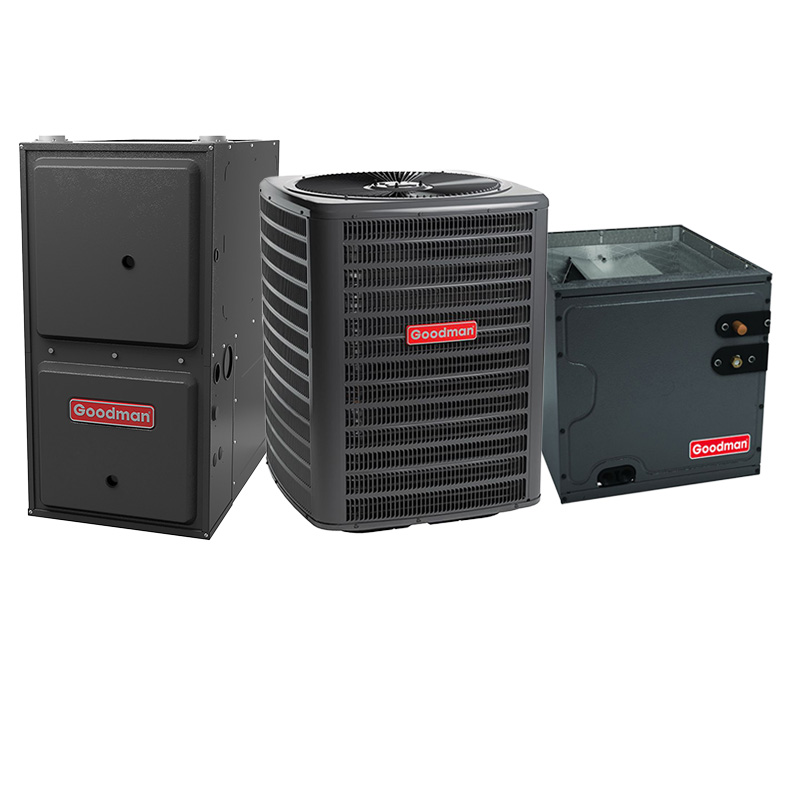
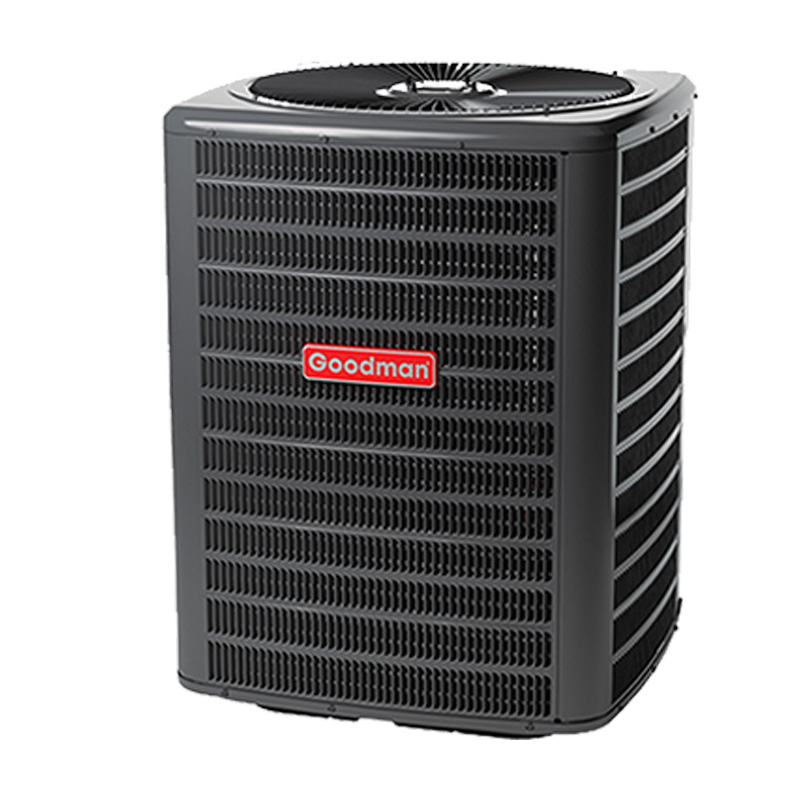
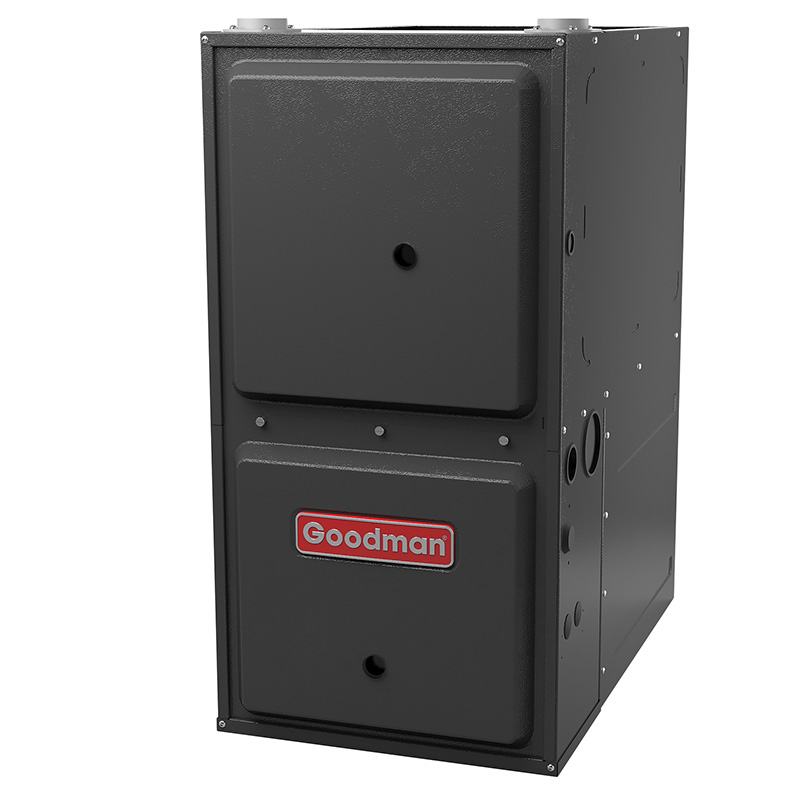
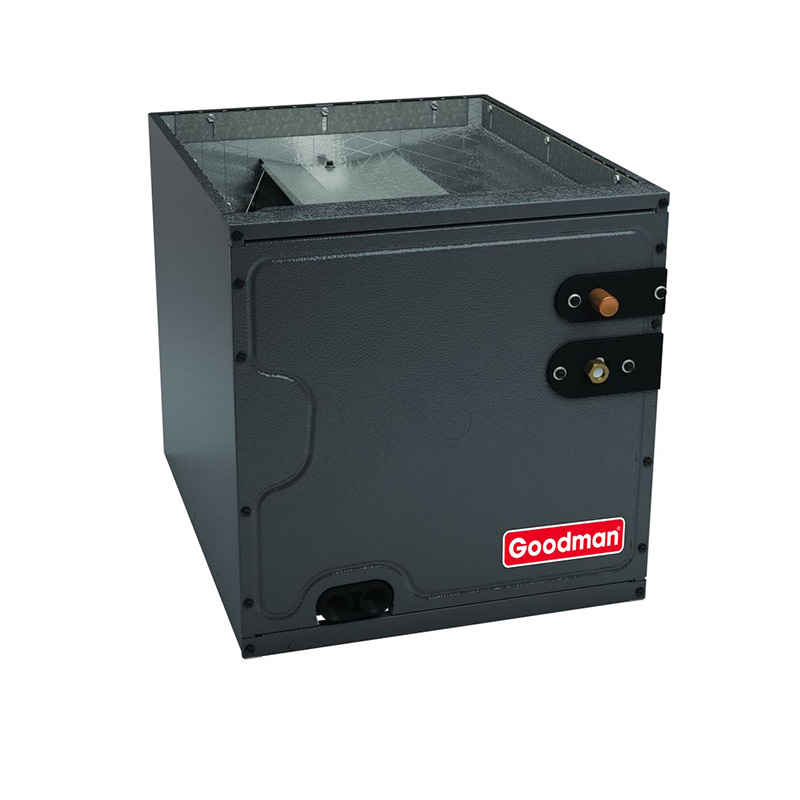
Goodman 5 Ton 13.6 SEER2 120000 BTU 96% AFUE Multi-Speed ECM Gas Furnace System – Downflow | R32
View on AC Direct see your lowest price →Check current price on AC Direct →
Key features
- 5-ton cooling capacity paired with 120,000 BTU gas furnace in a single matched system
- 96% AFUE high-efficiency furnace reduces heating energy waste to just 4%
- 13.6 SEER2 cooling efficiency meets current federal minimum efficiency standards
- Multi-speed ECM blower motor lowers electricity use and reduces airflow noise
- Downflow configuration designed for installations where supply air exits from the bottom
- R-32 refrigerant offers lower global warming potential compared to R-410A
About this system
This Goodman package pairs a 5-ton, 13.6 SEER2 cooling system with a 120,000 BTU, 96% AFUE multi-speed ECM gas furnace in a downflow configuration, making it a practical choice for homes where the air handler sits above a crawlspace or in a closet that blows air downward. The R-32 refrigerant charge is a forward-looking choice: R-32 has a lower global warming potential than the R-410A it replaces, and it is increasingly the industry standard for new residential equipment. At 5 tons, this system is sized for larger homes, typically in the 2,400 to 3,000 square foot range depending on climate zone, load, and insulation quality.
The 96% AFUE rating means 96 cents of every dollar spent on gas goes toward heat, which qualifies as a high-efficiency furnace and can translate to meaningful savings over a mid-efficiency 80% AFUE unit in colder climates. The multi-speed ECM blower motor adjusts airflow based on demand, running at lower speeds during moderate conditions to cut electricity use and reduce the on-off cycling noise common with single-speed motors. The 13.6 SEER2 cooling efficiency sits at the baseline end of the current regulatory minimum range for most U.S. regions, so buyers in hot southern climates who run AC heavily may want to weigh whether a higher SEER2 option better fits their long-term energy costs. Downflow units are less universally adaptable than upflow configurations, so verifying this orientation matches your ductwork before purchase is essential.
This Goodman system delivers solid high-efficiency heating and baseline cooling at a price point that is noticeably lower than Trane, Carrier, or Lennox equivalents. The 96% AFUE furnace is a genuine strength, but the 13.6 SEER2 rating and Goodman's documented reliability history after year 7 mean buyers should weigh upfront savings against potential longer-term service costs. It is a reasonable choice for budget-conscious buyers who prioritize heating performance and are prepared to factor in a service plan.
Overall score is the average of the five ratings above.
What we like
- 96% AFUE furnace is a true high-efficiency rating that reduces heating bills versus 80% AFUE units
- Priced 15 to 25 percent below comparable Trane, Lennox, and Carrier systems
- Multi-speed ECM motor improves comfort and lowers blower electricity consumption
- R-32 refrigerant is a more environmentally responsible choice with lower global warming potential
- Downflow design is purpose-built for specific installation scenarios where upflow units cannot fit
Trade-offs
- 13.6 SEER2 is at the lower end of the efficiency range; homeowners in hot climates will see higher cooling bills than with a 16+ SEER2 system
- Compressor lifespan averages 10 to 14 years, shorter than the 15 to 20 years typical of premium brands
- Dual-run capacitor failures and evaporator coil leaks are documented recurring issues in owner reports
- Downflow-only configuration limits installation flexibility; it cannot be repurposed if ductwork changes
What homeowners and pros say about Goodman
Homeowners who have purchased Goodman equipment often point to the upfront price as the clearest reason to choose it, and that sentiment shows up in the roughly 3.8 out of 5 rating Goodman earns across Google dealer reviews, where affordability is the single most common compliment. The ConsumerAffairs picture is more cautionary: Goodman scores around 2.5 out of 5 on that platform, which skews toward people who had a problem worth writing about. The recurring theme there is repair bills that start to accumulate after roughly year 7, rather than catastrophic early failure. For this specific system, the 96% AFUE furnace is the component most owners are likely to be satisfied with long-term; high-efficiency condensing furnaces in this class are relatively mature technology and the ECM motor adds genuine comfort and efficiency value.
HVAC technicians tend to have a pragmatic view of Goodman: the equipment is workable, but installation quality determines a large share of how long it lasts and how many callbacks happen in the first year. For this 5-ton downflow system, correct refrigerant charge and proper airflow setup are especially important because a heavy load system running with even a small undercharge or oversized blower speed can accelerate both the compressor wear and the evaporator coil stress that leads to the coil leaks documented in owner reports. The dual-run capacitor is the most likely early service call, generally a straightforward and inexpensive repair, but it is worth asking your installer about including a capacitor check in any annual maintenance visit. Buyers who go in with realistic expectations about periodic service needs, and who choose an experienced installer, tend to report the best outcomes with Goodman equipment.
Sources: ConsumerAffairs Goodman owner reviews, AHRI Directory of Certified Product Performance, U.S. DOE appliance and equipment efficiency standards, Goodman product specification sheets.
What it costs to run
At 13.6 SEER2, cooling this 5-ton system for a typical 1200-hour cooling season at the U.S. average electricity rate of $0.17/kWh works out to roughly $900 per year in cooling, about $13 less per year than a minimum-efficiency 13.4 SEER2 unit of the same size. Your real cost depends on your climate and local rate.
Method: (60,000 BTU/hr ÷ 13.6 SEER2) × 1200 hours ÷ 1000 × $0.17/kWh. Rate source: U.S. EIA average; cooling hours: moderate-climate estimate.
How it compares
| Brand | Comparable model | SEER2 | Stage | Price position |
|---|---|---|---|---|
| Goodman | 5-Ton 13.6 SEER2 / 96% AFUE Multi-Speed Downflow System | 13.6 | Multi-speed | Value pick |
| Carrier | Comfort 24ACC636 / 58TP Gas Furnace Series | 14.0 | Single-stage | Typically 15 to 25 percent more than Goodman |
| Trane | XR15 / S9X1 Gas Furnace Series | 14.3 | Single-stage | Typically 15 to 25 percent more than Goodman |
| Lennox | Merit ML14XC1 / ML196E Gas Furnace Series | 14.3 | Single-stage | Typically 15 to 25 percent more than Goodman |
Competitor rows are comparable single-stage units at similar efficiency; price is relative position, not a quote.
Questions about this system
Is the downflow configuration a problem if I want to use this system in a different setup later?
Yes, downflow units are designed specifically for installations where conditioned air exits from the bottom of the unit into a below-floor duct system or crawlspace plenum. They are not interchangeable with upflow or horizontal configurations, so you should confirm your duct layout matches before purchasing. Attempting to use a downflow unit in an upflow application is not supported and can create safety and performance issues.
What does 96% AFUE actually mean in dollar terms compared to an 80% AFUE furnace?
A 96% AFUE furnace converts 96% of the gas it burns into usable heat, wasting only 4% up the flue. An 80% AFUE unit wastes 20%, so on a $1,500 annual heating bill you could theoretically save around $225 per year by choosing 96% over 80% AFUE. Actual savings depend on your local gas rates, climate, and how tightly the home is sealed.
How reliable is Goodman, and what parts are most likely to need service?
Goodman rates around 2.5 out of 5 on ConsumerAffairs and approximately 3.8 out of 5 across Google dealer reviews, with affordability cited most often as a positive. The most commonly reported failure points are dual-run capacitors, which are typically a low-cost repair in the $300 to $600 range, and evaporator coil leaks. Compressors on Goodman units tend to average 10 to 14 years, which is shorter than the 15 to 20 years reported for premium brands.
Why does this system use R-32 refrigerant instead of R-410A?
R-32 has a global warming potential roughly two-thirds lower than R-410A, and the U.S. and global HVAC industry is transitioning away from higher-GWP refrigerants under updated environmental regulations. R-32 also operates at slightly different pressures, so technicians servicing this system will need to be certified and equipped for R-32 specifically. Replacement refrigerant costs and availability should be comparable to R-410A going forward as the market shifts.
Should I buy an extended warranty or service plan with this system?
Given that Goodman's documented reliability record shows repair costs rising after roughly year 7, a service agreement or extended parts and labor warranty is worth serious consideration. Goodman's standard limited warranty covers parts but not labor, which can be the larger cost on compressor or coil repairs. Many HVAC dealers offer third-party service plans that cover both, and for a system at this price point the added cost is often reasonable insurance.
Specifications
| Cooling capacity | 5 Ton |
| Efficiency | 13.6 SEER2 |
| Furnace output | 120000 BTU |
| Furnace efficiency | 96% AFUE |
| Configuration | Downflow |
| Refrigerant | R-32 |