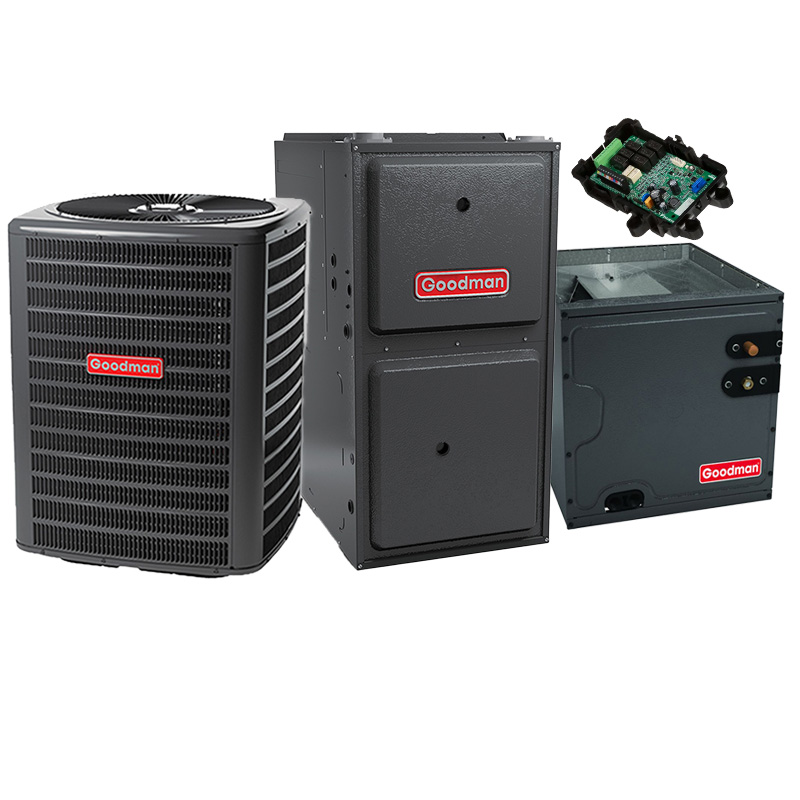
Goodman 5 Ton 13.6 SEER2 120000 BTU 96% AFUE Two-Stage Gas Furnace With R32 Air Condenser and Coil System – Upflow
View on AC Direct see your lowest price →Check current price on AC Direct →
Key features
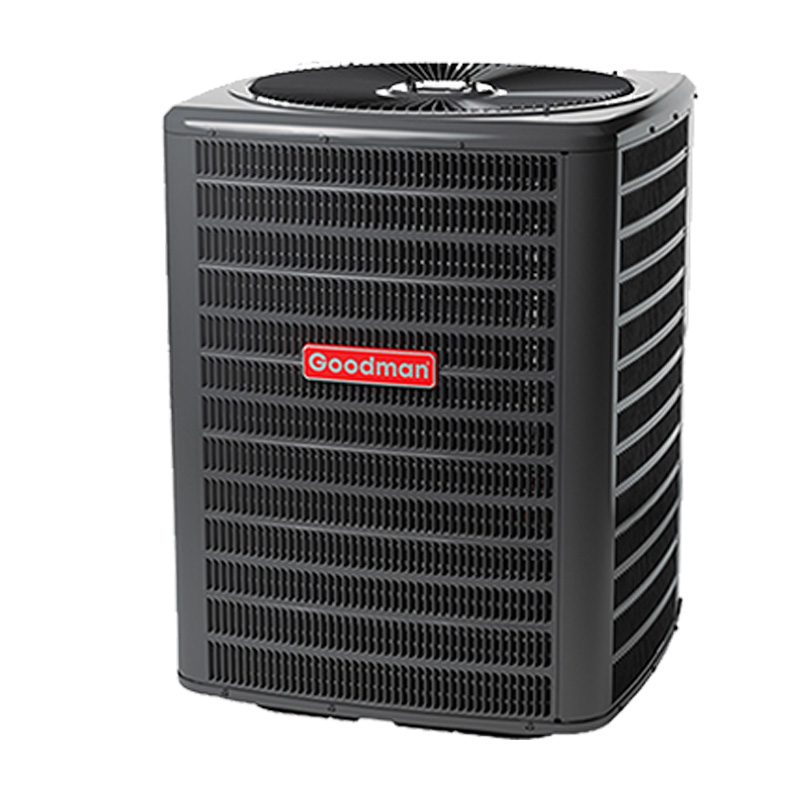
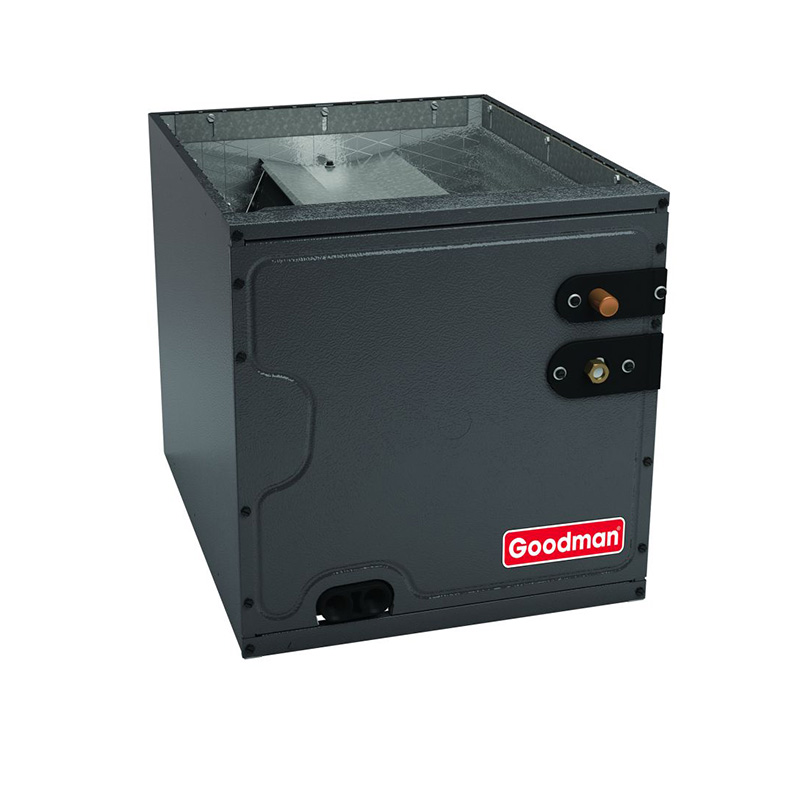
- 5-ton R-32 condenser and coil paired with 120,000 BTU upflow gas furnace
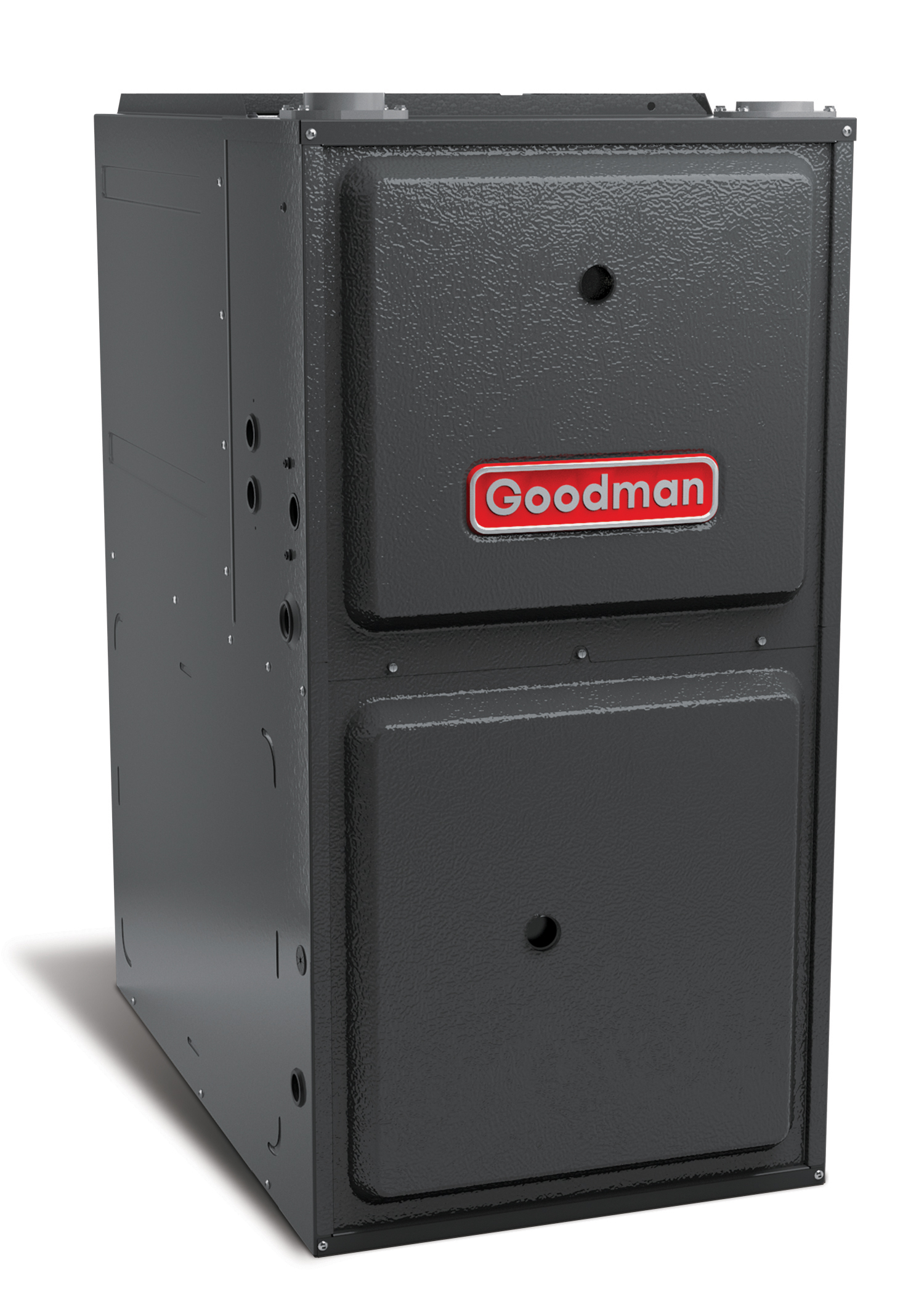
- 96% AFUE two-stage furnace for high-efficiency heating and reduced short-cycling
- 13.6 SEER2 cooling efficiency meets current federal minimums nationwide
- R-32 refrigerant with lower global warming potential than R-410A
- Two-stage gas valve improves humidity control and temperature consistency
- Upflow cabinet design suits basement and main-floor closet installations
About this system
This Goodman system pairs a 5-ton R-32 air condenser and matching evaporator coil with a 120,000 BTU, 96% AFUE two-stage gas furnace in an upflow configuration. At 13.6 SEER2, the cooling side meets the current federal minimum for northern climates and sits just above the threshold for southern regions, so it clears the legal bar everywhere in the U.S. but does not reach the efficiency ceiling. The 96% AFUE furnace, however, is a genuine high-efficiency unit: it converts 96 cents of every dollar of gas into usable heat, which meaningfully cuts heating bills compared to an 80% AFUE system, particularly in colder climates where the furnace runs hard from October through March.
The two-stage furnace is the standout feature here. Running on low stage during moderate weather reduces short-cycling, improves humidity control, and keeps temperature swings tighter than a single-stage unit allows. For a large home in the 2,500 to 3,500 square foot range, 5 tons and 120,000 BTU is a reasonable match, though proper Manual J load calculation by your installer is essential because oversizing is a common and costly mistake. The upflow configuration suits homes where the furnace sits in a basement or closet and blows air upward into the duct system. R-32 refrigerant has a lower global warming potential than R-410A and is increasingly standard, though it does require technicians who are current on handling procedures.
This system delivers a capable, high-efficiency heating and code-compliant cooling package at a price well below Carrier, Trane, and Lennox equivalents, making it a solid choice for budget-conscious buyers who hire an experienced installer. The trade-off is a shorter average compressor lifespan and a history of component failures that show up more frequently after year 7, so the savings at purchase need to be weighed against potentially earlier repair or replacement costs.
Overall score is the average of the five ratings above.
What we like
- 96% AFUE furnace provides genuine high-efficiency heating with real monthly savings
- Two-stage operation improves comfort and humidity control versus single-stage
- Priced 15 to 25 percent below comparable Carrier, Trane, and Lennox systems
- R-32 refrigerant is current-generation with lower environmental impact than R-410A
- Complete matched system simplifies permitting and warranty administration
Trade-offs
- Compressors average 10 to 14 years, noticeably shorter than the 15 to 20 years seen in premium brands
- Dual-run capacitor failures are the most commonly reported issue, typically surfacing within the first several years
- Evaporator coil leaks appear in a meaningful share of owner reviews and can be expensive to address
- A minority of owners report refrigerant leaks within the first year, often tied to installation or initial charge quality
What homeowners and pros say about Goodman
Homeowners who chose Goodman equipment most often point to the price as the deciding factor, and that sentiment is backed up by Google dealer review scores that average around 3.8 out of 5 across dealer locations, where affordability is the most frequently cited reason for satisfaction. The picture on ConsumerAffairs is notably different, sitting at roughly 2.5 out of 5, and the complaints there follow a consistent pattern: systems that ran without trouble for several years before repair bills started climbing around year 7 or beyond. Both data points are real, and together they suggest Goodman delivers reasonable early-life performance but carries a higher probability of mid-life repair costs than premium competitors.
HVAC technicians who service Goodman equipment tend to echo the same trade-off. They consistently flag dual-run capacitor failures as the most routine call they handle on these systems, typically a quick repair in the 300 to 600 dollar range, but one that many owners face at least once. More serious are the evaporator coil leaks that appear in a meaningful share of owner feedback and the compressor lifespan that tends to average 10 to 14 years, compared to the 15 to 20 years technicians commonly see from Carrier, Trane, or Lennox compressors. Technicians also note that a minority of Goodman owners report refrigerant leaks in the first year, which they attribute to installation or initial charge issues rather than the equipment itself. For this 5-ton two-stage system specifically, that last point underscores how much the outcome depends on who installs it and how carefully the refrigerant charge is set at startup.
Sources: ConsumerAffairs Goodman owner reviews, AHRI Directory of Certified Product Performance, U.S. DOE appliance and equipment efficiency standards, Goodman product specification sheets.
What it costs to run
At 13.6 SEER2, cooling this 5-ton system for a typical 1200-hour cooling season at the U.S. average electricity rate of $0.17/kWh works out to roughly $900 per year in cooling, about $13 less per year than a minimum-efficiency 13.4 SEER2 unit of the same size. Your real cost depends on your climate and local rate.
Method: (60,000 BTU/hr ÷ 13.6 SEER2) × 1200 hours ÷ 1000 × $0.17/kWh. Rate source: U.S. EIA average; cooling hours: moderate-climate estimate.
How it compares
| Brand | Comparable model | SEER2 | Stage | Price position |
|---|---|---|---|---|
| Goodman | 5T 13.6 SEER2 / 96% AFUE Two-Stage System (this unit) | 13.6 | Two-stage | Value pick |
| Carrier | Performance 13 / 96% AFUE 58TP Two-Stage Bundle | 13.8 | Two-stage | Approximately 15 to 20 percent above this Goodman system |
| Trane | XR14 Condenser / S9X2 Two-Stage Furnace Bundle | 14.0 | Two-stage | Approximately 20 to 25 percent above this Goodman system |
| Lennox | Merit 14 Series / ML196 Two-Stage Furnace Bundle | 14.3 | Two-stage | Approximately 20 to 30 percent above this Goodman system |
Competitor rows are comparable single-stage units at similar efficiency; price is relative position, not a quote.
Questions about this system
Is 5 tons and 120,000 BTU the right size for my house?
Not necessarily, and this matters a great deal. The only way to know is a Manual J load calculation performed by your installer using your home's square footage, insulation, window area, and local climate. Oversizing a system this large leads to short-cycling, poor humidity control, and premature wear, so do not skip that step.
What does the two-stage furnace actually do for me day to day?
On mild days the furnace runs on its lower stage, which means longer, quieter cycles that hold your set temperature more steadily and remove more moisture from the air. It only ramps to full capacity when outdoor temperatures are coldest. Most owners in heating-heavy climates notice both better comfort and a measurable drop in gas bills compared to a single-stage furnace of similar AFUE.
How worried should I be about Goodman's reliability reputation?
The concern is real but context matters. Goodman scores around 2.5 out of 5 on ConsumerAffairs, a channel that skews toward unhappy owners, with repair costs after roughly year 7 as the recurring complaint. Dealer Google reviews are more balanced at around 3.8 out of 5, with affordability as the most common praise. Documented weak points are dual-run capacitors (a relatively low-cost fix), evaporator coil leaks, and compressors that average 10 to 14 years versus 15 to 20 for premium brands. Budgeting for a capacitor replacement at some point is a reasonable expectation.
Does my installer need special certification to work with R-32 refrigerant?
Technicians already holding an EPA Section 608 certification can handle R-32, but it is classified as mildly flammable (A2L), so installers need to be aware of handling procedures and use appropriate equipment. Confirm your installer is familiar with A2L refrigerants before booking, since not all shops have updated their tools and training yet.
What warranty comes with this system and what should I watch out for?
Goodman typically covers parts for 10 years on registered systems, but coverage details and any labor warranty depend on the specific model numbers and your installing dealer. Registration is required within a set window after installation to activate the full term, so do not skip that step. Labor costs are generally not covered by the manufacturer, meaning a compressor failure outside a dealer labor warranty falls on you even if the part itself is free.
Specifications
| Cooling capacity | 5 Ton |
| Efficiency | 13.6 SEER2 |
| Furnace output | 120000 BTU |
| Furnace efficiency | 96% AFUE |
| Configuration | Upflow |
| Refrigerant | R-32 |