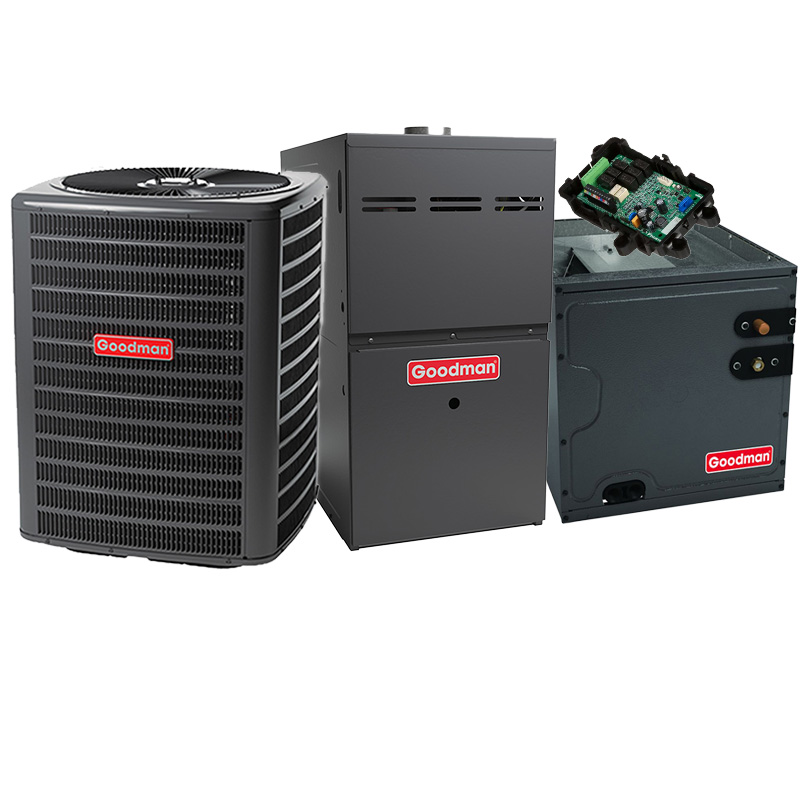
Goodman 5 Ton 13.6 SEER2 120000 BTU 96% AFUE Two-Stage Gas Furnace With R32 Air Condenser and Coil System – Upflow
View on AC Direct see your lowest price →Check current price on AC Direct →
Key features
- 5-ton cooling capacity with 13.6 SEER2 efficiency rating
- 120,000 BTU two-stage gas furnace at 96% AFUE
- R-32 refrigerant with lower global warming potential than R-410A
- Two-stage heating reduces temperature swings and improves humidity control
- Upflow configuration for basement and utility-room installations
- Factory-matched coil and condenser for rated system efficiency
About this system
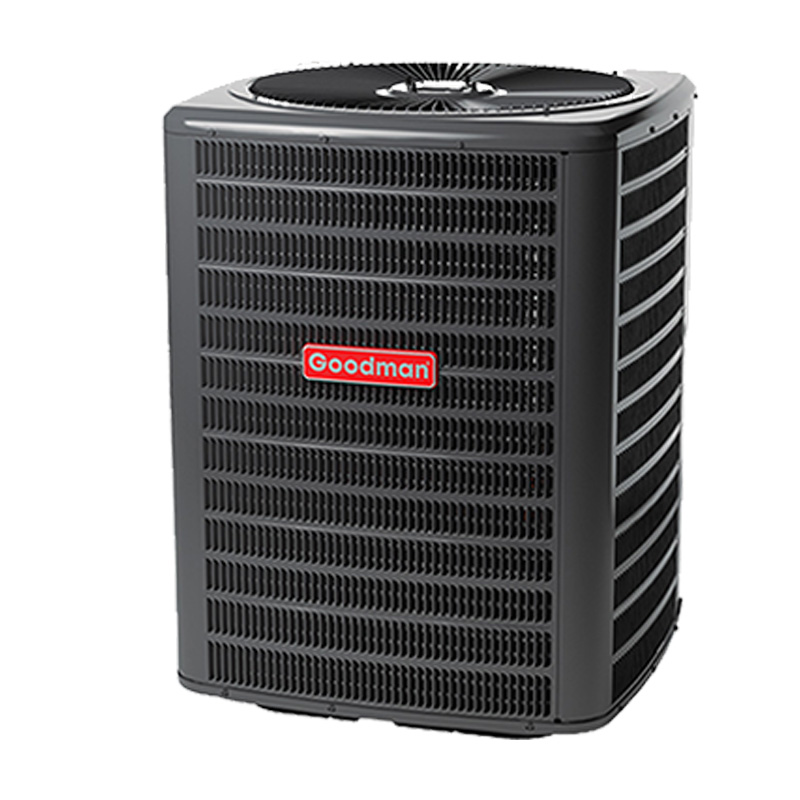
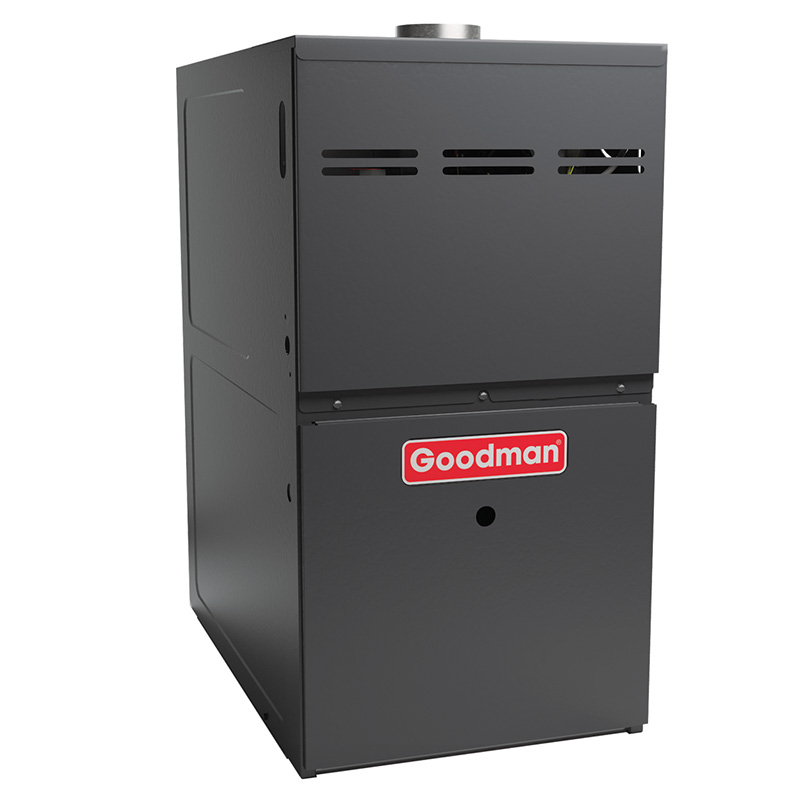
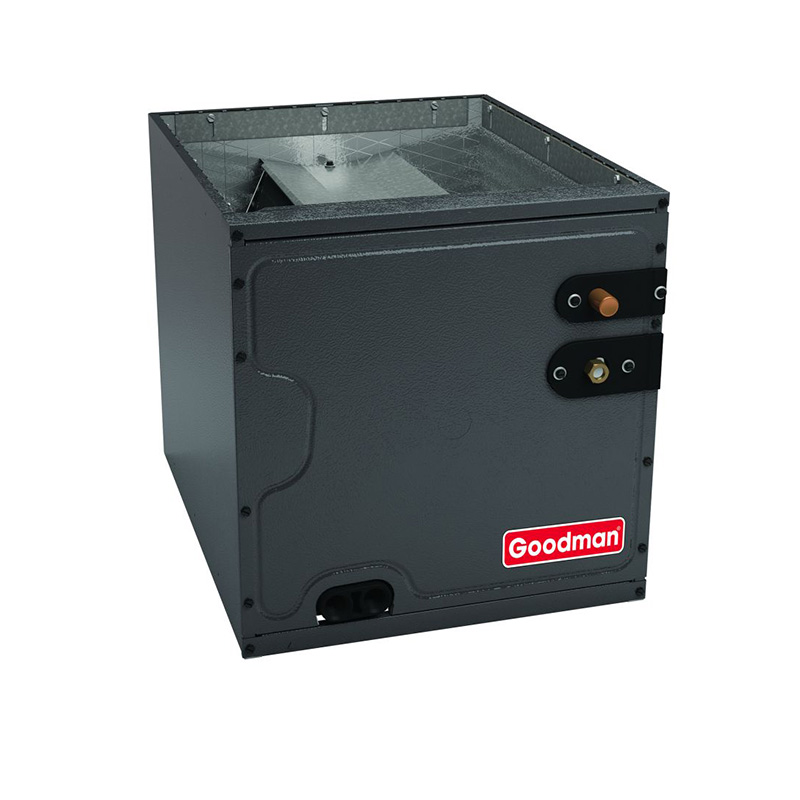
This Goodman package pairs a 5-ton, 13.6 SEER2 R-32 air condenser and matched evaporator coil with a 120,000 BTU, 96% AFUE two-stage gas furnace in an upflow configuration. The result is a complete comfort system sized for larger homes, typically in the 2,400 to 3,200 square foot range depending on climate, insulation, and local load calculations. The two-stage furnace runs at a lower firing rate on mild days, which improves humidity control, reduces temperature swings, and burns less gas than a single-stage unit would at full bore. At 96% AFUE, only 4 cents of every fuel dollar goes unused, putting this furnace solidly in the high-efficiency tier.
The R-32 refrigerant is a forward-looking choice. R-32 has a global warming potential roughly one-third that of the R-410A it replaces, and its higher energy density means slightly smaller refrigerant charges per system. The 13.6 SEER2 rating clears the federal minimum efficiency standards that took effect in 2023 for most U.S. climate regions, though it sits at the entry level of the high-efficiency range rather than at the top. Homeowners in moderate climates who run the AC seasonally will find the efficiency adequate; those in hot, humid climates running the system five or six months a year may see a meaningful payback difference by stepping up to a higher SEER2 unit. The upflow configuration requires the air handler to sit below the living space and discharge air upward into supply ductwork, which suits basement and utility-closet installs but is not appropriate for attic or crawl-space applications without reconfiguring the equipment.
This Goodman system delivers a high-efficiency furnace and a code-compliant AC at a price point meaningfully below comparable Carrier, Trane, and Lennox equipment, making it a reasonable choice for budget-conscious buyers who prioritize upfront cost and will commit to regular maintenance. The two-stage furnace is a genuine comfort upgrade over single-stage alternatives at this price, but documented failure modes on the cooling side, and a compressor lifespan that tends to run shorter than premium competitors, mean total cost of ownership deserves careful thought. Install quality is not a footnote here; it is the single largest variable in how this system performs and how long it lasts.
Overall score is the average of the five ratings above.
What we like
- Price runs 15 to 25 percent below comparable Trane, Lennox, and Carrier systems
- 96% AFUE two-stage furnace is a legitimate high-efficiency, high-comfort configuration
- R-32 refrigerant is environmentally preferable and future-friendly
- Factory-matched coil and condenser simplifies warranty compliance and efficiency verification
- Two-stage operation lowers gas consumption on mild heating days versus single-stage alternatives
Trade-offs
- Dual-run capacitors are the most commonly reported failure point and typically need replacement within the first decade
- Evaporator coil leaks appear in a meaningful share of owner reviews and can be costly to address
- Compressor lifespan averages 10 to 14 years versus 15 to 20 years for premium-brand compressors
- 13.6 SEER2 is at the lower end of the high-efficiency range, leaving energy savings on the table for households in hot climates with long cooling seasons
What homeowners and pros say about Goodman
Homeowners who have lived with Goodman equipment tend to split along a familiar line. Those who had a careful install by an experienced contractor and kept up with annual maintenance often report years of uneventful operation, and that experience tracks with Google dealer review scores that average around 3.8 out of 5 across hundreds of reviews, where affordability is the most common praise. The picture at ConsumerAffairs is rougher, scoring around 2.5 out of 5, though that platform skews heavily toward owners who are frustrated enough to write a complaint. The recurring theme there is repair costs that begin to accumulate after roughly year 7, which aligns with what field technicians see: dual-run capacitor failures are the most frequently reported service call, usually a straightforward fix in the 300 to 600 dollar range, but evaporator coil leaks and refrigerant issues appear with enough regularity to warrant attention.
HVAC technicians tend to have a pragmatic view of Goodman. They note that the brand’s performance is unusually dependent on installation quality compared to more forgiving premium units, and that a rushed or cut-rate install can accelerate the failure modes the brand is already known for, particularly refrigerant leaks within the first year that often trace back to a poor charge or a fitting left loose. On compressor longevity, technicians generally cite an average of 10 to 14 years for Goodman compressors versus 15 to 20 for Trane or Carrier, which matters more on a 5-ton unit where compressor replacement is not a minor expense. The consistent professional advice is to spend carefully on the install itself, not just the equipment, and to factor potential mid-life repairs into the total cost comparison with premium brands.
Sources: ConsumerAffairs Goodman owner reviews, AHRI Directory of Certified Product Performance, U.S. DOE appliance and equipment efficiency standards, Goodman product specification sheets.
What it costs to run
At 13.6 SEER2, cooling this 5-ton system for a typical 1200-hour cooling season at the U.S. average electricity rate of $0.17/kWh works out to roughly $900 per year in cooling, about $13 less per year than a minimum-efficiency 13.4 SEER2 unit of the same size. Your real cost depends on your climate and local rate.
Method: (60,000 BTU/hr ÷ 13.6 SEER2) × 1200 hours ÷ 1000 × $0.17/kWh. Rate source: U.S. EIA average; cooling hours: moderate-climate estimate.
How it compares
| Brand | Comparable model | SEER2 | Stage | Price position |
|---|---|---|---|---|
| Goodman | 5 Ton 13.6 SEER2 / 120,000 BTU 96% AFUE Two-Stage Upflow | 13.6 | Two-stage furnace / single-stage condenser | Value pick |
| Carrier | Comfort 14 Series (CA14NA / 58STA furnace bundle) | 14 | Single-stage | Typically 15 to 25 percent more than this Goodman system |
| Trane | XR14 condenser / S8B1 furnace bundle | 14 | Single-stage | Typically 15 to 25 percent more than this Goodman system |
| Lennox | Merit ML14 condenser / SL280 furnace bundle | 14 | Single-stage | Typically 15 to 25 percent more than this Goodman system |
Competitor rows are comparable single-stage units at similar efficiency; price is relative position, not a quote.
Questions about this system
Is a 5-ton system actually the right size for my home, or will it short-cycle?
Five tons is generally appropriate for homes in the 2,400 to 3,200 square foot range, but actual sizing depends on your climate zone, insulation levels, window area, and duct layout. An oversized system will short-cycle, reducing humidity removal and increasing wear. Ask your installer to perform a Manual J load calculation before ordering; do not size by square footage alone.
What should I expect in terms of repair costs and timing with a Goodman system?
The most commonly reported failure is the dual-run capacitor, a relatively low-cost fix typically in the 300 to 600 dollar range and usually a quick repair. Evaporator coil leaks are a more significant documented issue that can run considerably higher. ConsumerAffairs reviews show a pattern of repair costs climbing after roughly year 7, so budgeting for a service contract or a repair fund after that point is practical.
Why does this system use R-32 instead of R-410A, and does that affect service?
R-32 is a next-generation refrigerant with a much lower global warming potential than R-410A and is increasingly common as R-410A is phased down under federal environmental rules. Most certified HVAC technicians can work with R-32, but you should confirm your servicing contractor is equipped for it, as not every shop has updated its recovery and charging equipment yet.
Does the two-stage furnace require a compatible thermostat?
Yes, to get the full benefit of two-stage operation you need a thermostat that can send a two-stage signal to the furnace. A basic single-stage thermostat will work but will default the furnace to single-stage behavior. Confirm thermostat compatibility with your installer before the job is complete.
What does the warranty cover, and what do I need to do to keep it valid?
Goodman's standard warranty on registered equipment is typically 10 years on parts for residential installations, but warranty terms require registration within a set window after install and, importantly, installation by a licensed HVAC contractor. DIY installation or failure to register can reduce coverage significantly. Read the specific warranty certificate that ships with your unit, as terms can vary by product line and model year.
Specifications
| Cooling capacity | 5 Ton |
| Efficiency | 13.6 SEER2 |
| Furnace output | 120000 BTU |
| Furnace efficiency | 96% AFUE |
| Configuration | Upflow |
| Refrigerant | R-32 |