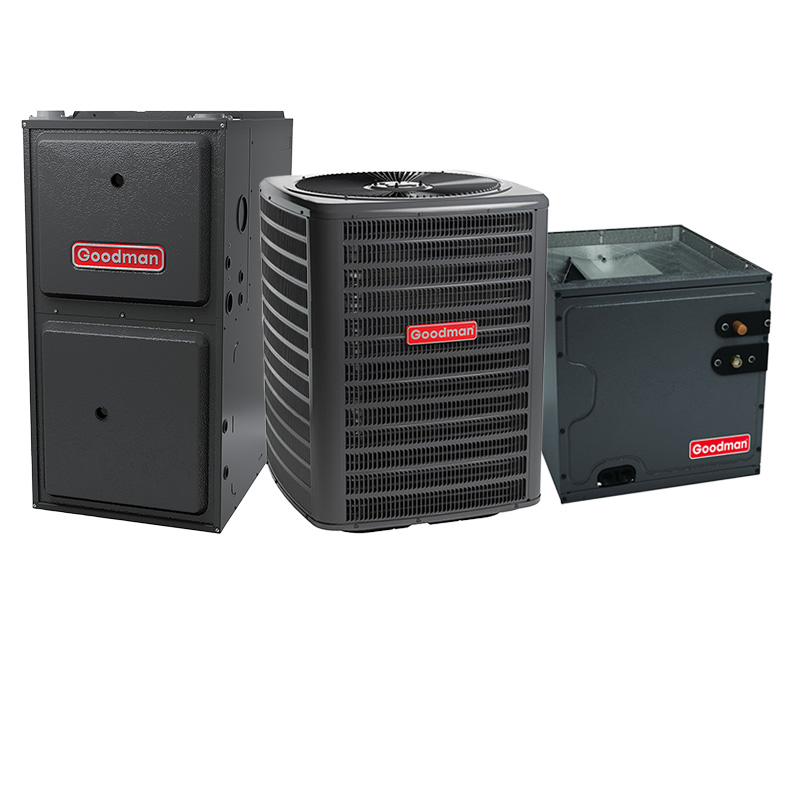
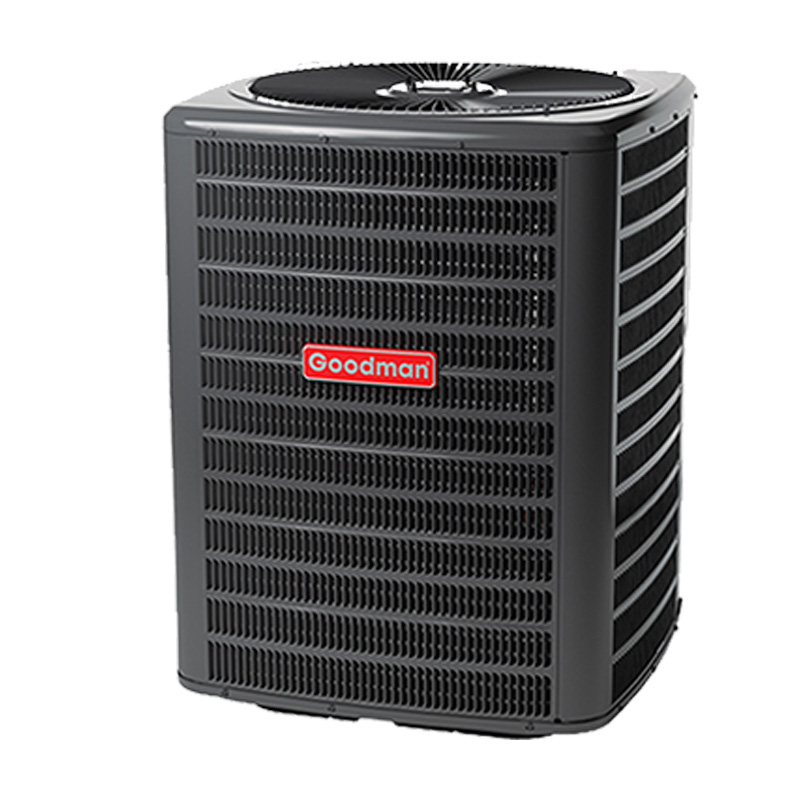
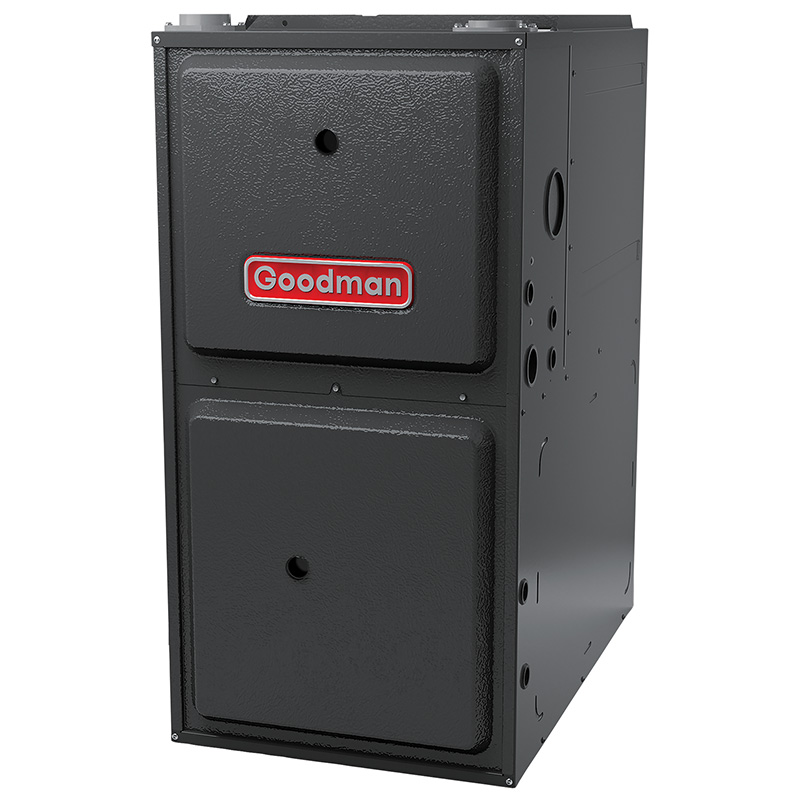
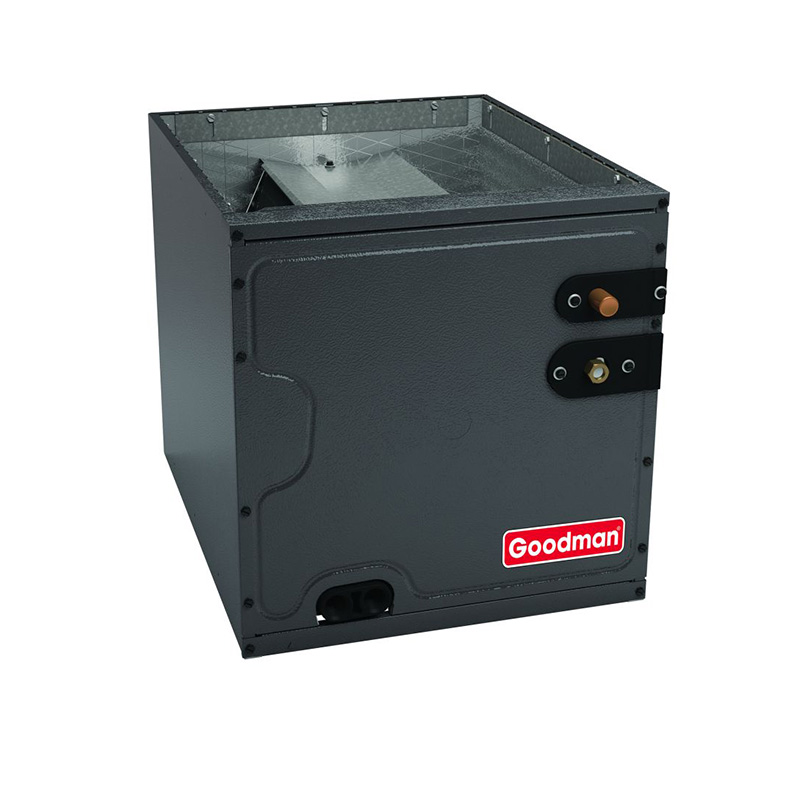
Goodman 5 Ton 13.6 SEER2 120000 BTU 96% AFUE Two Stage Multi-Speed ECM Gas Furnace System – Upflow | R32
View on AC Direct see your lowest price →Check current price on AC Direct →
Key features
- 5-ton two-stage cooling rated at 13.6 SEER2 using R-32 refrigerant
- 120,000 BTU two-stage gas furnace at 96% AFUE for high-efficiency heating
- Multi-speed ECM blower motor reduces electricity use and improves airflow control
- Upflow configuration suits basement or ground-level air handler installations
- Two-stage operation improves humidity control and reduces on/off temperature swings
- R-32 refrigerant has roughly 68% lower global warming potential than R-410A
About this system
The Goodman 5-ton, 13.6 SEER2, 96% AFUE upflow system pairs a two-stage air conditioner with a two-stage, multi-speed ECM gas furnace to cover large homes typically in the 2,500 to 3,500 square-foot range, depending on climate and insulation. The 120,000 BTU furnace output is on the high end for residential use, making this a reasonable fit for cold-climate homes with significant heating loads, large open floor plans, or homes with above-average heat loss. R-32 refrigerant carries a lower global warming potential than the R-410A it replaces, and its slightly higher energy density can support modest efficiency gains when the system is properly charged and commissioned.
The two-stage compressor and multi-speed ECM blower motor are the most meaningful upgrades over a basic single-stage system at this price tier. Two-stage operation lets the system run at a lower capacity on mild days, which improves humidity control, reduces temperature swings, and cuts runtime noise compared to single-stage equipment. The ECM motor draws significantly less electricity than a standard PSC blower motor and ramps airflow more precisely to match demand. Together, these features push real-world comfort and efficiency closer to what the rated numbers suggest, provided the duct system is sized and sealed correctly. At 13.6 SEER2, efficiency sits near the federal minimum for many northern regions and modestly above it for southern ones, so this is not a high-efficiency cooling system by current standards.
Goodman positions this system as a value-oriented option, typically priced 15 to 25 percent below comparable equipment from Trane, Lennox, or Carrier. That gap covers the hardware cost but not installation labor, so the total installed price difference narrows considerably. Buyers who prioritize upfront cost over long-term operating expense or who plan to sell the home within a decade tend to get the most from this kind of package. Those expecting to stay 15-plus years and keep heating and cooling costs low should weigh the lower SEER2 rating and Goodman’s documented compressor lifespan against the savings at purchase.
This Goodman bundle delivers solid two-stage comfort and strong heating efficiency at a price point well below premium brands, making it a practical choice for budget-conscious buyers with large homes in heating-dominant climates. The 13.6 SEER2 rating is near the low end of current standards, so cooling operating costs will be higher than mid- or high-efficiency alternatives over time. Long-term ownership confidence depends heavily on installer quality and a willingness to budget for component repairs, particularly after the seventh year.
Overall score is the average of the five ratings above.
What we like
- 96% AFUE furnace delivers genuine heating efficiency and meaningfully lower gas bills versus 80% AFUE systems
- Two-stage operation and ECM blower improve comfort and humidity control over basic single-stage equipment
- Priced 15 to 25 percent below comparable Trane, Lennox, and Carrier systems, lowering the upfront barrier
- R-32 refrigerant is a forward-compatible choice as R-410A is phased out industry-wide
- Two-stage furnace and variable-speed blower reduce noise during the longer, lower-capacity run cycles
Trade-offs
- 13.6 SEER2 cooling efficiency is near the federal minimum and will cost more to operate annually than 16+ SEER2 alternatives
- Dual-run capacitors are a documented early failure point, typically requiring a 300 to 600 dollar repair
- Compressor lifespan averages 10 to 14 years versus 15 to 20 years for premium-brand compressors
- A minority of owners report refrigerant leaks within the first year, most often tied to install or charge quality rather than the unit itself
What homeowners and pros say about Goodman
Homeowners who have lived with Goodman equipment long enough to form a real opinion tend to land in two camps. Those who had a skilled installer and kept up with maintenance often report years of trouble-free operation and point to the lower purchase price as genuine value. Those who ran into problems more frequently cite repair costs that started climbing around year seven or eight, which lines up with Goodman’s ConsumerAffairs score of roughly 2.5 out of 5, a channel where complaints are overrepresented but the pattern of post-warranty repair frustration appears consistently. Google dealer reviews, which capture a broader and more balanced audience, sit around 3.8 out of 5, where affordability and the two-stage comfort improvement are the most common points of praise.
HVAC technicians who work on Goodman equipment regularly point to dual-run capacitors as the most predictable service call, a repair that typically runs 300 to 600 dollars and is not unique to Goodman but does show up frequently in field reports on this brand. Evaporator coil leaks are a more significant documented failure mode, appearing in a meaningful share of owner accounts and carrying a higher repair cost. On the furnace side, the 96% AFUE rating is well regarded and the two-stage operation earns consistent approval for comfort. The compressor longevity gap, where Goodman averages 10 to 14 years against 15 to 20 for premium brands, is the trade-off that matters most to anyone planning a long ownership horizon. For a 5-ton system covering a large home, that difference in expected replacement timing is worth factoring into the total cost picture before committing to the lower sticker price.
Sources: ConsumerAffairs Goodman owner reviews, AHRI Directory of Certified Product Performance, U.S. DOE appliance and equipment efficiency standards, Goodman product specification sheets.
What it costs to run
At 13.6 SEER2, cooling this 5-ton system for a typical 1200-hour cooling season at the U.S. average electricity rate of $0.17/kWh works out to roughly $900 per year in cooling, about $13 less per year than a minimum-efficiency 13.4 SEER2 unit of the same size. Your real cost depends on your climate and local rate.
Method: (60,000 BTU/hr ÷ 13.6 SEER2) × 1200 hours ÷ 1000 × $0.17/kWh. Rate source: U.S. EIA average; cooling hours: moderate-climate estimate.
How it compares
| Brand | Comparable model | SEER2 | Stage | Price position |
|---|---|---|---|---|
| Goodman | GSXH5 / GMVC96 Series (this system) | 13.6 | two-stage | Value pick |
| Carrier | Performance 16 / 58CVA Series | 16+ | two-stage | 20 to 30 percent higher than this Goodman system |
| Trane | XR15 / S9V2 Series | 15+ | two-stage | 20 to 25 percent higher than this Goodman system |
| Lennox | Merit ML14XC1 / SLP98V Series | 14 to 16 | two-stage / variable | 25 to 35 percent higher than this Goodman system |
Competitor rows are comparable single-stage units at similar efficiency; price is relative position, not a quote.
Questions about this system
Is 5 tons and 120,000 BTU the right size for my home?
A proper Manual J load calculation is the only reliable way to answer this. As a rough reference, 5 tons is often used for homes in the 2,500 to 3,500 square-foot range in moderate climates, but insulation levels, window area, ceiling height, and local design temperatures all shift that number. Oversizing a two-stage system is less damaging than oversizing a single-stage unit, but it still causes short-cycling and humidity problems if the mismatch is large.
What should I budget for repairs over the life of this system?
The most commonly reported failure on Goodman equipment is the dual-run capacitor, a relatively inexpensive repair typically running 300 to 600 dollars including labor. Evaporator coil leaks are also documented in owner feedback and cost more to address, often 1,000 to 2,000 dollars depending on the repair approach. Setting aside a small annual maintenance fund from year five onward is a reasonable precaution.
How does the two-stage furnace actually help compared to a single-stage unit?
A two-stage furnace fires at a lower capacity, typically around 65 to 70 percent, during moderate cold and only steps up to full output on the coldest days. This means longer, steadier run cycles that distribute heat more evenly, reduce temperature swings between calls for heat, and operate more quietly. The ECM blower in this system further smooths airflow and uses less electricity than a standard single-speed motor.
Does using R-32 refrigerant change anything about service or maintenance?
R-32 requires technicians to use compatible recovery equipment and follow specific handling procedures, and not all service technicians are currently equipped for it. When hiring for future service calls, confirm the company has R-32 certified equipment and experience. On the homeowner side, day-to-day operation and maintenance schedules are unchanged.
Why does install quality matter so much for a Goodman system specifically?
Industry technicians consistently cite installation as the largest single factor in how long a Goodman unit lasts and how efficiently it runs. This applies to all HVAC equipment, but Goodman's thinner margin for error compared to premium brands makes it more noticeable. A correct refrigerant charge, proper static pressure, sealed ductwork, and accurate airflow setup at startup have a direct impact on whether the system reaches its rated lifespan or falls short of it.
Specifications
| Cooling capacity | 5 Ton |
| Efficiency | 13.6 SEER2 |
| Furnace output | 120000 BTU |
| Furnace efficiency | 96% AFUE |
| Configuration | Upflow |
| Refrigerant | R-32 |