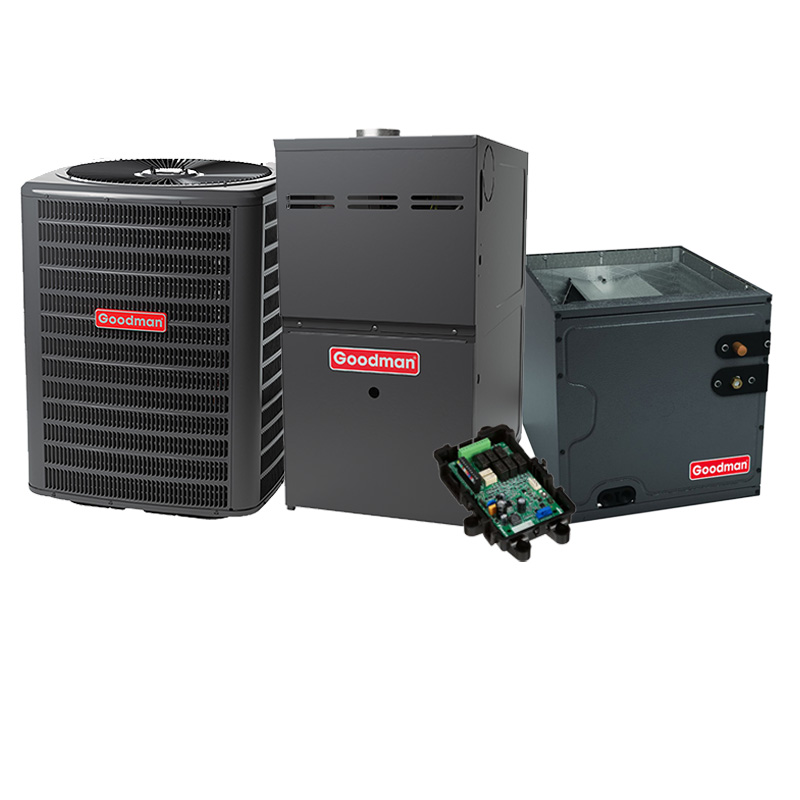
Goodman 5 Ton 13.6 SEER2 60000 BTU 80% Two-Stage Variable Speed Gas Furnace With R32 AC Condenser And Coil System – Upflow
View on AC Direct see your lowest price →Check current price on AC Direct →
Key features
- 5-ton cooling capacity with 13.6 SEER2 efficiency rating
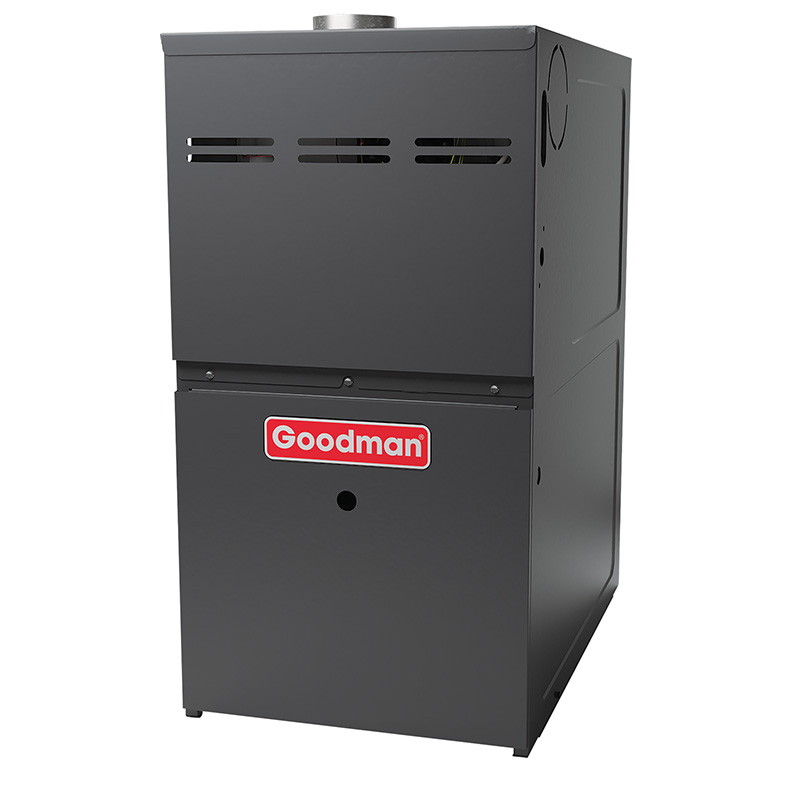
- 60,000 BTU two-stage gas furnace with variable-speed ECM blower
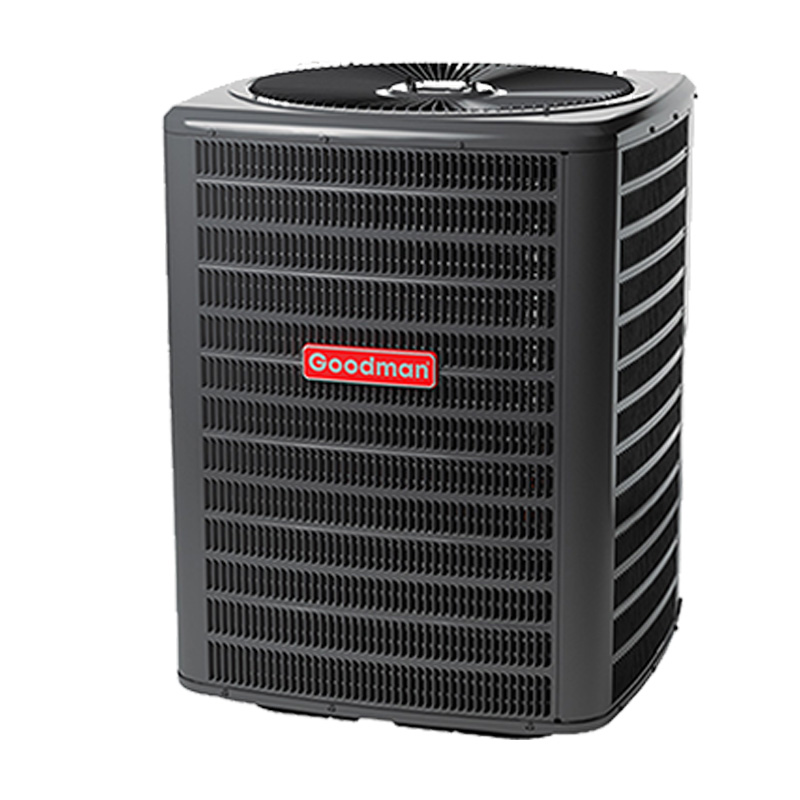
- R-32 refrigerant with lower global warming potential than R-410A
- Upflow configuration for basement or ground-level mechanical room installs
- Two-stage compressor reduces short-cycling and improves dehumidification
- Factory-matched condenser, coil, and air handler for consistent system performance
About this system
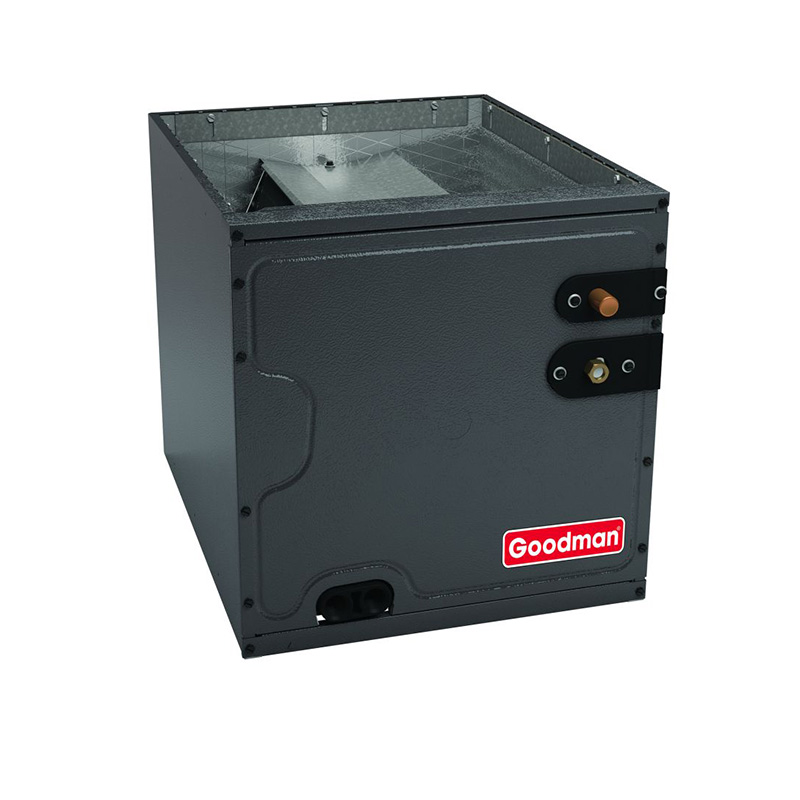
This Goodman upflow system pairs a 5-ton R-32 condenser with a 60,000 BTU two-stage, variable-speed gas furnace and a matched evaporator coil, giving larger homes a single-source heating and cooling solution. At 13.6 SEER2, efficiency sits at the federally compliant baseline for most U.S. regions, which keeps equipment cost down but means operating costs will run higher over time than systems rated 16 SEER2 or above. The two-stage compressor is worth noting: it runs on a lower stage during mild weather, reducing short-cycling, evening out humidity removal, and softening the load on the electrical system compared to single-stage equipment of the same tonnage.
R-32 refrigerant is a meaningful forward-looking choice. It has a lower global warming potential than R-410A, and as the industry moves away from R-410A it will be easier to service and recharge this unit in the years ahead. The variable-speed furnace blower adds comfort by maintaining steadier airflow and works well with zoning systems or homes with longer duct runs. The upflow configuration suits a basement or ground-level mechanical room where supply air exits the top of the air handler and feeds overhead ductwork. Buyers replacing an existing upflow system will find this an especially straightforward fit mechanically, though a licensed installer is required and install quality will heavily influence long-term performance.
This bundle is best suited to homeowners in climates with moderate to heavy cooling loads who want a complete matched system at a price point well below Trane, Carrier, or Lennox equivalents, and who are comfortable with the trade-offs that come with a value-tier brand: lower upfront cost, a real but manageable history of component failures, and performance that depends significantly on who installs it.
This Goodman bundle delivers a complete, factory-matched heating and cooling system at a price 15 to 25 percent below comparable premium-brand configurations, making it a practical choice for budget-conscious buyers in larger homes. The two-stage operation and variable-speed blower add genuine comfort value beyond what the base SEER2 number suggests, but buyers should budget for potential component replacements in years 7 through 14 and invest in a quality installation.
Overall score is the average of the five ratings above.
What we like
- Priced 15 to 25 percent below comparable Trane, Lennox, and Carrier systems
- Two-stage compressor reduces short-cycling and improves humidity control
- Variable-speed ECM blower delivers quieter, more consistent airflow
- R-32 refrigerant is serviceable long-term as R-410A is phased out
- Factory-matched components reduce compatibility guesswork and can support warranty coverage
Trade-offs
- 13.6 SEER2 is baseline efficiency; operating costs will be higher than 16+ SEER2 systems over a 10-15 year lifespan
- Dual-run capacitors are a documented common failure point, typically after year 7, adding repair costs
- Evaporator coil leaks appear in a meaningful share of owner reports, and compressor lifespan averages 10 to 14 years versus 15 to 20 for premium brands
- A minority of owners report refrigerant leaks within the first year, most often tied to install or charge issues, underscoring how critical installer quality is
What homeowners and pros say about Goodman
Homeowners who post about their Goodman systems online tend to split into two camps: those who got a clean installation and report years of uneventful service, and those who encountered problems and feel the savings evaporated in repair bills. On Google dealer reviews, Goodman-installed systems average around 3.8 out of 5, with affordability consistently cited as the main draw. On ConsumerAffairs, which skews toward complaints, the brand sits at about 2.5 out of 5, with a recurring pattern of repair costs climbing after roughly year seven. Neither number tells the whole story, but together they suggest a brand that performs adequately when installed correctly and starts to show its value-tier nature as components age.
HVAC technicians point to the dual-run capacitor as the component they replace most often on Goodman equipment, typically a low-cost fix in the 300 to 600 dollar range but a predictable one that owners should anticipate. Evaporator coil leaks are a more expensive concern that appears in enough owner reports to be taken seriously, and compressor lifespan on Goodman units tends to average 10 to 14 years compared to 15 to 20 years on premium brands. Pros who speak positively about Goodman usually do so in the context of clients with tight budgets, noting that a well-installed Goodman in a properly sized application will serve most homeowners reasonably well through the warranty period and into the early years beyond it.
Sources: ConsumerAffairs Goodman owner reviews, AHRI Directory of Certified Product Performance, U.S. DOE appliance and equipment efficiency standards, Goodman product specification sheets.
What it costs to run
At 13.6 SEER2, cooling this 5-ton system for a typical 1200-hour cooling season at the U.S. average electricity rate of $0.17/kWh works out to roughly $900 per year in cooling, about $13 less per year than a minimum-efficiency 13.4 SEER2 unit of the same size. Your real cost depends on your climate and local rate.
Method: (60,000 BTU/hr ÷ 13.6 SEER2) × 1200 hours ÷ 1000 × $0.17/kWh. Rate source: U.S. EIA average; cooling hours: moderate-climate estimate.
How it compares
| Brand | Comparable model | SEER2 | Stage | Price position |
|---|---|---|---|---|
| Goodman | 5-Ton 13.6 SEER2 Two-Stage R-32 Upflow System | 13.6 | Two-stage | Value pick |
| Carrier | Performance 17 Series (24ACC736A / FV4C air handler bundle) | 17 | Two-stage | Approximately 20 to 25 percent more than this Goodman bundle |
| Trane | XR15 / S9V2 Gas Furnace Bundle | 15.1 | Single-stage | Approximately 15 to 20 percent more than this Goodman bundle |
| Lennox | Merit ML14XC1 / SLP98V Bundle | 14 | Single-stage | Approximately 15 to 25 percent more than this Goodman bundle |
Competitor rows are comparable single-stage units at similar efficiency; price is relative position, not a quote.
Questions about this system
Why does this system use R-32 instead of R-410A, and does that affect service costs?
R-32 has a lower global warming potential than R-410A and is part of the industry's transition away from older refrigerants. As R-410A becomes harder to source, R-32 systems should be easier and potentially less expensive to service over time. Most certified HVAC technicians can handle R-32, but it is worth confirming your local service providers are equipped for it before purchasing.
Is 13.6 SEER2 going to cost me significantly more to run than a higher-efficiency system?
At baseline efficiency, you will pay more in electricity costs over the life of the system compared to a 16 or 17 SEER2 unit, and the gap grows in climates with long, hot summers. For a 5-ton system running heavy cooling hours, the annual difference can be meaningful enough to factor into your total cost of ownership calculation alongside the lower purchase price.
What is the most common repair this Goodman system will likely need, and how much does it cost?
The dual-run capacitor is the most frequently reported failure on Goodman equipment, and it typically shows up after the 7-year mark. It is one of the more affordable HVAC repairs, generally running between 300 and 600 dollars depending on your market and labor rates. Evaporator coil leaks are a secondary concern and tend to be costlier if they occur.
Does this system come with a warranty, and what does it actually cover?
Goodman typically offers a 10-year parts limited warranty on registered equipment, which covers components like the compressor and heat exchanger. Registration is usually required within a set window after installation to activate full coverage, and the warranty does not cover labor costs, which can be substantial if a major component fails outside a service agreement.
How important is installer quality for this specific system, and what should I look for in a contractor?
Installer quality is the single biggest factor in how long this system performs reliably, according to technicians who service Goodman equipment. The minority of owners who report refrigerant leaks in the first year are almost always dealing with an installation or initial charge issue rather than a manufacturing defect. Look for a contractor who pulls permits, performs a Manual J load calculation for your home, and pressure-tests the refrigerant circuit before startup.
Specifications
| Cooling capacity | 5 Ton |
| Efficiency | 13.6 SEER2 |
| Furnace output | 60000 BTU |
| Configuration | Upflow |
| Refrigerant | R-32 |