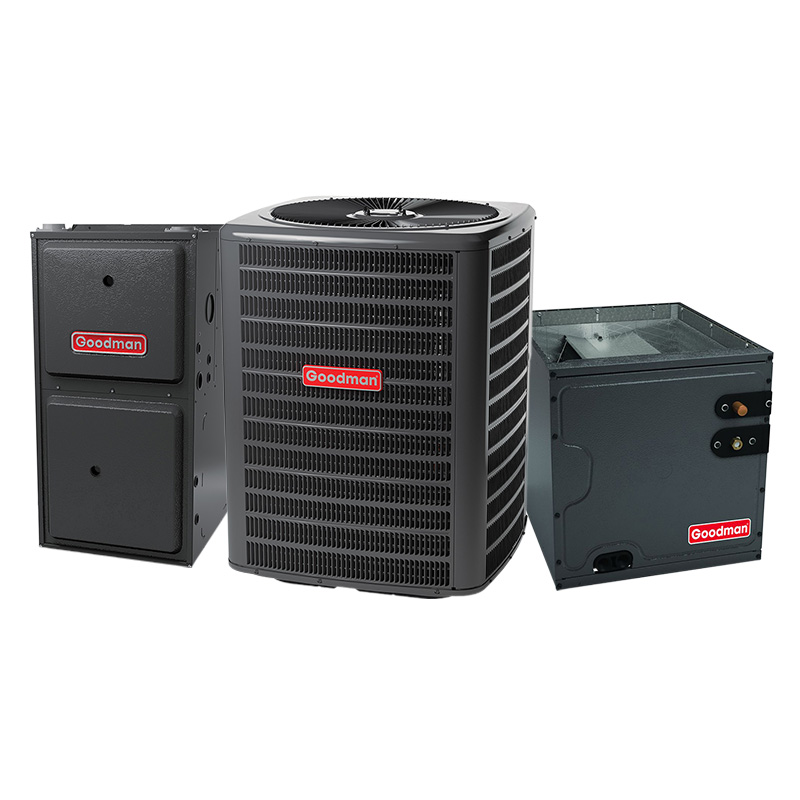
Goodman 5 Ton 13.6 SEER2 AC & Gas Furnace System – Multi-Speed, 120000 BTU Gas Furnace, 92% AFUE, Upflow, R32
View on AC Direct see your lowest price →Check current price on AC Direct →
Key features
- 5-ton cooling capacity matched with 120,000 BTU upflow gas furnace
- 13.6 SEER2 efficiency rating meets 2023 federal minimum standards for most regions
- 92% AFUE furnace recovers roughly 92 cents of heat energy per dollar of gas consumed
- Multi-speed furnace blower for improved comfort and humidity control vs. single-speed
- R-32 refrigerant with a lower global-warming potential than R-410A
- Upflow configuration compatible with the most common residential ductwork layouts
About this system
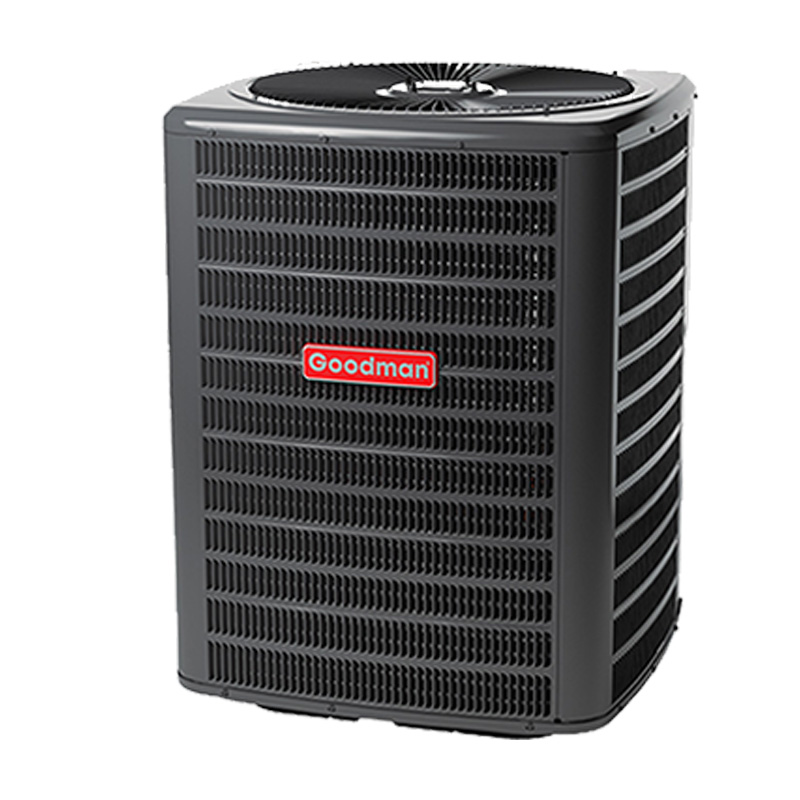
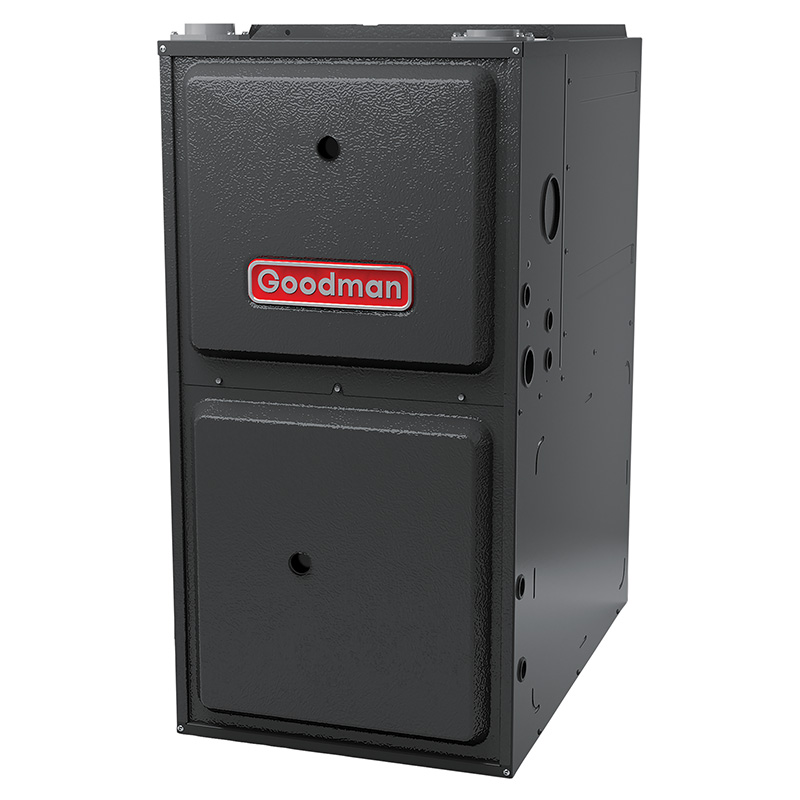
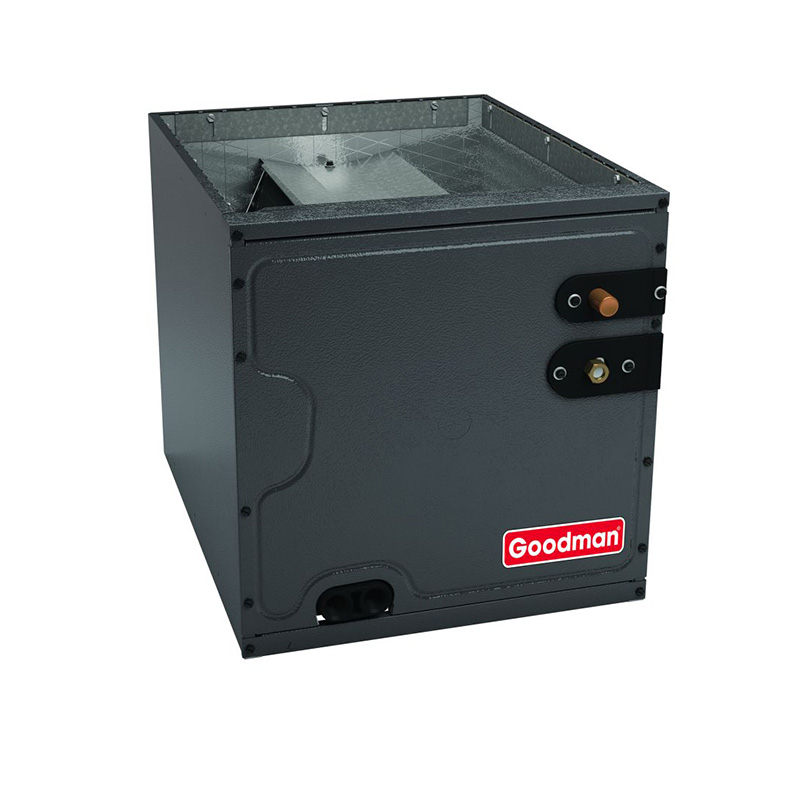
The Goodman GLXS3BN6010D pairs a 5-ton, 13.6 SEER2 single-stage air conditioner with a 120,000 BTU upflow gas furnace rated at 92% AFUE. That combination is aimed at larger homes, typically in the 2,500 to 3,500 square foot range depending on climate zone and insulation, where heating loads are heavy enough to justify the high BTU output. The 92% AFUE rating means roughly 92 cents of every dollar spent on gas goes toward usable heat, a meaningful step above the 80% baseline but a step below the 96% to 98% tier offered by two-stage or modulating furnaces. The upflow configuration suits the most common residential setup: a furnace in a basement, utility closet, or mechanical room blowing conditioned air upward through ductwork overhead.
The system uses R-32 refrigerant, a lower global-warming-potential alternative to the R-410A it replaces, and one that is increasingly common as the industry moves away from older refrigerants. R-32 requires technicians certified to handle it, so confirm your installer is current before scheduling. The multi-speed furnace blower provides two operating levels, which improves comfort distribution and humidity control compared to a single-speed unit, though it does not match the fine-grained comfort of a variable-speed system. This is a straightforward, code-compliant setup for buyers who want proven reliability at a price point well below premium brands.
The Goodman GLXS3BN6010D delivers a functional, code-compliant heating and cooling system at a price point that is realistically 15 to 25 percent below comparable Carrier, Trane, and Lennox equipment. It is a workable choice for budget-conscious buyers in larger homes, provided installation is handled by an experienced technician, since Goodman's real-world performance is heavily tied to install quality. Owners should budget for likely capacitor replacement and possibly coil or compressor work in the 7 to 14 year window.
Overall score is the average of the five ratings above.
What we like
- Priced significantly below premium brands for the same efficiency tier, freeing budget for a quality install
- 92% AFUE furnace delivers solid heating efficiency without the cost of a modulating unit
- Multi-speed blower improves temperature evenness and humidity management over basic single-speed designs
- R-32 refrigerant aligns with current and near-future regulatory direction, reducing retrofit risk
- Wide availability of parts and service technicians familiar with Goodman equipment
Trade-offs
- Dual-run capacitors are the most commonly reported failure point, typically requiring replacement within the first decade
- Evaporator coil leaks appear in a meaningful share of owner reviews and can be costly to address out of warranty
- Compressor lifespan averages 10 to 14 years, noticeably shorter than the 15 to 20 years seen in premium brands
- A minority of owners report refrigerant leaks in the first year, most often traced to installation or initial charge issues rather than equipment defects
What homeowners and pros say about Goodman
Homeowners who review Goodman equipment online tend to split along a clear fault line. Those who had an experienced installer handle the job and kept up with maintenance often report years of uneventful service and point to the lower upfront cost as a genuine advantage. Those who ran into trouble cite recurring repair bills, and Goodman’s ConsumerAffairs score of roughly 2.5 out of 5 reflects that pattern, since that platform draws a disproportionate share of frustrated owners. Google dealer reviews sit around 3.8 out of 5 across hundreds of ratings per location, where the most common praise is straightforward: it works and the price made sense. Neither number tells the whole story, but together they suggest a brand where outcomes vary more than they do with premium equipment.
HVAC technicians tend to describe Goodman in practical terms. The dual-run capacitor is the single most frequently cited failure point, a component that typically costs between 300 and 600 dollars to replace and is considered a routine repair rather than a sign of broader system trouble. Evaporator coil leaks show up often enough in owner reviews to be worth noting, and technicians who specialize in Goodman service treat them as a known risk rather than a surprise. Compressor longevity is the other recurring topic: Goodman compressors tend to average 10 to 14 years in real-world use, compared to 15 to 20 years for top-tier brands, a gap that matters more the longer you plan to stay in the home. A small but documented share of first-year refrigerant leaks also surfaces in owner reports, and most technicians attribute those to installation or initial charge problems rather than a factory defect, which reinforces the point that who installs this system matters as much as which system you buy.
Sources: ConsumerAffairs Goodman owner reviews, AHRI Directory of Certified Product Performance, U.S. DOE appliance and equipment efficiency standards, Goodman product specification sheets.
What it costs to run
At 13.6 SEER2, cooling this 5-ton system for a typical 1200-hour cooling season at the U.S. average electricity rate of $0.17/kWh works out to roughly $900 per year in cooling, about $13 less per year than a minimum-efficiency 13.4 SEER2 unit of the same size. Your real cost depends on your climate and local rate.
Method: (60,000 BTU/hr ÷ 13.6 SEER2) × 1200 hours ÷ 1000 × $0.17/kWh. Rate source: U.S. EIA average; cooling hours: moderate-climate estimate.
How it compares
| Brand | Comparable model | SEER2 | Stage | Price position |
|---|---|---|---|---|
| Goodman | GLXS3BN6010D | 13.6 | Single-stage | Value pick |
| Carrier | Comfort 13 (24ACC3 series) | 13.4 to 14.0 | Single-stage | Typically 15 to 25 percent more than Goodman |
| Trane | XR13 series | 13.4 to 14.0 | Single-stage | Typically 15 to 25 percent more than Goodman |
| Lennox | Merit 13ACX series | 13.4 to 14.0 | Single-stage | Typically 15 to 25 percent more than Goodman |
Competitor rows are comparable single-stage units at similar efficiency; price is relative position, not a quote.
Questions about this system
Is 13.6 SEER2 enough for a hot Southern climate, or should I step up?
13.6 SEER2 meets the 2023 federal minimum for most northern regions and is close to the minimum for the Southeast and Southwest. It will operate legally and functionally, but a 15 or 16 SEER2 unit will lower monthly utility costs noticeably if you run the system heavily for five or more months per year. For very hot climates with long cooling seasons, the upgrade math often favors the higher-efficiency model.
Does a 5-ton, 120,000 BTU system require a special electrical or gas service upgrade?
The 5-ton condensing unit typically requires a dedicated 240V circuit, usually 40 to 60 amps depending on wiring distance and local code. The 120,000 BTU furnace requires a gas line sized to support that input; many existing residential gas lines are sufficient, but your installer should verify capacity and pressure, particularly if other high-BTU appliances share the same run.
What does multi-speed mean for this furnace, and how is it different from variable speed?
Multi-speed means the furnace blower operates at two fixed speeds, low and high, switching between them based on demand. Variable-speed motors can ramp continuously across a wide range, using less electricity and maintaining more consistent temperatures. Multi-speed is more comfortable and slightly more efficient than single-speed, but it does not match the precision or the electricity savings of a true variable-speed blower.
My installer mentioned R-32 requires special handling. Is that a long-term concern?
R-32 is mildly flammable, classified A2L, which means technicians need specific training and equipment to service it safely. It is not a fringe refrigerant; most major manufacturers are adopting it, and the number of trained technicians is growing. In practice, routine maintenance and repair should not be harder to schedule than it was with R-410A systems a few years from now, though in some rural areas you may want to confirm technician availability before buying.
What warranty comes with this Goodman system, and what does it actually cover?
Goodman typically offers a 10-year parts limited warranty when the equipment is registered within a set window after installation, often 60 days, using a licensed contractor. The warranty covers manufacturer defects in parts but not labor, refrigerant, or failures caused by improper installation. Labor costs on an out-of-warranty repair, particularly for a coil or compressor, can easily run into the hundreds to low thousands of dollars, so extended labor coverage from your installer is worth pricing out.
Specifications
| Cooling capacity | 5 Ton |
| Efficiency | 13.6 SEER2 |
| Furnace output | 120000 BTU |
| Furnace efficiency | 92% AFUE |
| Configuration | Upflow |
| Refrigerant | R-32 |
| Model | GLXS3BN6010D |