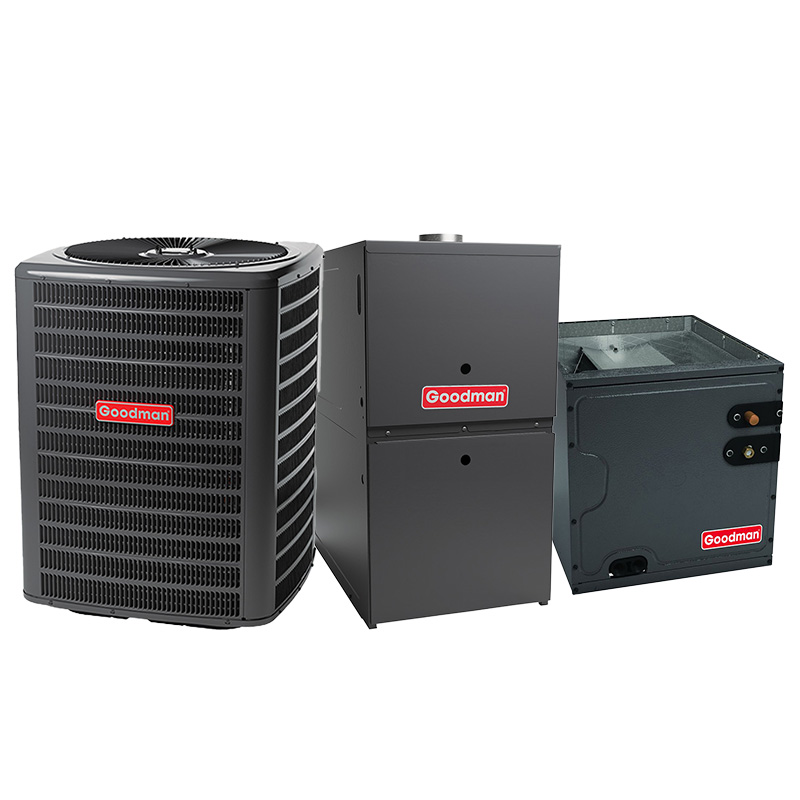
Goodman 5 Ton 13.6 SEER2 AC & Gas Furnace System – Two Stage Variable-Speed, 100000 BTU Gas Furnace, 80% AFUE, Upflow, R32
View on AC Direct see your lowest price →Check current price on AC Direct →
Key features
- Two-stage compressor reduces short cycling and improves humidity control on mild days
- Variable-speed ECM blower motor for quieter operation and more even air distribution
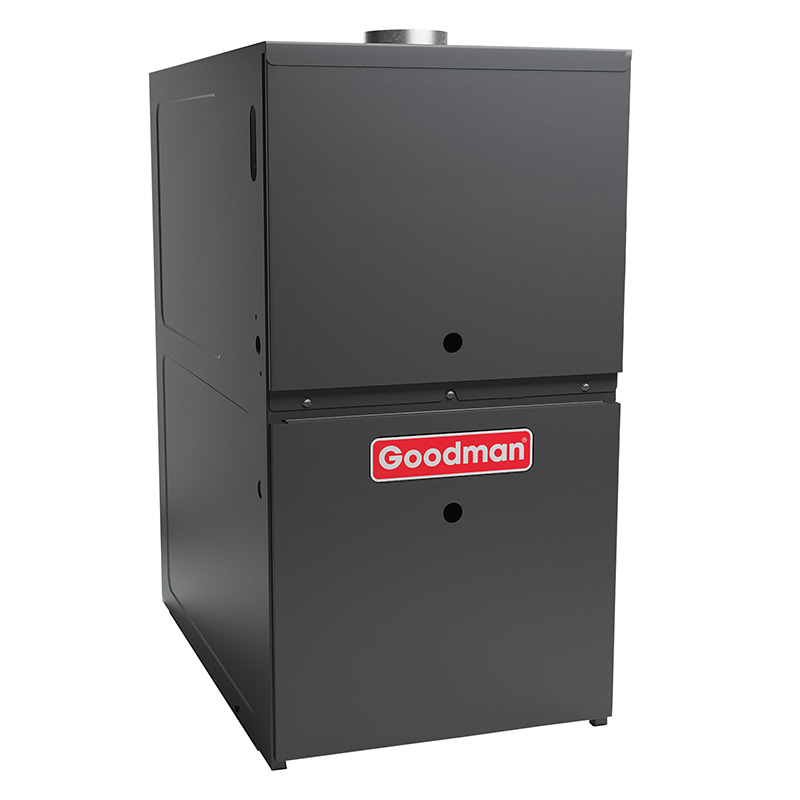
- 100,000 BTU upflow gas furnace rated at 80% AFUE
- R-32 refrigerant with lower global warming potential than R-410A
- 13.6 SEER2 efficiency meets current federal minimum standards for most climate zones
- Assembled in the USA; 10-year parts warranty available with registered installation by a licensed contractor
About this system
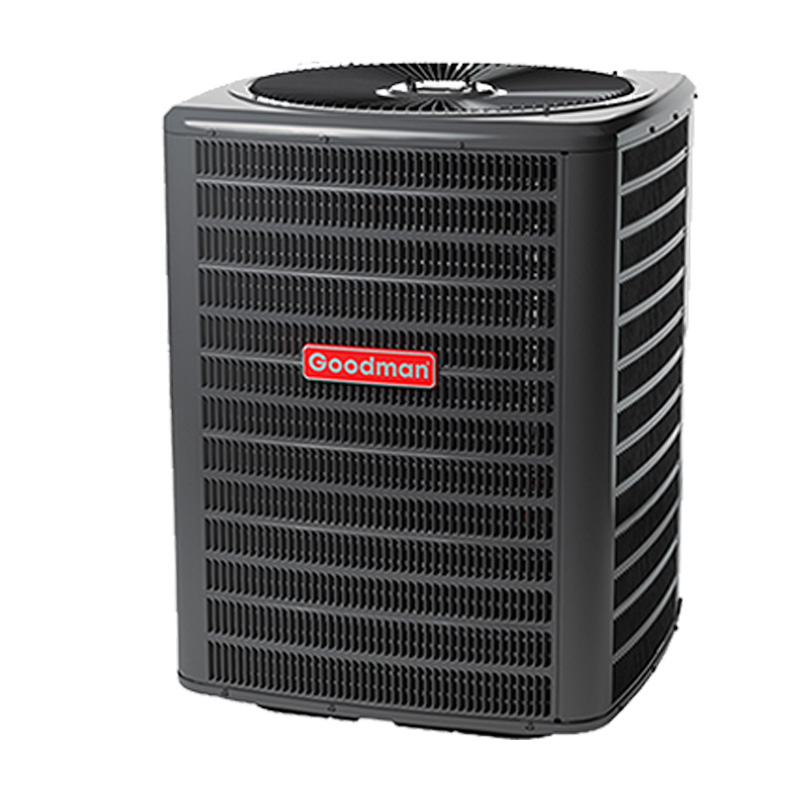
The Goodman 5-ton, 13.6 SEER2 split system pairs a two-stage, variable-speed air conditioner with a 100,000 BTU, 80% AFUE upflow gas furnace. At 5 tons, this system is built for larger homes, typically in the 2,400 to 3,200 square foot range depending on climate, insulation, and ceiling height. The two-stage compressor runs at a lower capacity on most days and ramps up only when temperatures climb, which reduces short cycling, keeps indoor humidity more stable, and trims operating costs compared to a single-stage unit at the same SEER2 rating. The variable-speed air handler blower adds to that comfort by moving air more quietly and consistently than a single-speed motor.
The 13.6 SEER2 rating sits at the current federal minimum efficiency tier for larger systems in most U.S. climate zones, so this is not a high-efficiency premium build. It will satisfy code in most regions, but homeowners in hot climates who run their systems heavily from May through September may find the operating cost savings of a 16 or 18 SEER2 unit worth the additional upfront investment. The 80% AFUE furnace is likewise an entry-level efficiency rating; roughly 20 cents of every heating dollar goes up the flue. That trade-off is more acceptable in mild-winter climates than in colder northern states where a 96% AFUE unit would pay back its premium faster. R-32 refrigerant has a lower global warming potential than R-410A and is becoming the industry standard, which is a forward-looking feature at this price point.
This system is assembled in the United States at Goodman’s Houston facility and carries the brand’s standard parts and labor warranty when registered by a licensed contractor. Like all Goodman equipment, it performs best when it is sized correctly for the load, installed with proper refrigerant charge, and commissioned by an experienced technician. Cutting corners on the install side is the most consistent predictor of shortened service life across the brand’s installed base.
This Goodman package delivers a functional, code-compliant two-stage system at a price point 15 to 25 percent below comparable Carrier, Trane, and Lennox configurations, making it a reasonable choice for budget-conscious buyers who understand they are accepting entry-level efficiency and a shorter average compressor lifespan. The two-stage and variable-speed features add genuine comfort value at this price, but the 80% AFUE furnace and 13.6 SEER2 rating mean ongoing operating costs will be higher than mid- or high-efficiency alternatives. Installation quality will largely determine whether this unit reaches the lower or upper end of its service life range.
Overall score is the average of the five ratings above.
What we like
- Two-stage cooling improves humidity control and comfort compared to single-stage units at similar cost
- Variable-speed ECM blower runs quietly and maintains more consistent temperatures
- R-32 refrigerant is a forward-compatible choice as the industry moves away from R-410A
- Price point is meaningfully lower than Carrier, Trane, and Lennox systems with similar staging and capacity
- 10-year registered parts warranty is competitive with most premium brands at this tier
Trade-offs
- 80% AFUE furnace wastes one dollar in five on heating fuel; a 96% AFUE unit pays back the difference faster in cold climates
- 13.6 SEER2 is the minimum efficiency threshold, so cooling operating costs will run higher than mid- or high-efficiency alternatives
- Documented failure patterns include dual-run capacitor failures, evaporator coil leaks, and compressor lifespans averaging 10 to 14 years versus 15 to 20 years for premium brands
- ConsumerAffairs ratings average around 2.5 out of 5, with recurring complaints about repair costs rising after year seven
What homeowners and pros say about Goodman
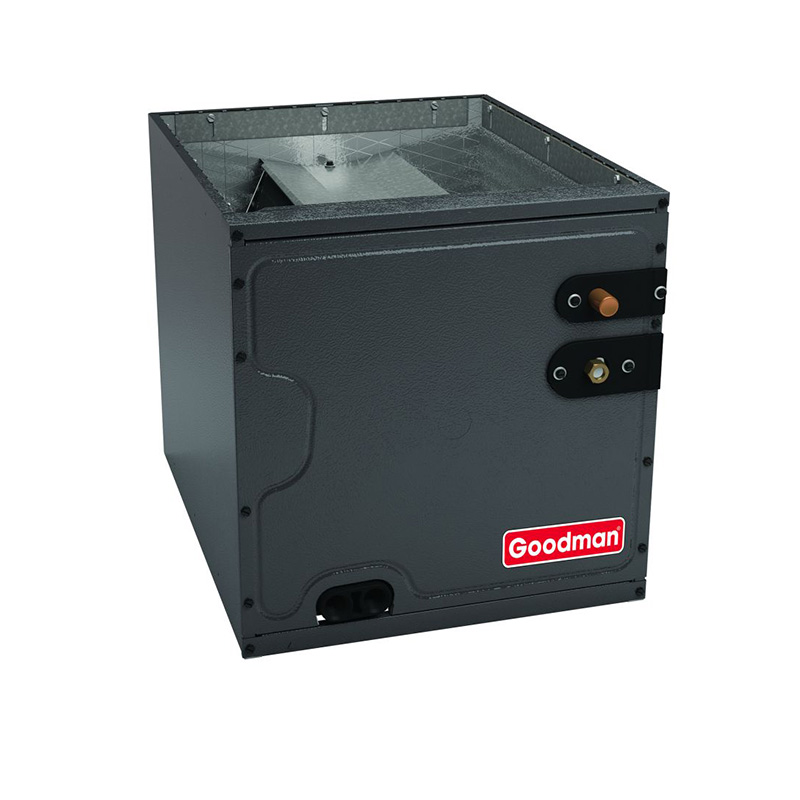
On Google dealer review pages, Goodman systems consistently pull scores around 3.8 out of 5 across hundreds of reviews per location, and the most repeated praise is straightforward: the price is lower and the equipment works. Owners who had a careful, experienced installer tend to report years of uneventful service. The specific failure modes that come up most often in owner accounts are dual-run capacitor failures, which are common across the industry and usually run 300 to 600 dollars to fix, and evaporator coil leaks, which are more disruptive and more costly. Those coil complaints show up often enough in Goodman feedback that they are worth budgeting for over a 10-plus year ownership window, particularly on a larger 5-ton system where the coil is a significant component.
ConsumerAffairs paints a harder picture, averaging around 2.5 out of 5, though that platform tends to attract people who have already had a problem rather than satisfied owners. The recurring theme there is repair costs climbing after roughly year seven, and compressor longevity is a real concern: Goodman compressors tend to average 10 to 14 years in service, compared to 15 to 20 years reported for premium-brand equipment. HVAC technicians who work across brands frequently note that Goodman’s performance gap compared to Trane, Carrier, or Lennox narrows considerably when the install is done right, and widens when it is not. For a 5-ton system where the equipment cost is already substantial, the quality of the commissioning work is not a place to save money.
Sources: ConsumerAffairs Goodman owner reviews, AHRI Directory of Certified Product Performance, U.S. DOE appliance and equipment efficiency standards, Goodman product specification sheets.
What it costs to run
At 13.6 SEER2, cooling this 5-ton system for a typical 1200-hour cooling season at the U.S. average electricity rate of $0.17/kWh works out to roughly $900 per year in cooling, about $13 less per year than a minimum-efficiency 13.4 SEER2 unit of the same size. Your real cost depends on your climate and local rate.
Method: (60,000 BTU/hr ÷ 13.6 SEER2) × 1200 hours ÷ 1000 × $0.17/kWh. Rate source: U.S. EIA average; cooling hours: moderate-climate estimate.
How it compares
| Brand | Comparable model | SEER2 | Stage | Price position |
|---|---|---|---|---|
| Goodman | GSZC7 / GMVC8 Series | 13.6 | Two-stage / Variable-speed | Value pick |
| Carrier | Performance 17 (24ACC7) with 80% Gas Furnace | 13.8 to 14.3 | Single-stage | Typically 15 to 25 percent more than this Goodman system |
| Trane | XR14 (4TTR4) with S8X1 80% Furnace | 13.8 to 14.4 | Single-stage | Typically 15 to 25 percent more than this Goodman system |
| Lennox | Merit 14ACX with ML180 80% Furnace | 13.8 to 14.3 | Single-stage | Typically 15 to 25 percent more than this Goodman system |
Competitor rows are comparable single-stage units at similar efficiency; price is relative position, not a quote.
Questions about this system
Is 5 tons the right size for my house, or do I need a Manual J load calculation?
A Manual J load calculation by your installer is the only reliable way to confirm sizing. As a rough benchmark, 5 tons is often appropriate for homes between 2,400 and 3,200 square feet, but ceiling height, insulation levels, window area, and local climate all shift that number. An oversized unit will short cycle and leave humidity problems behind; undersizing means the system runs continuously on the hottest days.
What does the two-stage compressor actually do differently in daily use?
On most days, the compressor runs at its lower stage, which is sufficient to maintain setpoint. This longer, slower run time removes more moisture from the air than a single-stage unit that short cycles on and off. The system only kicks to full capacity during peak heat. The result is more consistent temperatures, lower humidity, and somewhat quieter operation on typical days.
Should I upgrade to the 96% AFUE furnace instead of this 80% AFUE model?
In climates with long, cold winters, a 96% AFUE furnace typically pays back its cost premium in five to eight years through lower gas bills. In mild-winter climates where the furnace runs less than three or four months a year, the payback period stretches considerably and the 80% unit may make financial sense. Ask your installer to run a simple payback calculation based on your local gas rate and estimated heating hours.
How serious is the evaporator coil leak issue reported by some Goodman owners?
Evaporator coil leaks appear in a meaningful share of owner reviews and can result in refrigerant loss, reduced cooling capacity, and repair bills that offset some of the initial savings. This failure mode is not unique to Goodman, but it appears more frequently in owner feedback than with premium brands. Registering the system for the 10-year parts warranty is essential so a coil replacement is covered if one develops.
Does using R-32 refrigerant change anything about who can service this unit?
R-32 is classified as mildly flammable, so not every technician is currently equipped or certified to work with it. Before purchasing, confirm that your local HVAC service providers are familiar with R-32 handling procedures. In practice, R-32 systems are becoming common enough that most established contractors are preparing for or already handling it, but it is worth a quick confirmation call before committing.
Specifications
| Cooling capacity | 5 Ton |
| Efficiency | 13.6 SEER2 |
| Furnace output | 100000 BTU |
| Furnace efficiency | 80% AFUE |
| Configuration | Upflow |
| Refrigerant | R-32 |