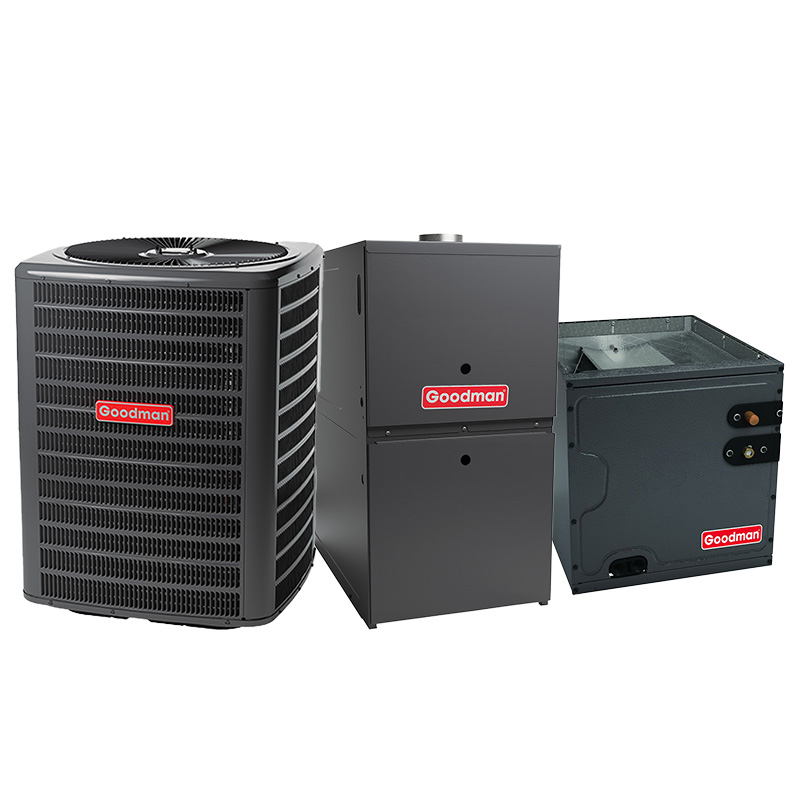
Goodman 5 Ton 13.6 SEER2 AC & Gas Furnace System – Two Stage Variable-Speed, 80000 BTU Gas Furnace, 80% AFUE, Upflow, R32
View on AC Direct see your lowest price →Check current price on AC Direct →
Key features
- Two-stage compressor reduces short-cycling and improves humidity removal on mild days
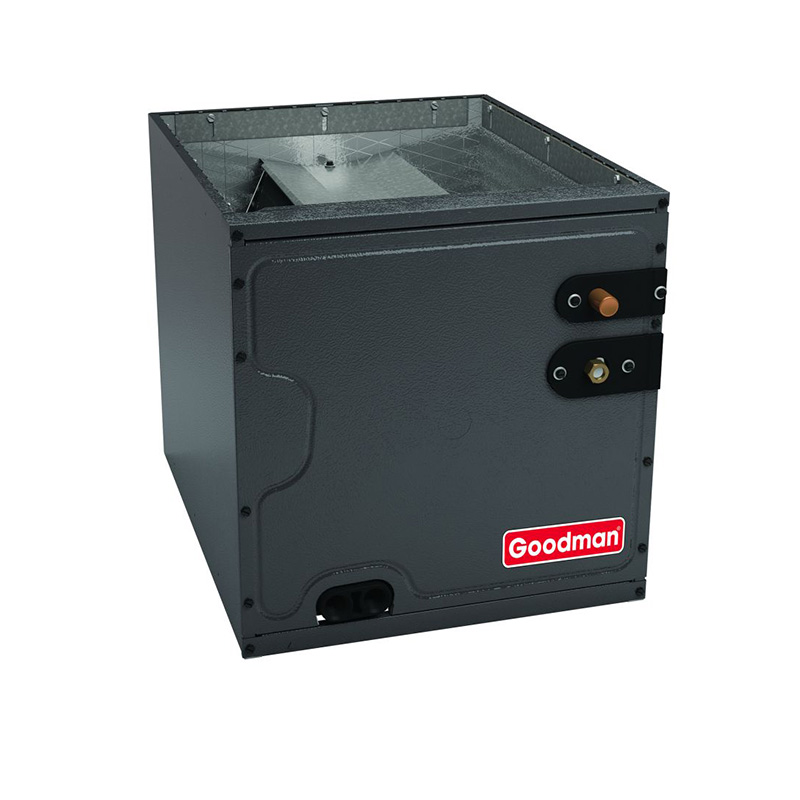
- Variable-speed air handler delivers quieter, more consistent airflow than single-speed blowers
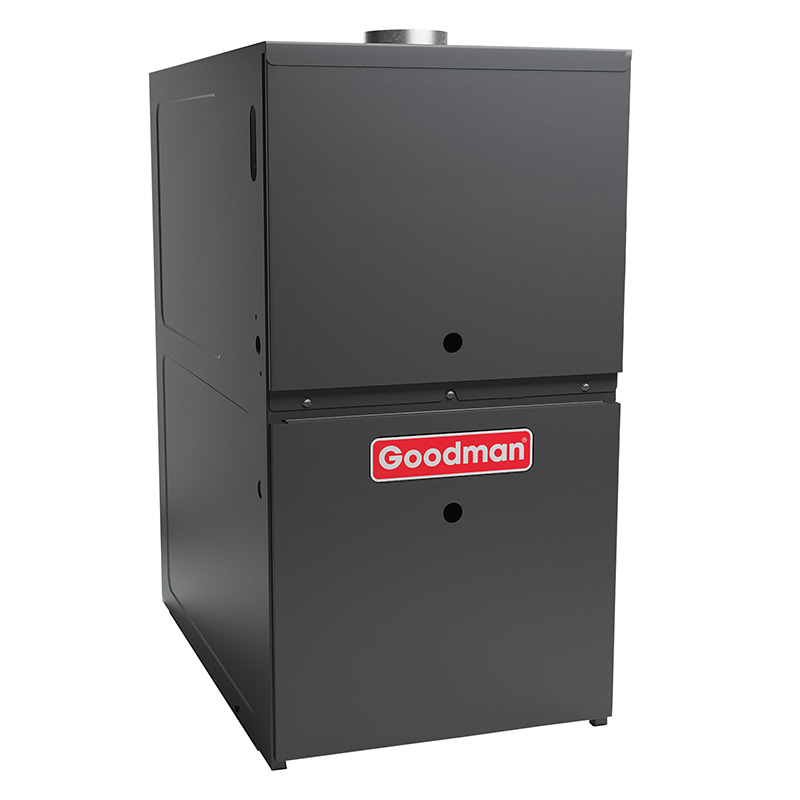
- 80,000 BTU, 80% AFUE upflow gas furnace for homes in moderate to mild winter climates
- R-32 refrigerant with roughly 68% lower global warming potential than R-410A
- 13.6 SEER2 efficiency meets current federal minimums for most U.S. regions
- 5-ton capacity suited to larger homes typically in the 2,400 to 3,200 sq ft range
About this system
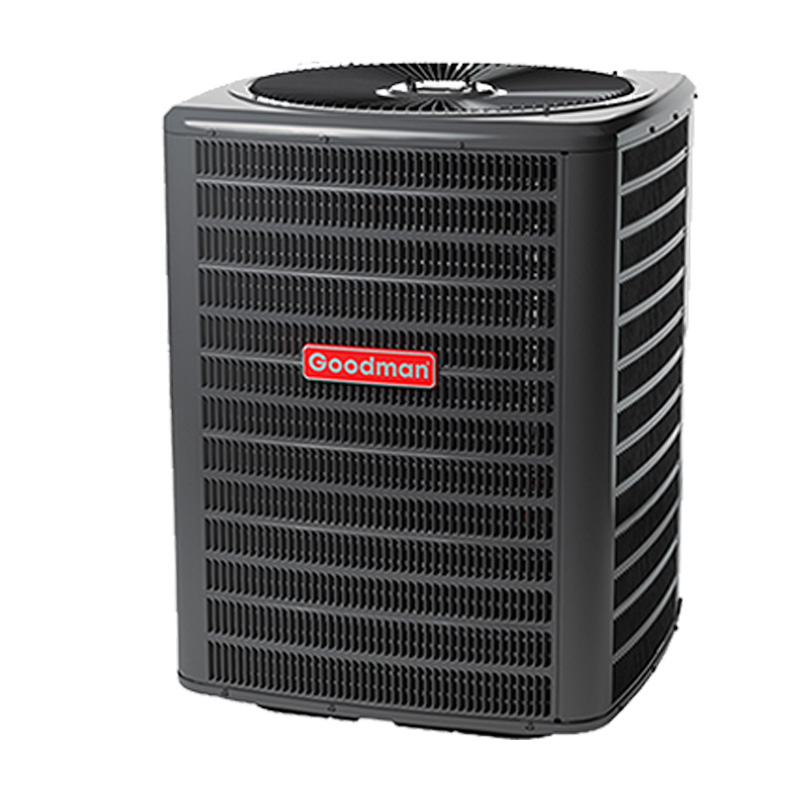
The Goodman 5-ton, 13.6 SEER2 system pairs a two-stage, variable-speed air conditioner with an 80,000 BTU, 80% AFUE upflow gas furnace. At 5 tons, this is a large-capacity package suited to homes in the 2,400 to 3,200 square foot range, depending on climate zone, insulation quality, and ceiling height. The two-stage compressor runs at a lower capacity on milder days and steps up only when peak demand arrives, which reduces short-cycling, improves humidity control, and lowers operating noise compared to single-stage units at the same efficiency tier.
The 13.6 SEER2 rating sits at the baseline of current federal efficiency minimums for most regions, so this is not a high-efficiency purchase. The 80% AFUE furnace means one dollar in five of your gas spend goes up the flue unburned, which is meaningful in colder climates but a common and acceptable trade-off in mild-winter regions or where gas prices are low. R-32 refrigerant is a step forward environmentally, with a global warming potential roughly 68% lower than the R-410A it replaces, and it requires less refrigerant charge by weight to do the same job. The upflow configuration means the furnace must be installed in a basement, closet, or utility space where air can be drawn in from the bottom and discharged upward into ductwork above.
This system is built around Goodman’s value-tier positioning: it delivers functional, code-compliant performance at a price point that is typically 15 to 25 percent below comparable Trane, Lennox, and Carrier equipment. The trade-off is that long-term reliability depends heavily on installation quality and routine maintenance, and repair costs can climb after year seven as documented by owner feedback.
This Goodman system is a workable, budget-conscious choice for a large home that needs reliable cooling and gas heat without the premium price tag of major competing brands. The two-stage, variable-speed combination punches above the baseline for comfort, but the 13.6 SEER2 and 80% AFUE specs mean operating costs will be higher over time than higher-efficiency alternatives. Buyers who keep up with maintenance and hire a skilled installer will likely get a decent service life; those who cut corners on either front face greater risk of the known failure points showing up early.
Overall score is the average of the five ratings above.
What we like
- Price is typically 15 to 25 percent below comparable Carrier, Trane, and Lennox systems
- Two-stage operation improves comfort and humidity control over single-stage units
- Variable-speed blower runs quieter and moves air more evenly through the home
- R-32 refrigerant is more environmentally responsible than legacy R-410A
- Dual-run capacitor failures, the most common repair, are generally a low-cost fix in the $300 to $600 range
Trade-offs
- 80% AFUE furnace wastes 20 cents of every gas dollar, a real cost in cold climates
- 13.6 SEER2 is the efficiency floor, not a selling point, meaning higher monthly bills than 16+ SEER2 systems
- Compressor lifespan averages 10 to 14 years, shorter than the 15 to 20 years seen in premium brands
- Evaporator coil leaks and early refrigerant charge issues appear in a meaningful share of owner reports
What homeowners and pros say about Goodman
Owners and HVAC technicians tend to land in the same place when discussing Goodman: the brand earns its keep on price but asks for something in return. On ConsumerAffairs, Goodman scores around 2.5 out of 5, a channel that skews toward frustrated owners, and the recurring theme there is repair costs climbing after roughly year seven. Google dealer reviews tell a more balanced story, averaging around 3.8 out of 5 across hundreds of reviews per location, where affordability is the praise that comes up most. The gap between those two numbers is itself informative: buyers who get a clean install from a quality contractor and maintain the equipment tend to report reasonable experiences, while those who encountered shortcuts at installation or deferred maintenance are overrepresented in the lower scores.
Among the documented failure points for this equipment, dual-run capacitors top the list and are generally a manageable repair in the $300 to $600 range. More consequential are evaporator coil leaks, which appear in a meaningful share of owner accounts and carry higher repair costs. Compressor lifespan is another honest consideration: Goodman compressors average 10 to 14 years in real-world reports, compared to the 15 to 20 years seen in premium brands, which matters when you are sizing up a 5-ton system for a large home. A minority of owners have reported refrigerant leaks within the first year, and technicians consistently point to installation or initial charge errors as the cause rather than the unit itself. The throughline from professionals is consistent: Goodman is an acceptable product in skilled hands and a risky one in careless ones.
Sources: ConsumerAffairs Goodman owner reviews, AHRI Directory of Certified Product Performance, U.S. DOE appliance and equipment efficiency standards, Goodman product specification sheets.
What it costs to run
At 13.6 SEER2, cooling this 5-ton system for a typical 1200-hour cooling season at the U.S. average electricity rate of $0.17/kWh works out to roughly $900 per year in cooling, about $13 less per year than a minimum-efficiency 13.4 SEER2 unit of the same size. Your real cost depends on your climate and local rate.
Method: (60,000 BTU/hr ÷ 13.6 SEER2) × 1200 hours ÷ 1000 × $0.17/kWh. Rate source: U.S. EIA average; cooling hours: moderate-climate estimate.
How it compares
| Brand | Comparable model | SEER2 | Stage | Price position |
|---|---|---|---|---|
| Goodman | GSXV6-60 / GCVC8 Series (5-ton, two-stage/variable-speed) | 13.6 | Two-stage | Value pick |
| Carrier | Comfort 24ACC6 Series (5-ton, single-stage) | 13.4 to 14.3 | Single-stage | Typically 15 to 25 percent more than this Goodman |
| Trane | XR13 Series (5-ton, single-stage) | 13.4 to 14.0 | Single-stage | Typically 15 to 25 percent more than this Goodman |
| Lennox | Merit ML14XC1 Series (5-ton, single-stage) | 13.4 to 14.0 | Single-stage | Typically 15 to 25 percent more than this Goodman |
Competitor rows are comparable single-stage units at similar efficiency; price is relative position, not a quote.
Questions about this system
Is 13.6 SEER2 going to cost me more to run than a higher-efficiency unit?
Yes, in a straightforward way. A system rated at 16 or 18 SEER2 uses measurably less electricity for the same cooling output, and the savings add up over years of use in a hot climate. In a mild climate with shorter cooling seasons, the payback gap narrows, but this unit is not an efficiency leader at 13.6 SEER2.
Why does the furnace only have 80% AFUE, and does that matter for my home?
80% AFUE is the federal minimum for most regions and means 20% of combustion heat escapes through the flue. If you live in a climate with four or more months of meaningful heating demand, a 95% or 96% AFUE furnace will reduce annual gas bills enough that the upgrade often pays back within several years. In mild-winter climates, the gap matters much less.
What are the most likely repairs I should budget for over the life of this system?
Dual-run capacitors are the most frequently reported failure on Goodman equipment and typically cost $300 to $600 to replace, including labor. Evaporator coil leaks show up in a meaningful share of owner accounts and are a more expensive repair. Compressor replacement is rare in the first decade but becomes a real possibility after year 10 to 14 given Goodman's documented average lifespan.
A few reviews mention refrigerant leaks in the first year. Is that a Goodman manufacturing defect?
Based on documented owner reports, first-year refrigerant leaks are most often traced to installation errors or an improper initial charge rather than a factory defect in the unit itself. This is exactly why installer quality matters so much with Goodman equipment. Verify your contractor is licensed, leak-tests the system at startup, and documents the refrigerant charge.
Does this system work with my existing ductwork, or will I need modifications?
At 5 tons this is a high-capacity system, and undersized or leaky ductwork is a common problem that causes comfort complaints, efficiency losses, and premature equipment wear. A proper Manual J load calculation and duct assessment before installation is not optional at this size. Many homes that replace a 3 or 4 ton unit with a 5 ton system without a duct check end up with airflow problems that no amount of equipment quality can fix.
Specifications
| Cooling capacity | 5 Ton |
| Efficiency | 13.6 SEER2 |
| Furnace output | 80000 BTU |
| Furnace efficiency | 80% AFUE |
| Configuration | Upflow |
| Refrigerant | R-32 |