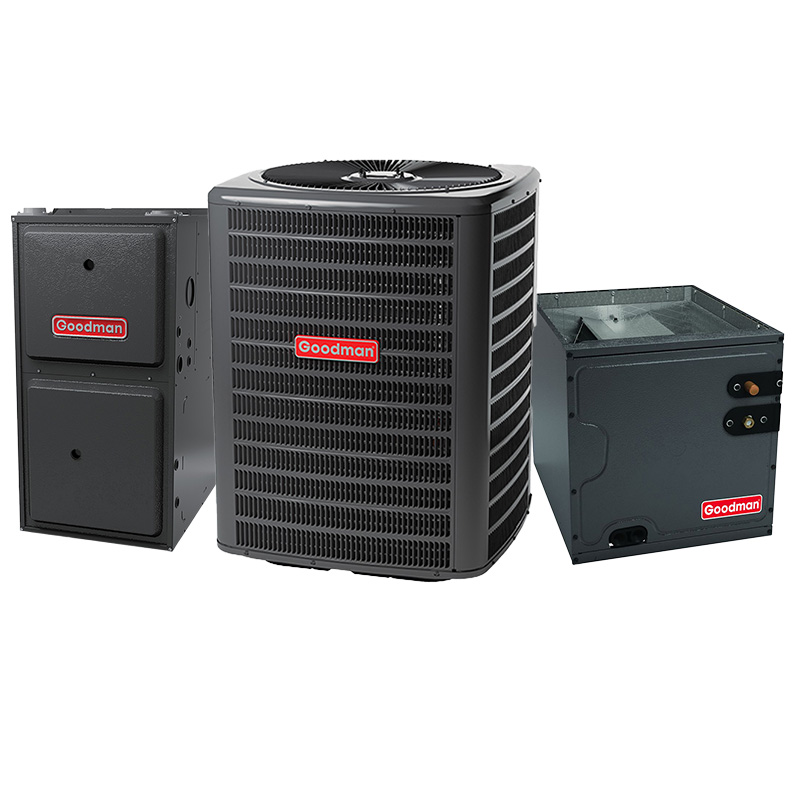
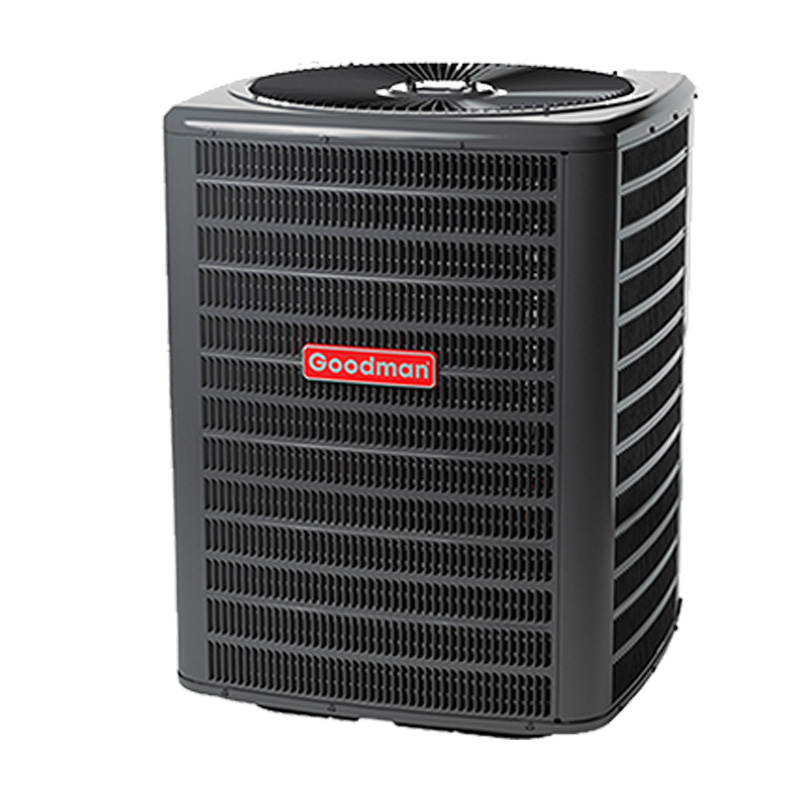
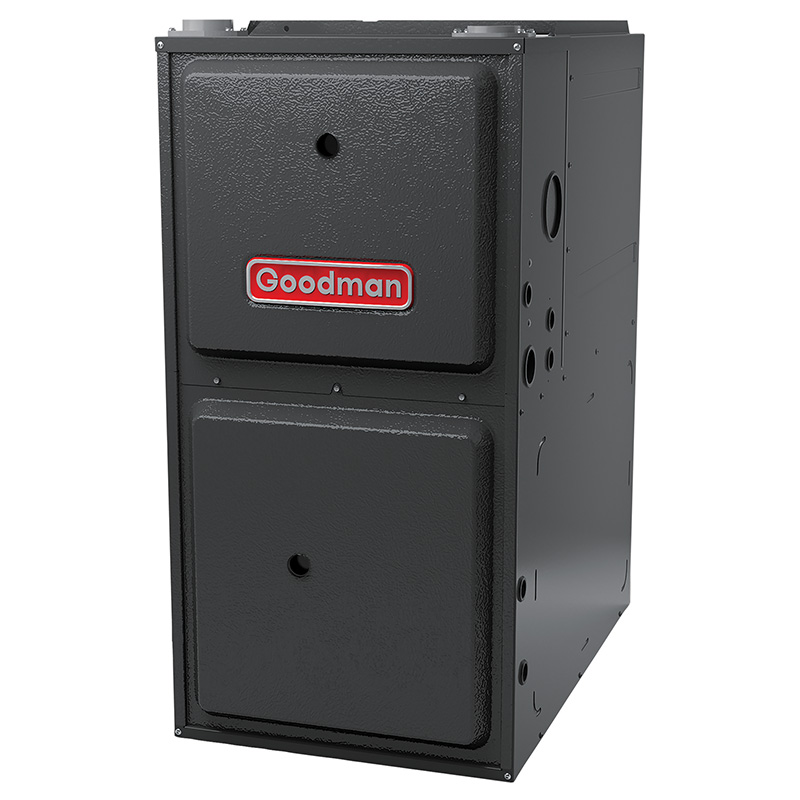
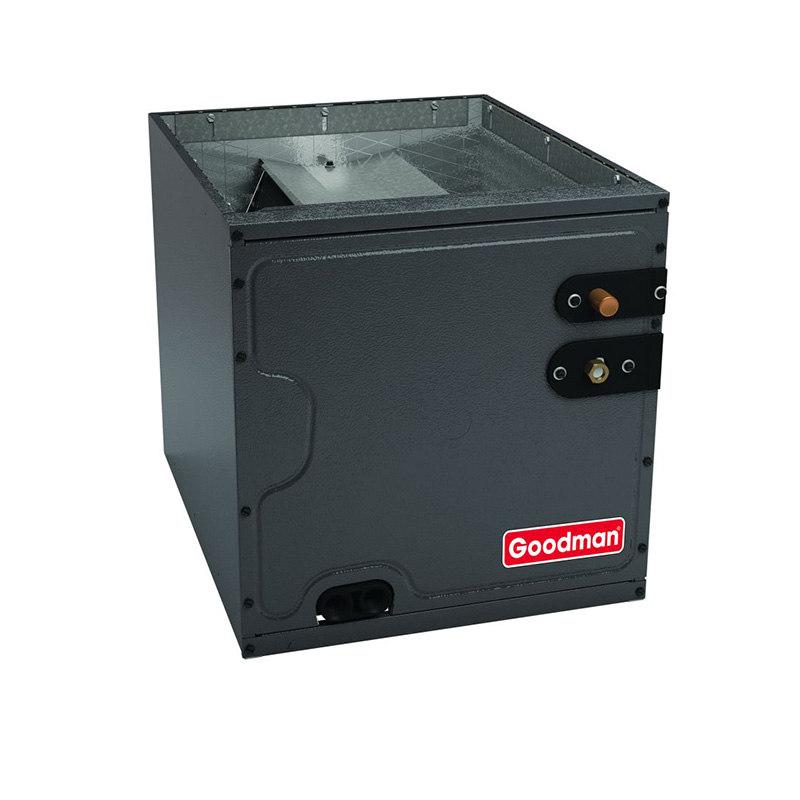
Goodman 5 Ton 13.6 SEER2 AC With 100000 BTU 96% AFUE 2-Stage Variable-Speed ECM Gas Furnace System – Upflow | R32
View on AC Direct see your lowest price →Check current price on AC Direct →
Key features
- 5-ton cooling capacity with 13.6 SEER2 efficiency rating
- 100,000 BTU 96% AFUE two-stage gas furnace reduces fuel waste
- Variable-speed ECM blower motor improves humidity control and lowers operating noise
- R-32 refrigerant with lower global-warming potential than R-410A
- Upflow configuration for basement or ground-floor installations with overhead ductwork
- Two-stage heating runs at reduced capacity on mild days, cutting short-cycling
About this system
This Goodman bundle pairs a 5-ton, 13.6 SEER2 air conditioner with a 100,000 BTU, 96% AFUE two-stage, variable-speed ECM gas furnace in an upflow configuration. The combination is sized for larger homes, typically 2,500 to 3,500 square feet depending on climate, insulation, and ceiling height. The 96% AFUE rating means only about four cents of every fuel dollar escapes as exhaust, which is a genuine efficiency gain over standard 80% units. The two-stage furnace and variable-speed ECM blower allow the system to run at a lower capacity on mild days, improving comfort, humidity control, and efficiency compared to a single-stage setup.
The 13.6 SEER2 rating on the cooling side meets the 2023 federal minimum for northern regions and sits just above the southern minimum, so it is a code-compliant baseline unit, not a high-efficiency cooling system. The switch to R-32 refrigerant is a forward-looking move: R-32 has a lower global-warming potential than the R-410A it replaces and is increasingly standard across the industry. Upflow configuration means supply air exits the top of the furnace, making it the right fit for homes where ductwork runs through an attic or upper floors and the air handler sits in a basement or ground-floor utility space. Buyers who want premium cooling efficiency in the 18 SEER2 and above range will need to look at higher-tier Goodman models or competing brands.
This Goodman system delivers genuinely good heating efficiency and a thoughtful two-stage, variable-speed setup at a price point well below Carrier, Trane, and Lennox equivalents. The cooling side is adequate rather than impressive, and long-term ownership costs will depend heavily on installation quality and whether you land one of the units with the documented coil or capacitor issues. For budget-conscious buyers who prioritize heating performance and can vet a skilled installer, it offers solid value.
Overall score is the average of the five ratings above.
What we like
- 96% AFUE furnace meaningfully reduces heating bills compared to 80% units
- Two-stage furnace and ECM blower improve comfort and humidity management
- R-32 refrigerant is future-ready and increasingly supported by technicians
- Priced 15 to 25 percent below comparable Carrier, Trane, and Lennox systems
- Upflow layout is well-suited to common basement and utility-closet installs
Trade-offs
- 13.6 SEER2 is a near-minimum efficiency rating; premium systems offer substantially better cooling economy
- Dual-run capacitors are the most frequently reported failure on Goodman equipment, typically a 300 to 600 dollar repair
- Evaporator coil leaks appear in a notable share of owner reports and can be a more costly fix
- Compressor lifespan averages 10 to 14 years versus 15 to 20 years for premium-brand compressors, per owner data
What homeowners and pros say about Goodman
Among homeowners, Goodman tends to split opinion along a predictable line. Those who had a thorough installation by an experienced contractor and stuck to annual maintenance often report years of steady, unremarkable service. Those who ran into problems point most often to dual-run capacitor failures, which Goodman equipment is well-documented for, and in more serious cases to evaporator coil leaks that required expensive repairs several years in. On ConsumerAffairs, Goodman sits at roughly 2.5 out of 5, and the recurring complaint pattern is repair costs climbing noticeably after year seven or so. Google dealer reviews tell a more moderate story, averaging around 3.8 out of 5, where the consistent theme is that buyers got solid performance relative to what they paid. For a 5-ton system with a 96% furnace and variable-speed blower, the price-to-feature ratio genuinely stands out against premium brands.
HVAC technicians who work on residential equipment tend to have a pragmatic view of Goodman. Many will note that the brand is not their first recommendation for longevity, citing compressor lifespans that typically run 10 to 14 years rather than the 15 to 20 years more common with Trane, Carrier, or Lennox units. They also flag the capacitor failure rate as something owners should budget for and catch early to avoid cascading compressor damage. A minority of early-ownership refrigerant leaks on Goodman systems are generally attributed to installation errors or charge issues rather than the equipment itself, which reinforces the technician-side view that a careful, experienced installer makes a larger difference with Goodman than it does with premium brands. For buyers who want the two-stage and variable-speed comfort features at a lower upfront cost and can commit to regular maintenance, this system is a reasonable choice with eyes open about its limits.
Sources: ConsumerAffairs Goodman owner reviews, AHRI Directory of Certified Product Performance, U.S. DOE appliance and equipment efficiency standards, Goodman product specification sheets.
What it costs to run
At 13.6 SEER2, cooling this 5-ton system for a typical 1200-hour cooling season at the U.S. average electricity rate of $0.17/kWh works out to roughly $900 per year in cooling, about $13 less per year than a minimum-efficiency 13.4 SEER2 unit of the same size. Your real cost depends on your climate and local rate.
Method: (60,000 BTU/hr ÷ 13.6 SEER2) × 1200 hours ÷ 1000 × $0.17/kWh. Rate source: U.S. EIA average; cooling hours: moderate-climate estimate.
How it compares
| Brand | Comparable model | SEER2 | Stage | Price position |
|---|---|---|---|---|
| Goodman | GSX16S / GMVC96 (this system) | 13.6 | two-stage furnace / single-stage cooling | Value pick |
| Carrier | Performance 14 (24ACC4) with 96% Performance series furnace | 13.8 to 14.3 | single-stage cooling / two-stage furnace option | Typically 15 to 25 percent more than this Goodman system |
| Trane | XR14c with S9X2 96% furnace | 14.0 to 14.5 | single-stage cooling / two-stage furnace option | Typically 15 to 25 percent more than this Goodman system |
| Lennox | Merit ML14XC1 with SL280V furnace | 13.8 to 14.3 | single-stage cooling / two-stage furnace option | Typically 15 to 25 percent more than this Goodman system |
Competitor rows are comparable single-stage units at similar efficiency; price is relative position, not a quote.
Questions about this system
Is 5 tons the right size for my home?
A proper Manual J load calculation by a licensed HVAC contractor is the only reliable way to confirm sizing. As a rough guide, 5 tons is commonly used for homes in the 2,500 to 3,500 square foot range in moderate climates, but insulation levels, ceiling height, window area, and local design temperatures all affect the correct size. Oversizing a unit causes short-cycling, poor humidity control, and accelerated wear.
What does the switch to R-32 refrigerant mean for maintenance and service costs?
R-32 is gradually replacing R-410A across the industry, and most refrigerant-certified technicians are already working with it. Refrigerant costs and availability are comparable to R-410A at this point, and R-32 requires a lower charge volume for the same capacity, which can modestly reduce material cost on a recharge. The main thing to confirm is that any technician who services this unit is certified to handle A2L refrigerants, which R-32 is classified as.
Goodman has mixed reviews online. How worried should I be about reliability?
Goodman scores around 2.5 out of 5 on ConsumerAffairs, a channel that tends to attract complaints, and around 3.8 out of 5 in Google dealer reviews where affordability is the most common praise. The documented failure patterns to watch for are dual-run capacitor failures, which are typically a quick 300 to 600 dollar fix, and evaporator coil leaks, which are more involved. A small share of owners report refrigerant leaks within the first year, which is usually tied to installation rather than the equipment itself. Signing up for an annual maintenance plan significantly improves the odds of catching capacitor issues before they cause a compressor failure.
What is included in Goodman's warranty for this system, and is registration required?
Goodman typically offers a 10-year parts limited warranty on registered systems, which must be registered within a set window after installation, usually 60 days. Without registration the warranty period is shorter, often dropping to 5 years on parts. The compressor usually carries its own coverage term within that parts warranty. Always confirm current warranty terms directly with Goodman at the time of purchase, as terms can change, and keep your installation records and registration confirmation.
Does the variable-speed ECM blower actually make a noticeable difference compared to a standard blower?
Yes, particularly in two areas: comfort and energy use. The ECM motor ramps speed up and down to maintain a steadier airflow rather than blasting on and off at full speed, which reduces temperature swings and runs more quietly during low-demand periods. It also draws significantly less electricity than a standard PSC motor during those lower-speed cycles. Homeowners with humidity concerns in summer tend to notice the improvement most, because longer, slower run cycles are more effective at pulling moisture out of the air.
Specifications
| Cooling capacity | 5 Ton |
| Efficiency | 13.6 SEER2 |
| Furnace output | 100000 BTU |
| Furnace efficiency | 96% AFUE |
| Configuration | Upflow |
| Refrigerant | R-32 |