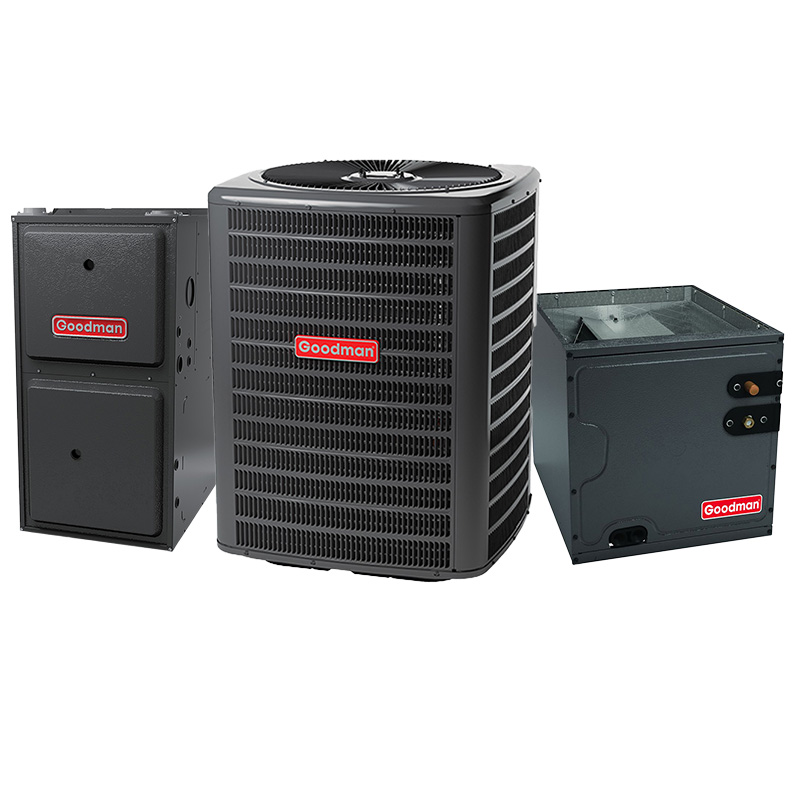
Goodman 5 Ton 13.6 SEER2 AC With 120000 BTU 96% AFUE 2-Stage Variable-Speed ECM Gas Furnace System – Upflow | R32
View on AC Direct see your lowest price →Check current price on AC Direct →
Key features
- 13.6 SEER2 cooling efficiency meets 2023 federal minimum standards for most U.S. regions
- 96% AFUE two-stage gas furnace reduces fuel waste and temperature swings
- Variable-speed ECM blower motor lowers electricity use and improves humidity control
- R-32 refrigerant has roughly 68% lower global warming potential than R-410A
- Upflow configuration for basements and main-floor utility rooms with overhead ductwork
- 5-ton / 120,000 BTU capacity sized for larger homes in colder climates
About this system
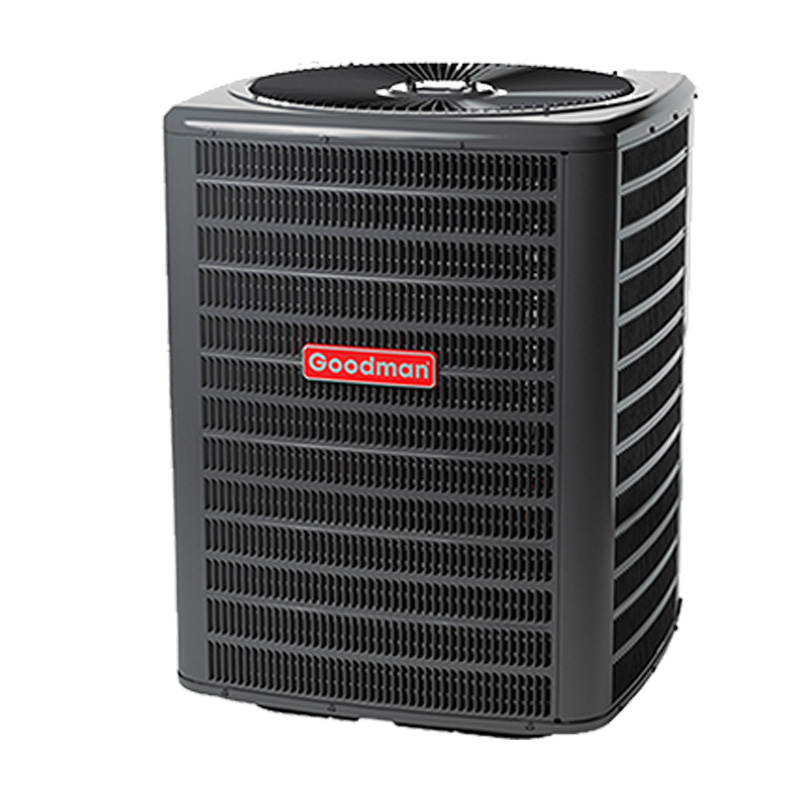
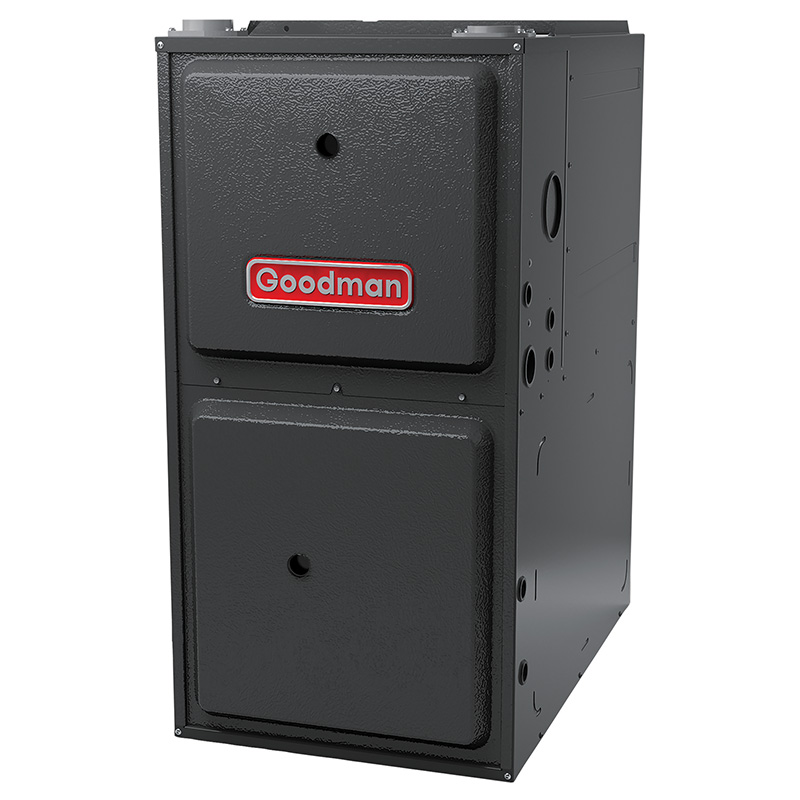
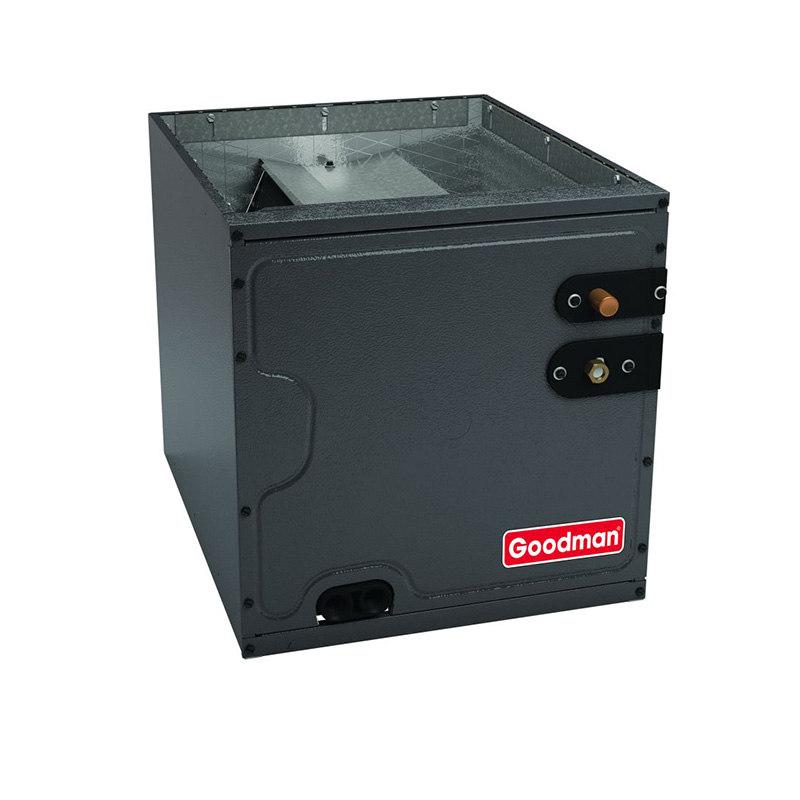
This Goodman 5-ton package combines a 13.6 SEER2 air conditioner with a 120,000 BTU, 96% AFUE two-stage gas furnace for larger homes typically in the 2,500 to 3,500 square foot range, depending on climate and insulation. The upflow configuration means the furnace sits at floor level and pushes conditioned air upward through overhead ductwork, which suits most basement and main-floor mechanical room setups. R-32 refrigerant replaces older R-410A, carrying a lower global warming potential and slightly better thermodynamic properties, though it does require certified technicians familiar with its mildly flammable classification.
The two-stage furnace and variable-speed ECM blower motor are the standout specs here. Two-stage heating lets the furnace run at a lower firing rate on moderately cold days, reducing temperature swings and gas consumption compared to a single-stage unit. The ECM blower uses significantly less electricity than a standard PSC motor and ramps speed gradually, which also helps with humidity control during cooling season. At 96% AFUE, very little heat goes up the flue. Together these features push comfort and efficiency noticeably beyond a basic 80% single-stage system, which matters in a house large enough to need 5 tons and 120,000 BTU.
This system delivers a genuinely capable comfort package at a price point well below comparable Carrier, Trane, or Lennox configurations. The two-stage furnace and ECM blower add real-world value for a large home, but Goodman's documented history of capacitor failures, coil leaks, and shorter average compressor life means ongoing maintenance costs deserve a spot in your budget planning. It is a reasonable choice if upfront savings are important and you have a skilled installer.
Overall score is the average of the five ratings above.
What we like
- Priced 15 to 25 percent below comparable Trane, Lennox, and Carrier systems
- 96% AFUE two-stage furnace meaningfully cuts heating bills versus basic 80% units
- ECM variable-speed blower reduces electricity draw and improves comfort consistency
- R-32 refrigerant is a forward-looking choice with lower environmental impact
- Dual-run capacitor failures, the most common Goodman issue, are typically a low-cost repair in the $300 to $600 range
Trade-offs
- Compressors average 10 to 14 years versus 15 to 20 for premium brands, so long-term ownership costs can close the initial price gap
- Evaporator coil leaks appear in a meaningful share of owner reviews and can be an expensive repair
- A minority of owners report refrigerant leaks in year one, usually tied to install or charge quality rather than a factory defect
- Performance is heavily dependent on installer skill, making contractor selection as important as equipment selection
What homeowners and pros say about Goodman
Homeowners who post about Goodman equipment online tend to split into two camps: those who got a clean install and years of trouble-free service, and those who hit a repair bill around year 7 or 8 and felt blindsided. That pattern shows up clearly in the brand’s ConsumerAffairs score of roughly 2.5 out of 5, a channel where complaints are overrepresented but where the specific grievances, climbing repair costs after the initial warranty years, are consistent enough to take seriously. Google dealer reviews land considerably higher, around 3.8 out of 5, with affordability cited as the top reason buyers are satisfied. For this particular system, the two-stage furnace and ECM blower add complexity compared to a basic Goodman single-stage setup, which means more components that could eventually need attention.
HVAC technicians who work on Goodman equipment regularly point to dual-run capacitor replacement as a near-routine service call, typically running $300 to $600 and not a crisis if caught during annual maintenance. The more consequential documented issues are evaporator coil leaks, which appear in a meaningful share of owner accounts and carry higher repair costs, and compressor longevity that averages 10 to 14 years compared to 15 to 20 years on premium-brand equipment. For a 5-ton system running hard through hot summers, that lifespan gap is worth factoring into a real cost-of-ownership comparison. A minority of owners also report refrigerant leaks in the first year, which technicians generally attribute to install or charge errors rather than factory defects, reinforcing the widely held view among pros that who installs a Goodman matters as much as the unit itself.
Sources: ConsumerAffairs Goodman owner reviews, AHRI Directory of Certified Product Performance, U.S. DOE appliance and equipment efficiency standards, Goodman product specification sheets.
What it costs to run
At 13.6 SEER2, cooling this 5-ton system for a typical 1200-hour cooling season at the U.S. average electricity rate of $0.17/kWh works out to roughly $900 per year in cooling, about $13 less per year than a minimum-efficiency 13.4 SEER2 unit of the same size. Your real cost depends on your climate and local rate.
Method: (60,000 BTU/hr ÷ 13.6 SEER2) × 1200 hours ÷ 1000 × $0.17/kWh. Rate source: U.S. EIA average; cooling hours: moderate-climate estimate.
How it compares
| Brand | Comparable model | SEER2 | Stage | Price position |
|---|---|---|---|---|
| Goodman | 5-Ton 13.6 SEER2 / 120K BTU 96% AFUE 2-Stage ECM System | 13.6 | Two-stage furnace / variable-speed blower | Value pick |
| Carrier | Performance 96 Series (59TP6 furnace + 24ACC6 condenser) | ~13.8-14.0 | Two-stage furnace / variable-speed blower | Typically 15 to 25 percent more than this Goodman system |
| Trane | S9V2 furnace + XR15 condenser | ~14.0 | Two-stage furnace / variable-speed blower | Typically 15 to 25 percent more than this Goodman system |
| Lennox | ML296V furnace + 14ACX condenser | ~14.0 | Two-stage furnace / variable-speed blower | Typically 15 to 25 percent more than this Goodman system |
Competitor rows are comparable single-stage units at similar efficiency; price is relative position, not a quote.
Questions about this system
Is R-32 refrigerant safe, and will my HVAC technician be able to work on it?
R-32 is classified as mildly flammable (A2L) and requires technicians certified to handle it, which most licensed HVAC contractors already are or are becoming as R-32 rolls out industry-wide. It is not considered a significant safety risk in normal residential use, but you should confirm your service company has experience with A2L refrigerants before scheduling work.
What maintenance does this system need to avoid the common Goodman failure points?
Annual tune-ups that include checking and replacing the dual-run capacitor proactively are the single most effective step, since capacitor failure is the most frequently reported Goodman issue. Keeping coil surfaces clean and verifying refrigerant charge at each service visit also helps catch early signs of coil leaks before they become expensive repairs.
Is 5 tons and 120,000 BTU actually right for my house, or is this oversized?
Equipment sizing should come from a Manual J load calculation performed for your specific home, not a square footage rule of thumb. An oversized system short-cycles, which reduces humidity control and puts more wear on components, so confirm sizing with your installer before purchasing.
How does the two-stage furnace actually change day-to-day comfort compared to a single-stage?
On most winter days the furnace runs at its lower stage, which keeps temperatures more even throughout the house and runs longer cycles that distribute heat more uniformly. It only fires at full capacity during the coldest conditions. The result is fewer hot-and-cold swings near the thermostat and somewhat lower gas bills on moderate days.
What does Goodman's warranty cover on this system, and are there conditions attached?
Goodman typically offers a 10-year parts warranty when the unit is registered within a set window after installation, dropping to a shorter period if registration is missed. The compressor often carries its own extended coverage. However, the warranty does not cover labor, refrigerant, or failures resulting from improper installation, which is one more reason installer quality matters significantly with this brand.
Specifications
| Cooling capacity | 5 Ton |
| Efficiency | 13.6 SEER2 |
| Furnace output | 120000 BTU |
| Furnace efficiency | 96% AFUE |
| Configuration | Upflow |
| Refrigerant | R-32 |