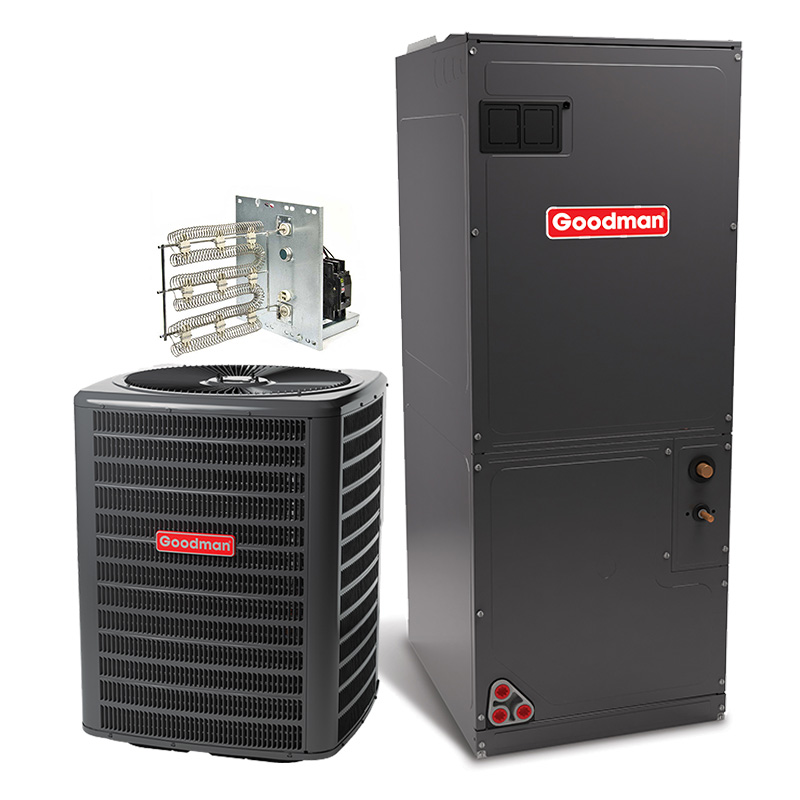
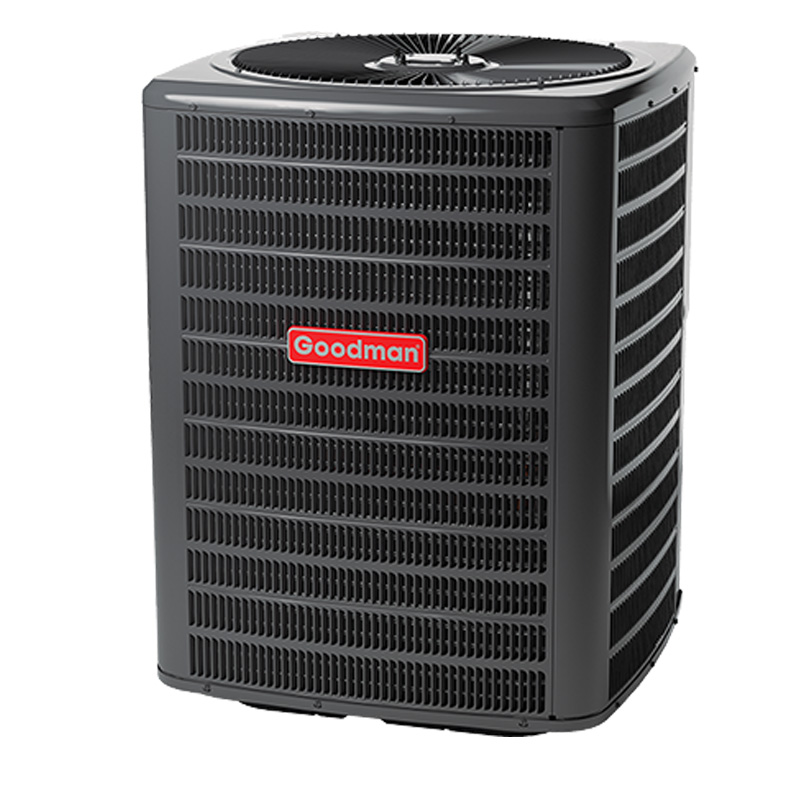
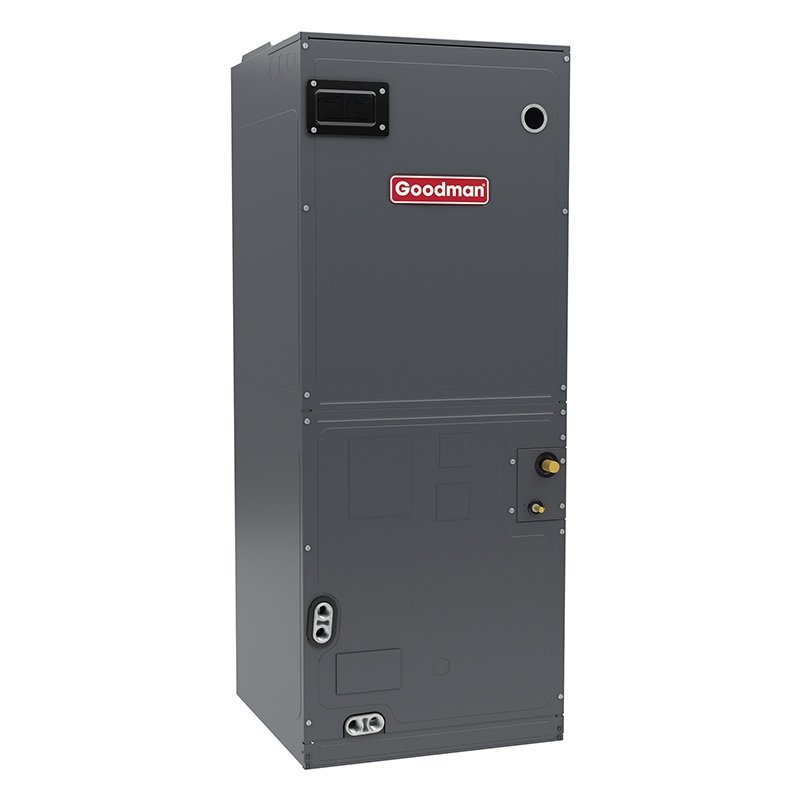
Goodman 5 Ton 13.8 SEER2 R32 Air Conditioner System With Electric Heat
View on AC Direct see your lowest price →Check current price on AC Direct →
Key features
- 5-ton cooling capacity suited for larger homes in the 2,400 to 3,000 sq ft range
- 13.8 SEER2 efficiency rating meets current federal minimum standards for most regions
- R-32 refrigerant with lower global warming potential than legacy R-410A systems
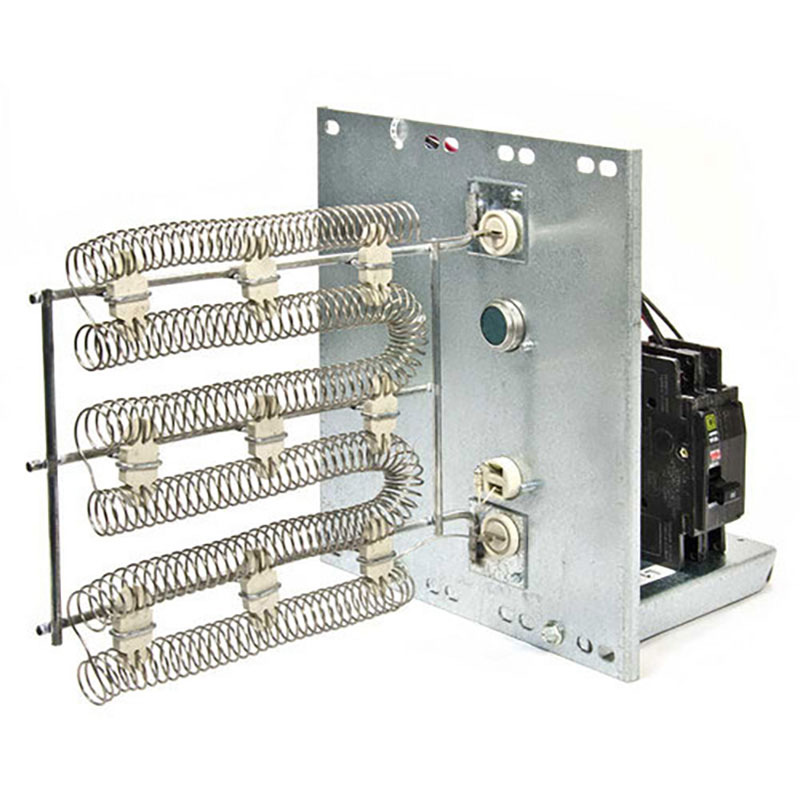
- Integrated electric heat strip eliminates the need for a separate furnace or air handler
- Single-stage scroll compressor for straightforward operation and serviceability
- Priced 15 to 25 percent below comparable Carrier, Trane, and Lennox equipment
About this system
This Goodman 5-ton, 13.8 SEER2 package pairs a large-capacity air conditioner with an electric heat strip, making it a practical choice for homes in the 2,400 to 3,000 square foot range in climates where a gas furnace is either unavailable or unnecessary. The R-32 refrigerant is a meaningful step forward: it has a lower global warming potential than the R-410A it replaces, and its higher energy density allows the system to operate at slightly lower operating pressures, which can reduce long-term stress on the compressor and line sets. For buyers in all-electric homes or in southern regions where heating loads are modest, the integrated electric heat strip simplifies installation by eliminating a separate air handler or furnace.
At 13.8 SEER2, this system clears the federal minimum efficiency threshold for most U.S. climate regions but sits at the entry tier of the efficiency range rather than the top. Homeowners in hot, humid climates who run their systems heavily from May through October will notice that gap in their utility bills compared to 16 or 17 SEER2 equipment. That said, Goodman prices this class of equipment roughly 15 to 25 percent below comparable Carrier, Trane, and Lennox systems, so the upfront savings can partially offset modestly higher operating costs depending on your electricity rate and annual run hours. The system is best matched with a professional installation by a technician experienced with R-32 systems, since that refrigerant requires specific recovery equipment and handling certifications.
This Goodman 5-ton unit delivers solid capacity and acceptable efficiency at a price point that is genuinely hard to match from a major brand, making it a reasonable choice for budget-conscious buyers who are willing to invest in a quality installation and plan for possible component repairs after year seven. The R-32 transition is a legitimate benefit, but entry-level efficiency and Goodman's documented reliability record mean this is a value-oriented decision, not a premium one. Buyers who expect low lifetime maintenance costs or who plan to stay in the home for 20-plus years should weigh the total cost of ownership carefully.
Overall score is the average of the five ratings above.
What we like
- Significantly lower purchase price than comparable Carrier, Trane, or Lennox equipment
- R-32 refrigerant is more environmentally responsible and increasingly well-supported by technicians
- 5-ton capacity handles large homes without the need for zoning in most cases
- Single-stage design keeps service and repair straightforward for most HVAC technicians
- All-in-one cooling and electric heat configuration reduces installation complexity in all-electric homes
Trade-offs
- 13.8 SEER2 is entry-level efficiency; operating costs will be higher than 16+ SEER2 alternatives in high-run climates
- Dual-run capacitors and evaporator coil leaks are documented recurring failure points that add to long-term service costs
- Compressor lifespan averages 10 to 14 years, noticeably shorter than the 15 to 20 years typical of premium brands
- A minority of owners have reported refrigerant leaks in the first year, most often traced to installation or charge errors rather than factory defects
What homeowners and pros say about Goodman
Homeowners who research Goodman online encounter a split picture. On ConsumerAffairs, the brand scores around 2.5 out of 5, a platform where frustrated owners are far more likely to post than satisfied ones, and the recurring complaint is that repair costs begin climbing noticeably after roughly year seven. On Google dealer reviews, the story is more balanced: scores sit near 3.8 out of 5 across locations, with affordability consistently cited as the strongest selling point. Neither number tells the whole story, but together they suggest a brand that delivers on price and performs acceptably when conditions are right, while carrying more long-term service risk than premium alternatives.
HVAC technicians who work on Goodman equipment regularly point to a few specific patterns worth knowing before buying. Dual-run capacitors are the most frequently replaced component, usually a quick fix in the 300 to 600 dollar range but one that seems to come up more often than on premium brands. Evaporator coil leaks appear in a meaningful portion of owner feedback and are a more costly repair when they occur. Compressors on Goodman units tend to average 10 to 14 years in the field, compared to 15 to 20 years that technicians associate with Carrier, Trane, and Lennox equipment. A small but documented share of owners also report refrigerant leaks within the first year, which most technicians attribute to installation or initial charge errors rather than factory defects. That last point reinforces what Goodman installers consistently say: the quality of the installation matters more with this brand than with almost any other, and skimping on the contractor to save money compounds the risk.
Sources: ConsumerAffairs Goodman owner reviews, AHRI Directory of Certified Product Performance, U.S. DOE appliance and equipment efficiency standards, Goodman product specification sheets.
What it costs to run
At 13.8 SEER2, cooling this 5-ton system for a typical 1200-hour cooling season at the U.S. average electricity rate of $0.17/kWh works out to roughly $887 per year in cooling, about $26 less per year than a minimum-efficiency 13.4 SEER2 unit of the same size. Your real cost depends on your climate and local rate.
Method: (60,000 BTU/hr ÷ 13.8 SEER2) × 1200 hours ÷ 1000 × $0.17/kWh. Rate source: U.S. EIA average; cooling hours: moderate-climate estimate.
How it compares
| Brand | Comparable model | SEER2 | Stage | Price position |
|---|---|---|---|---|
| Goodman | GSX-H18 / ARUF Air Handler with Electric Heat | 13.8 | Single-stage | Value pick |
| Carrier | Comfort Series 24ACC6 | 13.8 to 14.3 | Single-stage | Typically 15 to 25 percent more than this Goodman |
| Trane | XR14c | 13.8 to 14.3 | Single-stage | Typically 15 to 25 percent more than this Goodman |
| Lennox | Merit ML14XC1 | 13.8 to 14.4 | Single-stage | Typically 15 to 25 percent more than this Goodman |
Competitor rows are comparable single-stage units at similar efficiency; price is relative position, not a quote.
Questions about this system
Do I need a special technician to work with the R-32 refrigerant in this system?
Yes. R-32 is classified as a mildly flammable refrigerant (A2L), so technicians must have specific training and recovery equipment certified for A2L refrigerants. Most established HVAC contractors are now equipped for R-32, but confirm this before booking installation or service, since using improper equipment can create safety hazards and void the warranty.
What size electric heat strip do I need for a 5-ton system, and will my electrical panel support it?
Heat strip sizing depends on your climate and home's heat load, but a 5-ton system typically pairs with a 10 to 20 kW strip for supplemental heat. A 20 kW strip can draw 80 to 100 amps on its own circuit, so older 150- or 200-amp panels may require an electrical audit before installation. Have an electrician verify panel capacity before purchasing.
How worried should I be about the documented capacitor and coil failure issues?
Dual-run capacitor failures are the most commonly reported issue with Goodman equipment and typically cost between 300 and 600 dollars to repair. They are not unusual across HVAC brands, but they appear more frequently in owner feedback for Goodman than for premium competitors. Evaporator coil leaks are more serious and more expensive; scheduling annual maintenance to catch refrigerant loss early is the best way to limit repair costs.
Is 13.8 SEER2 going to cost me noticeably more to run than a higher-efficiency unit?
In a climate where the system runs 1,500 or more hours per year, the difference between 13.8 SEER2 and 17 SEER2 can add up to meaningful annual savings on electricity. The exact number depends on your local utility rate, but the gap grows wider the more you run the system. If you are in a hot southern climate, it is worth pricing a higher-efficiency unit and calculating the payback period before committing.
What does Goodman's warranty cover on this system, and are there any conditions I should know about?
Goodman typically offers a 10-year parts warranty when the system is registered within a set window after installation. The warranty generally requires installation by a licensed contractor and may be reduced to five years if registration is missed or if the unit is installed improperly. Review the specific warranty documentation for this model before purchase, and keep all installation and registration records in case of a future claim.
Specifications
| Cooling capacity | 5 Ton |
| Efficiency | 13.8 SEER2 |
| Refrigerant | R-32 |