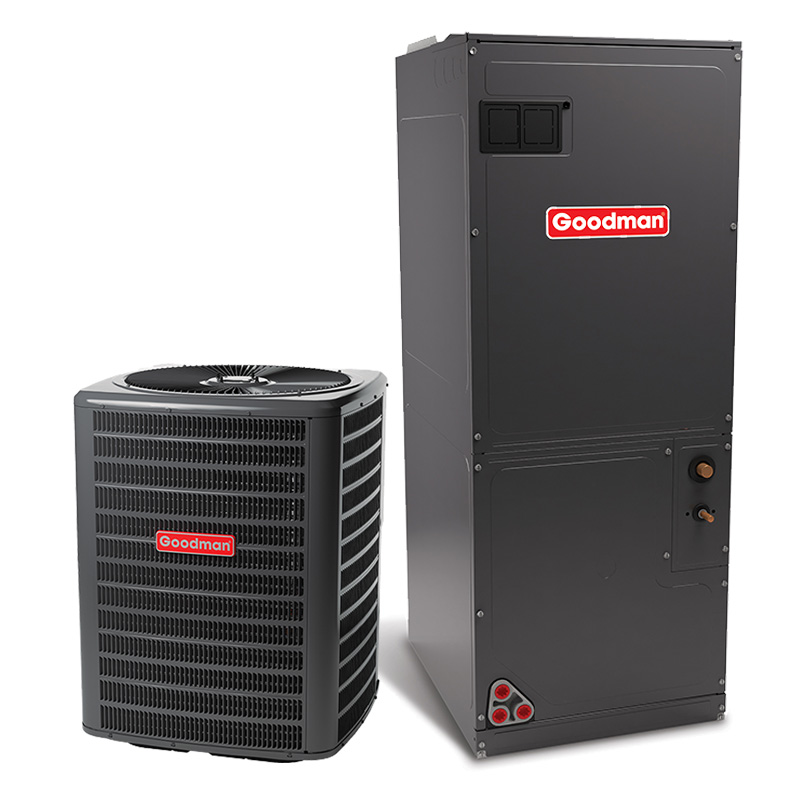
Goodman 5 Ton 13.8 SEER2 R32 Cooling Only System
View on AC Direct see your lowest price →Check current price on AC Direct →
Key features
- 5-ton capacity suited to larger homes or high cooling-load spaces
- 13.8 SEER2 efficiency meets current federal minimums for most U.S. regions
- R-32 refrigerant with significantly lower global warming potential than R-410A
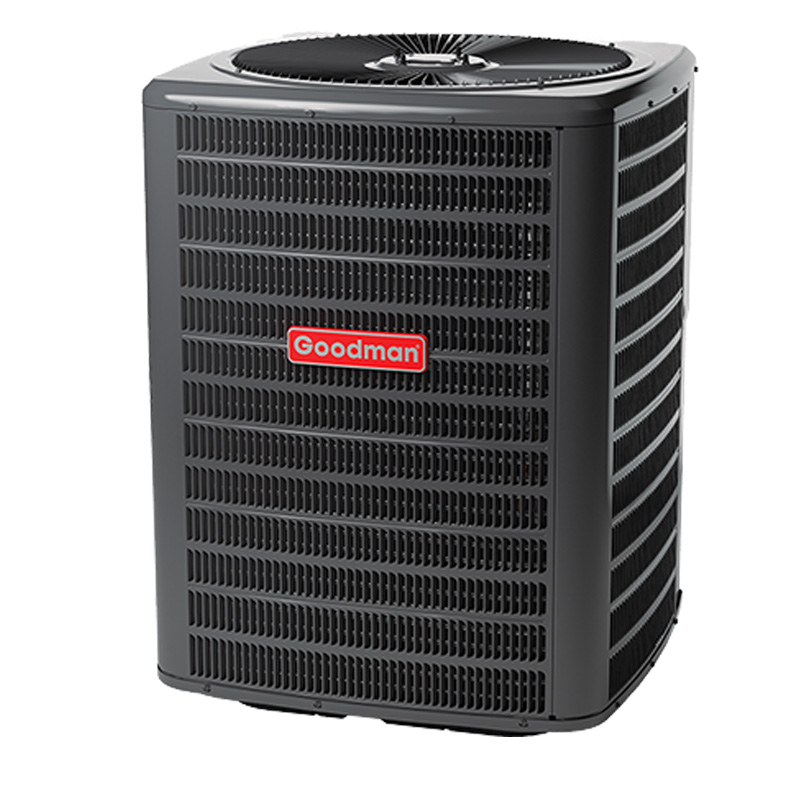
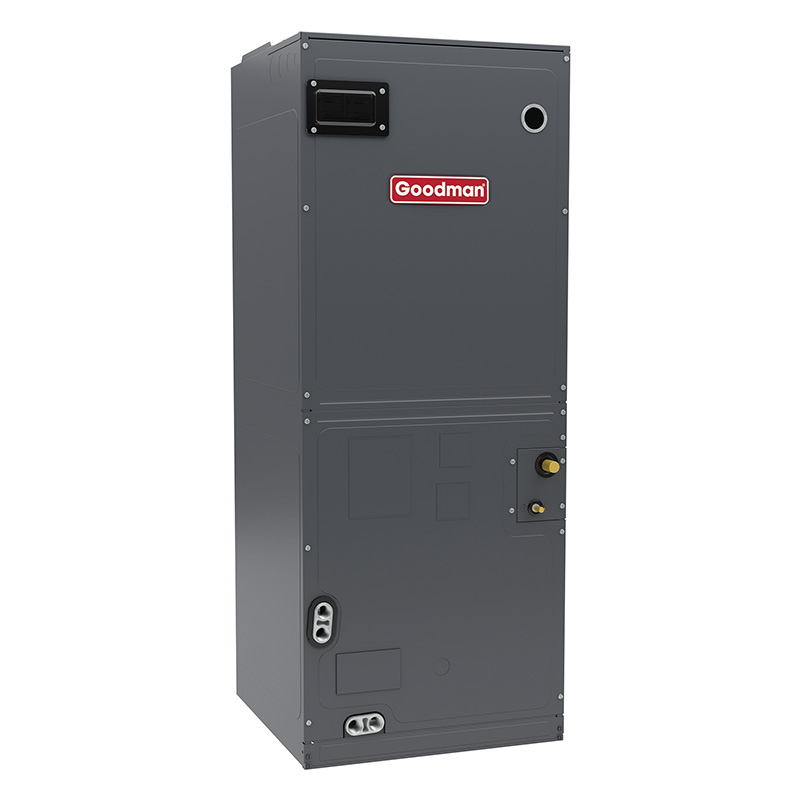
- Cooling-only condenser designed to pair with a compatible air handler or gas furnace
- Single-stage compressor operation with straightforward mechanical design
- Wide aftermarket parts availability supports lower long-term repair costs
About this system
The Goodman 5-ton 13.8 SEER2 cooling-only system is built for large homes typically in the 2,400 to 3,200 square foot range, or smaller spaces with high cooling loads from sun exposure, poor insulation, or open floor plans. Running on R-32 refrigerant, it steps ahead of R-410A systems on environmental impact: R-32 has roughly one-third the global warming potential of R-410A and also tends to operate at higher efficiency in certain ambient conditions. At 13.8 SEER2, this unit clears the federal minimum for most U.S. climate zones and delivers baseline energy savings over older equipment, but it is not a high-efficiency play.
This is a cooling-only configuration, so it pairs with an existing furnace or air handler rather than functioning as a heat pump. That makes it a practical swap-in for households replacing a failed condenser in a region where the heating load is already handled by gas or another fuel source. Goodman positions this product as an entry-level workhorse: straightforward single-stage operation, wide parts availability, and a price point meaningfully below the premium brands. It will not match the dehumidification performance or quiet operation of a variable-speed or two-stage system, but for buyers prioritizing upfront cost over long-term comfort refinements, it fills that role honestly.
The Goodman 5-ton 13.8 SEER2 R-32 system is a reasonable budget-conscious choice for homeowners who need a large-capacity cooling replacement and want to keep upfront costs down. It does the core job at minimum-compliance efficiency, but buyers should budget for potential mid-life repairs and understand that install quality will heavily influence how long it performs. It is not the system for buyers chasing long-term reliability or premium comfort features.
Overall score is the average of the five ratings above.
What we like
- Priced 15 to 25 percent below comparable Trane, Lennox, and Carrier equipment at similar efficiency
- R-32 refrigerant is more environmentally responsible than R-410A and increasingly supported by technicians
- Simple single-stage design means straightforward diagnosis and widely available replacement parts
- 5-ton capacity covers larger homes that smaller systems cannot adequately serve
- Cooling-only configuration is a cost-effective solution where heating is already handled by another system
Trade-offs
- Dual-run capacitor failures are the most commonly reported issue and, while inexpensive to fix, add to ownership costs over time
- Evaporator coil leaks appear in a meaningful share of owner reports and can be a more expensive repair
- Compressor lifespan averages 10 to 14 years, noticeably shorter than the 15 to 20 years seen in premium brands
- Single-stage operation provides only on/off cooling with no modulation, which limits humidity control and comfort consistency
What homeowners and pros say about Goodman
On consumer review channels, Goodman equipment draws a split response that tracks closely with this specific system’s profile. The ConsumerAffairs score sits at roughly 2.5 out of 5, a channel where dissatisfied owners are more likely to post, and the recurring theme there is repair costs that begin climbing after about year seven. Google dealer reviews land around 3.8 out of 5 across multiple locations, where the most consistent praise is straightforwardly about price: buyers who got a functioning large-capacity system installed for less than premium alternatives would have cost them. For a 5-ton unit where equipment cost is already substantial, that savings gap matters to a lot of households.
HVAC technicians who work on Goodman equipment frequently note that the dual-run capacitor is the part they replace most often on these systems, a repair that is generally quick and inexpensive but adds up if it happens more than once. Evaporator coil leaks are a more frustrating documented failure mode, and some owners have reported refrigerant issues within the first year, which pros typically trace back to installation rather than the equipment itself. The compressor longevity picture is the most sobering real-world data point: Goodman compressors tend to average 10 to 14 years in documented owner experience, a meaningful gap from the 15 to 20 years seen in premium-brand equipment. For this 5-ton system specifically, technicians consistently emphasize that installation quality is the single biggest factor in how long and how reliably it runs.
Sources: ConsumerAffairs Goodman owner reviews, AHRI Directory of Certified Product Performance, U.S. DOE appliance and equipment efficiency standards, Goodman product specification sheets.
What it costs to run
At 13.8 SEER2, cooling this 5-ton system for a typical 1200-hour cooling season at the U.S. average electricity rate of $0.17/kWh works out to roughly $887 per year in cooling, about $26 less per year than a minimum-efficiency 13.4 SEER2 unit of the same size. Your real cost depends on your climate and local rate.
Method: (60,000 BTU/hr ÷ 13.8 SEER2) × 1200 hours ÷ 1000 × $0.17/kWh. Rate source: U.S. EIA average; cooling hours: moderate-climate estimate.
How it compares
| Brand | Comparable model | SEER2 | Stage | Price position |
|---|---|---|---|---|
| Goodman | 5-Ton 13.8 SEER2 R-32 Cooling Only | 13.8 | Single-stage | Value pick |
| Carrier | Comfort Series (24ACC6) | 13.8–14.3 | Single-stage | Typically 15 to 25 percent more than Goodman |
| Trane | XR14c | 14.0–14.3 | Single-stage | Typically 15 to 25 percent more than Goodman |
| Lennox | Merit Series (13ACX) | 13.8–14.0 | Single-stage | Typically 15 to 25 percent more than Goodman |
Competitor rows are comparable single-stage units at similar efficiency; price is relative position, not a quote.
Questions about this system
Is 13.8 SEER2 going to noticeably lower my electricity bills compared to my old system?
If you are replacing a system rated at 10 to 12 SEER (older SEER scale), you will likely see a meaningful reduction in cooling costs. However, 13.8 SEER2 is the efficiency floor for new equipment in most regions, so compared to higher-tier units in the 17 to 20 SEER2 range, the savings gap is real. The bigger your home and the hotter your climate, the more that efficiency gap shows up on your utility bill over time.
Can this system work with my existing air handler or furnace, or do I need to replace those too?
This is a cooling-only condenser, so it does require a compatible indoor coil and air handler or furnace. Whether your existing indoor equipment works depends on its age, condition, refrigerant type, and matching specifications. Your installer should verify compatibility before purchase, and mismatched equipment can void the efficiency rating and potentially the warranty.
What are the most likely repair costs I should plan for over the life of this system?
Dual-run capacitor failure is the most commonly reported issue with Goodman equipment and typically runs 300 to 600 dollars including labor. Evaporator coil leaks are a more expensive repair, often in the range of several hundred to over a thousand dollars depending on the coil and refrigerant charge. Compressor replacement, if needed, is the costliest scenario and given Goodman's 10 to 14 year average compressor lifespan, that expense may arrive sooner than with premium brands.
Does this system use R-32 refrigerant, and will technicians in my area be able to service it?
Yes, this unit runs on R-32, which is increasingly common as the HVAC industry phases out R-410A. Most established HVAC contractors are already working with R-32 equipment, but it is worth confirming that your chosen service technician has experience with it before scheduling any work. R-32 requires specific handling procedures and is flammable at certain concentrations, so proper training matters.
A minority of Goodman owners report refrigerant leaks in the first year. Should I be worried?
Early refrigerant leaks are typically a result of improper installation or an inadequate refrigerant charge at startup rather than a defect in the equipment itself. The best protection is hiring an experienced, licensed HVAC contractor who follows manufacturer startup procedures carefully. If you do notice reduced cooling performance in the first season, have the system checked promptly so any issue is caught while it is still likely a warranty matter.
Specifications
| Cooling capacity | 5 Ton |
| Efficiency | 13.8 SEER2 |
| Refrigerant | R-32 |