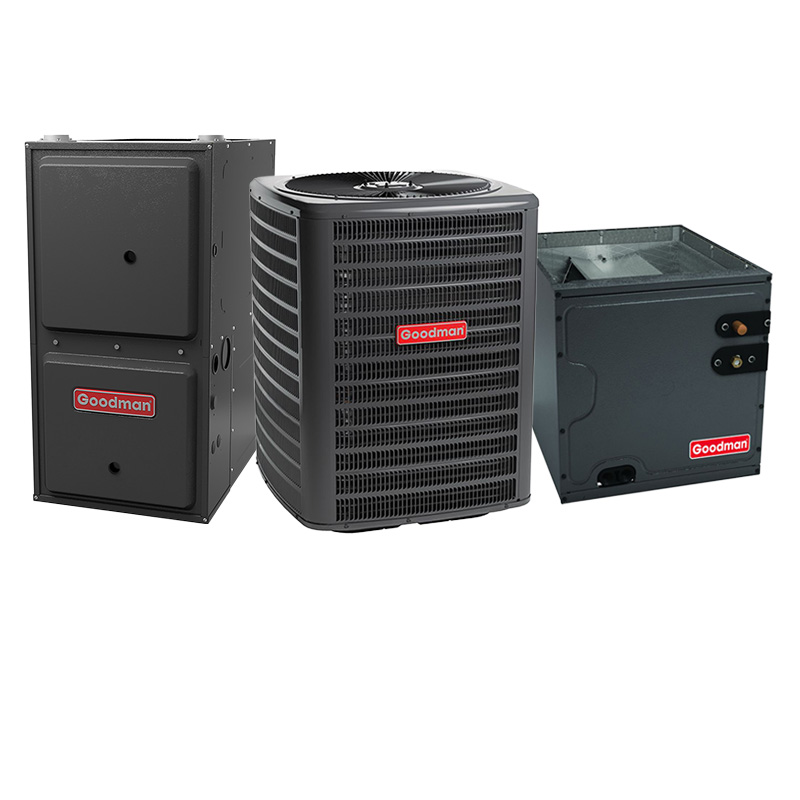
Goodman 5 Ton 14 SEER2 100000 BTU 80% AFUE Multi-Speed ECM Gas Furnace System – Downflow | R32
View on AC Direct see your lowest price →Check current price on AC Direct →
Key features
- 5-ton cooling capacity suited for larger homes, typically 2,500 to 3,500 sq ft depending on load
- 14 SEER2 efficiency rating meets current federal minimum standards for most U.S. regions
- 100,000 BTU, 80% AFUE gas furnace in a downflow-only configuration
- Multi-speed ECM blower motor reduces electricity use and improves humidity control vs. single-speed motors
- R-32 refrigerant with lower global warming potential than legacy R-410A systems
- Priced 15 to 25 percent below comparable Trane, Lennox, and Carrier equipment at similar specs
About this system
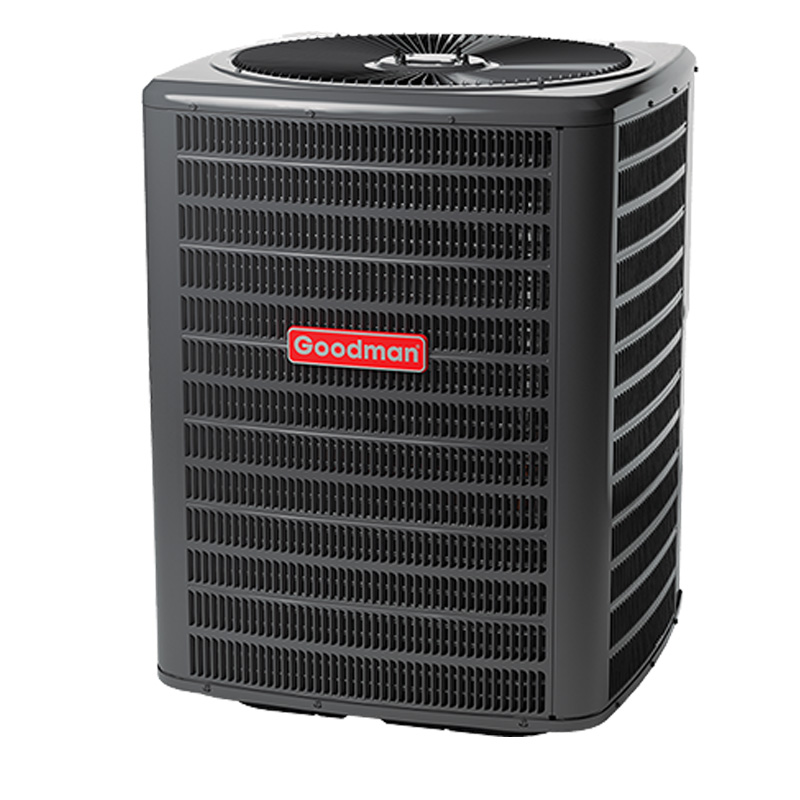
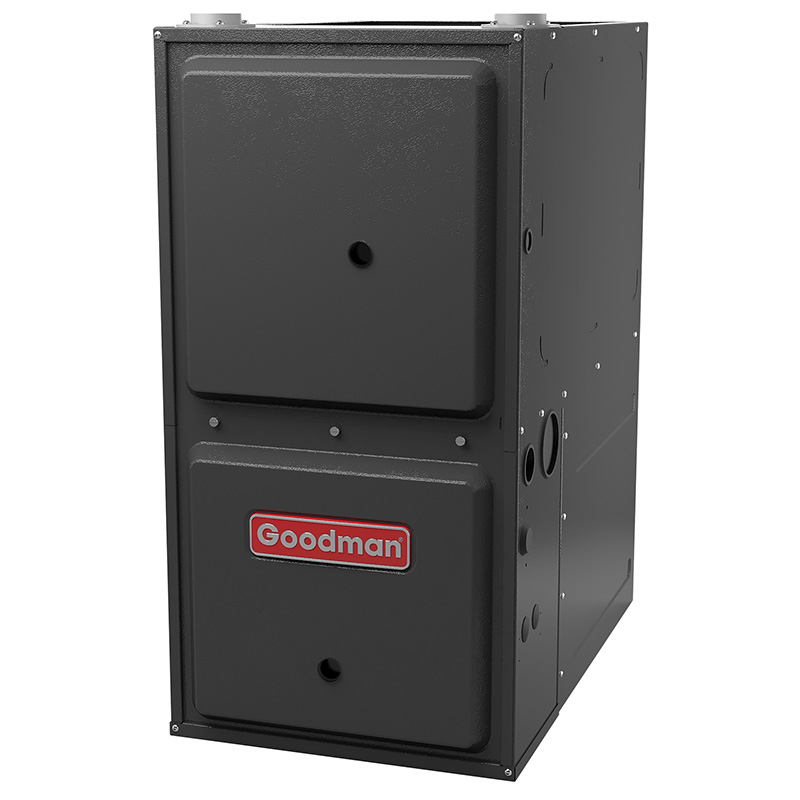
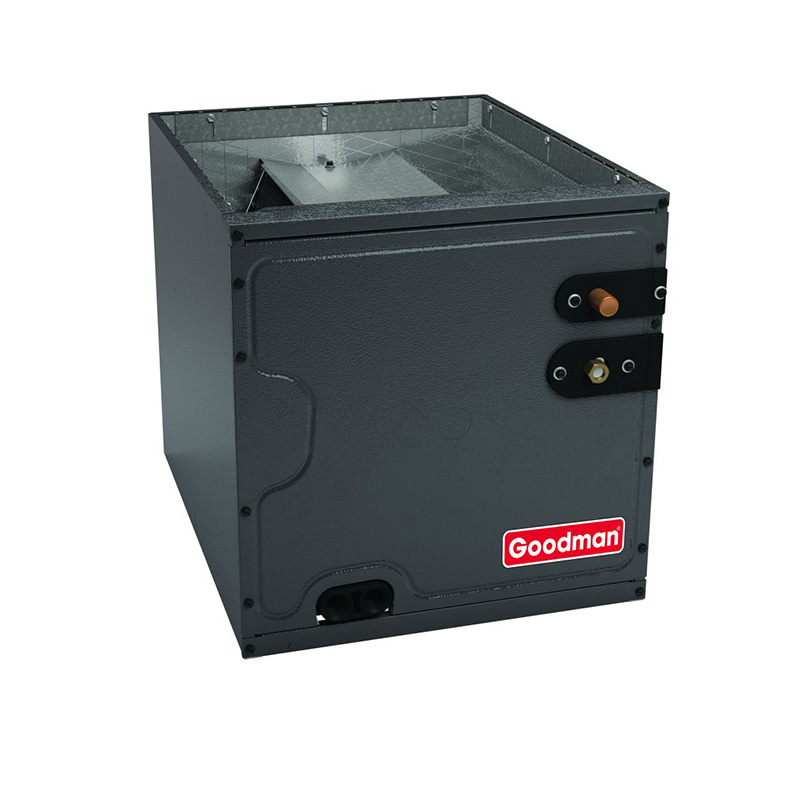
This Goodman 5-ton, 14 SEER2 downflow system pairs a 100,000 BTU, 80% AFUE multi-speed ECM gas furnace with a matched central air conditioner using R-32 refrigerant. At 5 tons of cooling capacity, it is sized for larger homes, typically in the 2,500 to 3,500 square foot range depending on climate zone and insulation quality. The downflow configuration means conditioned air discharges through the bottom of the air handler, making it the correct choice for installations where ductwork runs beneath the unit, such as crawl space systems or certain closet setups. Using the wrong airflow configuration is a common and costly mistake, so confirming your duct layout before purchasing is essential.
The 14 SEER2 rating sits at the federal minimum efficiency threshold for many U.S. climate zones, which means running costs are competitive but not exceptional compared to 16 SEER2 or higher equipment. The 80% AFUE furnace converts eight out of every ten units of gas into usable heat, a standard mid-efficiency rating that suits milder heating climates or buyers where gas prices are low. The multi-speed ECM blower motor is a genuine upgrade over single-speed motors: it ramps airflow up and down to match demand, which reduces temperature swings, lowers electricity use at the air handler, and improves humidity control versus a basic PSC motor. R-32 refrigerant carries a lower global warming potential than the R-410A it replaces and is increasingly the industry standard in new equipment.
This Goodman system delivers a functional, code-compliant heating and cooling solution for large homes at a price point that meaningfully undercuts the premium brands. The ECM motor and R-32 refrigerant are genuine value-adds at this price tier, but buyers should go in knowing that long-term reliability leans heavily on installer quality and that repair costs can climb after year seven. For budget-conscious buyers with access to a skilled installer, it is a reasonable choice; for buyers prioritizing a long trouble-free ownership window, the premium brands offer a measurable advantage.
Overall score is the average of the five ratings above.
What we like
- Purchase price is typically 15 to 25 percent below Carrier, Trane, and Lennox at comparable specs
- Multi-speed ECM blower motor improves comfort and lowers blower electricity costs versus single-speed alternatives
- R-32 refrigerant is a forward-looking choice with lower environmental impact and growing technician familiarity
- Downflow configuration is correct and efficient for crawl space and under-floor duct systems
- Widely available parts network means capacitors and common components can be sourced quickly nationwide
Trade-offs
- Compressor lifespan averages 10 to 14 years, shorter than the 15 to 20 years documented for premium-brand compressors
- Dual-run capacitor failures are the most commonly reported repair, typically needed within the first 7 to 10 years
- A minority of owners report refrigerant leaks in the first year, usually linked to installation or initial charge quality rather than the unit itself
- Evaporator coil leaks appear in a meaningful share of owner reviews, a repair that can run into the thousands of dollars if the compressor warranty has lapsed
What homeowners and pros say about Goodman
Homeowners who share feedback on Goodman tend to split clearly between those who got a clean installation and those who did not. On ConsumerAffairs, Goodman scores around 2.5 out of 5, a low figure that reflects the platform’s complaint-heavy nature, where the recurring theme is repair costs climbing after roughly year seven. Google dealer reviews paint a more balanced picture at around 3.8 out of 5 across hundreds of reviews per location, with affordability cited most often as the reason buyers chose Goodman in the first place. For this particular system, the 5-ton size and downflow configuration mean there is less margin for an installation shortcut: a system this large that is improperly charged or installed in the wrong airflow direction will fail faster and work harder.
HVAC technicians tend to see Goodman as workmanlike equipment where their own labor quality determines the outcome more than the hardware. The failure modes they flag most often in owner forums and trade communities match the documented record: dual-run capacitor replacements are common, usually a quick and inexpensive service call, but evaporator coil leaks and compressor wear showing up between years 10 and 14 are the repairs that frustrate owners who expected longer service life. The R-32 refrigerant in this system is a practical step forward, and the multi-speed ECM blower is a genuine comfort upgrade at a price tier where many competitors still spec basic single-speed motors. Taken together, this system rewards buyers who hire carefully, maintain annually, and go in with realistic expectations about the brand’s mid-range longevity ceiling.
Sources: ConsumerAffairs Goodman owner reviews, AHRI Directory of Certified Product Performance, U.S. DOE appliance and equipment efficiency standards, Goodman product specification sheets.
What it costs to run
At 14 SEER2, cooling this 5-ton system for a typical 1200-hour cooling season at the U.S. average electricity rate of $0.17/kWh works out to roughly $874 per year in cooling, about $39 less per year than a minimum-efficiency 13.4 SEER2 unit of the same size. Your real cost depends on your climate and local rate.
Method: (60,000 BTU/hr ÷ 14 SEER2) × 1200 hours ÷ 1000 × $0.17/kWh. Rate source: U.S. EIA average; cooling hours: moderate-climate estimate.
How it compares
| Brand | Comparable model | SEER2 | Stage | Price position |
|---|---|---|---|---|
| Goodman | GLXS5BN60 / GCVC8010 Series (5-ton, downflow, 14 SEER2, 80% AFUE) | 14 | Single-stage / Multi-speed ECM | Value pick |
| Carrier | Comfort 14 Series (5-ton, 14 SEER2, 80% AFUE) | 14 | Single-stage | Typically 15 to 25 percent more than Goodman |
| Trane | XR14c Series (5-ton, 14 SEER2, 80% AFUE) | 14 | Single-stage | Typically 15 to 25 percent more than Goodman |
| Lennox | Merit ML14XC1 Series (5-ton, 14 SEER2, 80% AFUE) | 14 | Single-stage | Typically 15 to 25 percent more than Goodman |
Competitor rows are comparable single-stage units at similar efficiency; price is relative position, not a quote.
Questions about this system
Is a downflow furnace the right configuration for my house, and can I change it later?
Downflow means the furnace discharges air through its bottom, so it requires ductwork located below the unit, which is typical for crawl space installations or certain closet platforms. It cannot be converted to an upflow or horizontal configuration, so you need to confirm your existing duct layout before ordering. Installing a downflow unit where an upflow is needed is a significant and expensive mistake to undo.
What does 80% AFUE mean for my heating bills compared to a 96% AFUE furnace?
An 80% AFUE furnace vents 20 cents of every gas dollar up the flue, while a 96% AFUE unit loses roughly 4 cents. In a climate with long, cold winters and high gas prices that difference adds up, but in milder heating climates or where gas is inexpensive, the payback period for the more expensive high-efficiency unit can stretch to 10 years or more. Run a heat-load calculation with your contractor to decide if the upgrade makes financial sense for your specific location.
Is 14 SEER2 going to cost me significantly more to run than a higher-efficiency unit?
At 14 SEER2 you are at the federal minimum for most regions, so operating costs are higher than a 16 or 18 SEER2 system, particularly if you are in a hot climate with long cooling seasons. The annual savings from stepping up to 16 SEER2 on a 5-ton system can be meaningful, and some utility rebate programs require at least 15 or 16 SEER2 to qualify. Check your local utility's rebate schedule before finalizing your purchase.
How worried should I be about the documented capacitor and evaporator coil failure issues with Goodman?
Dual-run capacitor failure is the most commonly reported Goodman repair, but it is also one of the cheapest and quickest HVAC fixes, typically costing 300 to 600 dollars when caught promptly. Evaporator coil leaks are more serious because they can run into the thousands of dollars and are more likely to surface after the shorter compressor warranty windows. Buying an extended labor warranty from your installer and scheduling annual maintenance checks are the most practical ways to catch these issues early.
R-32 is new to me. Will local technicians be able to service this system?
R-32 is now standard in a large and growing share of new residential equipment, and most licensed HVAC technicians are already certified to handle it since it requires the same EPA Section 608 certification as other refrigerants. Your technician does need R-32-rated equipment for recovery and recharge, which most shops are acquiring as part of the industry-wide transition. Confirming your service contractor is set up for R-32 before signing a maintenance agreement is a reasonable precaution.
Specifications
| Cooling capacity | 5 Ton |
| Efficiency | 14 SEER2 |
| Furnace output | 100000 BTU |
| Furnace efficiency | 80% AFUE |
| Configuration | Downflow |
| Refrigerant | R-32 |