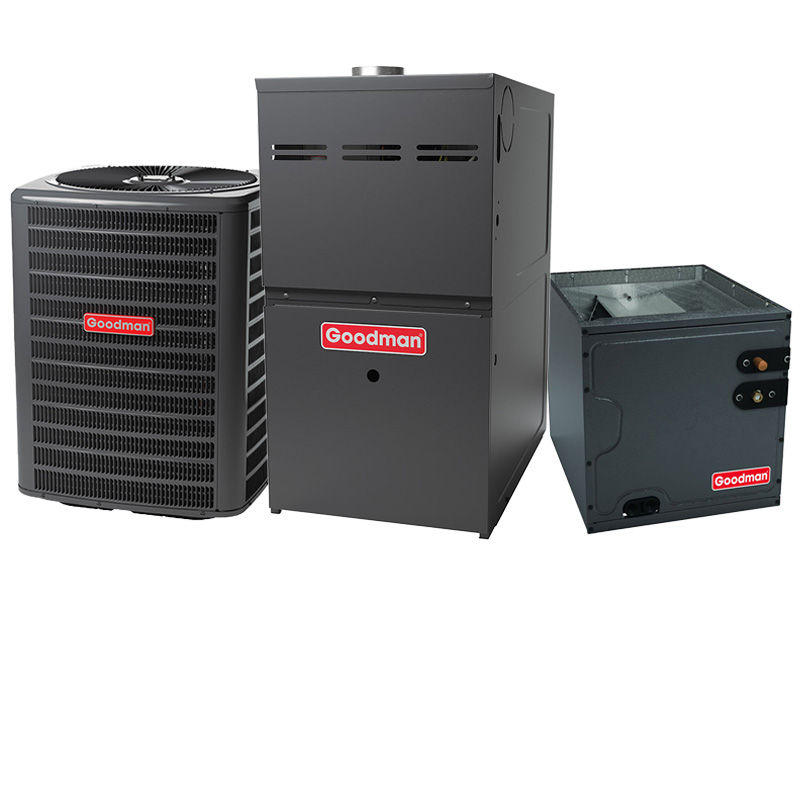
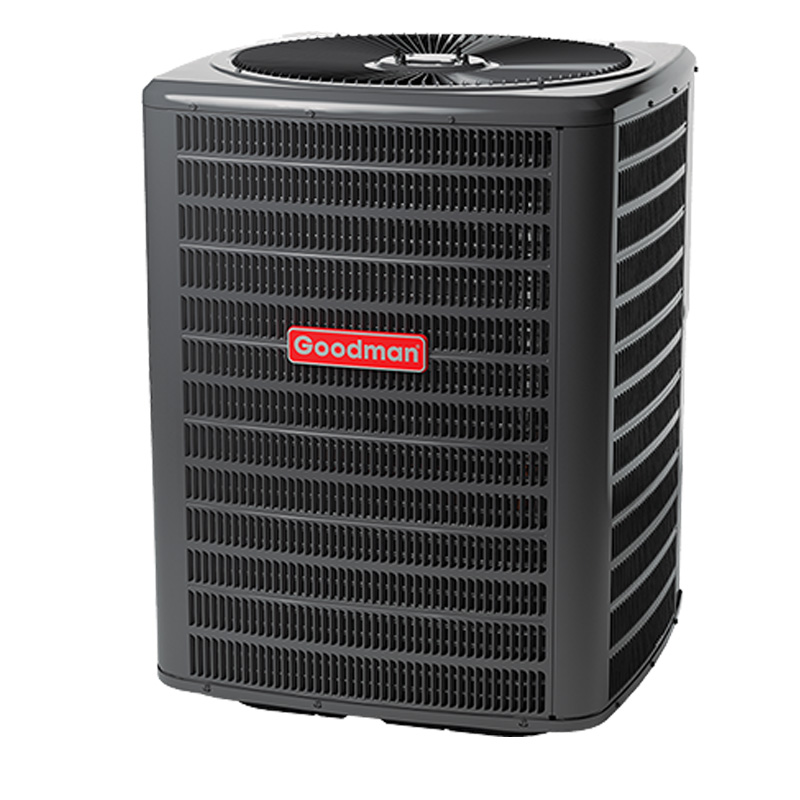
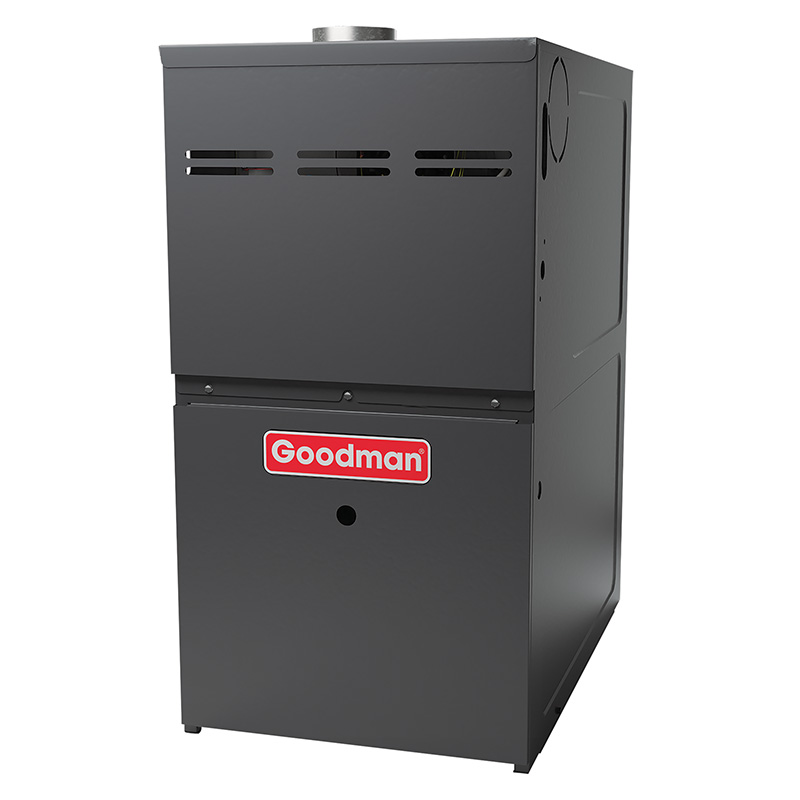
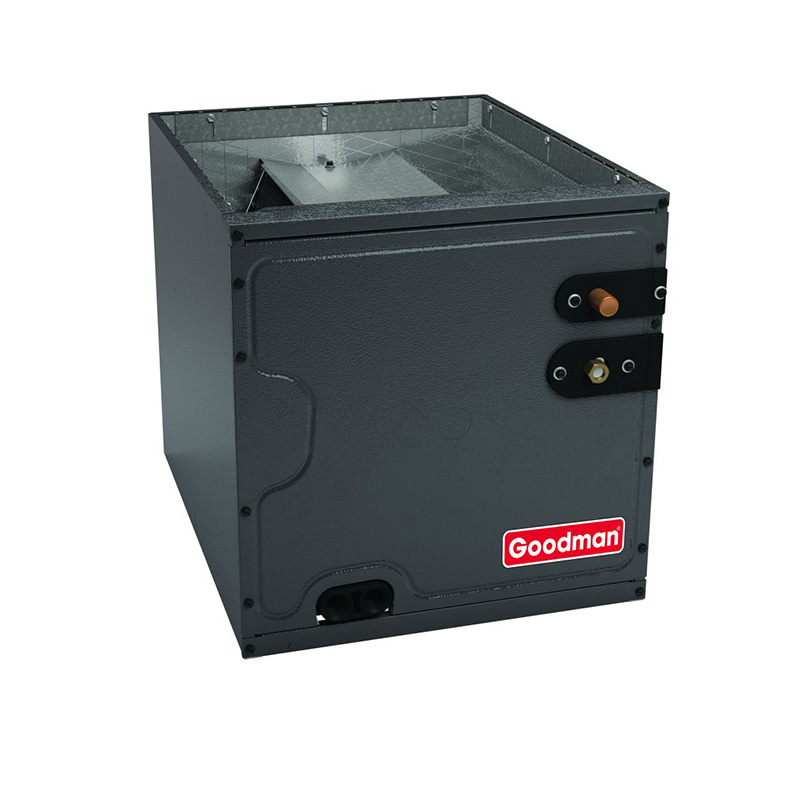
Goodman 5 Ton 14 SEER2 100000 BTU 80% AFUE Multi-Speed ECM Gas Furnace System – Upflow | R32
View on AC Direct see your lowest price →Check current price on AC Direct →
Key features
- 5-ton cooling capacity with 14 SEER2 efficiency rating
- 100,000 BTU gas furnace at 80% AFUE efficiency
- Multi-speed ECM blower motor for quieter, more efficient airflow
- Upflow configuration for basement or ground-level installations
- R-32 refrigerant with lower global-warming potential than R-410A
- Factory-matched system designed for compatibility between coil and furnace
About this system
The Goodman 5-ton, 14 SEER2, 100,000 BTU 80% AFUE upflow system is a bundled heating and cooling solution sized for larger homes, typically in the 2,500 to 3,500 square foot range depending on climate and insulation. The 14 SEER2 rating sits at the current federal minimum efficiency threshold for most U.S. regions, which means running costs are functional but not exceptional. The 80% AFUE furnace converts eight of every ten units of gas into usable heat, a baseline-tier rating that suits homeowners in mild-to-moderate heating climates where the furnace runs a few months per year rather than all winter. The system uses R-32 refrigerant, a lower global-warming-potential option that is becoming more common as the industry moves away from R-410A.
The upflow configuration is the standard residential orientation, where the furnace draws return air in at the bottom and discharges heated or cooled air upward into ductwork above. This works well in homes with a basement or ground-level utility room and overhead duct runs. The multi-speed ECM blower motor improves airflow efficiency and humidity control compared to a single-speed PSC motor, and it runs more quietly at lower speeds during shoulder seasons. For buyers replacing aging equipment on a defined budget, this system covers the basics reliably when installed correctly by a licensed technician.
This Goodman system delivers solid baseline heating and cooling performance at a price point that is 15 to 25 percent below comparable equipment from Trane, Carrier, and Lennox. Efficiency is entry-level, not premium, and long-term ownership costs depend heavily on installation quality and whether you budget for likely component repairs after year seven. It is a reasonable choice for cost-conscious buyers who understand what they are getting.
Overall score is the average of the five ratings above.
What we like
- Priced 15 to 25 percent below Trane, Carrier, and Lennox equivalents
- ECM multi-speed blower reduces energy use and improves comfort compared to single-speed units
- R-32 refrigerant is more environmentally responsible than outgoing R-410A
- Factory-matched coil and furnace reduces compatibility guesswork during installation
- Widely available parts and a large national service network mean repairs are rarely delayed by parts sourcing
Trade-offs
- Dual-run capacitors are the most frequently reported failure, typically at year 7 or beyond, adding repair costs in the $300 to $600 range
- Compressor lifespan averages 10 to 14 years versus 15 to 20 years for premium-brand compressors
- Evaporator coil leaks appear in a meaningful share of long-term owner reports
- 80% AFUE furnace results in noticeably higher annual gas bills compared to 96% or 98% AFUE units in cold climates
What homeowners and pros say about Goodman
Homeowners who track Goodman on ConsumerAffairs give the brand roughly 2.5 out of 5, though that channel skews toward people who had problems rather than satisfied owners who never post. The recurring theme in those reviews is repair costs climbing after roughly year seven, with dual-run capacitor failures and evaporator coil leaks showing up as the most cited issues. Compressor longevity is another real concern: Goodman compressors tend to average 10 to 14 years in the field, a shorter window than the 15 to 20 years commonly associated with premium-brand compressors. A minority of owners also report refrigerant leaks within the first year, which industry technicians generally attribute to installation or initial charge issues rather than a manufacturing defect in the equipment itself.
On Google dealer reviews, Goodman equipment scores around 3.8 out of 5 across hundreds of reviews per location, with affordability consistently cited as the top reason buyers chose it. HVAC technicians generally describe Goodman as competent, value-tier equipment whose lifespan and performance lean heavily on who installs it and how well that work is done. For this specific 5-ton, 14 SEER2 upflow system with an 80% AFUE furnace, the practical takeaway is straightforward: the price advantage is real, the efficiency is baseline, and budgeting for at least one or two component repairs over a 12 to 15 year ownership window is a reasonable expectation rather than a worst-case scenario.
Sources: ConsumerAffairs Goodman owner reviews, AHRI Directory of Certified Product Performance, U.S. DOE appliance and equipment efficiency standards, Goodman product specification sheets.
What it costs to run
At 14 SEER2, cooling this 5-ton system for a typical 1200-hour cooling season at the U.S. average electricity rate of $0.17/kWh works out to roughly $874 per year in cooling, about $39 less per year than a minimum-efficiency 13.4 SEER2 unit of the same size. Your real cost depends on your climate and local rate.
Method: (60,000 BTU/hr ÷ 14 SEER2) × 1200 hours ÷ 1000 × $0.17/kWh. Rate source: U.S. EIA average; cooling hours: moderate-climate estimate.
How it compares
| Brand | Comparable model | SEER2 | Stage | Price position |
|---|---|---|---|---|
| Goodman | GMVC8 / GSXH5 matched system | 14 | Single-stage / Multi-speed | Value pick |
| Carrier | Performance 14 Series (24ACC6) | 14 | Single-stage | Typically 15 to 25 percent more than Goodman |
| Trane | XR14 Series | 14 | Single-stage | Typically 15 to 25 percent more than Goodman |
| Lennox | Merit ML14XC1 Series | 14 | Single-stage | Typically 15 to 25 percent more than Goodman |
Competitor rows are comparable single-stage units at similar efficiency; price is relative position, not a quote.
Questions about this system
Is 14 SEER2 good enough, or should I pay more for a higher-efficiency system?
14 SEER2 meets the current federal minimum and is adequate for moderate climates or homeowners prioritizing upfront cost. If your home runs the air conditioner heavily from May through September, a 16 or 18 SEER2 unit can meaningfully lower monthly utility bills, and the payback period is often 5 to 8 years depending on your electricity rate and usage.
How does R-32 affect service and refrigerant costs compared to R-410A?
R-32 is a single-component refrigerant, which makes it easier to recharge than blended refrigerants if a leak is found and fully recovered. Availability is growing as manufacturers shift to it, though your technician should confirm they are certified and equipped to handle R-32 before any service call.
What does the documented capacitor failure issue mean for my maintenance budget?
Dual-run capacitors are a relatively inexpensive and quick repair, typically in the $300 to $600 range including labor. Scheduling an annual tune-up where the technician tests capacitor health proactively can catch this before it causes a no-cooling call on the hottest day of the year.
Will 80% AFUE save me money over a 96% AFUE furnace in the long run?
Not necessarily. An 80% AFUE furnace costs less upfront, but in colder climates where the furnace runs four to six months per year, the difference in annual gas consumption can add up. In mild climates with short heating seasons, the upfront savings from an 80% unit often outweigh the efficiency gap over the system's lifespan.
Is this system appropriate for a 3,000 square foot home, or could it be oversized?
A 5-ton unit may or may not suit a 3,000 square foot home; the right size depends on your climate zone, insulation, window area, ceiling height, and duct layout. An oversized system short-cycles, which reduces humidity control and accelerates wear. Ask your installer to perform a Manual J load calculation before committing to 5 tons.
Specifications
| Cooling capacity | 5 Ton |
| Efficiency | 14 SEER2 |
| Furnace output | 100000 BTU |
| Furnace efficiency | 80% AFUE |
| Configuration | Upflow |
| Refrigerant | R-32 |