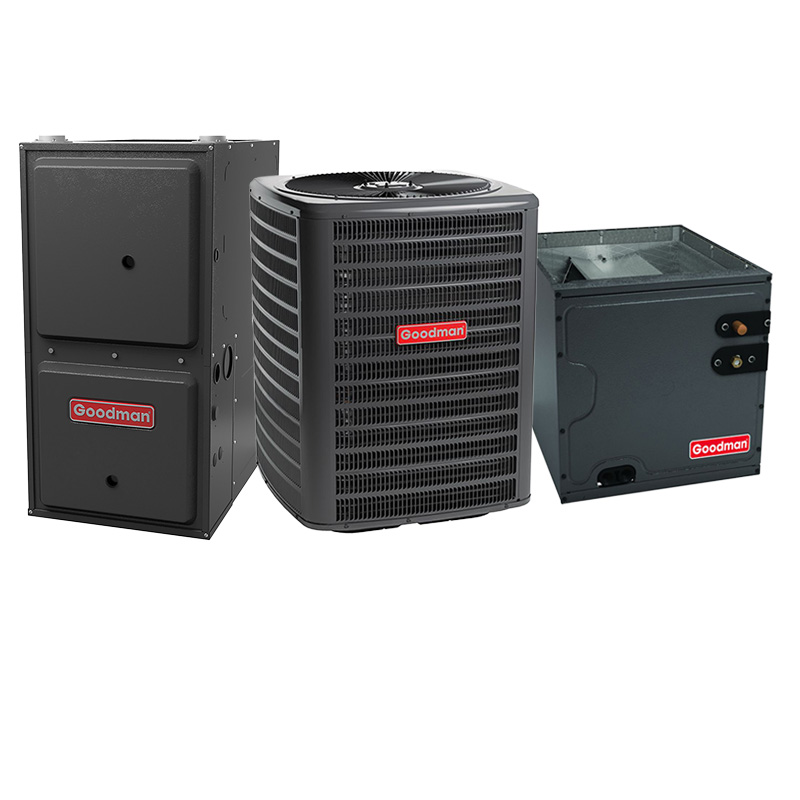
Goodman 5 Ton 14 SEER2 100000 BTU 80% AFUE Two Stage Multi-Speed ECM Gas Furnace System – Low NOX For California Downflow | R32
View on AC Direct see your lowest price →Check current price on AC Direct →
Key features
- 5-ton, 14 SEER2 cooling matched with 100,000 BTU two-stage gas heat
- 80% AFUE furnace with multi-speed ECM blower for lower electrical draw
- Downflow configuration for installations above crawlspace or floor-level ductwork
- R-32 refrigerant with lower global warming potential than R-410A
- California Low NOX certified, meeting stricter state emissions standards
- Two-stage furnace operation reduces short-cycling and improves room-to-room comfort
About this system
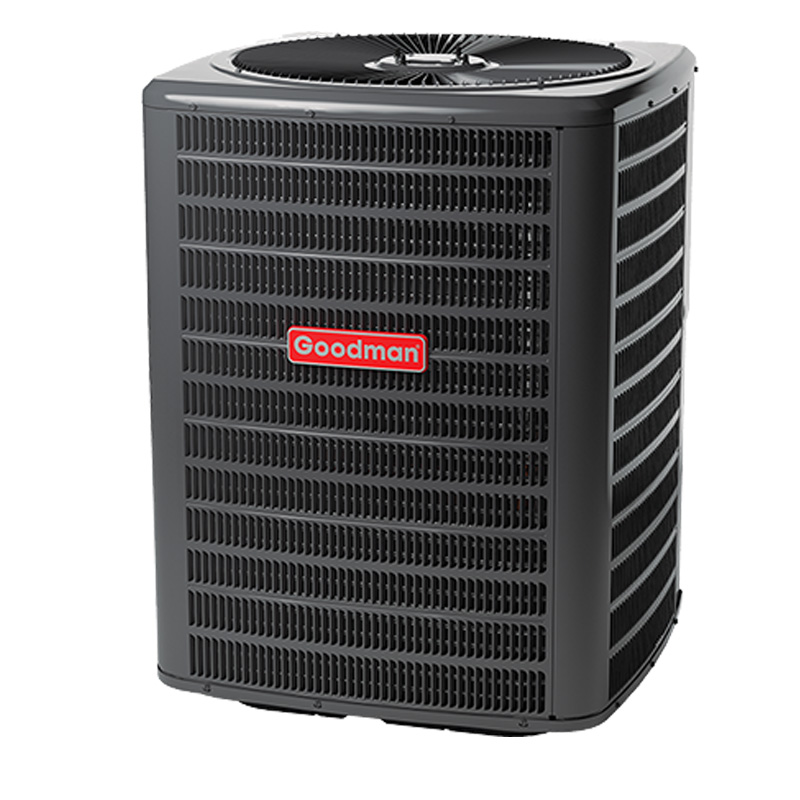
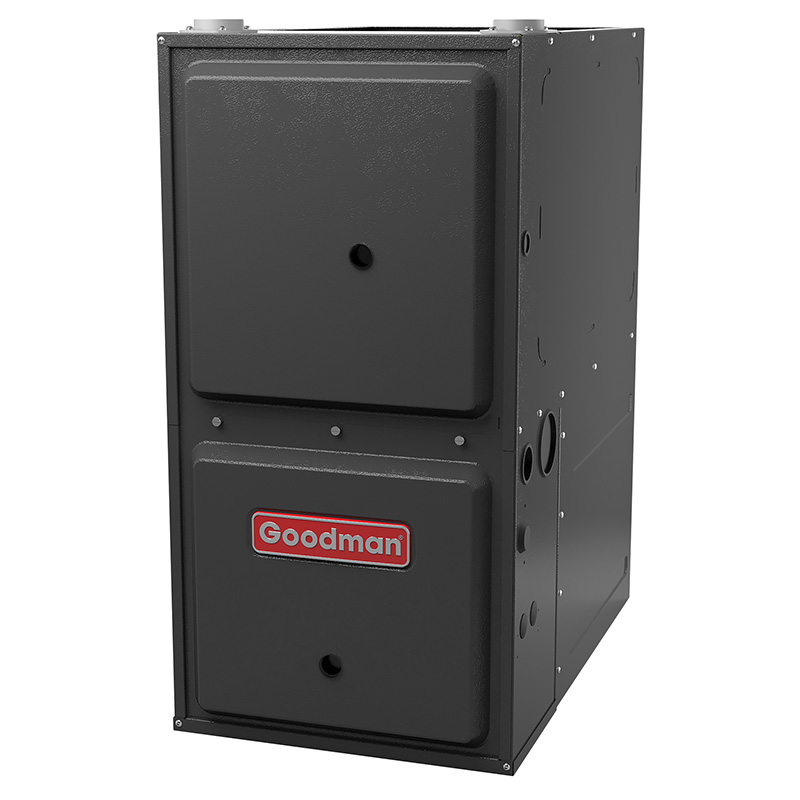
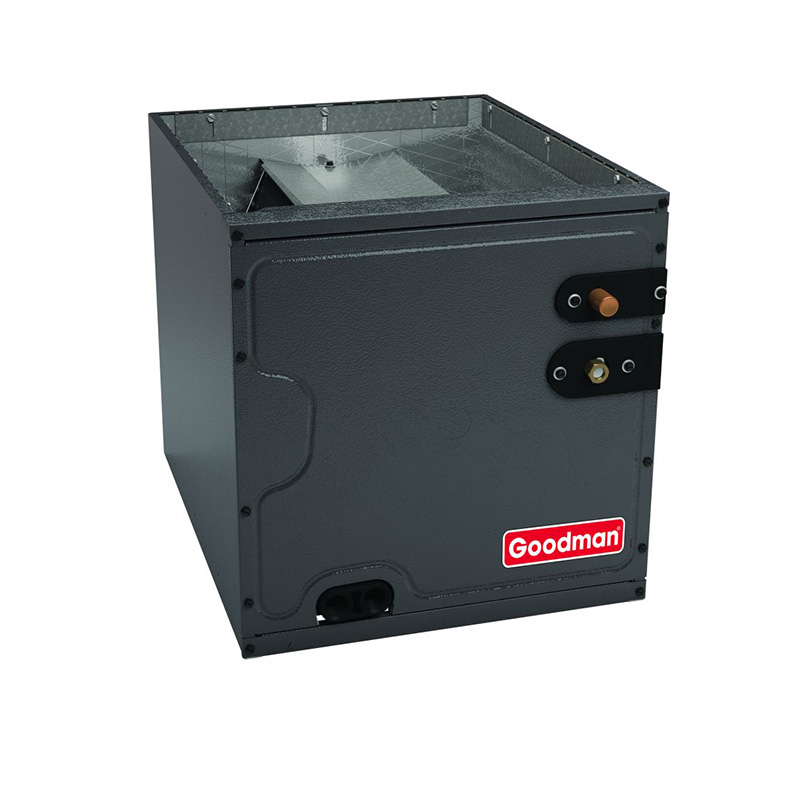
The Goodman GLXS4BA6010 pairs a 5-ton, 14 SEER2 central air conditioner with a 100,000 BTU, 80% AFUE two-stage gas furnace in a downflow configuration, using R-32 refrigerant and a multi-speed ECM blower motor. This combination is sized for larger homes in the 2,200 to 3,000 square foot range and is specifically certified for California’s Low NOX emission requirements, making it one of the few value-priced options that clears that regulatory hurdle without stepping up to a premium brand.
The downflow configuration means conditioned air exits through the bottom of the air handler, which suits homes where the furnace sits in a closet or utility space above a crawlspace or main-level ductwork. R-32 refrigerant carries a lower global warming potential than the R-410A it replaces and is increasingly standard across new residential equipment. The two-stage furnace operation runs at a lower capacity most of the time, reducing short-cycling, evening out temperatures room to room, and cutting fuel consumption compared with single-stage units. The ECM motor adjusts airflow continuously, which also helps with humidity control and lowers electrical draw versus a standard PSC motor.
At 14 SEER2 and 80% AFUE, this system sits at the federally mandated efficiency floor for its climate zone rather than above it. That means lower upfront cost but higher monthly operating costs compared with 16 SEER2 or higher setups, and it will not qualify for most Inflation Reduction Act tax credits that require at least 15 SEER2 or 95% AFUE. It is a practical choice for buyers replacing an aging system on a defined budget who want two-stage comfort without the price tag of Trane, Carrier, or Lennox equivalents.
This system delivers genuine two-stage comfort and Low NOX compliance at a price point roughly 15 to 25 percent below comparable Carrier, Trane, and Lennox configurations, which is its primary appeal. The efficiency ratings sit at the regulatory minimum, so operating costs will be higher than mid- or high-efficiency alternatives over the life of the system. Long-term reliability depends heavily on installation quality and willingness to budget for maintenance, as Goodman's documented failure patterns show repair costs climbing after year seven.
Overall score is the average of the five ratings above.
What we like
- Priced meaningfully below comparable premium-brand two-stage systems
- Two-stage furnace and ECM blower improve comfort and humidity control versus single-stage units
- California Low NOX certification covers a state requirement most budget systems cannot meet
- R-32 refrigerant is forward-looking and widely available from HVAC suppliers
- Downflow configuration fills a specific installation need that not all value-brand lineups address
Trade-offs
- 14 SEER2 and 80% AFUE are at the efficiency floor, meaning higher utility bills and no federal tax credit eligibility
- Dual-run capacitors are the most commonly reported failure on Goodman equipment, typically a 300 to 600 dollar repair
- Compressor lifespan averages 10 to 14 years versus 15 to 20 years typical of premium brands, meaning earlier replacement risk
- A minority of owners have reported evaporator coil leaks and first-year refrigerant charge issues, underscoring the importance of installer selection
What homeowners and pros say about Goodman
Goodman earns a loyal following among cost-conscious buyers and the contractors who serve them, largely because the price gap versus Carrier, Trane, and Lennox is real and consistent. On Google dealer review aggregates, Goodman systems score around 3.8 out of 5 across hundreds of reviews per location, with affordability showing up as the most repeated praise. The picture on ConsumerAffairs is harsher, around 2.5 out of 5, though that channel attracts owners who are already frustrated, and the recurring pattern there is repair costs accelerating after roughly year seven rather than early catastrophic failure. For a system like this GLXS4BA6010, that timeline is worth factoring into total cost of ownership.
Among the documented failure modes, dual-run capacitors are the most commonly reported issue on Goodman equipment and are generally a low-cost fix in the 300 to 600 dollar range when caught early. Evaporator coil leaks appear in a meaningful share of owner reviews and are more disruptive. Compressor lifespan on Goodman units tends to average 10 to 14 years, which is shorter than the 15 to 20 years more typically associated with premium brands, meaning buyers on a tight upfront budget should plan for the possibility of a compressor or full-system replacement sooner than they might with a Trane or Lennox. A small minority of owners have also reported refrigerant leaks in the first year, which HVAC technicians generally attribute to install or charge errors rather than a defect in the equipment itself, reinforcing how much the installer choice shapes the outcome with this brand.
Sources: ConsumerAffairs Goodman owner reviews, AHRI Directory of Certified Product Performance, U.S. DOE appliance and equipment efficiency standards, Goodman product specification sheets.
What it costs to run
At 14 SEER2, cooling this 5-ton system for a typical 1200-hour cooling season at the U.S. average electricity rate of $0.17/kWh works out to roughly $874 per year in cooling, about $39 less per year than a minimum-efficiency 13.4 SEER2 unit of the same size. Your real cost depends on your climate and local rate.
Method: (60,000 BTU/hr ÷ 14 SEER2) × 1200 hours ÷ 1000 × $0.17/kWh. Rate source: U.S. EIA average; cooling hours: moderate-climate estimate.
How it compares
| Brand | Comparable model | SEER2 | Stage | Price position |
|---|---|---|---|---|
| Goodman | GLXS4BA6010 (this system) | 14 | Two-stage | Value pick |
| Carrier | Performance 15 (24ACC636 + 59TP6) | 15 | Two-stage | Approximately 20 to 25 percent more than this Goodman |
| Trane | XR15 + XC80 (4TTR5060 + TUD2B100) | 15 | Two-stage | Approximately 20 to 30 percent more than this Goodman |
| Lennox | Merit 14 (ML14XC1-060 + ML180UH) | 14 | Single-stage | Approximately 15 to 20 percent more than this Goodman for single-stage comfort |
Competitor rows are comparable single-stage units at similar efficiency; price is relative position, not a quote.
Questions about this system
Does this system qualify for the federal Inflation Reduction Act tax credit?
No. The IRA's residential clean energy credits for central air conditioners generally require a minimum of 15 SEER2, and the furnace credit requires at least 97% AFUE. At 14 SEER2 and 80% AFUE, this system does not meet either threshold. Check with your tax advisor and the ENERGY STAR database for current qualification requirements.
Why does the downflow configuration matter, and how do I know if my home needs it?
A downflow furnace discharges heated or cooled air downward into the return duct or plenum below the unit, which is typical when the air handler sits in an upper-floor closet, attic platform, or utility room with ductwork running beneath it. If your existing furnace has the supply plenum at the bottom and the flue connection at the top, downflow is correct for your application. Installing an upflow unit in a downflow application is a code violation and a safety hazard, so confirm the orientation before purchasing.
What are the most common repairs I should budget for over the first ten years?
Dual-run capacitors are the most frequently reported Goodman failure, typically costing 300 to 600 dollars including labor and usually appearing after several years of operation. Evaporator coil leaks have also shown up in a meaningful share of owner reports. Keeping an extended warranty or a service agreement active after the manufacturer coverage expires is a practical way to manage these costs.
Is R-32 refrigerant safe and readily serviceable in California?
R-32 is a mildly flammable (A2L classification) refrigerant, so technicians must be certified and equipped for A2L handling, which is becoming standard as the industry transitions away from R-410A. It is widely stocked by HVAC distributors in California and is approved for residential use under current regulations. Confirm that any contractor you hire has the required A2L certification before scheduling service.
How important is the installer when it comes to Goodman reliability?
Very important. Industry technicians consistently identify installation quality as the single biggest factor in how long any Goodman system lasts. Issues like improper refrigerant charge, poor ductwork connections, and inadequate commissioning account for a significant portion of early-life failures, including the first-year refrigerant leak complaints documented in owner reviews. Getting multiple bids from licensed contractors and confirming they perform a Manual J load calculation is worth the extra time before purchase.
Specifications
| Cooling capacity | 5 Ton |
| Efficiency | 14 SEER2 |
| Furnace output | 100000 BTU |
| Furnace efficiency | 80% AFUE |
| Configuration | Downflow |
| Refrigerant | R-32 |
| Model | GLXS4BA6010 |