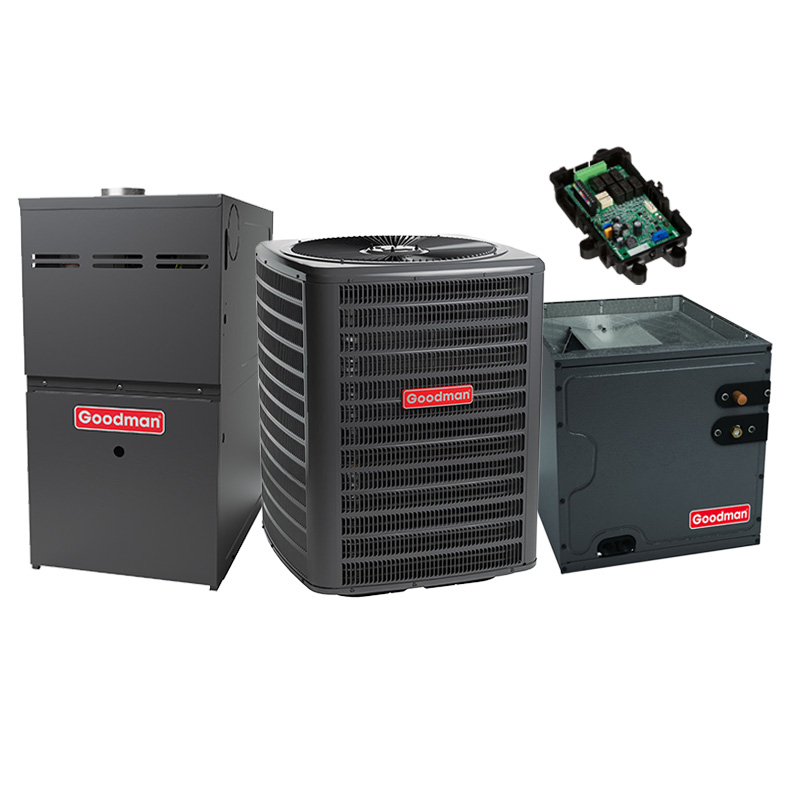
Goodman 5 Ton 14 SEER2 120000 BTU 80% Gas Furnace With R32 Air Conditioning Condenser And Coil System – Upflow
View on AC Direct see your lowest price →Check current price on AC Direct →
Key features
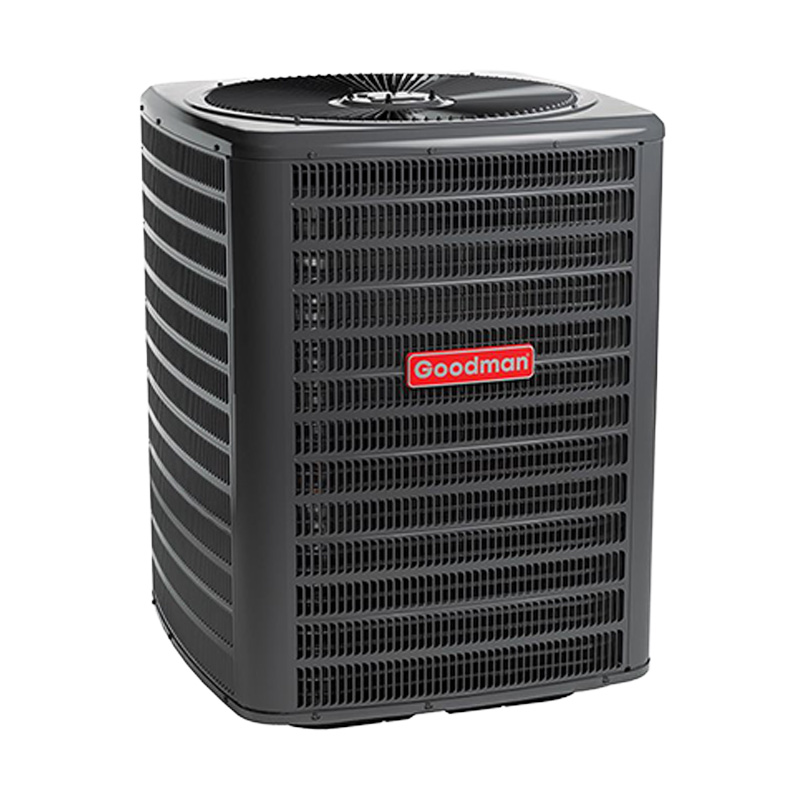
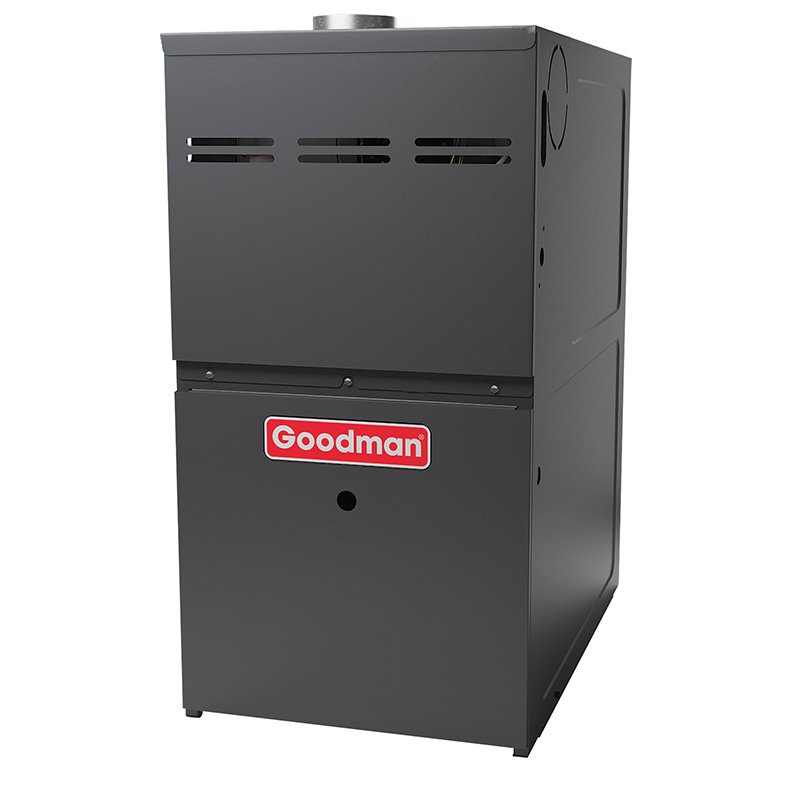
- 5-ton R-32 air conditioning condenser matched with a 120,000 BTU 80% AFUE upflow gas furnace
- 14 SEER2 efficiency rating meets current federal minimum standards for new installations
- R-32 refrigerant offers lower global warming potential than R-410A and better long-term regulatory outlook
- Upflow cabinet orientation designed for basement or utility closet installs with overhead duct systems
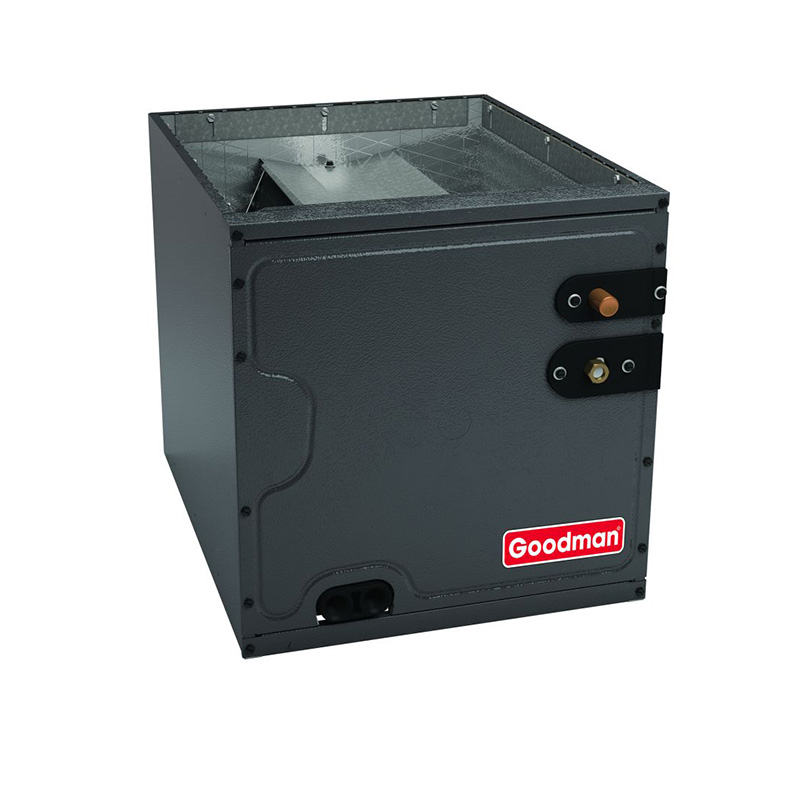
- Factory-matched coil included, simplifying permitting and ensuring rated system efficiency
- Priced approximately 15 to 25 percent below comparable Trane, Carrier, and Lennox configurations
About this system
This Goodman bundle pairs a 5-ton R-32 condensing unit rated at 14 SEER2 with a 120,000 BTU 80% AFUE upflow gas furnace and a matched evaporator coil, giving you a complete split system in a single purchase. The 14 SEER2 rating sits at the federal minimum threshold for new residential equipment, which keeps the purchase price down but means your operating costs will be higher than systems in the 16 to 18 SEER2 range over the life of the unit. The upflow configuration means conditioned air exits the top of the air handler, making this the right choice for basements, utility closets, and crawl-space installations where ductwork runs overhead.
R-32 refrigerant is a meaningful spec upgrade over older R-410A equipment. It carries a lower global warming potential, is easier to handle in smaller charges, and is likely to remain legal and available as regulations on higher-GWP refrigerants tighten over the next decade. The 120,000 BTU furnace output is substantial and is appropriate for larger homes in colder climates, though a proper Manual J load calculation is essential before committing to this size. Oversizing a furnace causes short-cycling, uneven humidity control, and premature heat exchanger wear, so confirm the sizing with your installer rather than guessing based on square footage alone.
This Goodman system delivers a complete, code-compliant heating and cooling solution at a price point that genuinely undercuts premium brands by a meaningful margin. The trade-off is a compressor lifespan and reliability record that trails the upper tier, and long-term satisfaction depends heavily on installation quality and ongoing maintenance. For budget-conscious buyers who want a matched system and plan to invest in professional installation, it is a reasonable choice with clear limitations.
Overall score is the average of the five ratings above.
What we like
- Significantly lower upfront cost than Carrier, Trane, or Lennox equivalents at the same efficiency tier
- Complete matched system reduces compatibility guesswork and satisfies most jurisdictional permitting requirements
- R-32 refrigerant is forward-looking and avoids the phase-out timeline hanging over R-410A equipment
- 80% AFUE furnace is appropriate and cost-effective for mixed or moderate heating climates
- Dual-run capacitor failures, the most common documented issue, are a low-cost repair typically in the 300 to 600 dollar range
Trade-offs
- 14 SEER2 is the efficiency floor, meaning higher monthly utility bills compared to mid- or high-efficiency alternatives
- Compressor lifespan averages 10 to 14 years versus 15 to 20 years for premium brands, raising long-run replacement cost
- Evaporator coil leaks appear in a meaningful share of owner reviews, and a minority of owners report refrigerant leaks within the first year
- ConsumerAffairs reviews average around 2.5 out of 5, with repair costs after year 7 cited repeatedly as the core frustration
What homeowners and pros say about Goodman
Homeowners who track their Goodman experience online present a divided picture. On ConsumerAffairs, a complaint-weighted channel, Goodman scores around 2.5 out of 5, and the pattern in the negative reviews is consistent: the first several years are largely uneventful, then repair costs start climbing around year seven. The specific failures that come up most are dual-run capacitor failures, which are a manageable low-cost fix, and evaporator coil leaks, which are not. A smaller group of owners describe refrigerant leaks within the first year, a problem that typically points to installation or initial charge quality rather than a factory defect. On Google dealer reviews, where the audience skews toward customers who had a complete installation experience rather than just a single frustrating repair call, scores run around 3.8 out of 5, and affordability is the word that appears most often in the positive feedback.
HVAC professionals tend to view Goodman as a workable option when the customer’s budget is genuinely constrained, but they are consistent on one point: installation quality matters more with this brand than with premium equipment. A well-installed Goodman system running on a clean refrigerant charge with properly sized ductwork will outperform a sloppily installed Carrier or Trane in every measurable way. The documented compressor lifespan of roughly 10 to 14 years, compared to 15 to 20 years for top-tier brands, is the trade-off that experienced technicians flag most often when a customer is weighing the upfront savings. For a 5-ton system at 14 SEER2, that gap in expected service life is worth factoring into the true cost of ownership before signing a contract.
Sources: ConsumerAffairs Goodman owner reviews, AHRI Directory of Certified Product Performance, U.S. DOE appliance and equipment efficiency standards, Goodman product specification sheets.
What it costs to run
At 14 SEER2, cooling this 5-ton system for a typical 1200-hour cooling season at the U.S. average electricity rate of $0.17/kWh works out to roughly $874 per year in cooling, about $39 less per year than a minimum-efficiency 13.4 SEER2 unit of the same size. Your real cost depends on your climate and local rate.
Method: (60,000 BTU/hr ÷ 14 SEER2) × 1200 hours ÷ 1000 × $0.17/kWh. Rate source: U.S. EIA average; cooling hours: moderate-climate estimate.
How it compares
| Brand | Comparable model | SEER2 | Stage | Price position |
|---|---|---|---|---|
| Goodman | 5-Ton 14 SEER2 R-32 with 120,000 BTU 80% AFUE Upflow Furnace and Coil | 14 | Single-stage | Value pick |
| Carrier | Comfort Series 24ACC636 with 58MCA furnace | 14-15 | Single-stage | Typically 15 to 25 percent more than Goodman |
| Trane | XR14c condenser with S9X2 furnace | 14-15 | Single-stage | Typically 15 to 25 percent more than Goodman |
| Lennox | Merit ML14XC1 condenser with ML196 furnace | 14-15 | Single-stage | Typically 15 to 25 percent more than Goodman |
Competitor rows are comparable single-stage units at similar efficiency; price is relative position, not a quote.
Questions about this system
Is a 5-ton, 120,000 BTU system the right size for my home?
Size should always be determined by a Manual J load calculation performed by your installer, not by square footage rules of thumb. A 5-ton condenser and 120,000 BTU furnace is a large combination suited to homes typically above 2,500 square feet in colder climates, but local insulation levels, window area, and climate zone all affect the correct answer. Oversizing causes short-cycling, poor humidity control, and accelerated wear.
Why does this system use R-32 instead of R-410A?
R-32 has a global warming potential roughly 68 percent lower than R-410A and requires a smaller refrigerant charge to do the same work. Regulatory pressure on high-GWP refrigerants is increasing, so R-32 equipment is better positioned for long-term serviceability and legal compliance. Your technician will need R-32 certification and compatible recovery equipment.
What are the most common repairs I should budget for?
The dual-run capacitor is the single most frequently reported failure point on Goodman systems and typically costs 300 to 600 dollars to diagnose and replace. Evaporator coil refrigerant leaks show up in a meaningful portion of owner reviews and are more expensive to address. Setting aside a small annual maintenance fund after year five is a practical habit with this equipment.
How important is installer quality with a Goodman system?
Very important. HVAC technicians consistently identify installation quality as the largest variable in how long any Goodman unit lasts and how efficiently it runs. Proper refrigerant charge, correct airflow setup, and tight duct connections matter more with a value-tier brand than with premium equipment that has tighter manufacturing tolerances. A minority of early refrigerant leak reports on Goodman units trace back to installation or initial charge issues rather than factory defects.
What does Goodman's warranty cover on this system, and are there conditions I should know about?
Goodman typically offers a 10-year parts warranty when the equipment is registered within a specified window after installation, dropping to a shorter period on unregistered units. The warranty generally covers parts but not labor, which can be a significant out-of-pocket cost on a compressor or coil replacement. Confirm registration requirements and read the labor exclusion carefully before assuming full coverage.
Specifications
| Cooling capacity | 5 Ton |
| Efficiency | 14 SEER2 |
| Furnace output | 120000 BTU |
| Configuration | Upflow |
| Refrigerant | R-32 |