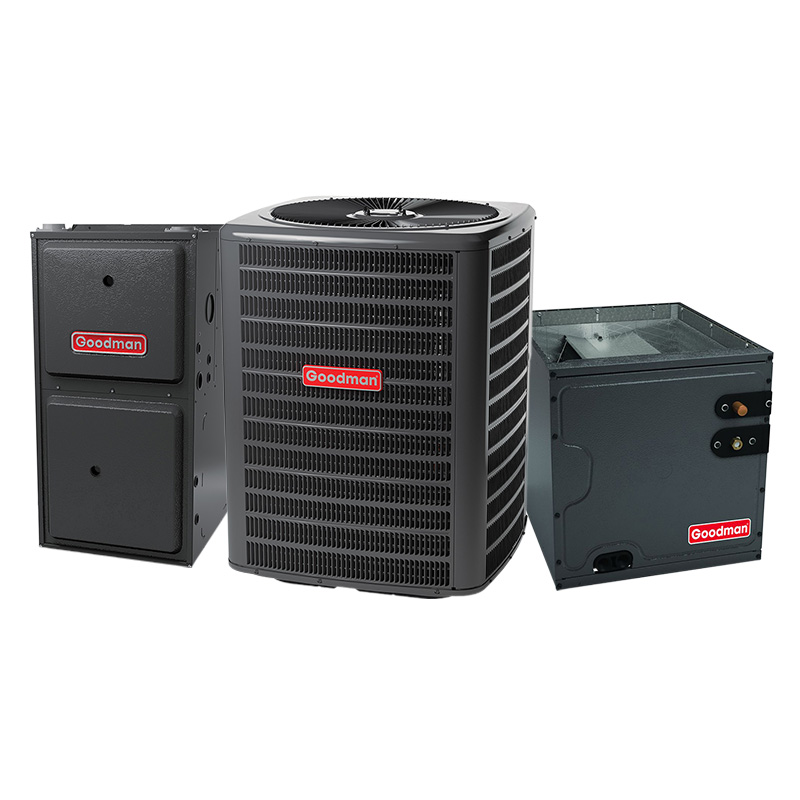
Goodman 5 Ton 14 SEER2 AC & Gas Furnace System – Multi-Speed, 100000 BTU Gas Furnace, 92% AFUE, Upflow, R32
View on AC Direct see your lowest price →Check current price on AC Direct →
Key features
- 5-ton cooling capacity, suited to larger homes roughly 2,400 to 3,200 sq ft depending on load
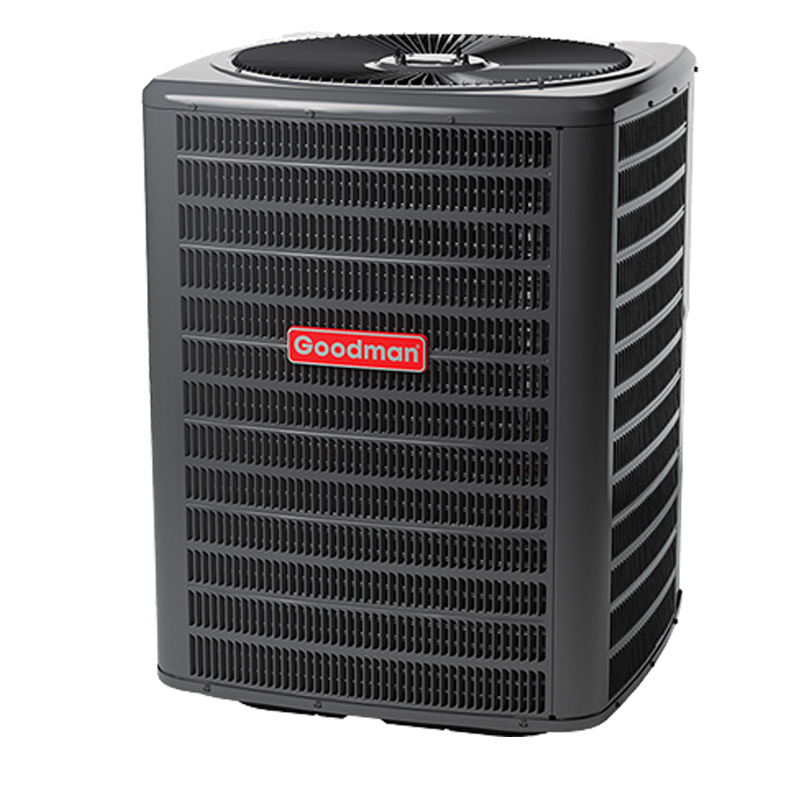
- 14 SEER2 single-stage AC using R-32 refrigerant, meets current federal minimum efficiency standards
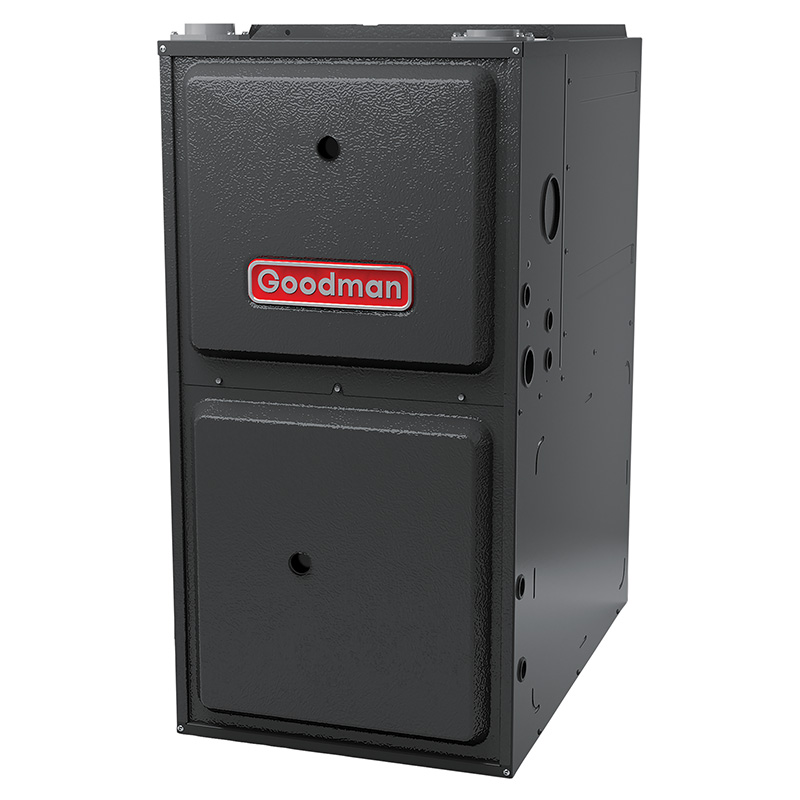
- 100,000 BTU upflow gas furnace with 92% AFUE for moderate heating efficiency
- Multi-speed ECM-style blower motor improves airflow and humidity management over single-speed units
- Upflow configuration compatible with standard basement or closet duct installations
- Goodman factory warranty: 10-year parts, lifetime heat exchanger (registration required within 60 days)
About this system
The Goodman GLXS4BA6010 pairs a 5-ton, 14 SEER2 single-stage central air conditioner with a 100,000 BTU upflow gas furnace rated at 92% AFUE. That efficiency combination sits at the entry level of what most states now require after the 2023 regional efficiency minimums took effect, so this system clears the bar without the added cost of two-stage or variable-speed equipment. The R-32 refrigerant is a step forward environmentally, carrying a global warming potential roughly 68 percent lower than the R-410A it replaces, and it is increasingly common in newer residential equipment across all brands.
A 5-ton, 100,000 BTU configuration is aimed at larger homes, typically in the 2,400 to 3,200 square foot range depending on climate zone, insulation quality, and window load. The upflow furnace orientation suits the most common residential duct arrangement, where the air handler sits in a basement or ground-floor closet and supplies conditioned air upward. The multi-speed blower gives the furnace more flexibility across heating and cooling demands than a single-speed motor would, though it stops short of the comfort and humidity control advantages a fully variable-speed motor delivers. Buyers choosing this system are generally prioritizing a lower initial price point over long-term efficiency gains or premium comfort features.
The Goodman GLXS4BA6010 is a straightforward, budget-conscious choice for homeowners replacing a large system who want to meet current efficiency codes without paying a premium brand markup. It delivers acceptable efficiency and a competitive warranty on paper, but real-world longevity tracks closely with install quality and leans shorter than premium-brand compressors. Buyers who keep up with capacitor and coil inspections and use a skilled installer are most likely to see the full service life.
Overall score is the average of the five ratings above.
What we like
- Priced 15 to 25 percent below comparable Carrier, Trane, and Lennox equipment, leaving room in the budget for quality installation
- 10-year parts warranty and lifetime heat exchanger coverage (with registration) are competitive for the price tier
- R-32 refrigerant is more environmentally responsible than R-410A and increasingly supported by HVAC technicians
- Multi-speed blower provides more consistent airflow and better humidity handling than basic single-speed alternatives
- 92% AFUE furnace avoids the cost premium of 96-97% condensing tiers while still exceeding the 80% AFUE minimum
Trade-offs
- Dual-run capacitors are the most commonly reported failure point; budget $300 to $600 for this likely repair somewhere in the first several years
- Compressor lifespan averages 10 to 14 years versus 15 to 20 years typical of premium brands, meaning earlier replacement risk on a large, expensive unit
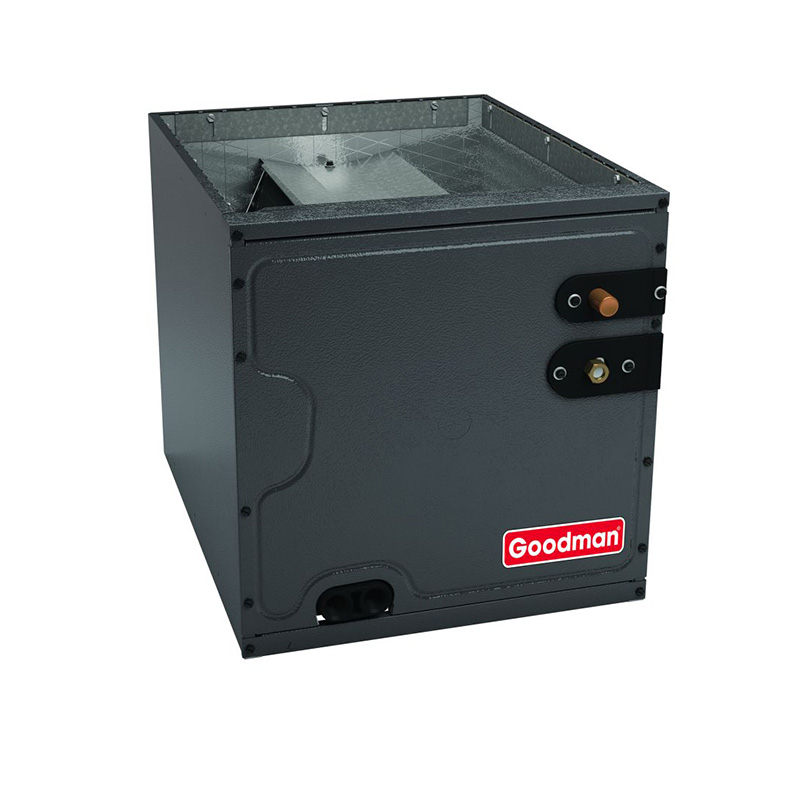
- Evaporator coil leaks appear in a meaningful share of owner reviews and can be a costly repair outside warranty if refrigerant loss is involved
- Single-stage operation means the system runs at full capacity or not at all, which can cause temperature swings and less precise humidity control compared to two-stage or variable-speed systems
What homeowners and pros say about Goodman
Homeowners who review Goodman equipment tend to cluster at the extremes: those who had a smooth installation and routine maintenance report years of trouble-free operation and praise the value, while those who ran into problems often describe frustration with repair costs that felt large relative to what they paid upfront. On ConsumerAffairs, Goodman scores around 2.5 out of 5, a channel that skews toward dissatisfied owners, where the pattern that stands out is repair bills climbing after roughly year seven. Google dealer reviews land higher, around 3.8 out of 5 across several hundred reviews per location, with affordability cited most often as the reason buyers chose the brand. For a 5-ton system like this one, the stakes of those later-year repairs are higher than on a smaller unit simply because compressor and coil replacements scale with size.
HVAC technicians who work on Goodman equipment regularly point to two things above all else. First, install quality determines more of the outcome than the brand name does, and a well-installed Goodman consistently outlasts a poorly installed premium unit. Second, they know to watch the dual-run capacitor, which is the most commonly reported failure point on Goodman condensers and typically a $300 to $600 fix when it goes. Evaporator coil leaks and refrigerant loss within the first year are also documented in owner reports, most often tied to installation or initial charge issues rather than a defect in the coil itself. Compressor longevity on Goodman units is generally cited in the 10 to 14 year range, shorter than the 15 to 20 years technicians associate with Carrier, Trane, or Lennox compressors. On a 5-ton system, that gap is worth factoring into the total cost of ownership calculation before the purchase decision is final.
Sources: ConsumerAffairs Goodman owner reviews, AHRI Directory of Certified Product Performance, U.S. DOE appliance and equipment efficiency standards, Goodman product specification sheets.
What it costs to run
At 14 SEER2, cooling this 5-ton system for a typical 1200-hour cooling season at the U.S. average electricity rate of $0.17/kWh works out to roughly $874 per year in cooling, about $39 less per year than a minimum-efficiency 13.4 SEER2 unit of the same size. Your real cost depends on your climate and local rate.
Method: (60,000 BTU/hr ÷ 14 SEER2) × 1200 hours ÷ 1000 × $0.17/kWh. Rate source: U.S. EIA average; cooling hours: moderate-climate estimate.
How it compares
| Brand | Comparable model | SEER2 | Stage | Price position |
|---|---|---|---|---|
| Goodman | GLXS4BA6010 | 14 | Single-stage | Value pick |
| Carrier | Comfort 14 Series (24ACC4) | 14 | Single-stage | Typically 15 to 25 percent more than Goodman |
| Trane | XR14c Series | 14 | Single-stage | Typically 15 to 25 percent more than Goodman |
| Lennox | Merit ML14XC1 Series | 14 | Single-stage | Typically 15 to 25 percent more than Goodman |
Competitor rows are comparable single-stage units at similar efficiency; price is relative position, not a quote.
Questions about this system
Does the 10-year warranty actually cover parts on a 5-ton system, or are there hidden limitations?
Goodman's 10-year limited parts warranty covers the compressor, coil, and most functional components, but it requires product registration within 60 days of installation to activate. Without registration, coverage drops to 5 years on parts. The warranty covers parts only, not labor, so a failed compressor at year 8 still means a significant service bill even under warranty.
Is a 5-ton unit actually right for my house, or will it short-cycle?
A proper Manual J load calculation is essential before committing to a 5-ton system. Oversizing is a common and costly mistake: a unit too large for the space will short-cycle, fail to adequately dehumidify, and put extra wear on the compressor. Have your installer run a load calculation rather than simply matching the tonnage of whatever is being replaced.
How hard is it to find a technician who services R-32 refrigerant?
R-32 availability and technician familiarity are growing quickly as the industry transitions away from R-410A, but in some rural or smaller markets, fewer shops may have R-32 certified equipment on hand today. It is worth confirming your local service providers carry R-32 before purchase, since a refrigerant leak requiring a recharge could take longer to address in underserved areas.
What is the real risk of an evaporator coil leak on this unit, and what would it cost?
Coil leaks are a documented failure mode in Goodman owner reviews, though they are not universal. If a leak develops within the 10-year parts warranty period, Goodman covers the replacement coil but not the labor or refrigerant charge, which on a 5-ton R-32 system could run several hundred dollars or more. Leaks appearing in year one are usually traced back to installation issues rather than a defective coil.
Is the multi-speed blower in the furnace the same as a variable-speed motor?
No. Multi-speed means the blower has two or more fixed speeds selected by the control board, while a variable-speed (ECM) motor adjusts continuously across a wide range of airflow levels. Multi-speed is a step up from single-speed in terms of humidity and comfort, but it does not deliver the near-silent low-speed operation or fine-grained humidity control of a true variable-speed motor found on higher-tier furnaces.
Specifications
| Cooling capacity | 5 Ton |
| Efficiency | 14 SEER2 |
| Furnace output | 100000 BTU |
| Furnace efficiency | 92% AFUE |
| Configuration | Upflow |
| Refrigerant | R-32 |
| Model | GLXS4BA6010 |