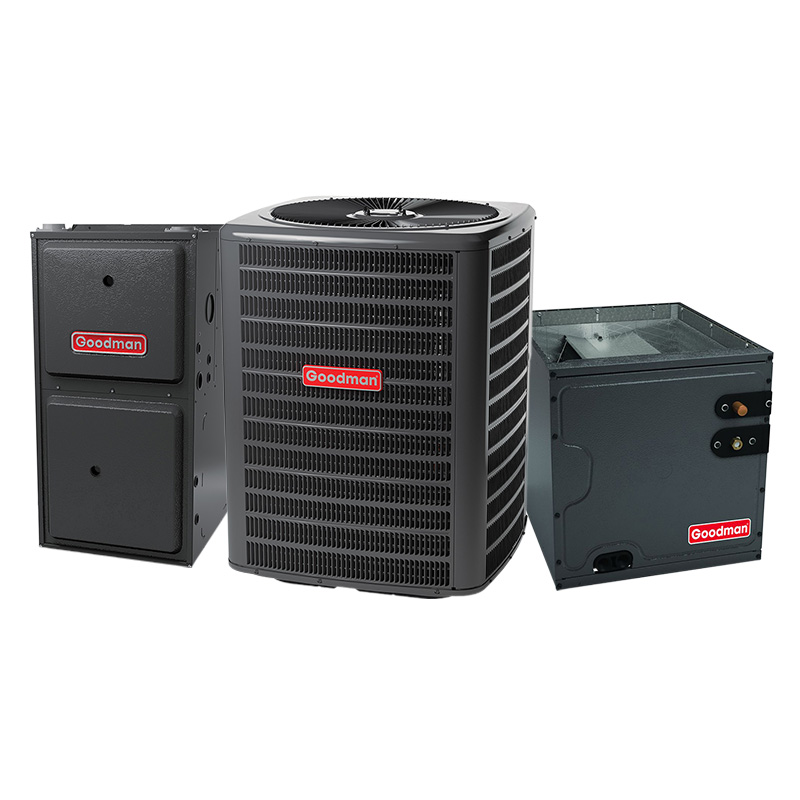
Goodman 5 Ton 14 SEER2 AC & Gas Furnace System – Multi-Speed, 80000 BTU Gas Furnace, 92% AFUE, Upflow, R32
View on AC Direct see your lowest price →Check current price on AC Direct →
Key features
- 5-ton cooling capacity with 14 SEER2 efficiency rating
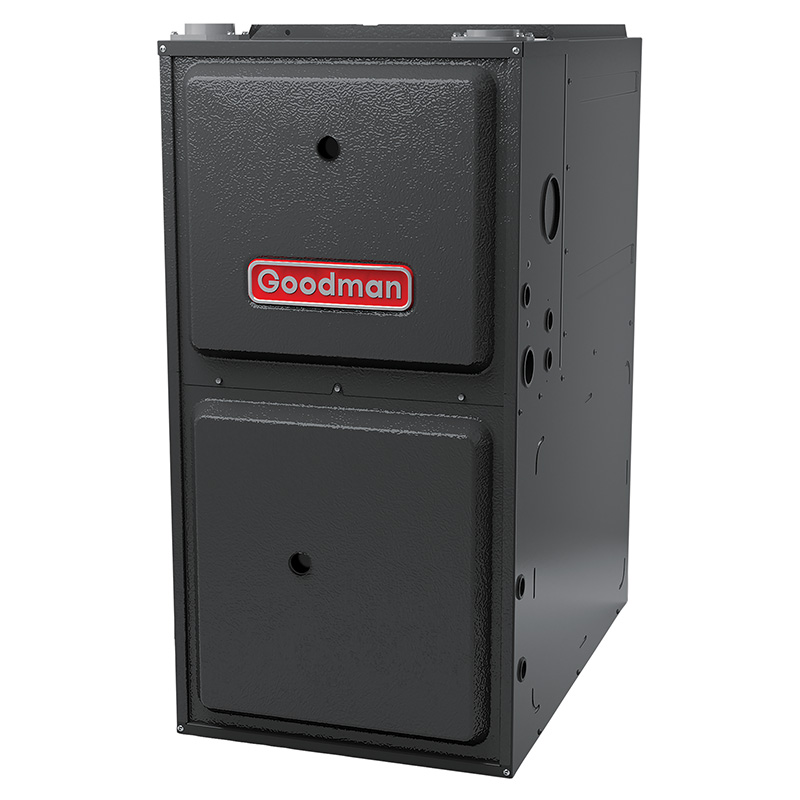
- 80,000 BTU upflow gas furnace at 92% AFUE
- Multi-speed ECM blower for variable airflow and quieter operation
- R-32 refrigerant, lower global warming potential than R-410A
- Upflow configuration suits basement and ground-level utility installs
- Single-stage compressor operation, straightforward to service
About this system
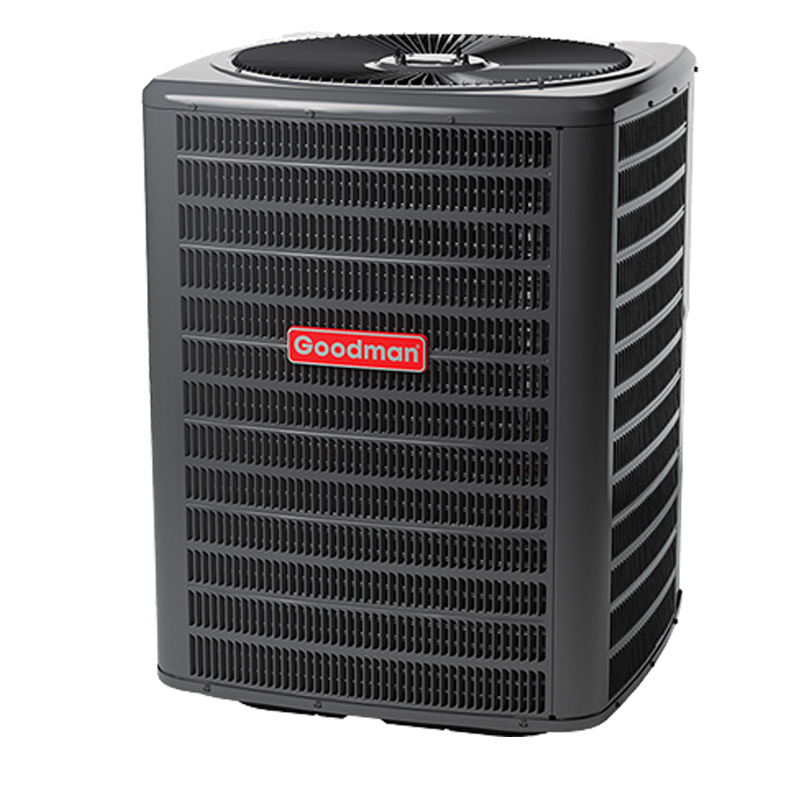
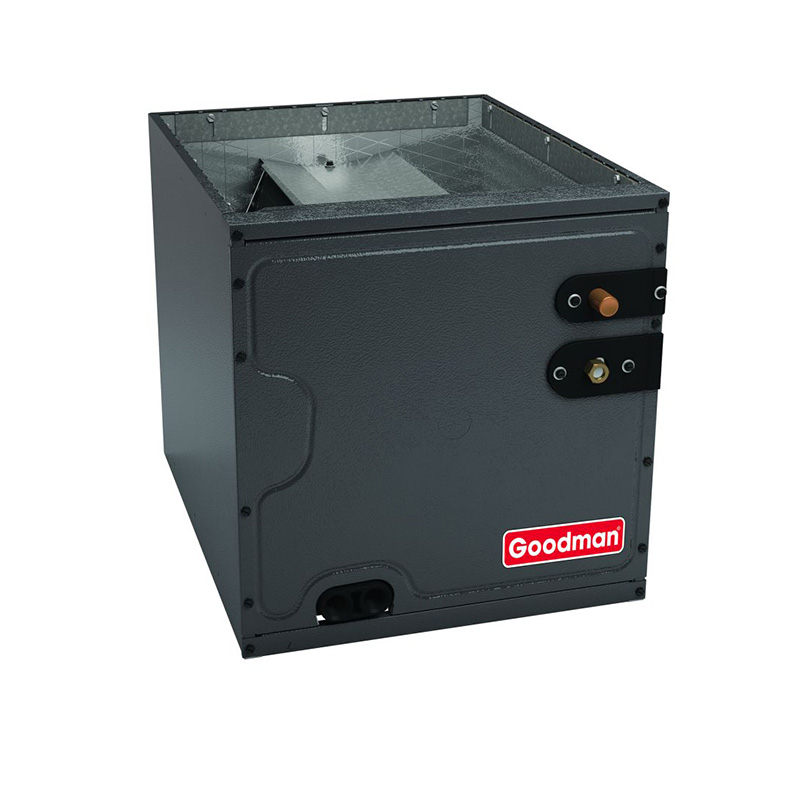
The Goodman GLXS4BA6010 pairs a 5-ton, 14 SEER2 single-stage air conditioner with an 80,000 BTU upflow gas furnace rated at 92% AFUE. That efficiency combination sits at the entry point of what federal standards now require in most regions, making this a code-compliant baseline system rather than a high-efficiency showcase. The R-32 refrigerant charge is a meaningful forward-looking detail: R-32 has a lower global warming potential than the R-410A it replaces, and the industry is broadly moving in that direction, so parts and technician familiarity should remain solid for the life of this equipment. The multi-speed blower on the furnace side allows some airflow flexibility, which helps with humidity control and quieter low-demand operation compared to a fully single-speed unit.
At 5 tons this system is sized for larger homes, typically in the 2,200 to 3,000 square foot range depending on climate, insulation, and window load. An upflow configuration means the furnace pulls return air from the bottom and discharges conditioned air upward into overhead ductwork, which is the most common arrangement in homes with a basement or utility closet install. Buyers who need a reliable, professionally installed system on a firm budget and who are comfortable with Goodman’s known ownership profile will find the specs match most regional code requirements. Those who prioritize long compressor life or want minimal service calls over a 15-plus-year horizon should weigh the trade-offs carefully before committing.
The Goodman GLXS4BA6010 delivers a code-minimum efficiency package at a price point that is consistently 15 to 25 percent below comparable Carrier, Trane, and Lennox systems, making it a practical choice for budget-conscious buyers who hire an experienced installer. The single-stage compressor and documented history of capacitor failures and shorter compressor lifespans are real ownership considerations that buyers should price into their long-term budget. For a large home that needs reliable heating and cooling without premium equipment costs, this system does the job, provided installation quality is not compromised.
Overall score is the average of the five ratings above.
What we like
- Priced 15 to 25 percent below comparable premium-brand systems, reducing upfront cost significantly
- 92% AFUE furnace recovers most of the combustion energy, keeping heating bills reasonable
- R-32 refrigerant is industry-forward and should remain well-supported throughout the system's life
- Multi-speed blower improves humidity management and reduces noise versus basic single-speed units
- Single-stage components are straightforward and inexpensive to diagnose and service
Trade-offs
- Dual-run capacitors are the most commonly reported failure, typically adding a 300 to 600 dollar repair cost, often within the first decade
- Evaporator coil leaks appear in a meaningful share of owner reports, a potential cost that can be significant depending on labor rates
- Compressor lifespan averages 10 to 14 years, shorter than the 15 to 20 years typical of premium brands
- A minority of owners report refrigerant leaks in the first year, most often traced to install quality rather than a factory defect
What homeowners and pros say about Goodman
Homeowners who post about Goodman equipment tend to cluster at the extremes. On ConsumerAffairs, where the platform naturally draws people motivated by frustration, Goodman scores around 2.5 out of 5, and the recurring complaint pattern is consistent: systems that run acceptably for several years before repair costs start climbing, with out-of-pocket labor expenses on parts-only warranty coverage catching owners off guard after year seven or so. The specific failure modes that appear most often are not random. Dual-run capacitors fail with enough regularity that experienced Goodman owners often budget for one replacement over a system’s life. Evaporator coil leaks show up in a meaningful share of reviews and carry a higher repair cost. Compressor longevity averaging 10 to 14 years, versus 15 to 20 years for premium brands, is a real gap that matters when you are deciding whether the upfront savings hold up over a full ownership cycle.
The more balanced picture comes from Google dealer reviews, where Goodman systems collect scores around 3.8 out of 5 across locations that install and service them regularly. Affordability is the most repeated positive, and dealers who specialize in Goodman frequently note that the equipment performs well when installation is done correctly and carefully. HVAC technicians tend to echo that point directly: Goodman’s performance correlates strongly with install quality, and a system that was rushed, improperly charged, or paired with undersized ductwork will surface problems that might otherwise stay dormant for years. For the GLXS4BA6010 specifically, the R-32 refrigerant and multi-speed blower represent genuine spec improvements over older baseline Goodman equipment, but they do not change the underlying brand reliability profile that buyers should factor in honestly before purchasing.
Sources: ConsumerAffairs Goodman owner reviews, AHRI Directory of Certified Product Performance, U.S. DOE appliance and equipment efficiency standards, Goodman product specification sheets.
What it costs to run
At 14 SEER2, cooling this 5-ton system for a typical 1200-hour cooling season at the U.S. average electricity rate of $0.17/kWh works out to roughly $874 per year in cooling, about $39 less per year than a minimum-efficiency 13.4 SEER2 unit of the same size. Your real cost depends on your climate and local rate.
Method: (60,000 BTU/hr ÷ 14 SEER2) × 1200 hours ÷ 1000 × $0.17/kWh. Rate source: U.S. EIA average; cooling hours: moderate-climate estimate.
How it compares
| Brand | Comparable model | SEER2 | Stage | Price position |
|---|---|---|---|---|
| Goodman | GLXS4BA6010 | 14 | Single-stage | Value pick |
| Carrier | Comfort 14 Series (24ACC6) | 14 | Single-stage | Typically 15 to 25 percent more than Goodman |
| Trane | XR14c Series | 14 | Single-stage | Typically 15 to 25 percent more than Goodman |
| Lennox | Merit 14ACX Series | 14 | Single-stage | Typically 15 to 25 percent more than Goodman |
Competitor rows are comparable single-stage units at similar efficiency; price is relative position, not a quote.
Questions about this system
What does 14 SEER2 actually mean for my monthly electric bill compared to older equipment?
SEER2 is the updated testing standard and is roughly equivalent to a 15 SEER rating under the older method. If you are replacing a system rated at 10 to 13 SEER, you can expect a noticeable reduction in cooling energy use, but this is still an entry-level efficiency rating. A higher SEER2 system would cut bills further, though the upfront cost difference may take years to recoup depending on your local electricity rate.
Is R-32 refrigerant more expensive or harder to find for service calls?
R-32 is newer than R-410A in residential equipment but is widely used globally and is the direction the U.S. industry is heading. At this point most certified HVAC technicians can handle it, though not every small shop may stock it on their trucks yet. Availability and pricing are expected to improve as adoption grows, and your system should not face the supply problems that older R-22 equipment now encounters.
How often do the dual-run capacitors actually fail, and is it a big deal to fix?
Capacitor failure is the single most commonly reported repair on Goodman AC units and tends to show up after several years of use, often accelerated by heat exposure in attic or outdoor locations. The repair itself is typically one of the least expensive HVAC service calls, usually falling in the 300 to 600 dollar range including labor, and most technicians can complete it in under an hour. Keeping a maintenance contract or annual inspection schedule gives you the best chance of catching a weakening capacitor before it causes the compressor to struggle.
Will this furnace work in a two-story home where the unit is in the basement?
Yes, the upflow configuration is specifically designed for this scenario: the furnace draws return air from the bottom and pushes heated or cooled air upward into the supply trunk, which feeds overhead ductwork running to the upper floors. Proper duct sizing and balance are critical in a two-story application, so confirm your installer performs a Manual D duct calculation rather than reusing existing ductwork without checking it.
What does the Goodman warranty cover, and are there conditions I need to meet?
Goodman typically offers a 10-year parts warranty when the equipment is registered within a set window after installation, dropping to a shorter period if registration is missed. The warranty covers parts but not labor, which can be a significant out-of-pocket expense if a major component like the compressor or heat exchanger fails outside the labor warranty the installer provides. Always confirm registration requirements with your installer at the time of commissioning and keep your paperwork.
Specifications
| Cooling capacity | 5 Ton |
| Efficiency | 14 SEER2 |
| Furnace output | 80000 BTU |
| Furnace efficiency | 92% AFUE |
| Configuration | Upflow |
| Refrigerant | R-32 |
| Model | GLXS4BA6010 |