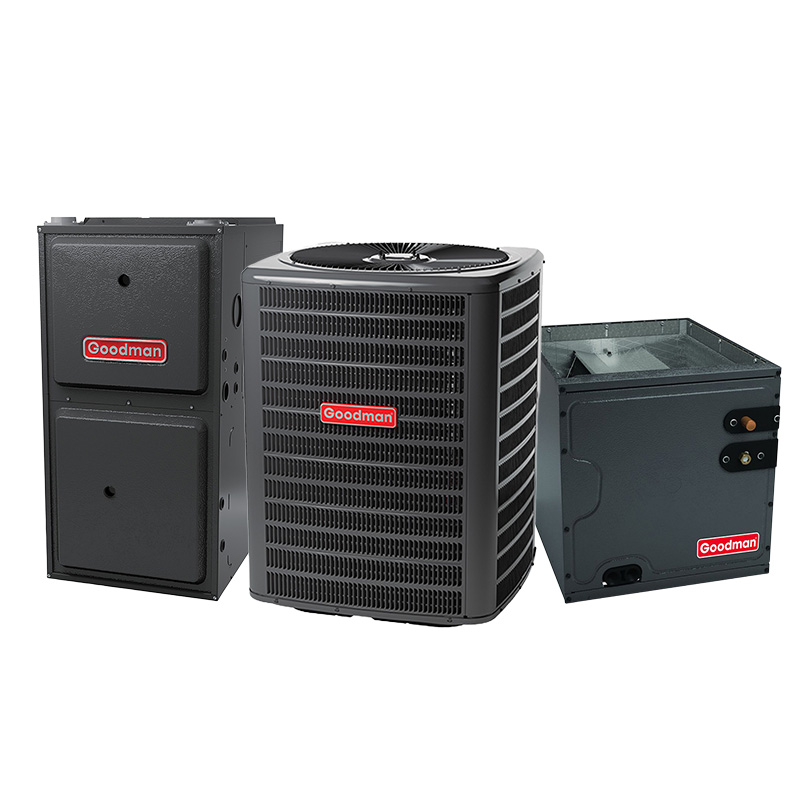
Goodman 5 Ton 14 SEER2 AC & Gas Furnace System – Two Stage Variable-Speed, 100000 BTU Gas Furnace, 96% AFUE, Upflow, R32
View on AC Direct see your lowest price →Check current price on AC Direct →
Key features
- Two-stage compressor for better humidity control and quieter part-load operation
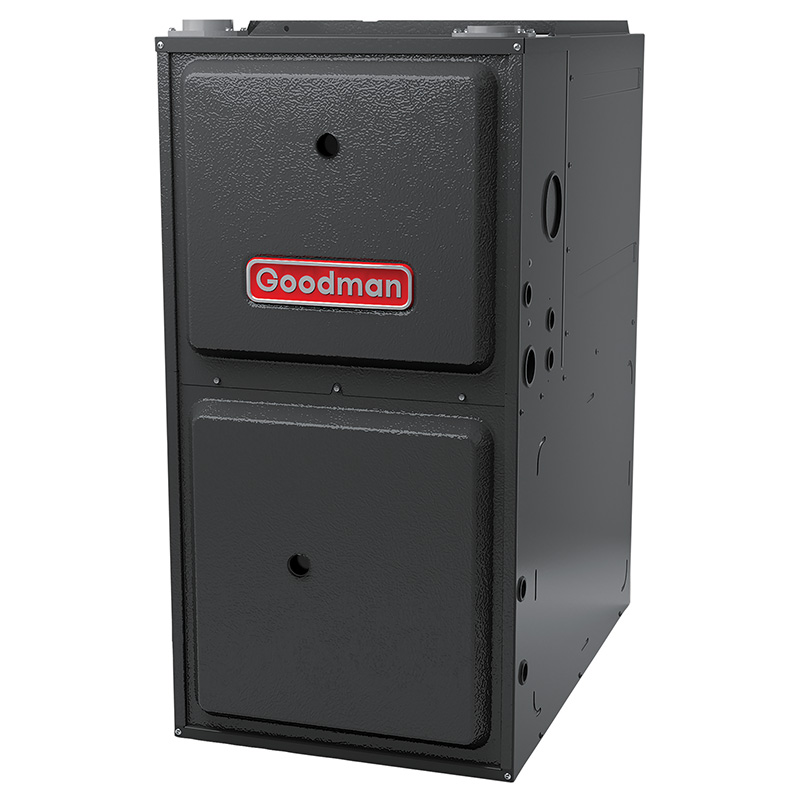
- 96% AFUE upflow gas furnace rated at 100,000 BTU input
- 14 SEER2 cooling efficiency rating, meeting current federal minimum for most regions
- R-32 refrigerant with lower global-warming potential than R-410A
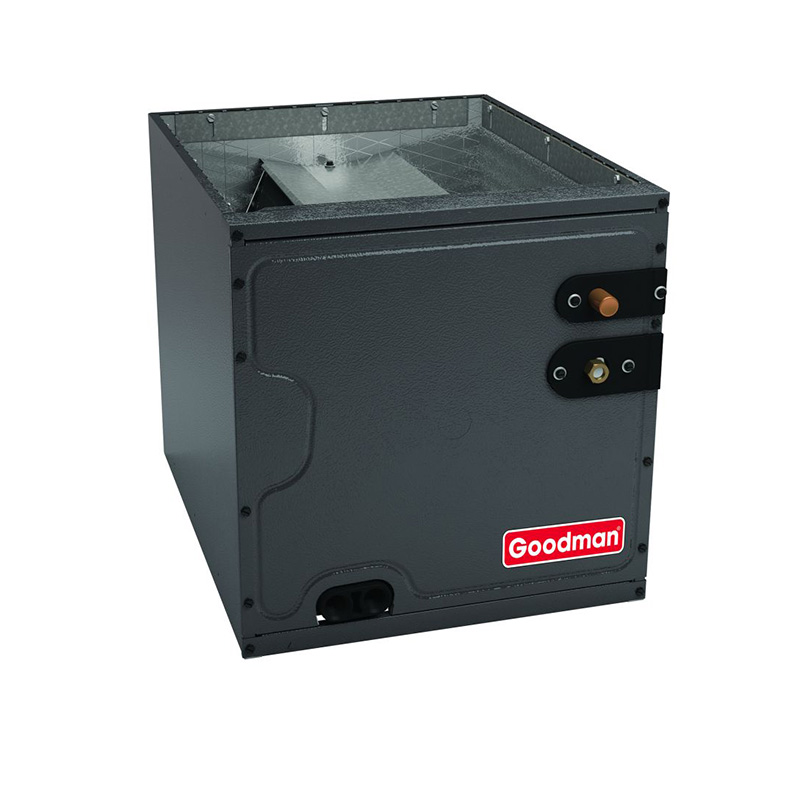
- Variable-speed air handler for more consistent airflow and improved filtration contact time
- Factory-matched system design intended to simplify equipment selection and coil compatibility
About this system
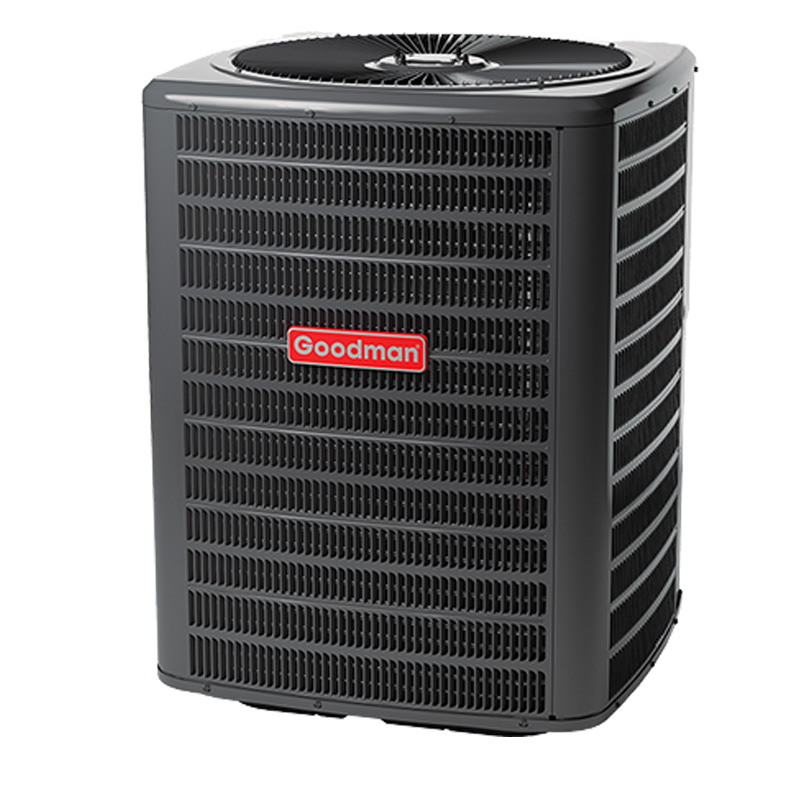
The Goodman GLXS4BA6010 pairs a 5-ton, 14 SEER2 two-stage central air conditioner with a 100,000 BTU, 96% AFUE upflow gas furnace in a single matched system. The two-stage compressor runs at a lower capacity on mild days and steps up only when outdoor heat demands it, which reduces the short-cycling that plagues single-stage equipment and helps the system pull more humidity from indoor air before calling it a day. R-32 refrigerant carries a lower global-warming potential than the R-410A it replaces, and Goodman has priced the system well below comparable hardware from Trane, Lennox, and Carrier.
The 96% AFUE furnace is a genuine high-efficiency unit, meaning roughly 96 cents of every dollar of gas goes toward heating rather than escaping through a flue. That makes it a reasonable fit for colder climates where the furnace runs hard from October through March. The upflow configuration suits the most common residential duct layouts, where the air handler sits in a basement or utility closet and supply ducts run upward through the floor system. Sizing at 5 tons means this system is built for larger homes, typically in the 2,400 to 3,000 square foot range depending on climate zone, insulation quality, and window load. A proper Manual J load calculation before purchase is essential at this size, because an oversized system will short-cycle regardless of how many stages the compressor has.
This system is a reasonable choice for budget-conscious homeowners who want better-than-entry-level comfort features, plan to invest in a quality installation, and are comfortable with the trade-offs that come with a value-tier brand. It will not match the long-term reliability record of premium brands, but it delivers the spec sheet at a price that gives some homeowners room to absorb a repair or two over the life of the equipment.
The GLXS4BA6010 delivers two-stage cooling, a genuine 96% AFUE furnace, and R-32 refrigerant at a price that undercuts comparable Trane, Carrier, and Lennox systems by a meaningful margin. The trade-off is a brand with a documented history of capacitor failures, evaporator coil leaks, and compressor lifespans that tend to run shorter than premium alternatives. Buyers who prioritize upfront cost and plan to budget for occasional repairs will find real value here; buyers who want the lowest total cost of ownership over 15-plus years may be better served elsewhere.
Overall score is the average of the five ratings above.
What we like
- Two-stage operation improves humidity removal and reduces temperature swings compared to single-stage equipment
- 96% AFUE furnace is genuinely high-efficiency and will lower heating bills relative to 80% AFUE alternatives
- Priced roughly 15 to 25 percent below comparable Carrier, Trane, and Lennox systems
- R-32 refrigerant has roughly 70 percent lower global-warming potential than R-410A
- Factory-matched system simplifies coil selection and supports warranty compliance
Trade-offs
- Dual-run capacitors are the most commonly reported component failure, typically around years 4 to 7, adding repair costs of $300 to $600 per incident
- Evaporator coil leaks appear in a meaningful share of owner reports, which can be a costly mid-life repair
- Compressor lifespan averages 10 to 14 years versus 15 to 20 years for premium-brand compressors
- A minority of owners report refrigerant leaks within the first year, most often traced to install or initial charge quality rather than the equipment itself
What homeowners and pros say about Goodman
Goodman earns a Google dealer review average of around 3.8 out of 5 across locations, and the most consistent praise from homeowners is straightforward: the equipment is affordable. For a 5-ton two-stage system with a 96% AFUE furnace, that matters. On ConsumerAffairs, where the rating sits at roughly 2.5 out of 5, the picture is less flattering, though it is worth noting that complaint-driven platforms attract dissatisfied owners at a much higher rate than satisfied ones. The recurring theme in that feedback is repair costs climbing after the seventh year or so, which lines up with what HVAC technicians report about dual-run capacitor failures being the brand’s most common service call and evaporator coil leaks appearing in a meaningful portion of units over time.
Technicians who work on Goodman equipment regularly tend to have a pragmatic view: the hardware is not bad, but it is built to a price, and how long it lasts has more to do with installation quality than almost anything else. Compressors on Goodman units tend to average 10 to 14 years in real-world use, which is a shorter window than the 15 to 20 years more commonly associated with Carrier, Trane, or Lennox compressors. A minority of owners also report refrigerant leaks in the first year, and techs typically attribute those to install or initial charge issues rather than a factory defect. For this specific 5-ton system, the practical takeaway is that putting the money saved on equipment into hiring an experienced, detail-oriented installer is not optional advice; it is the single biggest factor in whether this system performs well and how long it holds up.
Sources: ConsumerAffairs Goodman owner reviews, AHRI Directory of Certified Product Performance, U.S. DOE appliance and equipment efficiency standards, Goodman product specification sheets.
What it costs to run
At 14 SEER2, cooling this 5-ton system for a typical 1200-hour cooling season at the U.S. average electricity rate of $0.17/kWh works out to roughly $874 per year in cooling, about $39 less per year than a minimum-efficiency 13.4 SEER2 unit of the same size. Your real cost depends on your climate and local rate.
Method: (60,000 BTU/hr ÷ 14 SEER2) × 1200 hours ÷ 1000 × $0.17/kWh. Rate source: U.S. EIA average; cooling hours: moderate-climate estimate.
How it compares
| Brand | Comparable model | SEER2 | Stage | Price position |
|---|---|---|---|---|
| Goodman | GLXS4BA6010 | 14 | Two-stage | Value pick |
| Carrier | Comfort 14 Series (24ACC4) | 14 | Single-stage | Typically 15 to 25 percent more than Goodman |
| Trane | XR14 Series | 14 | Single-stage | Typically 15 to 25 percent more than Goodman |
| Lennox | Merit 14ACX Series | 14 | Single-stage | Typically 15 to 25 percent more than Goodman |
Competitor rows are comparable single-stage units at similar efficiency; price is relative position, not a quote.
Questions about this system
Is 5 tons the right size for my house?
Tonnage depends on your climate zone, insulation, ceiling height, window area, and duct layout, not square footage alone. A proper Manual J load calculation by your installer is the only reliable way to confirm sizing. Oversizing a two-stage system still causes short-cycling and poor humidity control, so skipping this step is a real risk at 5 tons.
What does two-stage cooling actually mean in day-to-day use?
The compressor runs at a lower capacity, usually around 60 to 70 percent, during mild weather and shifts to full capacity only when needed. Longer, quieter run cycles at low stage remove more humidity from the air and keep temperatures more consistent. The practical difference is most noticeable on mild, humid days when a single-stage system would blast on and off repeatedly.
R-32 refrigerant is new to me. Can my current technician service it?
R-32 requires technicians who are certified to handle A2L mildly flammable refrigerants, and they need compatible recovery and charging equipment. Most established HVAC companies are already tooled up for it, but it is worth confirming before you book service, especially in rural areas where fewer technicians may have made the switch.
What warranty comes with this Goodman system?
Goodman typically offers a 10-year parts warranty on registered equipment, including the compressor and heat exchanger, when installed by a licensed contractor and registered within a set window after installation. Failing to register on time can drop coverage to a shorter base warranty, so registration immediately after installation is important. The warranty does not cover labor, so factor repair costs into your budget planning.
How much should I expect to spend on repairs over the life of this system?
Dual-run capacitor replacements are the most common service call on Goodman equipment and typically run $300 to $600 each. Evaporator coil leaks are a less frequent but more expensive repair. Budgeting for one or two capacitor replacements over a 10-year period is a realistic expectation based on documented owner experience, and setting aside a modest repair fund is a sensible approach with any value-tier brand.
Specifications
| Cooling capacity | 5 Ton |
| Efficiency | 14 SEER2 |
| Furnace output | 100000 BTU |
| Furnace efficiency | 96% AFUE |
| Configuration | Upflow |
| Refrigerant | R-32 |
| Model | GLXS4BA6010 |