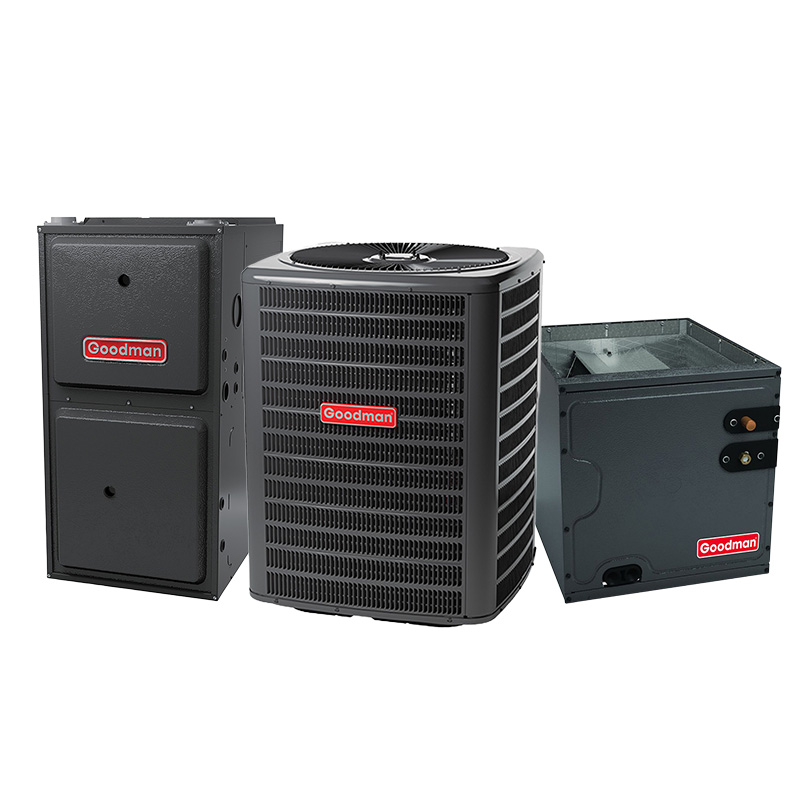
Goodman 5 Ton 14 SEER2 AC & Gas Furnace System – Two Stage Variable-Speed, 120000 BTU Gas Furnace, 96% AFUE, Upflow, R32
View on AC Direct see your lowest price →Check current price on AC Direct →
Key features
- Two-stage 5-ton compressor for better humidity control and reduced short-cycling
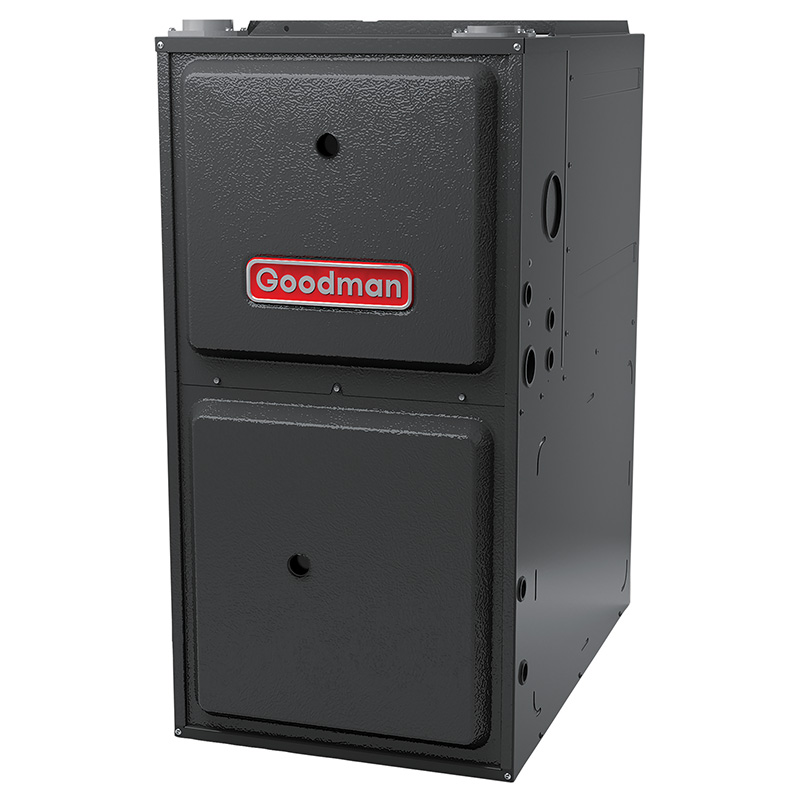
- 96% AFUE upflow gas furnace rated at 120,000 BTU input
- Variable-speed ECM blower motor for quieter, more even air distribution
- R-32 refrigerant with lower global warming potential than R-410A
- 14 SEER2 efficiency rating meets 2023 DOE regional minimums for northern climates
- Goodman 10-year parts warranty when registered within 60 days of installation
About this system
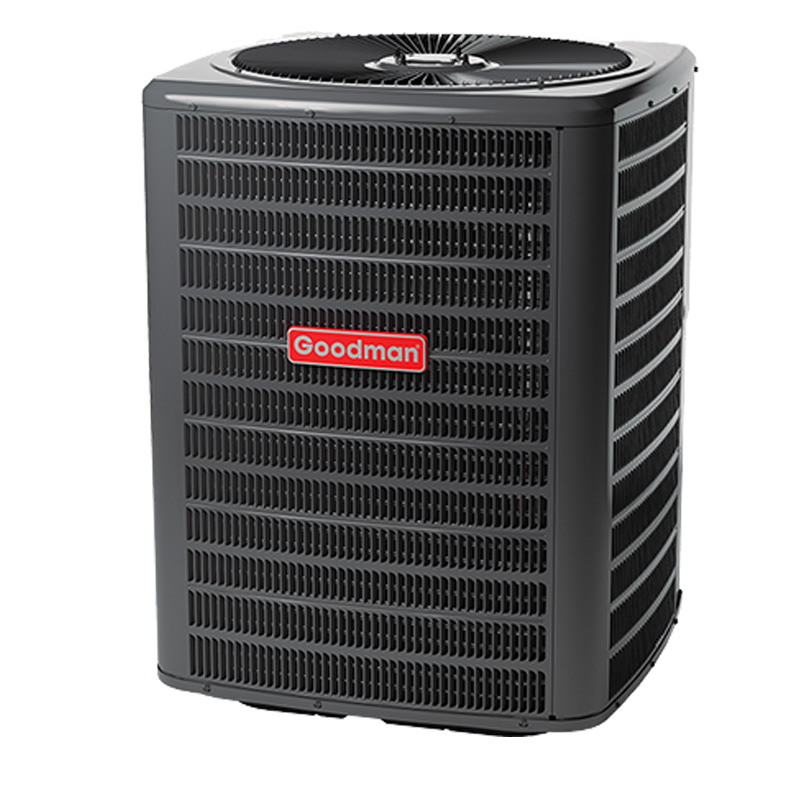
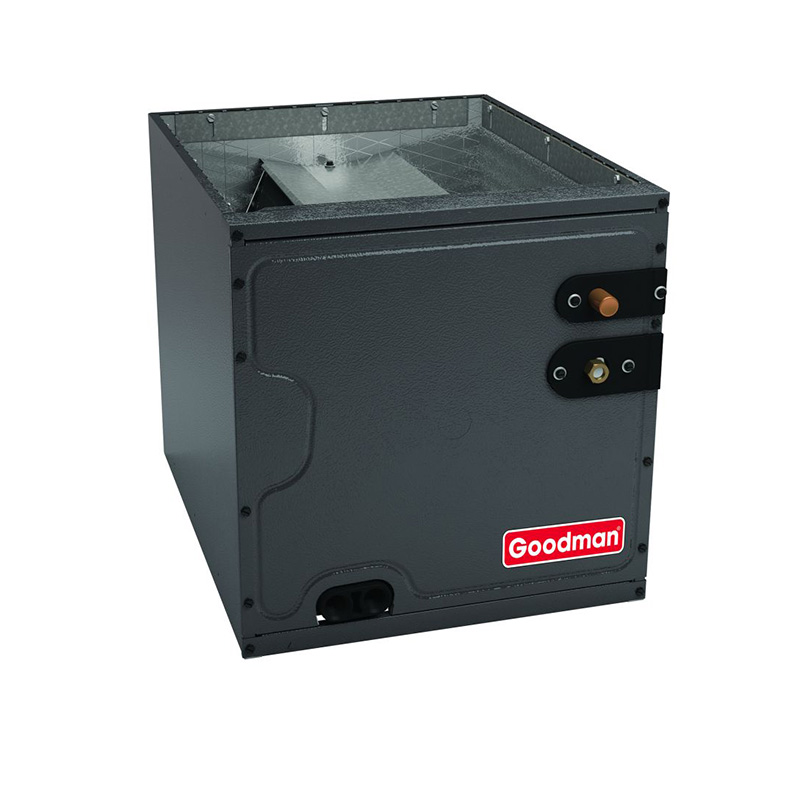
The Goodman GLXS4BA6010 pairs a 5-ton, 14 SEER2 two-stage air conditioner with a 120,000 BTU, 96% AFUE variable-speed gas furnace in an upflow configuration. The two-stage compressor runs at a lower capacity most of the time, cycling up only on the hottest days, which reduces short-cycling, keeps humidity more consistently in check, and puts less mechanical stress on the compressor than a single-stage unit would. The variable-speed air handler moves air more quietly and efficiently across the coil, adding a modest comfort advantage over fixed-speed alternatives at this price tier.
The 96% AFUE rating means 96 cents of every heating dollar goes into your home rather than out the flue, placing this furnace in the high-efficiency category and making it eligible for utility rebates in many regions. R-32 refrigerant carries a lower global warming potential than the R-410A it is replacing industry-wide, and its slightly higher energy density can support marginally better heat transfer. At 5 tons this system is sized for larger homes, typically in the 2,400 to 3,200 square foot range depending on local climate, insulation quality, and window area, so a Manual J load calculation by your installer is not optional, it is essential to getting the performance these specs promise.
This system delivers a genuine step up in comfort over single-stage budget alternatives, with two-stage cooling and a variable-speed furnace that work together to manage humidity and temperature swings more effectively. The 96% AFUE furnace and 14 SEER2 rating are competitive for the price tier, though the efficiency numbers sit at the lower end of what premium brands offer at this stage count. Buyers who prioritize upfront affordability over long-term repair cost predictability will find this a reasonable fit, provided installation is handled by an experienced technician.
Overall score is the average of the five ratings above.
What we like
- Priced 15 to 25 percent below comparable Trane, Lennox, and Carrier systems at similar staging
- Two-stage compressor improves humidity management compared to single-stage units
- 96% AFUE furnace qualifies for utility rebates in many areas and reduces monthly heating bills
- Variable-speed blower runs more quietly and distributes air more evenly than fixed-speed alternatives
- 10-year registered parts warranty provides reasonable coverage for a value-tier brand
Trade-offs
- Dual-run capacitor failures are the most commonly reported issue and, while typically a low-cost repair, add to out-of-pocket costs after the first few years
- Evaporator coil leaks appear in a meaningful share of owner reports, a known weak point in the product line
- Compressor lifespan averages 10 to 14 years, noticeably shorter than the 15 to 20 years frequently cited for premium brands
- A minority of owners have reported refrigerant leaks within the first year, generally traced to install or charge quality rather than the equipment itself
What homeowners and pros say about Goodman
Homeowners who have lived with a Goodman system share a familiar split in opinion. Those who had it properly sized and installed by an experienced contractor tend to report years of uneventful service and point to the lower purchase price as money well spent. Those who ran into problems more often describe issues that started after year 6 or 7, with dual-run capacitor replacements being the most common call to the service company. Evaporator coil leaks also surface in owner accounts with enough regularity that it is not an outlier concern, and a smaller number of buyers have dealt with refrigerant loss in the first year, an outcome that almost always points back to how the system was charged at startup rather than anything that left the factory. Goodman’s ConsumerAffairs score sits at roughly 2.5 out of 5, though that platform disproportionately captures people who had problems rather than those who did not.
HVAC technicians tend to give Goodman a more measured assessment. On dealer and contractor review platforms the brand averages around 3.8 out of 5 on Google, where affordability is the praise that comes up most often. Pros note that the variable-speed furnace and two-stage compressor in this package are genuine features, not marketing language, and that the equipment performs reasonably well when it is set up correctly. The consistent caution from the trade is about compressor longevity: the 10-to-14-year average the brand is known for falls short of the 15-to-20 years regularly achieved by Trane, Carrier, and Lennox compressors, which matters for buyers planning a long stay in their home. The professional consensus is that Goodman is a defensible choice when budget is the primary constraint and when a skilled installer handles the job from start to finish.
Sources: ConsumerAffairs Goodman owner reviews, AHRI Directory of Certified Product Performance, U.S. DOE appliance and equipment efficiency standards, Goodman product specification sheets.
What it costs to run
At 14 SEER2, cooling this 5-ton system for a typical 1200-hour cooling season at the U.S. average electricity rate of $0.17/kWh works out to roughly $874 per year in cooling, about $39 less per year than a minimum-efficiency 13.4 SEER2 unit of the same size. Your real cost depends on your climate and local rate.
Method: (60,000 BTU/hr ÷ 14 SEER2) × 1200 hours ÷ 1000 × $0.17/kWh. Rate source: U.S. EIA average; cooling hours: moderate-climate estimate.
How it compares
| Brand | Comparable model | SEER2 | Stage | Price position |
|---|---|---|---|---|
| Goodman | GLXS4BA6010 | 14 | Two-stage | Value pick |
| Carrier | Comfort 24ACC636A003 with 59SC5 furnace | 14-15 | Single-stage | Typically 15 to 25 percent more than this Goodman system |
| Trane | XR14c with S9X1 furnace | 14 | Single-stage | Typically 15 to 25 percent more than this Goodman system |
| Lennox | Merit 14ACX with ML196 furnace | 14 | Single-stage | Typically 15 to 25 percent more than this Goodman system |
Competitor rows are comparable single-stage units at similar efficiency; price is relative position, not a quote.
Questions about this system
Is 5 tons actually the right size for my home, or will this short-cycle?
A 5-ton system is typically appropriate for homes in the 2,400 to 3,200 square foot range, but climate zone, insulation, ceiling height, and window area all shift that number. Oversizing is one of the most common installation errors and causes short-cycling, poor humidity removal, and premature component wear regardless of brand. Insist on a Manual J load calculation before purchase.
What does the two-stage compressor actually do differently than a single-stage unit?
A two-stage compressor runs at a lower capacity, roughly 65 to 70 percent, during mild conditions and steps up to full capacity only when outdoor temperatures are at their peak. This means longer, steadier run cycles that pull more moisture out of indoor air, more consistent temperatures from room to room, and less mechanical stress during start-up compared to a single-stage unit that always runs at 100 percent.
What are the most common repairs I should budget for with a Goodman system?
Dual-run capacitors are the single most frequently reported failure point across the Goodman line and typically cost between 300 and 600 dollars to replace, including labor. Evaporator coil leaks are a second documented concern that can be more expensive to address. Setting aside a modest annual maintenance fund after year 5 is a practical approach given the brand's repair history.
Does this system use R-32 refrigerant, and does that affect service costs?
Yes, this unit is charged with R-32, which is newer to the residential market than R-410A. Most HVAC technicians are trained and certified to handle it, but you should confirm your service company has R-32 recovery equipment before booking. Parts availability is growing but is not yet as universal as R-410A, which is worth considering if you are in a rural area with limited service options.
How important is installer quality with a Goodman system specifically?
Industry technicians consistently cite installation quality as the single biggest factor in how long a Goodman system lasts and how reliably it performs. The early refrigerant leak reports documented in owner reviews are almost always traced to improper charging or line set handling at install rather than a factory defect. Choosing a licensed contractor with documented Goodman experience and verifying they pull permits is not just advisable, it is arguably more important with this brand than with premium alternatives.
Specifications
| Cooling capacity | 5 Ton |
| Efficiency | 14 SEER2 |
| Furnace output | 120000 BTU |
| Furnace efficiency | 96% AFUE |
| Configuration | Upflow |
| Refrigerant | R-32 |
| Model | GLXS4BA6010 |