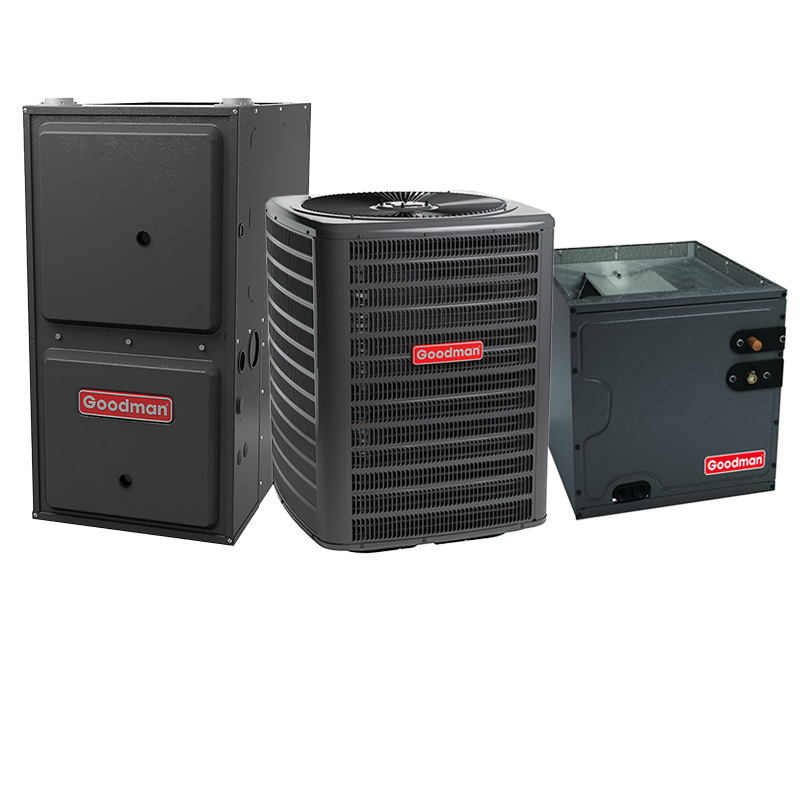
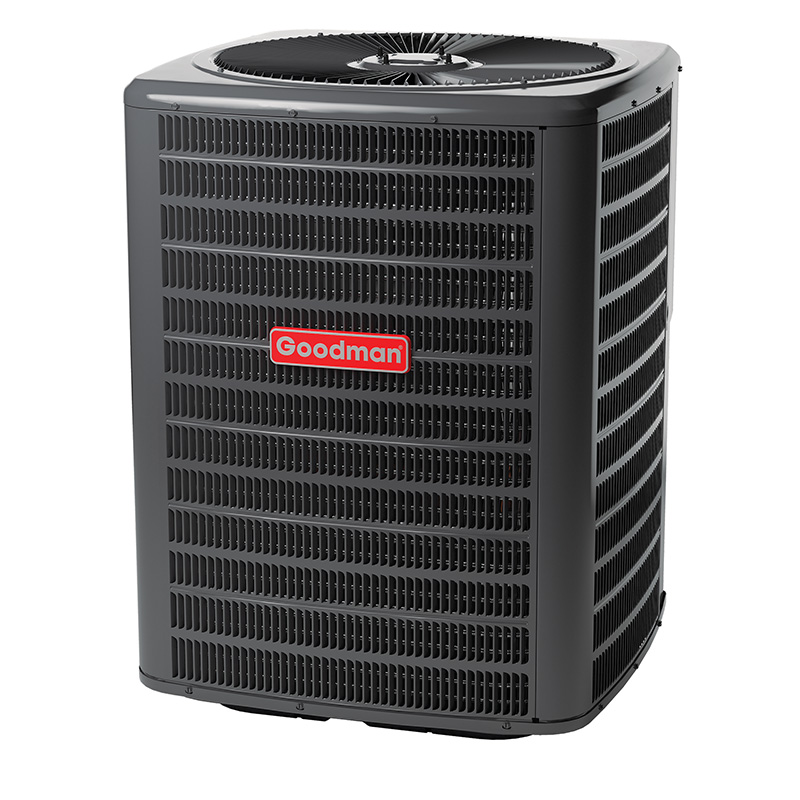
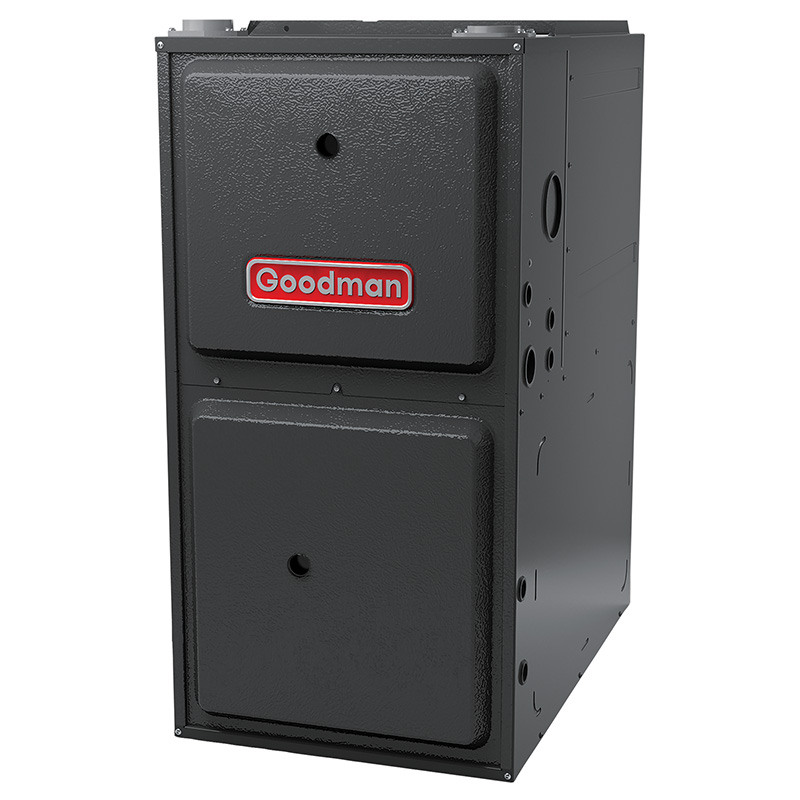
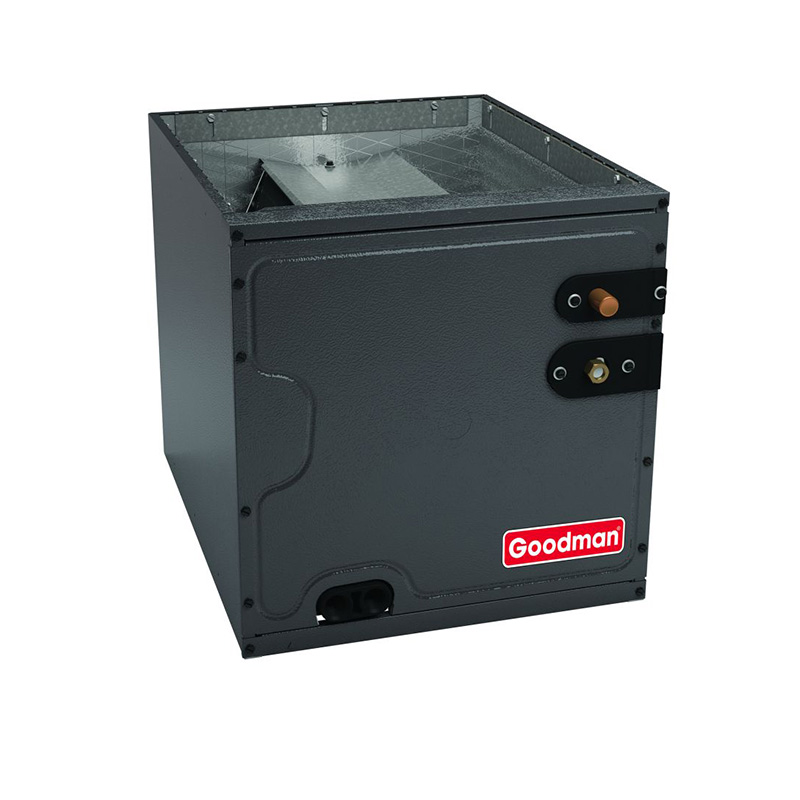
Goodman 5 Ton 15.5 SEER2 R32 AC System with 80,000 BTU 96% AFUE Gas Furnace – California & Colorado Ultra Low NOx, Upflow, Multi-Speed ECM
View on AC Direct see your lowest price →Check current price on AC Direct →
Key features
- 5-ton cooling capacity with 15.5 SEER2 rating for above-minimum efficiency
- 96% AFUE gas furnace, 80,000 BTU, upflow configuration
- Multi-speed ECM blower motor reduces electricity use and improves humidity control
- R-32 refrigerant with lower global warming potential than R-410A
- California and Colorado Ultra Low NOx certified for regulated state compliance
- Matched system design allows Goodman to supply ARI-certified performance data for permit purposes
About this system
The Goodman GLXS5BA6010 pairs a 5-ton, 15.5 SEER2 R-32 air conditioner with an 80,000 BTU, 96% AFUE upflow gas furnace in a configuration built to meet California and Colorado Ultra Low NOx emissions requirements. If you are in one of those regulated states and need a compliant split system for a larger home, typically 2,500 to 3,500 square feet depending on local climate and insulation, this bundle addresses both the cooling and heating sides in one purchase. The 96% AFUE rating means roughly 96 cents of every gas dollar goes toward heat, which sits at the top of the high-efficiency tier and can meaningfully reduce winter utility bills compared to an 80% furnace.
The multi-speed ECM blower motor is worth noting. Unlike a basic single-speed motor, the ECM ramps airflow up and down based on demand, which cuts blower electricity use, improves humidity control in cooling mode, and reduces the blast of cold air at startup that annoys many homeowners. R-32 refrigerant is the newer, lower-global-warming-potential replacement for R-410A and is now the direction the industry is moving, so parts and refrigerant availability should remain stable for this system’s service life. At 15.5 SEER2, efficiency is solid rather than exceptional, sitting just above the federal minimum for most U.S. climate zones and meaningfully below variable-speed premium systems in the 18 to 22 SEER2 range. For buyers prioritizing upfront cost savings over maximum efficiency, that is an intentional trade-off rather than a flaw.
This system delivers genuine high-efficiency heating, compliant low-NOx operation, and a modern refrigerant in a package priced well below comparable Carrier, Trane, or Lennox equipment. The trade-off is a brand track record that shows higher rates of capacitor failures, evaporator coil leaks, and shorter average compressor life than premium competitors, with long-term satisfaction heavily dependent on installation quality. Buyers who want low upfront cost and are comfortable budgeting for possible mid-cycle repairs will find real value here; those who want a quieter ownership experience may want to weigh the premium brands seriously.
Overall score is the average of the five ratings above.
What we like
- Upfront price runs 15 to 25 percent below comparable Trane, Lennox, and Carrier systems
- 96% AFUE furnace is at the top of the high-efficiency tier, with genuine winter operating cost savings
- R-32 refrigerant is current technology with stable future parts and service availability
- ECM blower motor cuts fan electricity use and improves comfort versus single-speed motors
- Ultra Low NOx certification means it is drop-in compliant for California and Colorado without modifications
Trade-offs
- Dual-run capacitors are the most commonly documented failure point, typically appearing within the first several years and costing $300 to $600 per service call
- Evaporator coil leaks appear in a meaningful share of owner reviews, which can be a significant repair expense outside the warranty window
- Compressor life averages 10 to 14 years versus 15 to 20 years for premium brands, meaning earlier replacement costs are a realistic planning item
- A minority of owners report refrigerant leaks within the first year, most often traced to installation or initial charge quality rather than the equipment itself
What homeowners and pros say about Goodman
Homeowners who chose Goodman equipment most often point to the lower purchase price as the deciding factor, and that sentiment is consistent with the Google dealer review average of around 3.8 out of 5 across hundreds of locations. Positive experiences tend to cluster around systems that were installed carefully by experienced technicians, reinforcing what the service trade already knows: Goodman’s performance ceiling depends heavily on who puts it in. The ConsumerAffairs score of roughly 2.5 out of 5 paints a harder picture, though that platform draws disproportionately from frustrated owners, so it reflects the floor of the experience rather than the average. The complaints that repeat most often are not random failures but specific documented patterns: dual-run capacitors are the most commonly cited repair item, typically a straightforward fix in the $300 to $600 range but annoying when it comes up in year four or five. Evaporator coil leaks appear in a meaningful share of reviews and are a more expensive problem to address outside the warranty window.
HVAC technicians tend to view Goodman as a functional but maintenance-aware brand. The compressor lifespan conversation comes up regularly in the service community, where 10 to 14 years is the observed average versus 15 to 20 years for Trane, Carrier, or Lennox compressors under similar duty cycles. For this specific system, the 5-ton size means the compressor will work harder in any climate that sees sustained summer heat, which makes that longevity gap a practical consideration rather than an abstract one. The R-32 refrigerant and ECM blower are genuine technical positives that technicians note as appropriate for a new installation. The overall picture for a buyer is straightforward: the savings are real, the failure modes are known and specific, and the outcome depends more on installer quality than with a premium brand that carries a wider margin for error in the field.
Sources: ConsumerAffairs Goodman owner reviews, AHRI Directory of Certified Product Performance, U.S. DOE appliance and equipment efficiency standards, Goodman product specification sheets.
What it costs to run
At 15.5 SEER2, cooling this 5-ton system for a typical 1200-hour cooling season at the U.S. average electricity rate of $0.17/kWh works out to roughly $790 per year in cooling, about $123 less per year than a minimum-efficiency 13.4 SEER2 unit of the same size. Your real cost depends on your climate and local rate.
Method: (60,000 BTU/hr ÷ 15.5 SEER2) × 1200 hours ÷ 1000 × $0.17/kWh. Rate source: U.S. EIA average; cooling hours: moderate-climate estimate.
How it compares
| Brand | Comparable model | SEER2 | Stage | Price position |
|---|---|---|---|---|
| Goodman | GLXS5BA6010 | 15.5 | Single-stage | Value pick |
| Carrier | Comfort 15 Series (24ACC6) | 15.2 | Single-stage | Typically 15 to 25 percent more than Goodman |
| Trane | XR15 Series | 15.0 | Single-stage | Typically 15 to 25 percent more than Goodman |
| Lennox | Merit 16 Series (ML16XC1) | 15.5 | Single-stage | Typically 15 to 25 percent more than Goodman |
Competitor rows are comparable single-stage units at similar efficiency; price is relative position, not a quote.
Questions about this system
Does this system actually qualify for California Air Quality Management District (AQMD) requirements right out of the box?
Yes. The furnace carries the Ultra Low NOx certification required by California AQMD districts and Colorado regulations, so no separate burner kit or modification is needed. Confirm the exact NOx limit for your specific district with your installer before purchase, as some Bay Area districts have stricter sub-14 ng/J rules.
My house is in a hot climate zone. Will 15.5 SEER2 make a noticeable difference on my electric bill compared to an older 14 SEER unit?
The efficiency gain from 14 SEER to 15.5 SEER2 is real but modest, roughly 10 percent less electricity per cooling hour in favorable conditions. On a 5-ton system running heavily in a hot climate, that can add up over a season, but the savings will not be dramatic enough to offset a much higher equipment cost on their own.
What does the multi-speed ECM furnace motor actually do for me in summer cooling mode?
The ECM motor adjusts airflow to match the cooling load rather than running flat out all the time, which reduces blower electricity consumption by a meaningful margin compared to a standard PSC motor. In humid climates, slower airflow at lower loads also lets the evaporator coil remove more moisture, so indoor humidity tends to stay more comfortable.
R-32 is new to me. Is it harder to find a technician who can work on it, and will refrigerant be available if I need a charge?
R-32 is now a mainstream refrigerant and most HVAC distributors stock it. Technicians need an updated refrigerant handling certification, and most active service companies already have it or are obtaining it as the industry transitions away from R-410A. Availability is not a practical concern for a new installation today.
Goodman's ConsumerAffairs score is low. How worried should I be about long-term reliability on a 5-ton system like this?
The ConsumerAffairs score of around 2.5 out of 5 reflects a complaint-heavy channel and should be read with that bias in mind, but the documented failure patterns are real: capacitors, evaporator coil leaks, and compressor longevity shorter than premium brands are the specific recurring themes. A 5-ton system running hard in a warm climate puts more wear on components than a smaller unit, so budgeting for a capacitor replacement or two during the system's life is prudent. Google dealer reviews average around 3.8 out of 5, where installer quality is the clearest differentiator in outcomes.
Specifications
| Cooling capacity | 5 Ton |
| Efficiency | 15.5 SEER2 |
| Furnace output | 80,000 BTU |
| Furnace efficiency | 96% AFUE |
| Configuration | Upflow |
| Refrigerant | R-32 |
| Model | GLXS5BA6010 |