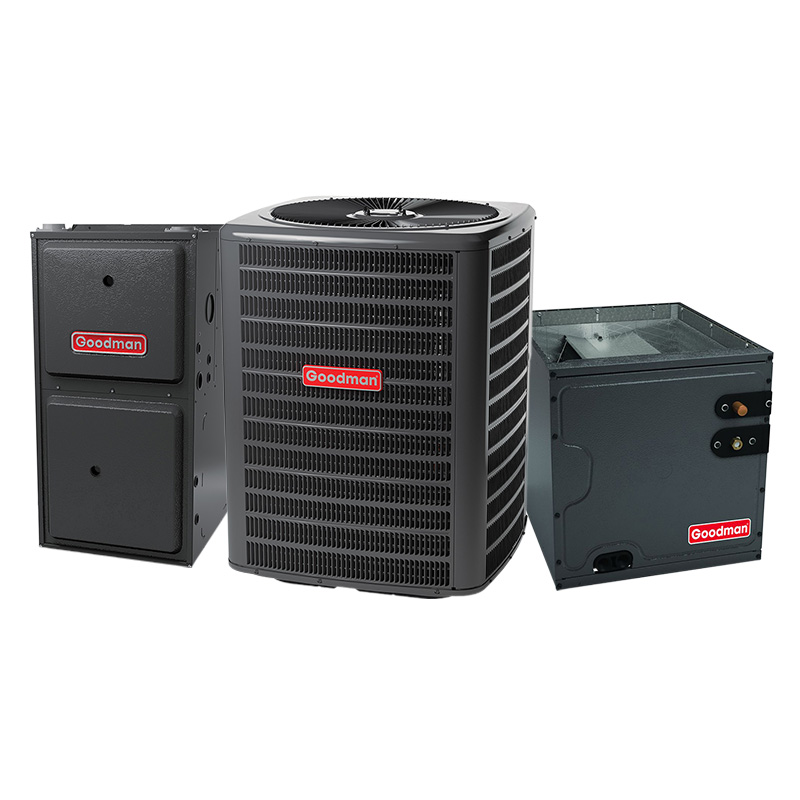
Goodman 5 Ton 15.5 SEER2 AC & Gas Furnace System – Multi-Speed, 100000 BTU Gas Furnace, 92% AFUE, Upflow, R32
View on AC Direct see your lowest price →Check current price on AC Direct →
Key features
- 5-ton cooling capacity, 15.5 SEER2 efficiency rating
- 100,000 BTU gas furnace at 92% AFUE, non-condensing upflow design
- Multi-speed indoor blower for improved comfort and dehumidification vs. single-speed
- R-32 refrigerant, lower global-warming potential than R-410A
- Matched system qualifies for Goodman's 10-year parts limited warranty with registration
- Conventional flue venting simplifies installation in homes with existing metal vent stacks
About this system
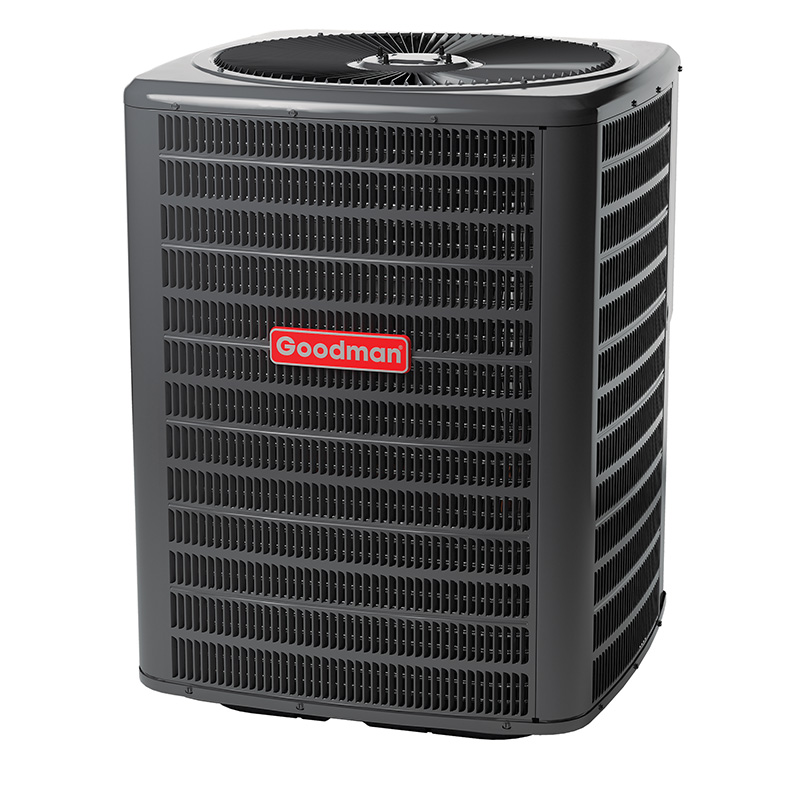
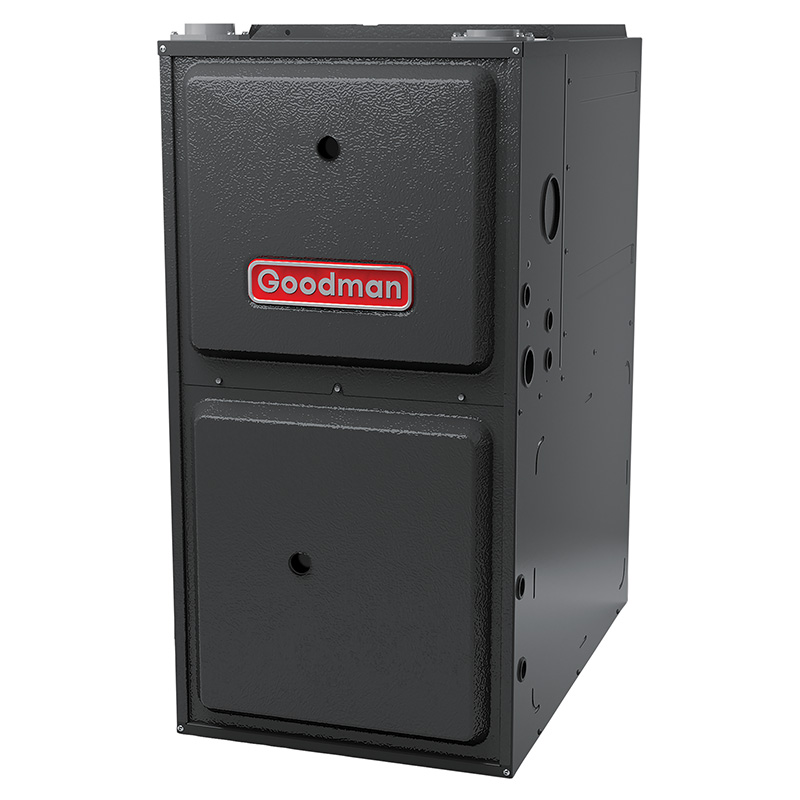
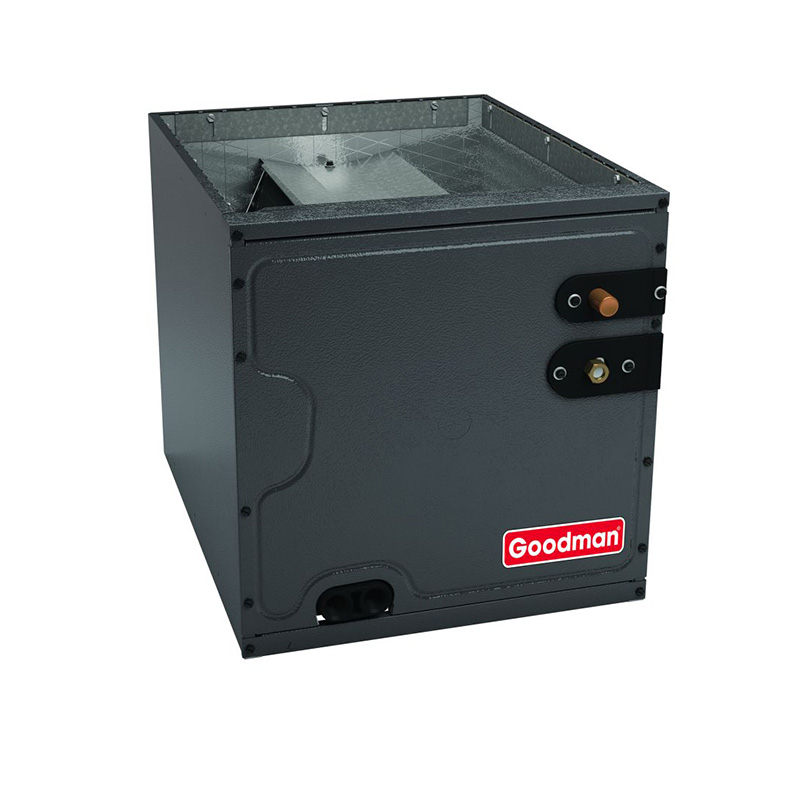
The Goodman GLXS5BA6010D bundles a 5-ton, 15.5 SEER2 central air conditioner with a 100,000 BTU, 92% AFUE upflow gas furnace into a single matched system. At 5 tons, this is sized for larger homes, typically in the 2,400 to 3,000 square foot range depending on insulation, climate zone, and ceiling height. The 15.5 SEER2 rating clears the federal minimum for most U.S. regions and lands in the lower-mid efficiency tier, meaning operating costs will be meaningfully lower than older 13 or 14 SEER equipment but noticeably higher than 18 SEER2 or variable-speed systems. The 92% AFUE furnace is a mid-efficiency non-condensing unit, which means it vents through conventional flue pipe rather than requiring a PVC condensate drain line, keeping retrofit installations simpler in homes with existing metal vent stacks.
The system runs on R-32 refrigerant, a lower global-warming-potential alternative to R-410A that is increasingly common in new residential equipment. The multi-speed blower on the air handler side improves comfort over single-speed units by allowing the fan to ramp down during milder conditions, reducing cold drafts and slightly improving dehumidification. The upflow configuration suits the most common installation scenario in U.S. homes: a furnace positioned in a basement, utility closet, or mechanical room where conditioned air rises into overhead ductwork. Buyers who need a high-capacity, code-compliant replacement system without paying premium-brand prices will find this package worth a close look, provided they hire an experienced installer and budget for routine maintenance.
This Goodman package gives homeowners a code-compliant, mid-efficiency matched system at a price point that is typically 15 to 25 percent below comparable Carrier, Trane, or Lennox configurations. It is a workmanlike choice for budget-conscious buyers in larger homes, but the brand's documented reliability record and install-sensitivity mean the long-term cost of ownership depends heavily on who puts it in and how well it is maintained. Expect solid performance in the early years with a realistic expectation of capacitor service and more variable outcomes after year 7.
Overall score is the average of the five ratings above.
What we like
- Priced 15 to 25 percent below comparable premium-brand systems, leaving room in budget for a quality install
- 15.5 SEER2 rating meets or exceeds federal minimums in all U.S. regions, reducing operating costs over older equipment
- 92% AFUE non-condensing furnace vents through standard metal flue, simplifying retrofits in existing homes
- Multi-speed blower improves humidity control and reduces temperature swings compared to single-speed alternatives
- 10-year parts limited warranty (with registration) is competitive for a value-tier brand
Trade-offs
- Dual-run capacitors are the most commonly reported failure point, typically requiring a 300 to 600 dollar service call, often within the first decade
- Evaporator coil leaks appear in a meaningful share of owner reports, a more costly repair than a capacitor swap
- Compressor lifespan averages 10 to 14 years versus 15 to 20 years cited for premium brands, so total lifecycle cost can narrow the upfront savings
- A minority of owners report refrigerant leaks in the first year, typically traced to installation or factory charge issues rather than a unit defect, underscoring the importance of installer quality
What homeowners and pros say about Goodman
Homeowners discussing Goodman equipment online tend to split along a familiar line. Those who paid attention to installer quality and kept up with maintenance often report years of trouble-free service and point to the lower purchase price as a genuine advantage. Those who ran into problems more frequently mention dual-run capacitor failures, which are well-documented and usually a straightforward fix, and a smaller but notable share report evaporator coil leaks that proved more expensive. Goodman’s ConsumerAffairs score sits at roughly 2.5 out of 5, but that channel skews heavily toward frustrated owners who sought out a place to vent, so it over-represents bad outcomes relative to the full install base. Google dealer reviews average closer to 3.8 out of 5, with affordability cited most often as the reason buyers chose the brand.
HVAC technicians who work on Goodman units regularly tend to describe them as straightforward to service, with readily available parts and no unusual diagnostic complexity. The recurring caution from that side of the conversation is that the brand’s performance ceiling is largely set by the installation. A well-commissioned Goodman system in a properly sized application with good airflow runs predictably. The compressor lifespan question is real: documented averages of 10 to 14 years compare unfavorably to the 15 to 20 years associated with premium brands, and a small percentage of owners have reported refrigerant leaks within the first year, typically attributed to installation or charge issues rather than a manufacturing defect. For a 5-ton application where upfront cost matters, this system is a reasonable starting point as long as the savings on equipment are reinvested in a skilled installation and a proactive maintenance schedule.
Sources: ConsumerAffairs Goodman owner reviews, AHRI Directory of Certified Product Performance, U.S. DOE appliance and equipment efficiency standards, Goodman product specification sheets.
What it costs to run
At 15.5 SEER2, cooling this 5-ton system for a typical 1200-hour cooling season at the U.S. average electricity rate of $0.17/kWh works out to roughly $790 per year in cooling, about $123 less per year than a minimum-efficiency 13.4 SEER2 unit of the same size. Your real cost depends on your climate and local rate.
Method: (60,000 BTU/hr ÷ 15.5 SEER2) × 1200 hours ÷ 1000 × $0.17/kWh. Rate source: U.S. EIA average; cooling hours: moderate-climate estimate.
How it compares
| Brand | Comparable model | SEER2 | Stage | Price position |
|---|---|---|---|---|
| Goodman | GLXS5BA6010D | 15.5 | Single-stage | Value pick |
| Carrier | Comfort Series (24ACC6) | 15.2-16 | Single-stage | Typically 15 to 25 percent more than Goodman |
| Trane | XR15 | 15-16 | Single-stage | Typically 15 to 25 percent more than Goodman |
| Lennox | Merit Series (ML14XC1) | 15-16 | Single-stage | Typically 15 to 25 percent more than Goodman |
Competitor rows are comparable single-stage units at similar efficiency; price is relative position, not a quote.
Questions about this system
Does this system require a new flue or special venting because it uses R-32 refrigerant?
No. R-32 affects the refrigerant circuit, not the venting. The 92% AFUE furnace in this package is a non-condensing unit that vents through conventional metal flue pipe, the same type most older gas furnaces use. No PVC condensate line is required for the furnace, which makes retrofits in homes with existing metal vent stacks straightforward.
Is 5 tons the right size for my home, or could oversizing cause problems?
Oversizing is a real concern with any system, including this one. A correctly sized system runs in longer cycles that remove more humidity and wear components more evenly. A Manual J load calculation by your installer is the only reliable way to confirm that 5 tons is appropriate for your specific home, climate, insulation level, and window area. Do not rely on square footage rules of thumb alone.
What is the most likely repair I should budget for in the first ten years?
Based on documented owner experience with Goodman equipment, the dual-run capacitor is the most commonly reported failure. It is a relatively inexpensive fix, typically in the 300 to 600 dollar range including a service call, but it is worth knowing about upfront. Evaporator coil leaks are a more costly but less frequent issue that has also appeared in a meaningful share of owner reports.
Will registering the warranty really make a difference, and how long do I have to do it?
Yes. Goodman's 10-year parts limited warranty applies only to registered units. Without registration, coverage typically drops to five years. Registration is done online at Goodman's website and should be completed within 60 days of installation. Keep your installer's invoice as proof of the installation date.
Can any certified HVAC technician work on this system, or does it require a Goodman-authorized dealer for warranty purposes?
Any EPA 608-certified HVAC technician can service the system, including those not affiliated with Goodman. However, Goodman's warranty covers parts, not labor, so you will pay for service calls regardless of who performs the work. Using a reputable, licensed contractor familiar with R-32 handling is recommended, since R-32 requires specific handling procedures distinct from R-410A.
Specifications
| Cooling capacity | 5 Ton |
| Efficiency | 15.5 SEER2 |
| Furnace output | 100000 BTU |
| Furnace efficiency | 92% AFUE |
| Configuration | Upflow |
| Refrigerant | R-32 |
| Model | GLXS5BA6010D |