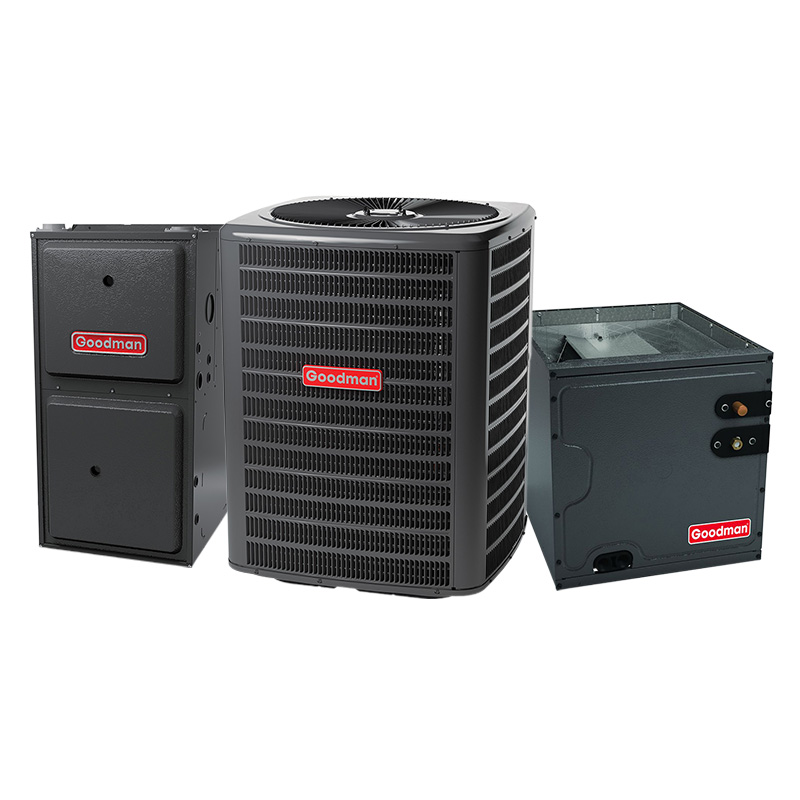
Goodman 5 Ton 15.5 SEER2 AC & Gas Furnace System – Multi-Speed, 120000 BTU Gas Furnace, 92% AFUE, Upflow, R32
View on AC Direct see your lowest price →Check current price on AC Direct →
Key features
- 5-ton cooling capacity with 15.5 SEER2 efficiency rating
- 120,000 BTU upflow gas furnace at 92% AFUE
- Multi-speed blower motor for improved airflow flexibility
- R-32 refrigerant with lower global-warming potential than R-410A
- Upflow configuration for basement or ground-level mechanical room installs
- Priced 15 to 25 percent below comparable premium-brand systems
About this system
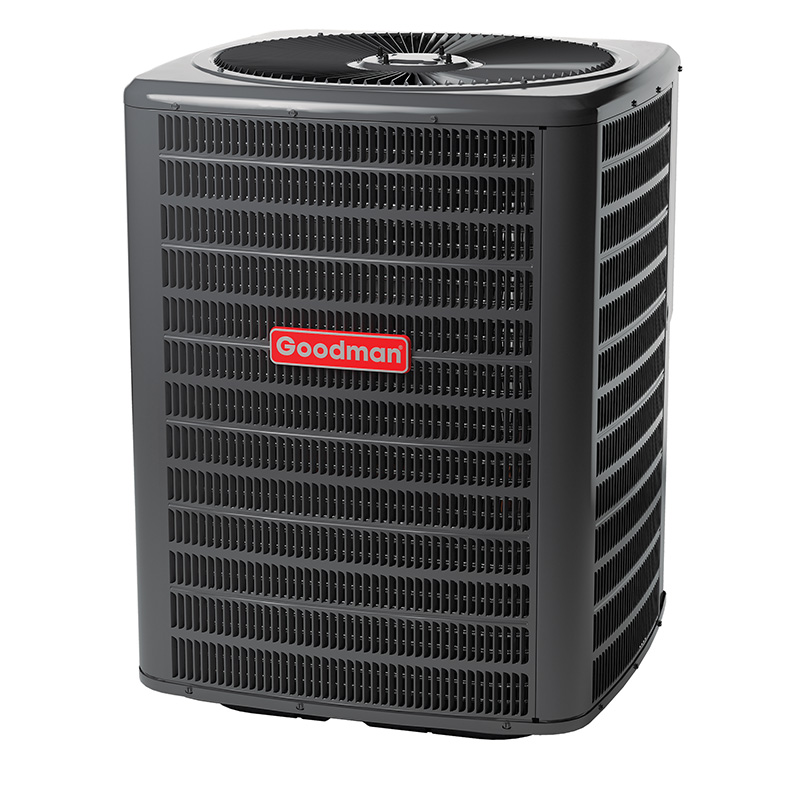
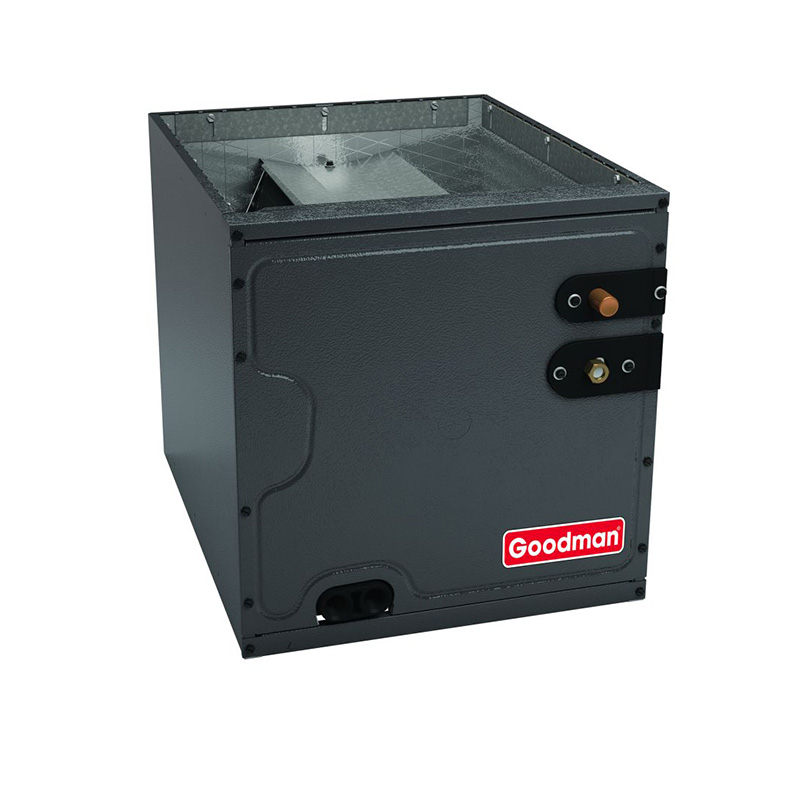
The Goodman GLXS5BA6010D pairs a 5-ton, 15.5 SEER2 central air conditioner with a 120,000 BTU upflow gas furnace rated at 92% AFUE. That efficiency pairing puts it solidly in the mid-tier range: the AC clears the federal minimum for most northern and southern regions, and the 92% AFUE furnace means roughly 92 cents of every dollar spent on gas goes toward heating your home. R-32 refrigerant has a lower global-warming potential than the older R-410A it replaces, and its higher energy density means the system can use a smaller refrigerant charge to move the same amount of heat.
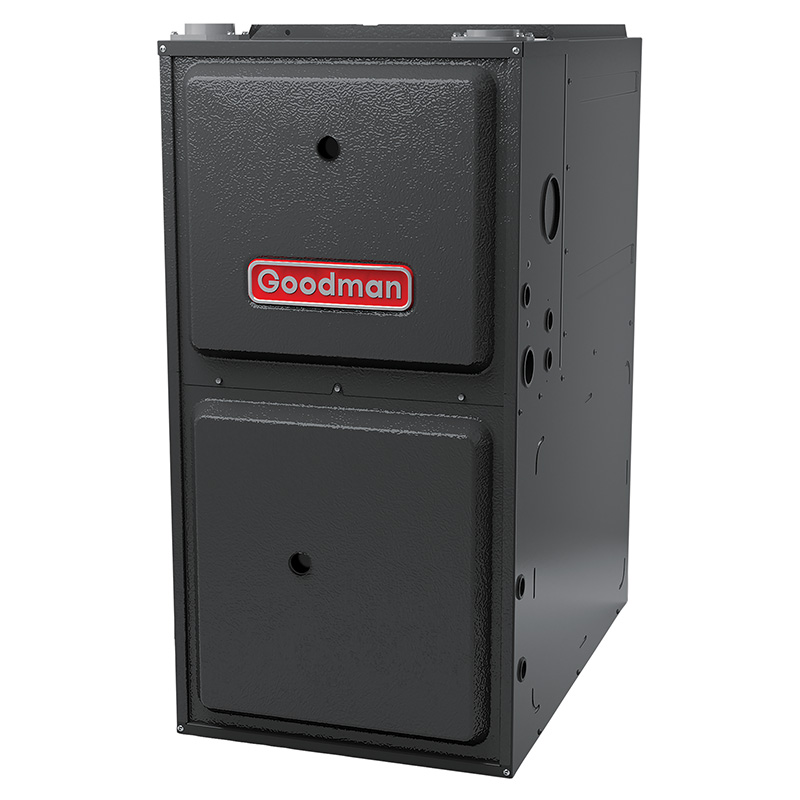
At 5 tons and 120,000 BTU, this is a large-capacity system suited to homes in the 2,400 to 3,200 square foot range, though proper Manual J load calculations by your installer matter far more than square footage rules of thumb. The multi-speed furnace blower gives more flexibility in airflow and comfort compared to a single-speed unit, though it stops short of the finer humidity control you get with a fully variable-speed system. This configuration is upflow only, meaning the furnace sits in a basement, utility closet, or ground-level mechanical room and discharges conditioned air upward into the duct system. If your home uses a downflow or horizontal setup, this is not the right fit.
Goodman positions this system as a budget-conscious replacement or new-construction option, typically priced 15 to 25 percent below comparable Trane, Lennox, and Carrier equipment. That savings is real, but it comes with trade-offs in projected component longevity and a brand reputation that generates more mixed owner feedback than its premium competitors. For buyers whose priority is keeping upfront costs down in a large home, it is worth a serious look alongside an honest conversation with your installer about long-term maintenance expectations.
The Goodman GLXS5BA6010D delivers adequate mid-tier efficiency at a noticeably lower price than Carrier, Trane, or Lennox alternatives, making it a defensible choice for cost-conscious buyers in large homes who are comfortable with the brand's reliability track record. Component longevity, particularly the compressor and evaporator coil, runs shorter on average than premium competitors, and repair costs that accumulate after year seven are a documented pattern among owners. The system's long-term performance leans heavily on the quality of the installing contractor, which makes choosing an experienced R-32-certified technician as important as the equipment itself.
Overall score is the average of the five ratings above.
What we like
- Lower upfront cost, typically 15 to 25 percent below Carrier, Trane, and Lennox at similar efficiency
- 15.5 SEER2 meets or exceeds federal minimums and reduces operating costs versus older lower-efficiency equipment
- 92% AFUE furnace is a meaningful efficiency step above 80% AFUE entry-level units
- R-32 refrigerant is more environmentally friendly and future-proof than R-410A
- Multi-speed blower improves comfort and dehumidification compared to single-speed alternatives
Trade-offs
- Compressor lifespan averages 10 to 14 years, shorter than the 15 to 20 years typical of premium brands
- Evaporator coil leaks appear in a meaningful share of owner reviews, a known failure mode for the brand
- Dual-run capacitor failures are the most commonly reported repair issue, usually occurring within the first decade
- A minority of owners report refrigerant leaks in the first year, often tied to install or initial charge quality rather than the unit itself
What homeowners and pros say about Goodman
On ConsumerAffairs, Goodman as a brand scores around 2.5 out of 5, a channel that skews toward frustrated owners, and the recurring theme in those reviews is repair costs that start climbing after roughly year seven. The most documented failure modes align with what technicians report in the field: dual-run capacitors are the most commonly replaced component, evaporator coil leaks show up in a meaningful share of owner accounts, and compressors tend to average 10 to 14 years rather than the 15 to 20 years owners of premium brands tend to see. A minority of owners also report refrigerant leaks within the first year, which technicians generally attribute to installation or initial charge issues rather than a defect in the equipment itself. Google dealer reviews paint a more moderate picture, with scores around 3.8 out of 5 across locations where affordability is the most frequently mentioned positive.
HVAC professionals who install Goodman equipment consistently say the same thing: the brand’s performance is more install-dependent than most. A clean line set, a correctly sized system confirmed by load calculation, a properly charged refrigerant circuit, and a contractor who knows R-32 protocols can meaningfully close the gap between Goodman and a premium brand in day-to-day operation. The flip side is that a rushed or inexperienced install amplifies every weakness in the product. For a 5-ton R-32 system serving a large home, getting the installation right is not a nice-to-have, it is the single biggest determinant of whether the lower upfront price actually saves you money over the equipment’s life.
Sources: ConsumerAffairs Goodman owner reviews, AHRI Directory of Certified Product Performance, U.S. DOE appliance and equipment efficiency standards, Goodman product specification sheets.
What it costs to run
At 15.5 SEER2, cooling this 5-ton system for a typical 1200-hour cooling season at the U.S. average electricity rate of $0.17/kWh works out to roughly $790 per year in cooling, about $123 less per year than a minimum-efficiency 13.4 SEER2 unit of the same size. Your real cost depends on your climate and local rate.
Method: (60,000 BTU/hr ÷ 15.5 SEER2) × 1200 hours ÷ 1000 × $0.17/kWh. Rate source: U.S. EIA average; cooling hours: moderate-climate estimate.
How it compares
| Brand | Comparable model | SEER2 | Stage | Price position |
|---|---|---|---|---|
| Goodman | GLXS5BA6010D | 15.5 | Single-stage (multi-speed blower) | Value pick |
| Carrier | Comfort 15 Series (24ACC636) | 15.2 | Single-stage | Typically 15 to 25 percent more than Goodman |
| Trane | XR15 Series (4TTR5060) | 15.0 | Single-stage | Typically 15 to 25 percent more than Goodman |
| Lennox | Merit 14ACX Series (14ACX-060) | 15.2 | Single-stage | Typically 15 to 25 percent more than Goodman |
Competitor rows are comparable single-stage units at similar efficiency; price is relative position, not a quote.
Questions about this system
Does this system work with my existing R-410A line set, or do I need new refrigerant lines?
R-32 can often run through copper line sets that were used with R-410A, but your installer needs to verify the line set is clean, the correct diameter for 5-ton capacity, and within the length limits specified in the installation manual. Residual POE oil from a previous R-410A system may also need to be flushed before charging with R-32. Do not assume a straight swap without your technician confirming compatibility.
What is the typical repair cost if the capacitor fails, and how often does it happen on Goodman systems?
Dual-run capacitor failure is the most commonly reported repair issue across Goodman equipment, and the fix typically runs in the 300 to 600 dollar range including a service call. It is a straightforward repair that most HVAC technicians can complete in under an hour, and the part itself is inexpensive. Budgeting for one capacitor replacement within the first ten years is a reasonable expectation based on documented owner feedback.
My house is around 3,000 square feet. Is 5 tons the right size, or should I go bigger?
Square footage alone does not determine the right tonnage. Insulation levels, ceiling height, window area, climate zone, and duct design all affect the correct load. A properly performed Manual J calculation by your contractor is the only reliable way to confirm sizing. Oversizing a system causes short cycling, poor humidity control, and accelerated wear, which is a particularly relevant concern with any equipment you want to last.
What does the Goodman warranty cover on this system, and are there conditions that could void it?
Goodman typically offers a 10-year parts warranty when the system is registered within 60 days of installation by a licensed contractor. Failure to register on time usually drops coverage to five years. The warranty covers parts but not labor, so factor in service call and technician time costs for any covered repair. Using an unqualified installer or failing to maintain the system per the owner's manual can also affect warranty claims.
Are R-32-certified technicians easy to find, and does this refrigerant change how servicing works?
R-32 is classified as A2L, a mildly flammable refrigerant, which means technicians need specific training and equipment to service it safely, including spark-free tools and proper ventilation protocols. Availability of certified technicians is growing but is not yet universal, particularly in smaller markets. Before purchasing, confirm that at least two or three service companies in your area are equipped and certified to work with R-32 systems.
Specifications
| Cooling capacity | 5 Ton |
| Efficiency | 15.5 SEER2 |
| Furnace output | 120000 BTU |
| Furnace efficiency | 92% AFUE |
| Configuration | Upflow |
| Refrigerant | R-32 |
| Model | GLXS5BA6010D |