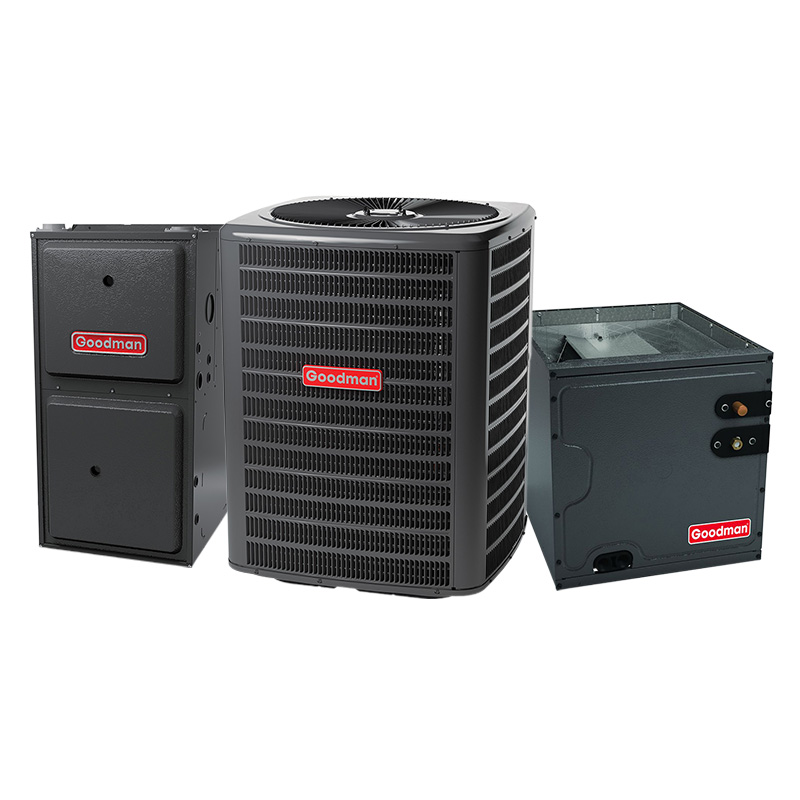
Goodman 5 Ton 15.5 SEER2 AC & Gas Furnace System – Multi-Speed, 80000 BTU Gas Furnace, 92% AFUE, Upflow, R32
View on AC Direct see your lowest price →Check current price on AC Direct →
Key features
- 5-ton cooling capacity, 15.5 SEER2 efficiency rating
- 80,000 BTU gas furnace with 92% AFUE single-stage operation
- Multi-speed blower motor for improved airflow and dehumidification
- R-32 refrigerant with lower global warming potential than R-410A
- Upflow configuration for basement and floor-level duct installations
- Goodman's 10-year parts limited warranty with product registration
About this system
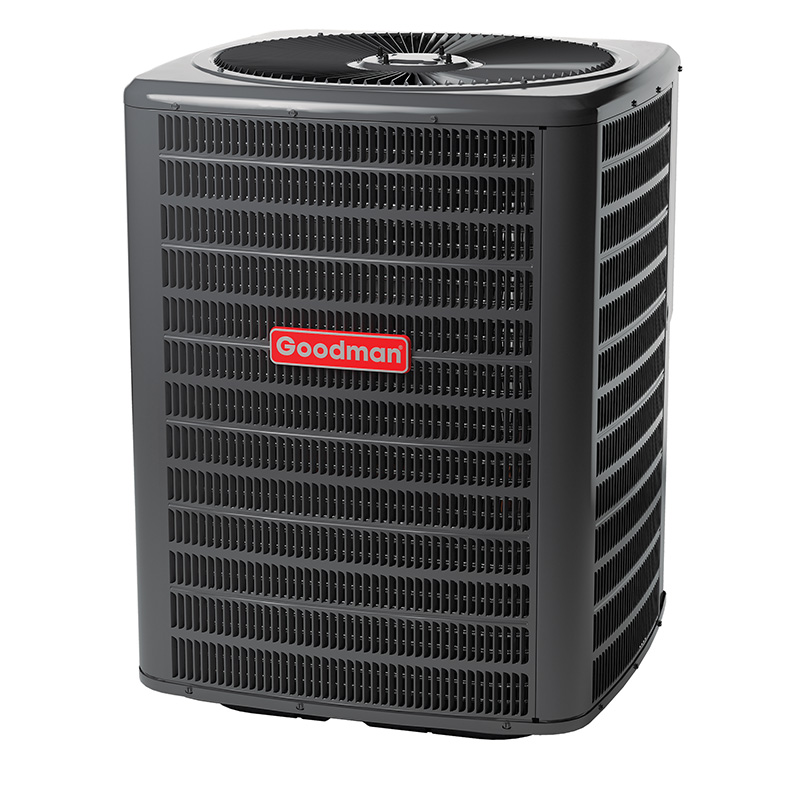
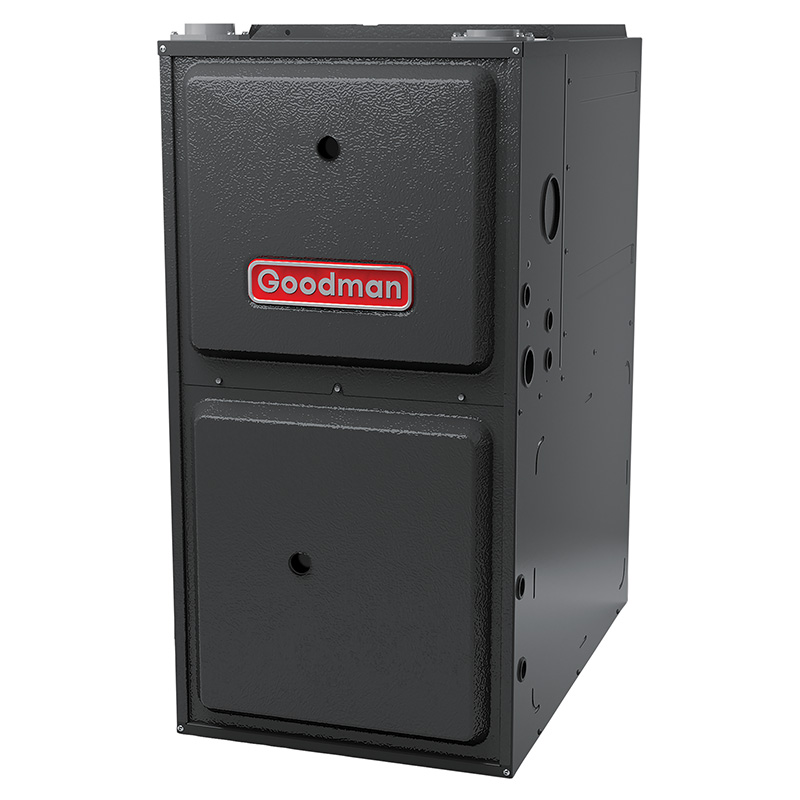
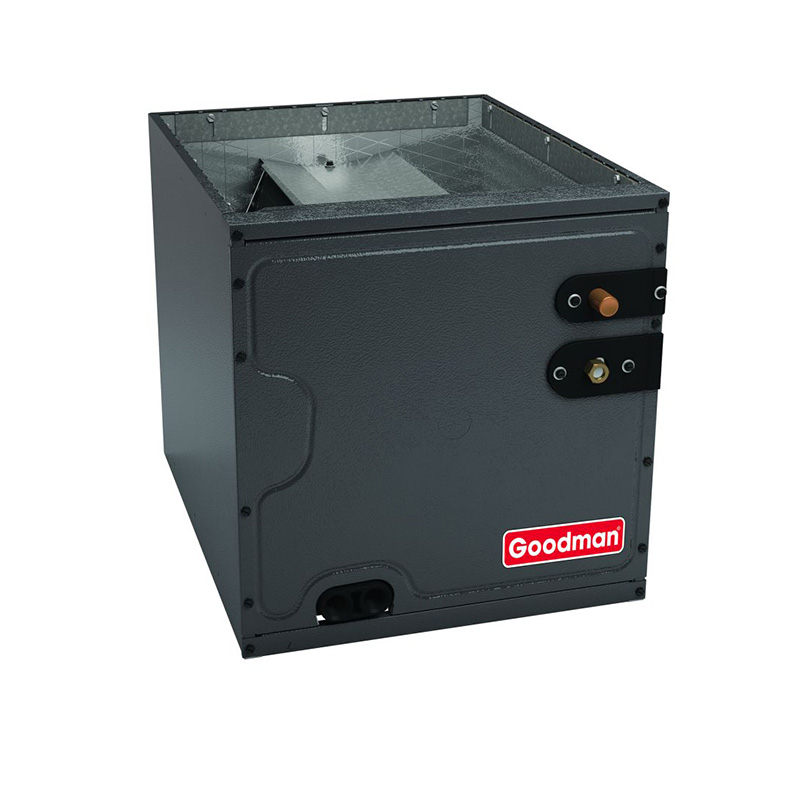
The Goodman GLXS5BA6010D pairs a 5-ton, 15.5 SEER2 single-stage air conditioner with an 80,000 BTU, 92% AFUE upflow gas furnace in an R-32 refrigerant system. At 5 tons, this setup is sized for larger homes, typically in the 2,400 to 3,000 square foot range depending on climate, insulation, and ceiling height. The 15.5 SEER2 rating clears the federal minimums for most U.S. regions and sits in the mid-efficiency tier, meaning real-world cooling costs will be noticeably lower than older 13 or 14 SEER equipment without reaching the premium operating-cost savings of 18 SEER2 or higher inverter-driven systems. The 92% AFUE furnace converts 92 cents of every dollar of gas into usable heat, which is a solid single-stage furnace figure though not in the same league as 96 or 98 AFUE two-stage or modulating units.
R-32 refrigerant is a meaningful forward-looking choice here. It has a lower global warming potential than the R-410A it replaced, and the industry is broadly moving in this direction, so parts and service availability should remain strong for the foreseeable future. The upflow configuration means the furnace sits on the floor and pushes conditioned air upward into the duct system, which suits the majority of basement and closet installations found in homes across the Midwest, Plains, and Northeast. Multi-speed furnace blower operation helps the system adjust airflow for both heating and cooling modes, improving comfort and dehumidification compared to single-speed-only blowers. This system suits budget-minded buyers in larger homes who want a functional, code-compliant upgrade and understand that long-term reliability will depend significantly on the quality of the installer they choose.
The Goodman GLXS5BA6010D delivers a functional mid-efficiency system at a price point that is genuinely 15 to 25 percent below comparable Carrier, Trane, and Lennox equipment. It is a reasonable choice for buyers prioritizing upfront cost, but documented failure patterns around capacitors, evaporator coil leaks, and a compressor lifespan shorter than premium brands mean budgeting for post-warranty repairs is a real consideration. Install quality is not a footnote with Goodman — it is arguably the most important variable in how well and how long this system performs.
Overall score is the average of the five ratings above.
What we like
- Upfront cost is meaningfully lower than Trane, Carrier, and Lennox equivalents at similar efficiency
- 15.5 SEER2 meets or exceeds regional minimums and will reduce cooling bills versus older sub-14 SEER systems
- 92% AFUE is a solid single-stage furnace efficiency that works well in cold-climate regions
- R-32 refrigerant is a responsible, future-oriented choice with broad industry support
- Multi-speed blower provides better dehumidification and comfort than single-speed-only alternatives
Trade-offs
- Dual-run capacitors are the most commonly reported failure point and, while a low-cost fix (roughly $300 to $600), they add up after year 7 when the complaint rate rises
- Evaporator coil leaks appear in a meaningful share of owner reports and can be a costly mid-life repair
- Compressor lifespan tends to average 10 to 14 years versus 15 to 20 years seen in premium brands, making replacement timing a real budget factor in a 5-ton system
- Single-stage operation means the system runs at full capacity or not at all, which can lead to short-cycling and humidity issues in shoulder seasons
What homeowners and pros say about Goodman
Homeowners who have lived with Goodman equipment for several years often land in one of two camps. Those who had a skilled installer and kept up with annual maintenance tend to report years of trouble-free operation and point to the lower purchase price as money well spent. Those who ran into problems frequently cite the dual-run capacitor as the first failure they encountered, usually sometime after the seventh year, and some go on to report evaporator coil leaks that proved more costly. On ConsumerAffairs, where the platform skews toward people motivated enough to file complaints, Goodman averages around 2.5 out of 5, with repair costs and perceived build quality the most common grievances. Google dealer reviews paint a more balanced picture, averaging around 3.8 out of 5, where affordability is the praise that appears most consistently.
HVAC technicians who work on many brands tend to have a candid view of Goodman: the equipment is serviceable, parts are widely available, and the brand’s market share means most shops stock common components. The concern professionals raise is the compressor lifespan, which in practice tends to run 10 to 14 years rather than the 15 to 20 years more commonly seen in Trane and Carrier compressors. For a 5-ton system, a compressor replacement is not a small expense, so buyers who plan to stay in their home long term should factor that into the total cost of ownership. On a 5-ton R-32 system like the GLXS5BA6010D, the consensus is that a thorough installation by an experienced contractor — including proper line set sizing, correct refrigerant charge verification, and a commissioning checklist — is what separates the owners who are satisfied from those who are not.
Sources: ConsumerAffairs Goodman owner reviews, AHRI Directory of Certified Product Performance, U.S. DOE appliance and equipment efficiency standards, Goodman product specification sheets.
What it costs to run
At 15.5 SEER2, cooling this 5-ton system for a typical 1200-hour cooling season at the U.S. average electricity rate of $0.17/kWh works out to roughly $790 per year in cooling, about $123 less per year than a minimum-efficiency 13.4 SEER2 unit of the same size. Your real cost depends on your climate and local rate.
Method: (60,000 BTU/hr ÷ 15.5 SEER2) × 1200 hours ÷ 1000 × $0.17/kWh. Rate source: U.S. EIA average; cooling hours: moderate-climate estimate.
How it compares
| Brand | Comparable model | SEER2 | Stage | Price position |
|---|---|---|---|---|
| Goodman | GLXS5BA6010D | 15.5 | Single-stage | Value pick |
| Carrier | Comfort 15 Series (24ACC6) | 15-16 | Single-stage | Typically 15 to 25 percent more than Goodman |
| Trane | XR15 Series | 15-16 | Single-stage | Typically 15 to 25 percent more than Goodman |
| Lennox | Merit ML14XC1 Series | 15-16 | Single-stage | Typically 15 to 25 percent more than Goodman |
Competitor rows are comparable single-stage units at similar efficiency; price is relative position, not a quote.
Questions about this system
Is 5 tons the right size for my home, or should I get a load calculation done first?
A proper Manual J load calculation is strongly recommended before purchasing any 5-ton system. Oversizing is a common mistake that leads to short-cycling, poor humidity control, and accelerated wear on the compressor and blower. Square footage alone is not enough — insulation, window area, climate zone, and ceiling height all affect the correct sizing.
What are the most likely repair costs I should budget for with a Goodman system over 10 years?
Based on documented owner experience, dual-run capacitor replacements are the most common repair, typically running $300 to $600 per incident and often occurring after year 7. Evaporator coil leaks are a less frequent but more expensive issue. Setting aside a repair fund after the warranty period is a practical approach with any value-tier brand.
Does R-32 refrigerant require a specially certified technician to service?
Yes, R-32 is classified as a mildly flammable refrigerant (A2L), and as of 2025 EPA rules, technicians need to use certified equipment and follow updated handling procedures. Most established HVAC contractors are already equipped for R-32 work, but it is worth confirming with your service provider before scheduling maintenance or repairs.
What does the upflow configuration mean, and will it work in my installation?
Upflow means the furnace draws return air in from the bottom and discharges heated or cooled air out the top into the supply duct plenum above it. This configuration is standard for installations where the air handler sits in a basement, utility closet, or on a ground-floor slab with ductwork running through the ceiling. It is not compatible with horizontal or downflow duct configurations without a different cabinet orientation.
How important is it to register the product to get the 10-year warranty?
Registration is required to activate the 10-year parts limited warranty. Without registration within a specified window after installation, the coverage typically drops to a shorter term. Make sure your installer provides the model and serial numbers and that you complete registration through Goodman's website promptly after the system is commissioned.
Specifications
| Cooling capacity | 5 Ton |
| Efficiency | 15.5 SEER2 |
| Furnace output | 80000 BTU |
| Furnace efficiency | 92% AFUE |
| Configuration | Upflow |
| Refrigerant | R-32 |
| Model | GLXS5BA6010D |