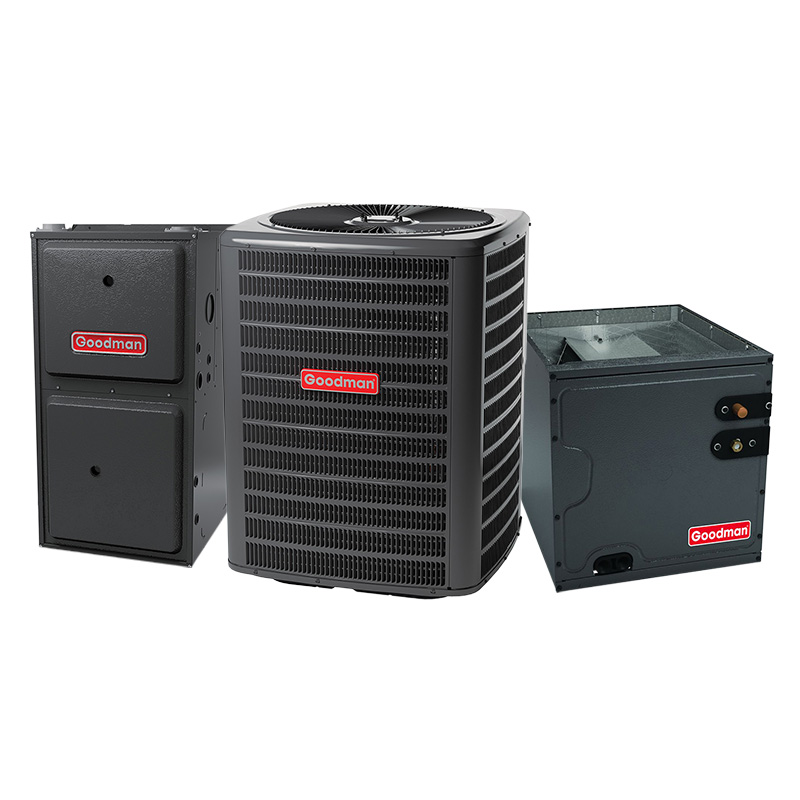
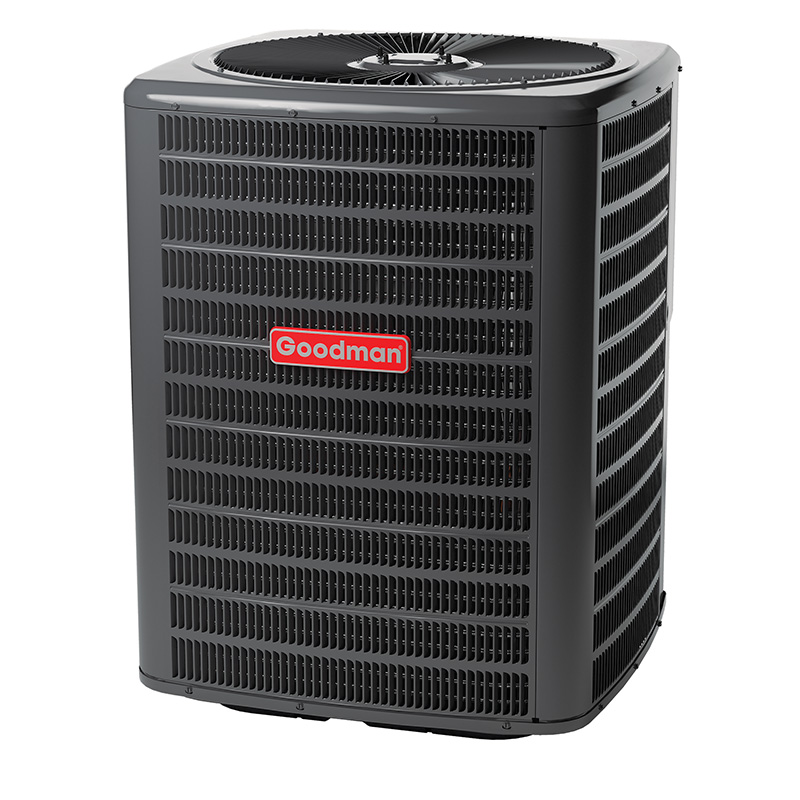
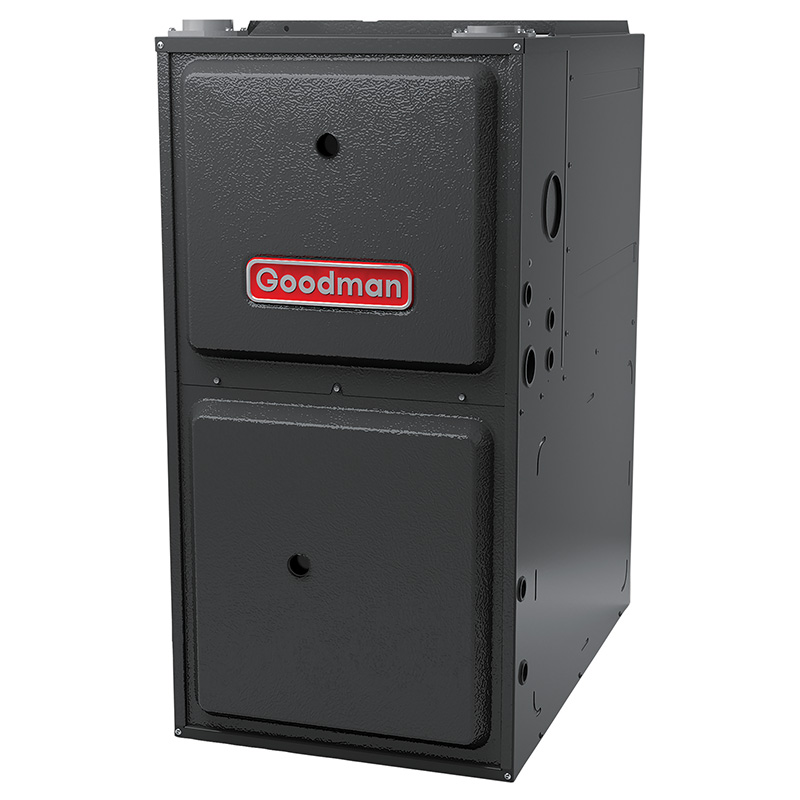
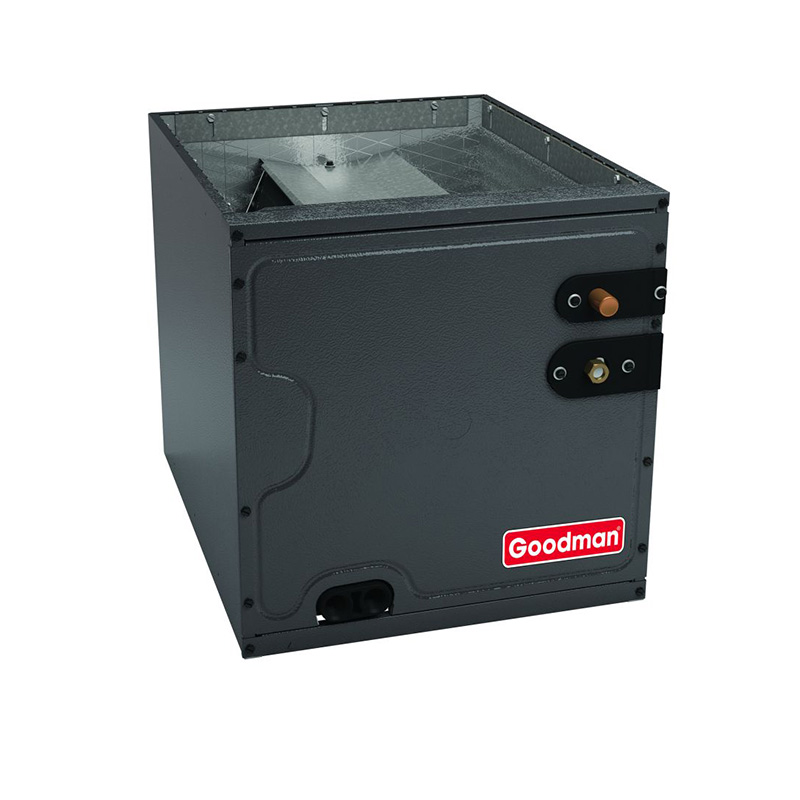
Goodman 5 Ton 16 SEER2 AC & Gas Furnace System – Modulating Variable-Speed, 100000 BTU Gas Furnace, 97% AFUE, Upflow, R32
View on AC Direct see your lowest price →Check current price on AC Direct →
Key features
- 5-ton variable-speed AC rated at 16 SEER2 for mid-tier seasonal efficiency
- Modulating 97% AFUE gas furnace with 100,000 BTU capacity for precise, fuel-efficient heating
- R-32 refrigerant with lower global warming potential than R-410A
- Upflow configuration compatible with the majority of residential duct layouts
- Variable-speed blower for quieter operation and more consistent airflow compared with single-stage systems
- Goodman 10-year parts warranty (registration required within 60 days of installation)
About this system
The Goodman GLXS5BA6010D pairs a 5-ton, 16 SEER2 variable-speed air conditioner with a 100,000 BTU modulating gas furnace rated at 97% AFUE. That combination puts this system near the top of the mid-efficiency tier: the 97% AFUE furnace converts nearly all fuel to heat, and the modulating burner adjusts output in small increments rather than simply cycling on and off at full blast. The result is steadier indoor temperatures and lower gas bills compared with single-stage or two-stage furnaces, which matters in a large home where a 5-ton load often means significant square footage and varied room demands.
The R-32 refrigerant is worth noting. R-32 has a lower global warming potential than the R-410A found in most older systems, and it operates at similar pressures, so certified technicians familiar with R-410A equipment can handle it with relatively modest additional training. However, R-32 is mildly flammable (A2L classification), which means local codes in some jurisdictions require specific handling procedures, and not every technician in every market is yet equipped for it. Confirming your installer holds the appropriate certification before purchase is a practical step, not an afterthought. The upflow configuration suits the most common residential installation arrangement, where the furnace sits in a basement or utility closet and conditioned air moves upward into the duct system.
This Goodman system delivers genuinely capable efficiency specs at a price typically 15 to 25 percent below comparable Carrier, Trane, or Lennox equipment, making it a reasonable choice for cost-conscious buyers who can secure a skilled installer and stay on top of maintenance. The modulating furnace and variable-speed components are real upgrades over base-level equipment, but Goodman's documented track record of capacitor failures, evaporator coil leaks, and compressor lifespans shorter than premium brands means the total cost of ownership over 15-plus years is less certain than the purchase price suggests. Buyers willing to budget for potential mid-life repairs and who register the warranty promptly will get the most out of this system.
Overall score is the average of the five ratings above.
What we like
- 97% AFUE modulating furnace keeps heating costs low and temperatures stable in large spaces
- 16 SEER2 rating clears most utility rebate thresholds and outperforms standard 14 SEER2 base systems
- Variable-speed blower reduces noise and improves humidity control compared with single-stage alternatives
- Purchase price is typically 15 to 25 percent less than Carrier, Trane, or Lennox equivalents with similar specs
- R-32 refrigerant aligns with evolving environmental regulations and is available from most HVAC supply houses
Trade-offs
- Dual-run capacitors are the most commonly reported failure point, often appearing after year 5 to 7 (typical repair: $300 to $600)
- Evaporator coil leaks appear in a meaningful share of owner reports, a potentially costly repair if it occurs outside the warranty window
- Compressor lifespan averages 10 to 14 years versus 15 to 20 years seen in premium-brand compressors under similar conditions
- R-32 (A2L) refrigerant requires a certified technician and may face local code restrictions, limiting your pool of service options in some markets
What homeowners and pros say about Goodman
Homeowners who track HVAC forums and review platforms describe Goodman equipment in broadly consistent terms: the upfront savings are real, and many units run without major incident for a decade. Goodman’s ConsumerAffairs score sits at roughly 2.5 out of 5, a figure shaped heavily by owners who post specifically because something went wrong, with repair costs after year 7 being the most repeated frustration. Google dealer reviews paint a more moderate picture at around 3.8 out of 5, where customers most often praise the price-to-spec ratio rather than any standout build quality. For a 5-ton modulating system like this one, the consensus is that getting a thorough installation with a properly charged R-32 circuit matters more than the nameplate alone.
HVAC technicians who work on Goodman equipment regularly point to a few patterns worth knowing before you buy. Dual-run capacitors are the most frequently replaced component, and while the fix usually costs $300 to $600, it comes up often enough that experienced techs consider it a near-routine item after the first several years. Evaporator coil leaks are documented in a meaningful share of owner reports and carry a higher repair cost. Compressors in Goodman systems tend to average 10 to 14 years in real-world conditions, compared with 15 to 20 years that premium-brand compressors more routinely achieve. A minority of owners report refrigerant leaks in the first year, which technicians generally attribute to the installation rather than a factory defect, underlining how much installer quality shapes the outcome on any Goodman system.
Sources: ConsumerAffairs Goodman owner reviews, AHRI Directory of Certified Product Performance, U.S. DOE appliance and equipment efficiency standards, Goodman product specification sheets.
What it costs to run
At 16 SEER2, cooling this 5-ton system for a typical 1200-hour cooling season at the U.S. average electricity rate of $0.17/kWh works out to roughly $765 per year in cooling, about $148 less per year than a minimum-efficiency 13.4 SEER2 unit of the same size. Your real cost depends on your climate and local rate.
Method: (60,000 BTU/hr ÷ 16 SEER2) × 1200 hours ÷ 1000 × $0.17/kWh. Rate source: U.S. EIA average; cooling hours: moderate-climate estimate.
How it compares
| Brand | Comparable model | SEER2 | Stage | Price position |
|---|---|---|---|---|
| Goodman | GLXS5BA6010D | 16 | Variable / Modulating | Value pick |
| Carrier | Performance 16 series (24ACC6) | 16 | Single-stage | Typically 15 to 25 percent more than this Goodman |
| Trane | XR16 series | 16 | Single-stage | Typically 15 to 25 percent more than this Goodman |
| Lennox | Merit ML16XC1 series | 16 | Single-stage | Typically 15 to 25 percent more than this Goodman |
Competitor rows are comparable single-stage units at similar efficiency; price is relative position, not a quote.
Questions about this system
Is R-32 refrigerant safe, and will my local technician be able to service it?
R-32 is classified A2L, meaning it is mildly flammable but not considered highly dangerous under normal conditions. Most EPA Section 608-certified technicians can handle it, but some local codes require additional precautions, and not every market has technicians equipped for it yet. Before buying, confirm that at least two or three service providers in your area work with R-32 systems.
What does 'modulating' mean on the furnace, and is it actually worth it over a two-stage model?
A modulating furnace adjusts its burner output in small steps, sometimes as many as 40 or more increments, rather than switching between just two fixed levels. In a 5-ton load scenario covering a large home, this typically means fewer temperature swings, quieter cycling, and lower gas consumption during mild weather. For most buyers at this system size, the modulating furnace is a meaningful upgrade over two-stage.
The 10-year parts warranty sounds good, but what are the real limitations I should know about?
Goodman's 10-year parts warranty requires online registration within 60 days of installation by a licensed contractor. It covers the cost of replacement parts but not labor, refrigerant, or diagnostic fees, which can add up significantly if a compressor or coil fails in year 8 or 9. A separate labor warranty through your installer is worth negotiating at the time of purchase.
Goodman's ConsumerAffairs score is only about 2.5 out of 5. Should that concern me?
ConsumerAffairs skews toward dissatisfied owners, so a 2.5 there does not mean the average unit fails, but it does reflect a real pattern: repair costs climbing after roughly year 7, with capacitors and coil leaks as the recurring complaints. Google dealer reviews average around 3.8 out of 5, where affordability draws the most positive feedback. The honest read is that this is a value brand with real trade-offs on long-term reliability compared with premium competitors.
My house is 2,800 square feet. Is 5 tons the right size, or should I get a load calculation done?
A Manual J load calculation is the only reliable way to confirm sizing. A rough rule of thumb suggests 5 tons for homes in the 2,500 to 3,200 square foot range in moderate climates, but ceiling height, insulation, window area, and local climate can shift that number significantly in either direction. Oversizing a modulating system wastes the efficiency advantage of variable-speed operation, so the calculation is worth the time before purchase.
Specifications
| Cooling capacity | 5 Ton |
| Efficiency | 16 SEER2 |
| Furnace output | 100000 BTU |
| Furnace efficiency | 97% AFUE |
| Configuration | Upflow |
| Refrigerant | R-32 |
| Model | GLXS5BA6010D |