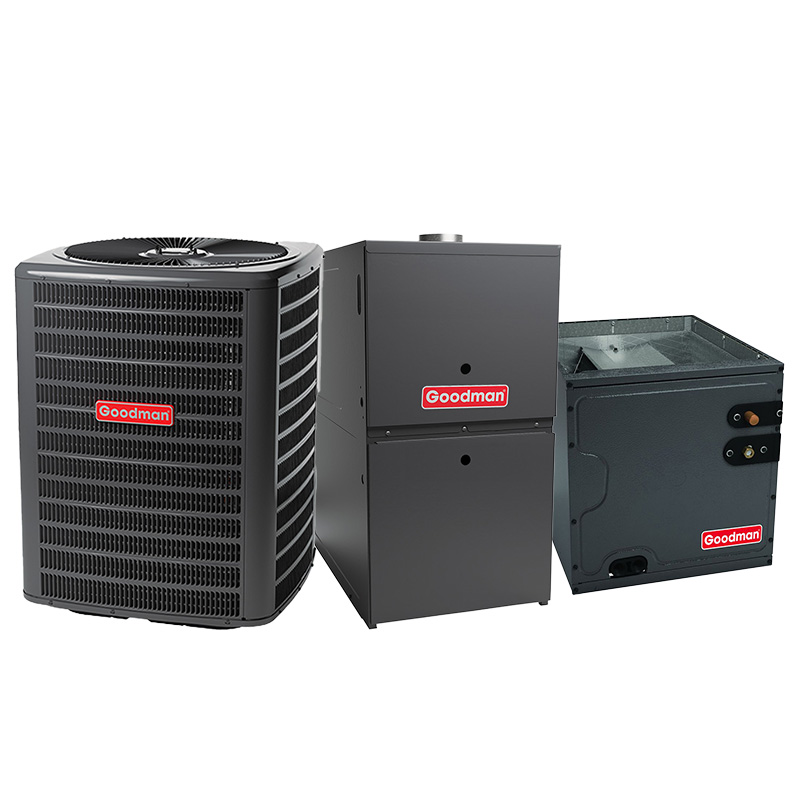
Goodman 5 Ton 16 SEER2 AC & Gas Furnace System – Two Stage Variable-Speed, 100000 BTU Gas Furnace, 80% AFUE, Upflow, R32
View on AC Direct see your lowest price →Check current price on AC Direct →
Key features
- Two-stage compressor for better humidity control and quieter part-load operation
- Variable-speed ECM blower motor for steady airflow and lower electricity use
- 16 SEER2 efficiency rating, meeting current federal minimums with a meaningful step above baseline
- 100,000 BTU upflow gas furnace at 80% AFUE for larger homes in moderate climates
- R-32 refrigerant with lower global warming potential than R-410A
- Goodman's 10-year parts warranty when registered within 60 days of installation
About this system
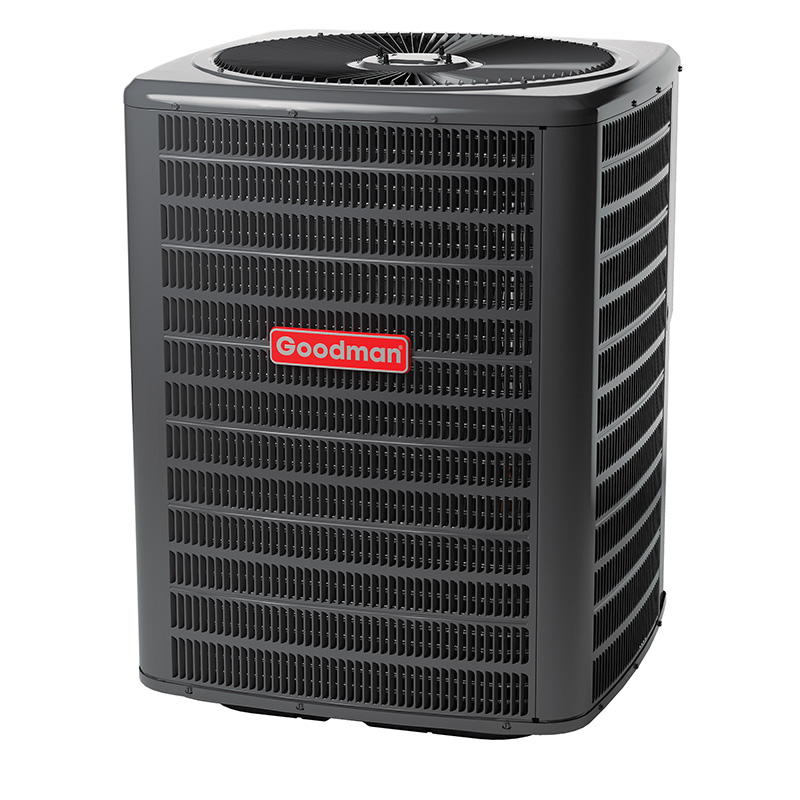
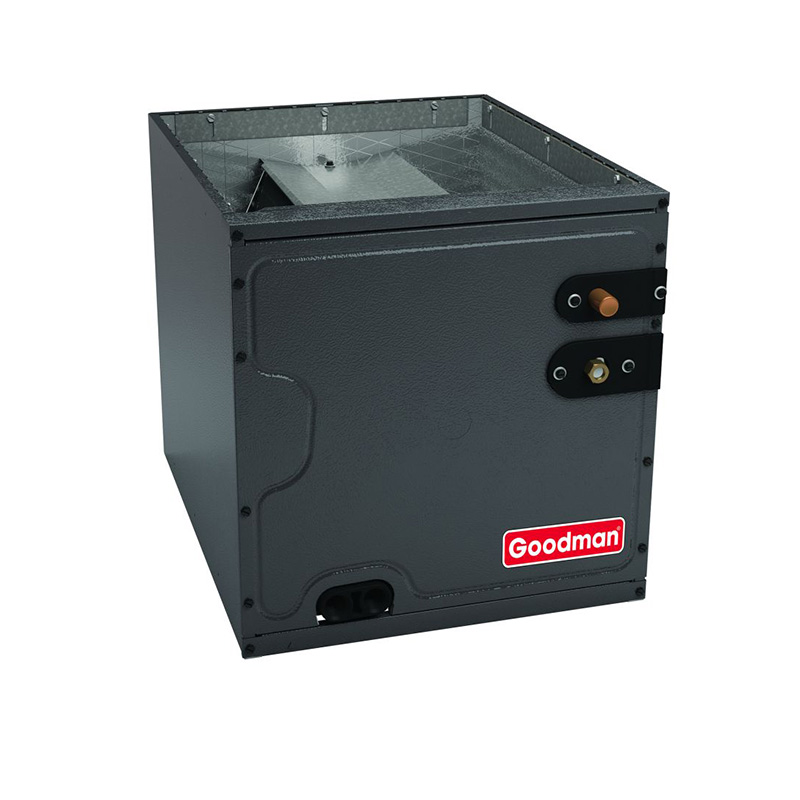
The Goodman 5-ton, 16 SEER2 split system pairs a two-stage, variable-speed air conditioner with a 100,000 BTU upflow gas furnace rated at 80% AFUE. At 5 tons, this system is sized for larger homes, typically in the 2,400 to 3,000 square foot range depending on climate zone, insulation, and window load. The two-stage compressor runs at a lower capacity during mild weather and steps up only when the load demands it, which reduces short-cycling, keeps humidity in check better than a single-stage unit, and trims energy use on moderate days. The variable-speed air handler fan further supports comfort by moving air slowly and steadily rather than blasting on and off, and it tends to run quieter at low speed.
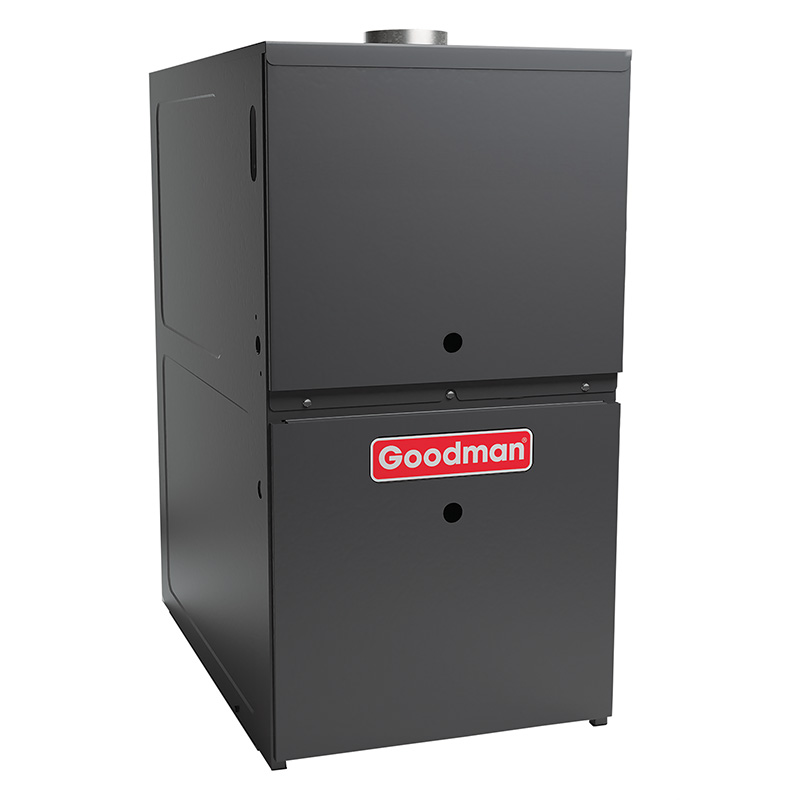
The furnace side delivers 80% AFUE, meaning 80 cents of every dollar of gas becomes usable heat. That is the baseline efficiency tier and a reasonable choice in mild to moderate climates, but homeowners in colder regions with high heating bills may find a 96% or higher AFUE unit pays back the price difference over time. The R-32 refrigerant charge is a shift away from R-410A: R-32 has a lower global warming potential and is increasingly common in new equipment, though it does require technicians to be certified for its handling. Upflow configuration suits installations where the furnace sits in a basement or closet and air rises into ductwork above, which covers a large share of single-family homes in North America.
This system suits homeowners replacing aging equipment in a large home who want a step above entry-level single-stage performance without paying premium-brand prices. It will reward buyers who invest in a careful, licensed installation, because Goodman’s real-world performance data consistently shows that installer quality is the dominant factor in how well and how long these systems run.
This Goodman bundle delivers real two-stage comfort and a genuine efficiency step above basic single-stage systems at a price that undercuts major premium brands by 15 to 25 percent. The trade-off is a shorter expected compressor lifespan and a documented history of capacitor and coil failures in the mid-ownership years. Buyers who use a skilled installer and stay current on maintenance will get solid value; those expecting premium longevity without that investment may be disappointed.
Overall score is the average of the five ratings above.
What we like
- Two-stage cooling reduces humidity and short-cycling compared to single-stage systems
- Variable-speed blower supports consistent temperatures and quieter low-load operation
- Priced 15 to 25 percent below comparable Trane, Carrier, and Lennox equipment
- R-32 refrigerant is forward-looking and has a lower environmental impact than R-410A
- 10-year registered parts warranty provides meaningful coverage on the most expensive components
Trade-offs
- Compressor lifespan averages 10 to 14 years, shorter than the 15 to 20 years often seen with premium brands
- Dual-run capacitor failures are the most commonly reported issue, typically arising after year 5 to 7 and adding repair costs of $300 to $600 per occurrence
- Evaporator coil leaks appear in a notable share of owner reports, which can mean refrigerant loss and costly service calls
- 80% AFUE furnace is the minimum efficiency tier; high heating-cost climates may not see optimal long-term savings compared to a condensing furnace
What homeowners and pros say about Goodman
Homeowners who review Goodman equipment tend to cluster at the extremes. On ConsumerAffairs, Goodman scores around 2.5 out of 5, a platform that skews toward complaint-driven feedback, where the recurring theme is repair costs climbing after roughly year 7. Google dealer reviews tell a somewhat more balanced story, averaging around 3.8 out of 5 across several hundred reviews per location, where affordability is consistently the most praised attribute. For this 5-ton two-stage system specifically, owners who report satisfaction generally credit the noticeable comfort improvement over whatever single-stage unit it replaced, particularly in humidity control during shoulder seasons. Those who report frustration most often point to dual-run capacitor failures, a known weak point across Goodman’s residential line that typically surfaces in the mid-ownership years at a cost of $300 to $600 per repair. A smaller but notable share of owners also describe evaporator coil leaks that led to refrigerant loss and repeat service visits.
HVAC technicians are generally candid about the Goodman trade-off: the equipment is competently engineered at its price point, but compressor longevity averages 10 to 14 years compared to 15 to 20 years that premium brands tend to deliver, and a minority of first-year refrigerant leaks point to charge or installation issues rather than factory defects. Pros who work on Goodman regularly tend to emphasize that a thorough commissioning, including verifying the refrigerant charge and airflow, closes much of the gap between this brand and higher-cost alternatives. For a 5-ton load in a larger home, the two-stage configuration here is a genuine upgrade over single-stage options at the same price, and technicians note that the variable-speed blower in this bundle is one of the better cost-control features available at this price tier. The honest summary from the field: Goodman rewards careful installation and routine maintenance, and punishes neglect more noticeably than premium brands do.
Sources: ConsumerAffairs Goodman owner reviews, AHRI Directory of Certified Product Performance, U.S. DOE appliance and equipment efficiency standards, Goodman product specification sheets.
What it costs to run
At 16 SEER2, cooling this 5-ton system for a typical 1200-hour cooling season at the U.S. average electricity rate of $0.17/kWh works out to roughly $765 per year in cooling, about $148 less per year than a minimum-efficiency 13.4 SEER2 unit of the same size. Your real cost depends on your climate and local rate.
Method: (60,000 BTU/hr ÷ 16 SEER2) × 1200 hours ÷ 1000 × $0.17/kWh. Rate source: U.S. EIA average; cooling hours: moderate-climate estimate.
How it compares
| Brand | Comparable model | SEER2 | Stage | Price position |
|---|---|---|---|---|
| Goodman | Two-Stage Variable-Speed 5-Ton 16 SEER2 AC + 80% AFUE Gas Furnace Bundle | 16 | Two-stage | Value pick |
| Carrier | Comfort 24ACC636 (5-ton) with 58TP furnace series | 16 | Single-stage | Typically 15 to 25 percent more than Goodman |
| Trane | XR16 (5-ton) with S9X1 80% AFUE furnace | 16 | Single-stage | Typically 15 to 25 percent more than Goodman |
| Lennox | Merit ML16XC1 (5-ton) with ML196E 80% AFUE furnace | 16 | Single-stage | Typically 15 to 25 percent more than Goodman |
Competitor rows are comparable single-stage units at similar efficiency; price is relative position, not a quote.
Questions about this system
Is a 5-ton system the right size for my home, or could it be oversized?
A 5-ton unit is generally sized for homes in the 2,400 to 3,000 square foot range, but the correct size depends heavily on your climate zone, insulation quality, window area, and ceiling height. An oversized system will short-cycle, raise humidity, and wear components faster. Always ask your installer to perform a Manual J load calculation before committing to any tonnage.
What should I expect to pay for repairs as this system ages, based on known failure patterns?
The most common repair on Goodman equipment is dual-run capacitor replacement, which typically runs $300 to $600 and tends to surface after roughly year 7. Evaporator coil leaks are also reported by a meaningful share of owners and can be more expensive to address, especially if refrigerant needs to be recovered and recharged. Budgeting for at least one service event per decade beyond routine maintenance is realistic.
Why does this system use R-32 refrigerant, and does that affect who can service it?
R-32 is replacing R-410A across the industry because it has a significantly lower global warming potential. It is mildly flammable, which means technicians need A2L certification or equivalent training to handle it safely. Most established HVAC companies are already certified or are getting there, but it is worth confirming your service provider is qualified before scheduling work.
How important is installation quality for a Goodman system compared to a premium brand?
Industry technicians consistently identify installation quality as the single biggest factor in how long a Goodman system lasts and how well it performs. Issues like improper refrigerant charge, poor duct sizing, or incorrect airflow setup can cause problems that owners sometimes attribute to the equipment itself. Choosing a licensed, experienced installer and having them verify the refrigerant charge and airflow on commissioning is especially important with this brand.
Does the 10-year warranty cover labor costs if something fails?
Goodman's 10-year registered warranty covers parts only, not labor. Labor costs for a covered repair are still your responsibility, and depending on your area and the type of failure, that can be a significant expense. Some HVAC contractors offer extended labor warranties at installation, which is worth considering given the documented repair history of this equipment line.
Specifications
| Cooling capacity | 5 Ton |
| Efficiency | 16 SEER2 |
| Furnace output | 100000 BTU |
| Furnace efficiency | 80% AFUE |
| Configuration | Upflow |
| Refrigerant | R-32 |