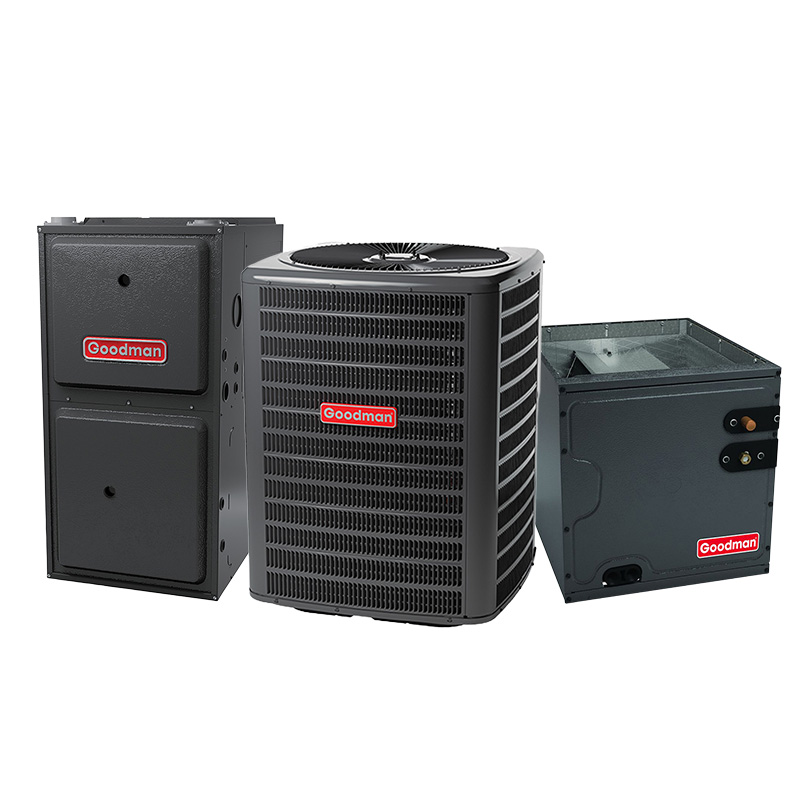
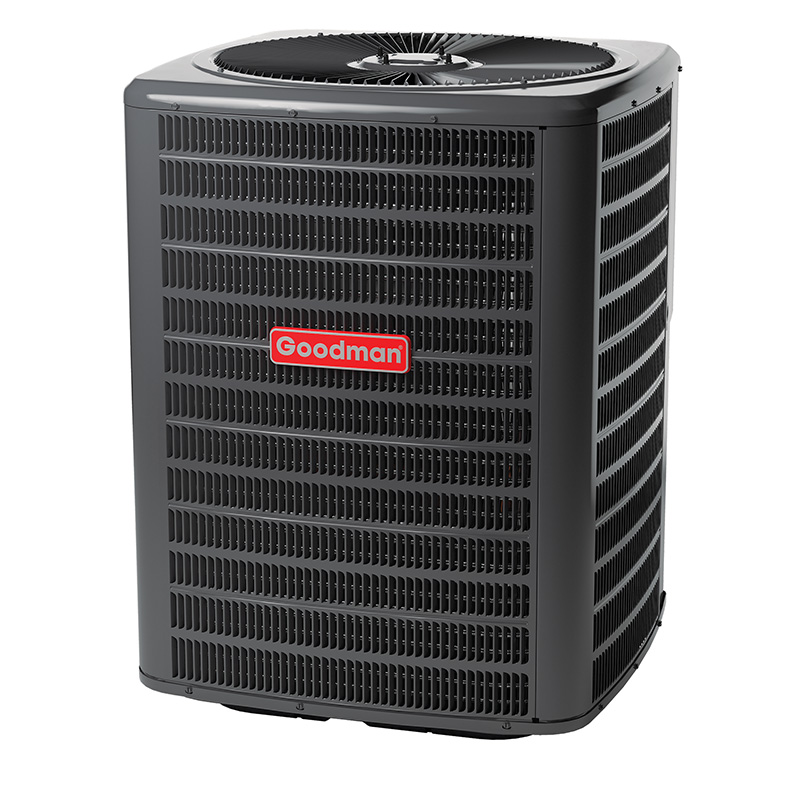
Goodman 5 Ton 16 SEER2 AC & Gas Furnace System – Two Stage Variable-Speed, 120000 BTU Gas Furnace, 96% AFUE, Upflow, R32
View on AC Direct see your lowest price →Check current price on AC Direct →
Key features
- 16 SEER2 two-stage cooling sized for homes up to approximately 4,000 sq ft
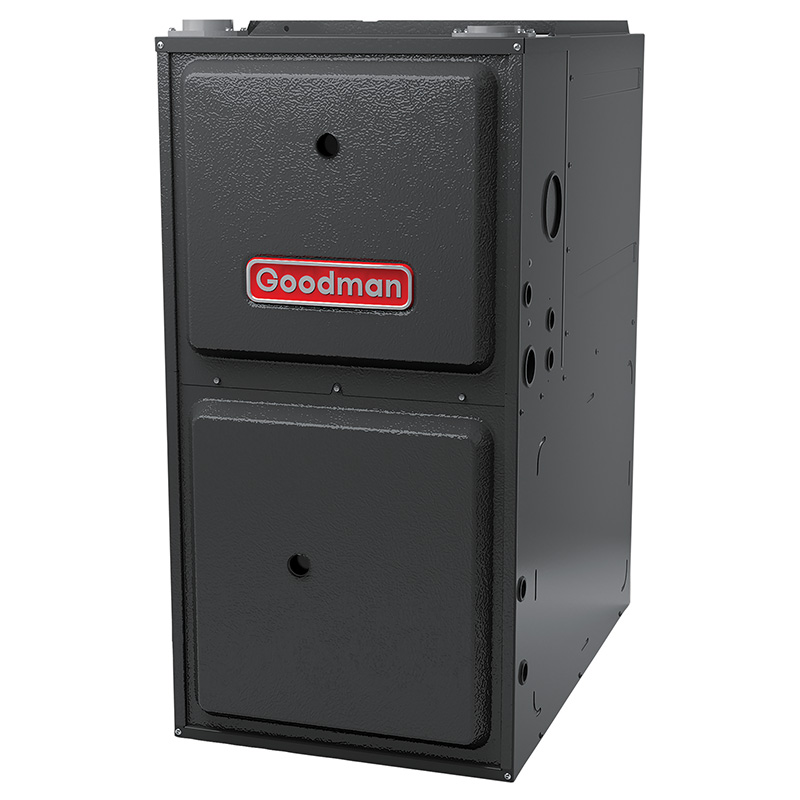
- 120,000 BTU, 96% AFUE upflow gas furnace for high-efficiency winter heating
- Two-stage compressor and variable-speed blower reduce humidity and temperature swings
- R-32 refrigerant with lower global warming potential than R-410A
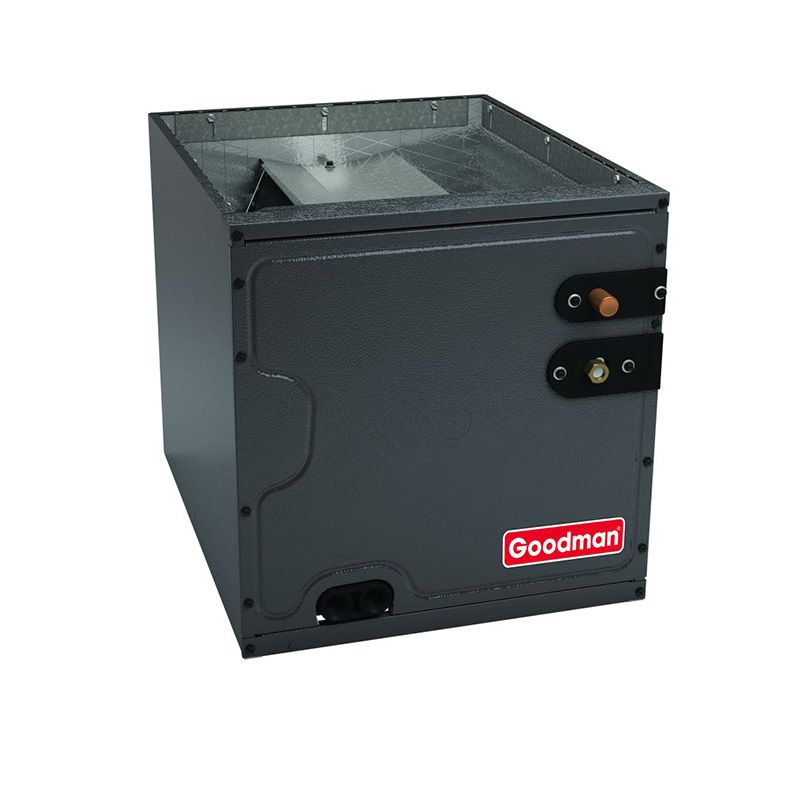
- Variable-speed air handler runs quieter and more efficiently than single-speed units
- Priced 15 to 25 percent below comparable Trane, Lennox, and Carrier equipment
About this system
The Goodman 5-ton, 16 SEER2 two-stage AC and gas furnace system is built for larger homes, typically in the 2,800 to 4,000 square foot range depending on climate, insulation, and layout. The 120,000 BTU, 96% AFUE upflow furnace is one of the more efficient gas options available at this price tier, meaning roughly 96 cents of every dollar of gas becomes usable heat. The two-stage operation on both the cooling and heating sides lets the equipment run at a lower capacity on mild days, which reduces temperature swings, lowers humidity more effectively than single-stage units, and eases the wear that comes from frequent hard starts.
R-32 refrigerant is the forward-looking choice here. It has a lower global warming potential than the R-410A it replaces and is becoming the industry standard, so future service technicians will increasingly stock it. The variable-speed air handler moves air more quietly and consistently than a single- or multi-speed blower, and it works in tandem with the two-stage compressor to hold indoor temperatures and humidity closer to the setpoint. That said, more components means more potential service points, and the system’s long-term performance will depend heavily on a correct installation: proper refrigerant charge, accurate static pressure setup, and clean ductwork are not optional extras with a system this size.
This package suits homeowners who want meaningful efficiency gains over entry-level equipment without paying the premium commanded by Trane, Lennox, or Carrier. It is a practical fit for sunbelt climates with long cooling seasons and cold-winter markets where a high-AFUE furnace pays back meaningfully over time. Buyers should budget for a qualified installer and factor in the brand’s documented reliability track record when deciding whether the upfront savings are worth it for their situation.
This system delivers a genuine efficiency and comfort step up from single-stage equipment at a price point that undercuts the major premium brands by a meaningful margin. The trade-off is a brand reputation that sits below its competitors on reliability metrics, and a compressor lifespan that tends to run shorter than Trane or Carrier equivalents. For cost-conscious buyers who use a skilled installer and keep up with maintenance, it represents solid value; for buyers who prioritize long-term ownership confidence above all else, the premium brands are worth the extra cost.
Overall score is the average of the five ratings above.
What we like
- 96% AFUE furnace is among the most efficient gas options at this price tier
- Two-stage cooling and variable-speed blower noticeably improve humidity control over single-stage systems
- R-32 refrigerant is future-ready as the industry moves away from R-410A
- Priced 15 to 25 percent below comparable Carrier, Trane, and Lennox systems
- Dual-run capacitor failures, the most common documented issue, are a low-cost repair typically running $300 to $600
Trade-offs
- Compressor lifespan averages 10 to 14 years versus 15 to 20 years for premium brands
- Evaporator coil leaks appear in a meaningful share of owner reviews and can be a costly mid-life repair
- A minority of owners report refrigerant leaks in year one, usually traceable to installation or initial charge issues
- ConsumerAffairs rating sits around 2.5 out of 5, with repair cost complaints clustering after year 7
What homeowners and pros say about Goodman
Homeowners who share feedback about Goodman online tend to split along a clear line. Those who had a careful installation and kept up with annual maintenance largely report years of uneventful service and appreciate that the upfront cost left room in the budget for a service plan or other home improvements. The brand’s Google dealer reviews average around 3.8 out of 5 across hundreds of reviews per location, and affordability is the word that shows up most consistently in the positive feedback. The picture shifts on complaint-heavy channels: Goodman’s ConsumerAffairs score sits at roughly 2.5 out of 5, and the recurring theme in those reviews is repair bills that start climbing around year 7 or 8, particularly around evaporator coil leaks and the cost of compressor work on larger tonnage units like this one.
HVAC technicians who service Goodman equipment regularly tend to describe it as workable but unforgiving of shortcuts. They point out that dual-run capacitor failures are the most common call they see on these units, and that replacement is usually a straightforward repair in the $300 to $600 range. More serious concerns they raise include evaporator coil leaks appearing in a meaningful number of units over time, and compressor lifespans that tend to fall in the 10 to 14-year window rather than the 15 to 20 years they see from Trane and Carrier equipment. For a 5-ton two-stage system running R-32, technicians consistently say that the initial installation quality, correct refrigerant charge, and airflow setup are not negotiable if the owner wants to see the better end of that lifespan range.
Sources: ConsumerAffairs Goodman owner reviews, AHRI Directory of Certified Product Performance, U.S. DOE appliance and equipment efficiency standards, Goodman product specification sheets.
What it costs to run
At 16 SEER2, cooling this 5-ton system for a typical 1200-hour cooling season at the U.S. average electricity rate of $0.17/kWh works out to roughly $765 per year in cooling, about $148 less per year than a minimum-efficiency 13.4 SEER2 unit of the same size. Your real cost depends on your climate and local rate.
Method: (60,000 BTU/hr ÷ 16 SEER2) × 1200 hours ÷ 1000 × $0.17/kWh. Rate source: U.S. EIA average; cooling hours: moderate-climate estimate.
How it compares
| Brand | Comparable model | SEER2 | Stage | Price position |
|---|---|---|---|---|
| Goodman | 5-Ton 16 SEER2 Two-Stage AC + 96% AFUE Variable-Speed Furnace | 16 | Two-stage | Value pick |
| Carrier | Comfort Series 24ACC636 / 59SC2 | 15.2-16 | Single-stage | Typically 15 to 25 percent more than Goodman |
| Trane | XR15 / S9X2 | 15.2-16 | Single-stage | Typically 15 to 25 percent more than Goodman |
| Lennox | Merit ML16XC1 / ML196E | 15.2-16 | Single-stage | Typically 15 to 25 percent more than Goodman |
Competitor rows are comparable single-stage units at similar efficiency; price is relative position, not a quote.
Questions about this system
Is 5 tons the right size for my house, or should I have a load calculation done first?
A load calculation (Manual J) is strongly recommended before purchasing any 5-ton system. Oversizing a unit this large leads to short cycling, poor humidity control, and premature wear. Climate zone, insulation quality, window area, and ceiling height all affect the correct size, and a 5-ton unit is often oversized for homes under 2,800 square feet in temperate climates.
Will my existing ductwork handle a 5-ton, variable-speed system?
Variable-speed systems are more sensitive to duct static pressure than single-stage units. Undersized or leaky ducts can cause the system to underperform, run inefficiently, and put extra stress on the blower motor. Have your installer perform a duct leakage test and verify that duct sizing meets the system's airflow requirements before installation.
How does R-32 refrigerant affect future service and repair costs?
R-32 is mildly flammable, which means technicians need specific certification and equipment to handle it safely. Availability is growing quickly as manufacturers shift away from R-410A, so it should not be difficult to source in most markets within the next few years. Long term, R-32 is the direction the industry is heading, which is a positive for parts availability.
What does the warranty actually cover, and are there registration requirements?
Goodman typically offers a 10-year parts warranty when the product is registered within a set window after installation, and a limited lifetime heat exchanger warranty on qualifying furnaces. Failure to register usually reduces coverage to 5 years on parts. Confirm the exact terms for this specific model at the time of purchase and register promptly after install.
Given Goodman's reliability reviews, is an extended warranty or service contract worth buying?
Given the documented pattern of repair costs rising after year 7, particularly around evaporator coil leaks and compressor longevity that runs shorter than premium brands, a service contract or extended warranty is worth evaluating seriously for a 5-ton system where repairs are not inexpensive. Compare the contract cost against the realistic repair scenarios and choose a plan that covers refrigerant and coil work, not just parts.
Specifications
| Cooling capacity | 5 Ton |
| Efficiency | 16 SEER2 |
| Furnace output | 120000 BTU |
| Furnace efficiency | 96% AFUE |
| Configuration | Upflow |
| Refrigerant | R-32 |