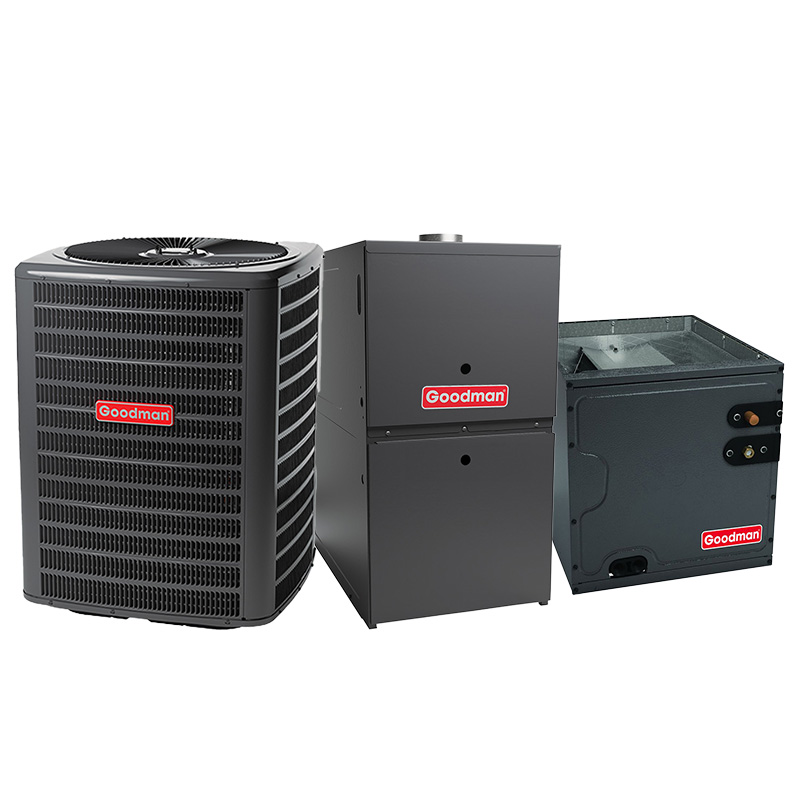
Goodman 5 Ton 16 SEER2 AC & Gas Furnace System – Two Stage Variable-Speed, 80000 BTU Gas Furnace, 80% AFUE, Upflow, R32
View on AC Direct see your lowest price →Check current price on AC Direct →
Key features
- 5-ton two-stage cooling with 16 SEER2 efficiency rating
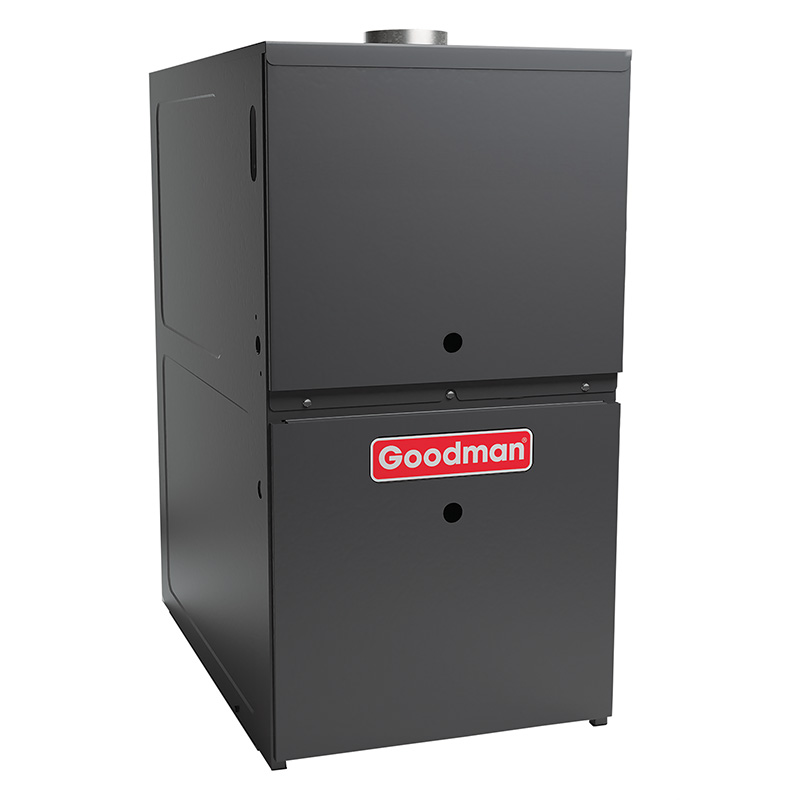
- 80,000 BTU upflow gas furnace at 80% AFUE
- Variable-speed blower motor for improved humidity control and quieter operation
- R-32 refrigerant, lower global warming potential than R-410A
- Two-stage compressor reduces short-cycling on mild-weather days
- Priced approximately 15 to 25 percent below comparable Trane, Carrier, and Lennox systems
About this system
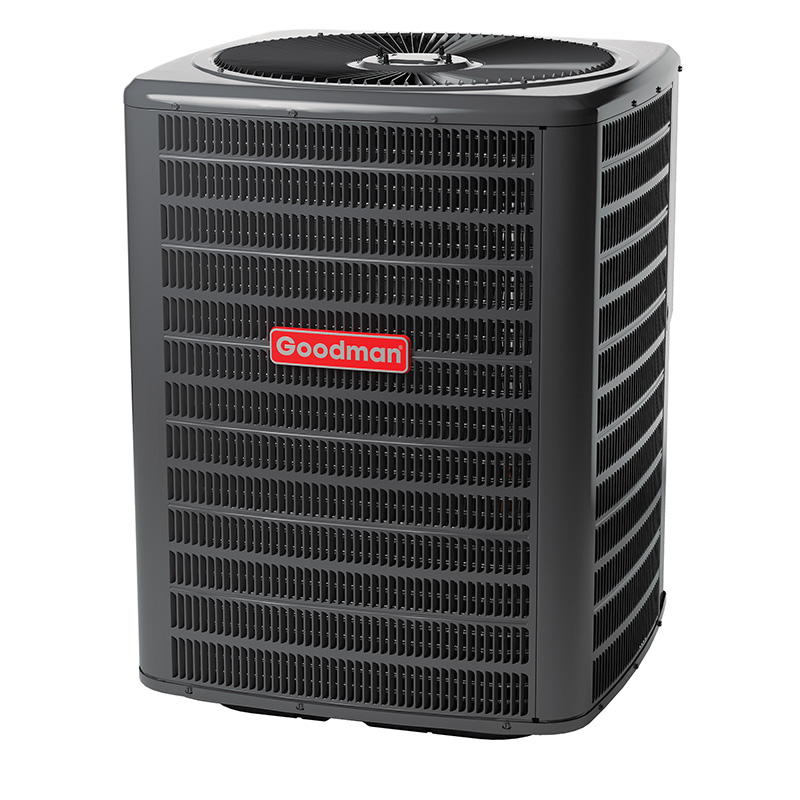
The Goodman 5-ton 16 SEER2 two-stage, variable-speed system pairs a 5-ton cooling unit with an 80,000 BTU upflow gas furnace rated at 80% AFUE. At 16 SEER2, this system sits just above the federal minimum efficiency threshold for most U.S. climate zones, which means real-world energy savings over a basic entry-level unit without the premium price tag of a high-efficiency system. The two-stage compressor runs at a lower capacity on milder days, which reduces short-cycling, improves humidity control, and makes the system quieter than a single-stage alternative — a meaningful benefit in a 5-ton application where oversizing and humidity problems are common complaints.
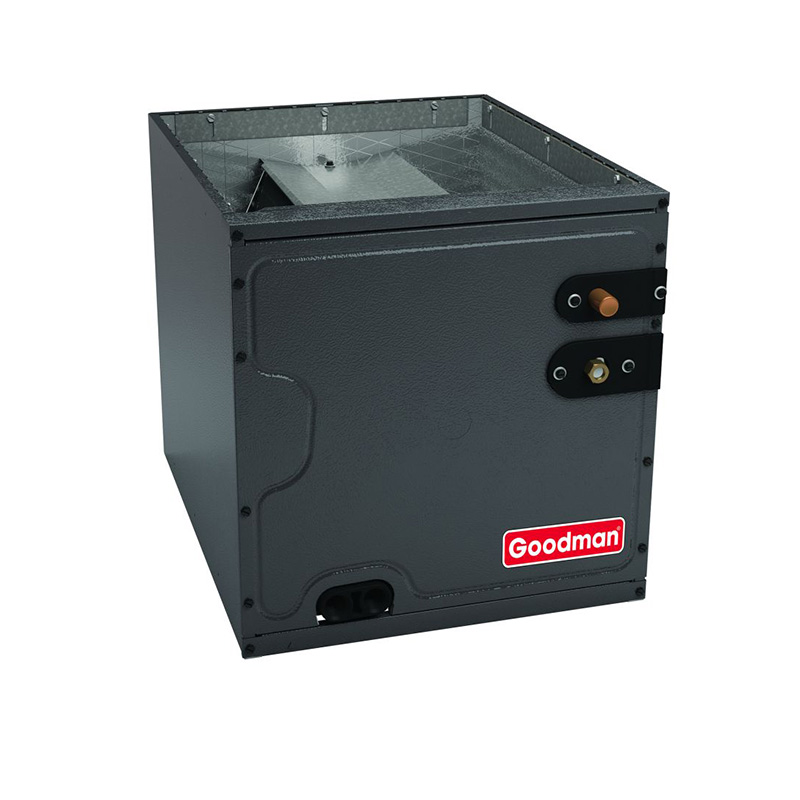
The R-32 refrigerant charge is a forward-looking choice: R-32 has a lower global warming potential than R-410A and is increasingly common as the industry moves away from older refrigerants. The variable-speed air handler pairs with the two-stage compressor to fine-tune airflow, which helps with both comfort and dehumidification. The upflow configuration means the furnace draws air from the bottom and discharges it upward, making it the right fit for basement or crawlspace installations with ductwork running overhead. A 5-ton system is typically sized for homes in the 2,200 to 3,000 square foot range, though actual sizing depends heavily on insulation, climate, and building envelope — a proper Manual J load calculation before purchase is strongly recommended.
This system offers a practical middle-ground for budget-conscious homeowners who want two-stage comfort and variable-speed airflow without paying a premium-brand price. Goodman's value positioning is real and well-documented, but so are its trade-offs: compressor longevity and coil leak rates trail premium competitors, and the system's long-term performance depends significantly on the quality of installation. Buyers who prioritize upfront cost and have access to a competent installer will likely be satisfied; those who want worry-free ownership over 15-plus years should weigh the alternatives carefully.
Overall score is the average of the five ratings above.
What we like
- Two-stage cooling improves humidity control and reduces short-cycling compared to single-stage 5-ton units
- Variable-speed blower provides quieter, more even airflow throughout the home
- R-32 refrigerant is more environmentally friendly and increasingly industry-standard
- Consistently priced 15 to 25 percent below comparable premium-brand systems
- Dual-run capacitor failures, the most common documented issue, are generally a low-cost repair in the $300 to $600 range
Trade-offs
- 80% AFUE furnace wastes 20 cents of every fuel dollar and falls short of the 90-plus percent efficiency available at a higher price point
- Compressor lifespan averages 10 to 14 years versus 15 to 20 years for premium brands like Trane and Carrier
- Evaporator coil leaks appear in a meaningful share of owner reports, a documented failure mode for the brand
- A minority of owners report refrigerant leaks within the first year, most often tied to installation or initial charge issues rather than factory defects
What homeowners and pros say about Goodman
Homeowners who have owned Goodman equipment for several years tend to land in two camps. The first group bought the system specifically for its lower price, got a solid installation, and reports years of reliable service — affordability is the most consistent praise in Google dealer reviews, which average around 3.8 out of 5 across hundreds of locations. The second group encounters the brand’s documented weak points: dual-run capacitor failures are by far the most frequently mentioned repair, and while they are relatively inexpensive to fix, they frustrate owners who expected trouble-free operation. Evaporator coil leaks and compressor replacements before the 10-year mark also appear in a meaningful share of owner accounts, and ConsumerAffairs scores hover around 2.5 out of 5, a platform where dissatisfied owners are more likely to post than happy ones, but a signal worth noting all the same.
HVAC technicians who work on Goodman equipment regularly make a point that applies directly to a 5-ton two-stage system: installation quality matters more here than with some premium brands because Goodman’s tolerances and build quality leave less margin for error in setup. A properly sized refrigerant charge, correct airflow calibration for the variable-speed blower, and a clean condensate drain path all have outsized effects on whether this system performs as advertised or becomes a recurring service call. The R-32 refrigerant charge also means the installer needs to be current on handling procedures for that refrigerant. For buyers focused on keeping first costs down and willing to invest in a competent installer, this system can deliver solid value. For buyers who want to set it and forget it for 15-plus years, the documented compressor lifespan of 10 to 14 years — compared to 15 to 20 for premium competitors — is a trade-off worth thinking through before committing.
Sources: ConsumerAffairs Goodman owner reviews, AHRI Directory of Certified Product Performance, U.S. DOE appliance and equipment efficiency standards, Goodman product specification sheets.
What it costs to run
At 16 SEER2, cooling this 5-ton system for a typical 1200-hour cooling season at the U.S. average electricity rate of $0.17/kWh works out to roughly $765 per year in cooling, about $148 less per year than a minimum-efficiency 13.4 SEER2 unit of the same size. Your real cost depends on your climate and local rate.
Method: (60,000 BTU/hr ÷ 16 SEER2) × 1200 hours ÷ 1000 × $0.17/kWh. Rate source: U.S. EIA average; cooling hours: moderate-climate estimate.
How it compares
| Brand | Comparable model | SEER2 | Stage | Price position |
|---|---|---|---|---|
| Goodman | This system (two-stage / variable-speed, 80% AFUE, R-32) | 16 | Two-stage | Value pick |
| Carrier | Comfort 16 series (single-stage, CA16NA condenser) | 16 | Single-stage | Typically 15 to 25 percent more than Goodman |
| Trane | XR16 series (single-stage condenser) | 16 | Single-stage | Typically 15 to 25 percent more than Goodman |
| Lennox | Merit 16 series (ML16XC1 single-stage condenser) | 16 | Single-stage | Typically 15 to 25 percent more than Goodman |
Competitor rows are comparable single-stage units at similar efficiency; price is relative position, not a quote.
Questions about this system
Is 16 SEER2 enough efficiency for a hot climate, or should I pay more for higher SEER2?
16 SEER2 exceeds the federal minimum for most regions and will deliver noticeable savings over an older 10 to 13 SEER system. In climates with very long, intense cooling seasons — think Florida, Texas, or Arizona — moving to an 18 or 20 SEER2 system can pay back the price difference over time, but the math depends on your local electricity rates and how many hours per year the system runs. For moderate climates, 16 SEER2 is a reasonable stopping point.
Why is 80% AFUE considered a drawback, and is a 96% furnace worth the extra cost?
An 80% AFUE furnace vents 20% of combustion heat out the flue, while a 96% unit vents only about 4%, capturing significantly more heat from the same amount of gas. In colder climates where the furnace runs heavily from October through April, the fuel savings from a high-efficiency unit can offset the price difference within a few years. In mild climates with short heating seasons, the payback period stretches out considerably, making 80% AFUE more defensible.
What does 'upflow' mean, and how do I know if that's the right configuration for my home?
Upflow means the furnace pulls return air in from the bottom and pushes conditioned air out the top into overhead ductwork. This is the standard setup for systems installed in a basement, utility closet, or ground-level space where ductwork runs through the ceiling or attic above. If your ducts come up from below (common in slab homes in warmer climates), you would need a downflow or horizontal configuration instead — confirm your existing ductwork layout before ordering.
What is R-32 refrigerant, and will it cost more to service than R-410A systems?
R-32 is a single-component refrigerant with a global warming potential roughly 68% lower than R-410A, and it is increasingly available as the industry transitions away from R-410A under EPA phase-down rules. Most HVAC technicians are beginning to work with R-32 regularly, though in some markets it may still be slightly less available than R-410A today. Service costs should be comparable over time as availability catches up with demand.
How often do Goodman dual-run capacitors fail, and is this a serious problem?
Dual-run capacitor failure is the most commonly reported repair issue across Goodman equipment in owner reviews, and it tends to show up as the system ages. The good news is that it is among the least expensive HVAC repairs, typically running $300 to $600 for parts and labor, and most technicians can complete the job in under an hour. It is a nuisance rather than a catastrophic failure, but budgeting for one or two over the system's life is realistic.
Specifications
| Cooling capacity | 5 Ton |
| Efficiency | 16 SEER2 |
| Furnace output | 80000 BTU |
| Furnace efficiency | 80% AFUE |
| Configuration | Upflow |
| Refrigerant | R-32 |