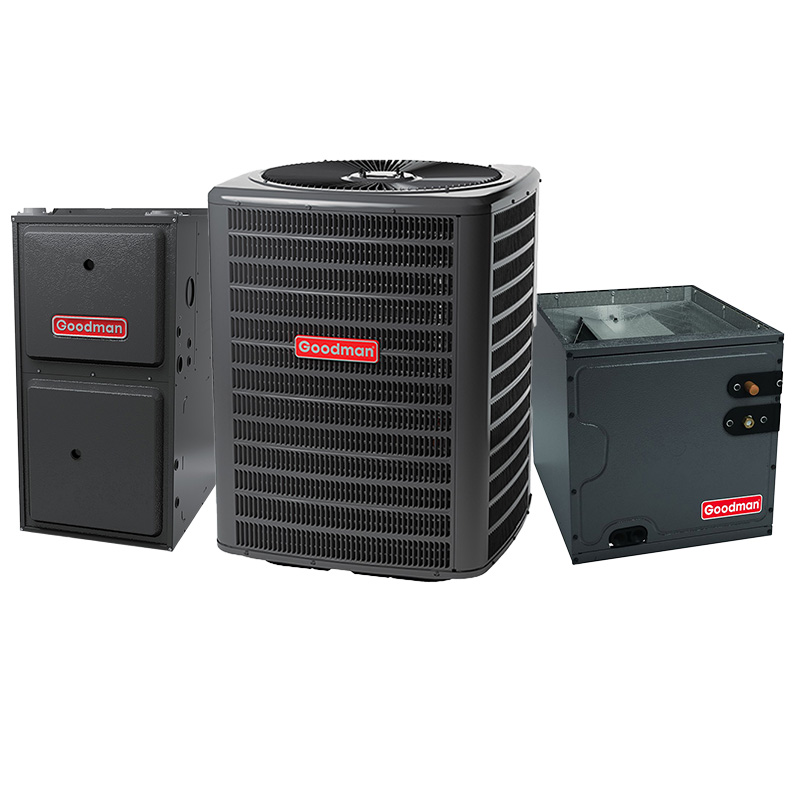
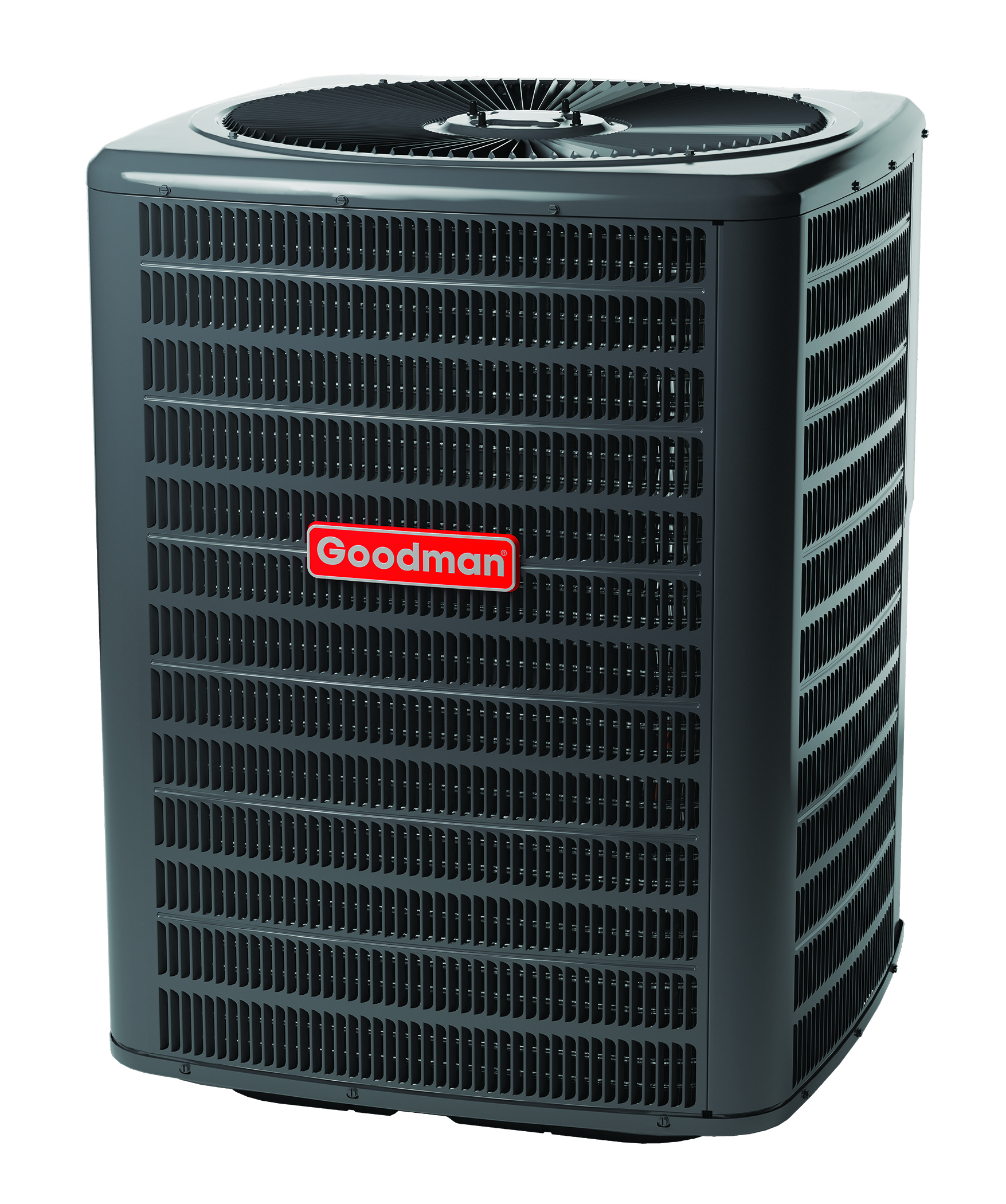
Goodman 5 Ton 16 SEER2 AC With 100000 BTU 96% AFUE 2-Stage Variable-Speed ECM Gas Furnace System – Upflow | 2-Stage High Efficiency AC | R32
View on AC Direct see your lowest price →Check current price on AC Direct →
Key features
- 5-ton, 16 SEER2 two-stage cooling with R-32 refrigerant
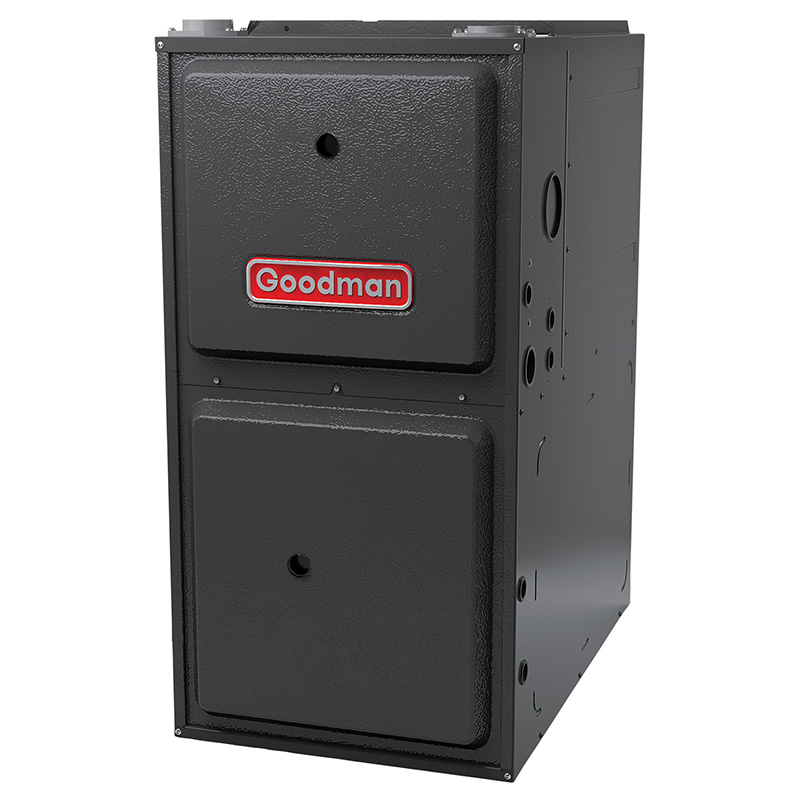
- 100,000 BTU, 96% AFUE two-stage gas furnace for efficient heating
- Variable-speed ECM blower motor for quieter, lower-energy air delivery
- Upflow configuration suits basement and closet installations
- Two-stage operation improves humidity control vs. single-stage systems
- Priced approximately 15 to 25 percent below comparable Trane, Carrier, and Lennox systems
About this system
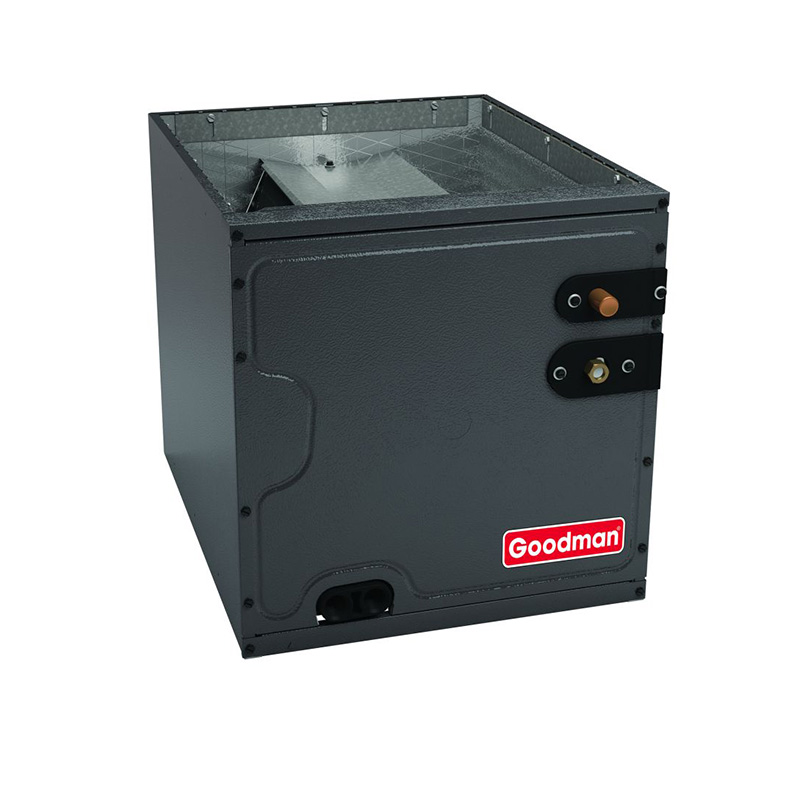
The Goodman GLXT7CA6010 pairs a 5-ton, 16 SEER2 two-stage central air conditioner with a 100,000 BTU, 96% AFUE two-stage variable-speed ECM gas furnace in an upflow configuration. At 16 SEER2, this system sits comfortably in the upper tier of standard-efficiency equipment, meeting or exceeding most regional energy codes and delivering meaningful savings over older 13 or 14 SEER systems without climbing into the premium-priced variable-capacity territory. The 96% AFUE rating means 96 cents of every heating dollar goes into your home, which is a genuinely strong number for a gas furnace at this price point. The variable-speed ECM blower motor runs at lower speeds most of the time, cutting electricity use during fan-only and heating cycles and moving air more quietly than a single-speed unit.
This combination is sized for larger homes, typically in the 2,200 to 3,000 square foot range depending on climate zone, insulation, and window load. Two-stage cooling lets the compressor run at reduced capacity on milder days, which improves humidity removal and comfort compared to single-stage equipment. The upflow configuration suits the most common residential installation scenario, where the furnace sits in a basement or closet and discharges conditioned air upward into the duct system. R-32 refrigerant has a lower global warming potential than the R-410A it replaces and is becoming the industry standard on new residential equipment. Buyers should confirm their installing contractor is certified to handle R-32, as it requires specific recovery equipment and procedures.
The GLXT7CA6010 delivers genuine two-stage comfort and strong heating efficiency at a price well below premium brands, making it a reasonable choice for cost-conscious buyers who use a vetted, experienced installer. Its long-term ownership costs depend heavily on that installer quality and on budgeting for the component repairs that Goodman owners encounter more frequently after year 7. This is a capable system for the price, not a trouble-free one.
Overall score is the average of the five ratings above.
What we like
- 16 SEER2 efficiency clears most regional energy codes and reduces monthly cooling costs vs. older equipment
- 96% AFUE furnace rating is genuinely high-efficiency, not a marketing stretch
- Two-stage operation improves humidity control and comfort on mild days compared to single-stage alternatives
- Variable-speed ECM blower runs quieter and uses less electricity than single-speed motors
- Purchase price is typically 15 to 25 percent lower than comparable Carrier, Trane, or Lennox combinations
Trade-offs
- Dual-run capacitors are the most commonly documented failure point, with repair costs typically in the $300 to $600 range, and tend to surface after several years of use
- Evaporator coil leaks appear in a meaningful share of owner reviews and can be costly to diagnose and repair
- Compressor lifespan averages 10 to 14 years versus 15 to 20 years reported for premium-brand compressors
- A minority of owners report refrigerant leaks in the first year, most often tied to installation or charging errors rather than a factory defect, which puts the burden squarely on installer quality
What homeowners and pros say about Goodman
Homeowners who research Goodman before buying often encounter two very different narratives. On ConsumerAffairs, where the brand scores around 2.5 out of 5, the recurring story is one of repair costs that start climbing after roughly year 7, with dual-run capacitor failures and evaporator coil leaks appearing as the most commonly named culprits. On Google dealer reviews, the score rises to roughly 3.8 out of 5, and affordability is consistently the top reason buyers say they are satisfied. That gap between the two scores reflects a real pattern: buyers who get a quality installation and budget for routine component maintenance tend to report reasonable experiences, while those who encounter coil leaks, early refrigerant loss, or compressor failure within a shorter-than-expected window are the most vocal critics.
HVAC technicians who work on Goodman equipment regularly tend to echo a consistent theme: the brand performs closer to its potential when the installation is clean, the refrigerant charge is dialed in precisely, and the system is commissioned properly. With R-32 now in play on this unit, that installer-quality factor becomes even more important, since the refrigerant is less forgiving of improper handling. Compressor lifespan is a genuine trade-off at this price tier, with Goodman units averaging 10 to 14 years versus the 15 to 20 years more commonly cited for premium brands. For a buyer who goes in with clear expectations about the value proposition, including the likelihood of a capacitor replacement somewhere in the middle years and a realistic compressor horizon, this system can represent solid bang for the dollar. For a buyer expecting premium-brand longevity at a value-brand price, the ownership experience may be disappointing.
Sources: ConsumerAffairs Goodman owner reviews, AHRI Directory of Certified Product Performance, U.S. DOE appliance and equipment efficiency standards, Goodman product specification sheets.
What it costs to run
At 16 SEER2, cooling this 5-ton system for a typical 1200-hour cooling season at the U.S. average electricity rate of $0.17/kWh works out to roughly $765 per year in cooling, about $148 less per year than a minimum-efficiency 13.4 SEER2 unit of the same size. Your real cost depends on your climate and local rate.
Method: (60,000 BTU/hr ÷ 16 SEER2) × 1200 hours ÷ 1000 × $0.17/kWh. Rate source: U.S. EIA average; cooling hours: moderate-climate estimate.
How it compares
| Brand | Comparable model | SEER2 | Stage | Price position |
|---|---|---|---|---|
| Goodman | GLXT7CA6010 | 16 | Two-stage | Value pick |
| Carrier | Comfort 16 (24ACC6) with 59TP6 furnace | 16 | Two-stage | Typically 15 to 25 percent more than Goodman |
| Trane | XR16c with S9X2 furnace | 16 | Two-stage | Typically 15 to 25 percent more than Goodman |
| Lennox | Merit 16ACX with ML196 furnace | 16 | Two-stage | Typically 15 to 25 percent more than Goodman |
Competitor rows are comparable single-stage units at similar efficiency; price is relative position, not a quote.
Questions about this system
Does my HVAC technician need special certification to work with R-32 refrigerant?
Yes. R-32 is mildly flammable and requires technicians to use specific recovery equipment and follow updated safety procedures. Before scheduling installation or future service, confirm your contractor is trained and equipped for R-32 systems, as not all residential HVAC technicians have made the transition yet.
Is 5 tons the right size for my house, or should I get a load calculation done first?
A 5-ton system is generally appropriate for homes in the 2,200 to 3,000 square foot range, but that range shifts significantly based on your climate zone, ceiling height, insulation levels, and window area. Oversizing a two-stage system wastes money and shortens equipment life, so a Manual J load calculation by your installer is strongly recommended before purchase.
What are the most common repairs I should budget for over the life of this system?
Based on documented owner experience with Goodman equipment, dual-run capacitor replacement is the most frequently reported issue and typically costs $300 to $600 per occurrence. Evaporator coil leaks and refrigerant loss are also reported by a meaningful number of owners, and compressor replacement becomes a real possibility after 10 to 14 years. Setting aside a maintenance fund from year one is a practical step.
How does the two-stage furnace improve comfort compared to a single-stage model?
A two-stage furnace runs at a lower firing rate on most days, which extends run cycles, distributes heat more evenly, and reduces the temperature swings associated with single-stage on-off cycling. The paired variable-speed ECM blower circulates air continuously at low speed between heating calls, which also helps maintain more consistent room-to-room temperatures.
What warranty does this Goodman system carry, and are there any conditions I need to meet?
Goodman typically offers a 10-year parts warranty on registered systems, but registration must be completed within a defined window after installation, and the system must be installed by a licensed HVAC contractor. Failure to register, DIY installation, or improper refrigerant handling can reduce coverage, so confirm the exact terms with your dealer at the time of purchase and register promptly.
Specifications
| Cooling capacity | 5 Ton |
| Efficiency | 16 SEER2 |
| Furnace output | 100000 BTU |
| Furnace efficiency | 96% AFUE |
| Configuration | Upflow |
| Refrigerant | R-32 |
| Model | GLXT7CA6010 |