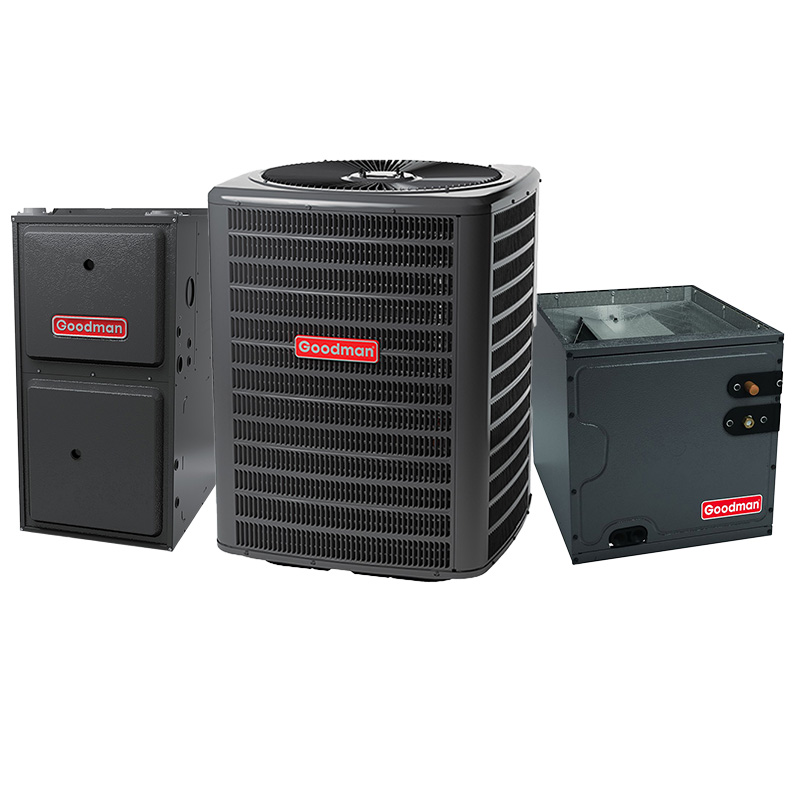
Goodman 5 Ton 16 SEER2 AC With 120000 BTU 96% AFUE 2-Stage Variable-Speed ECM Gas Furnace System – Upflow | 2-Stage High Efficiency AC | R32
View on AC Direct see your lowest price →Check current price on AC Direct →
Key features
- 5-ton two-stage AC rated at 16 SEER2 for above-minimum efficiency in larger homes
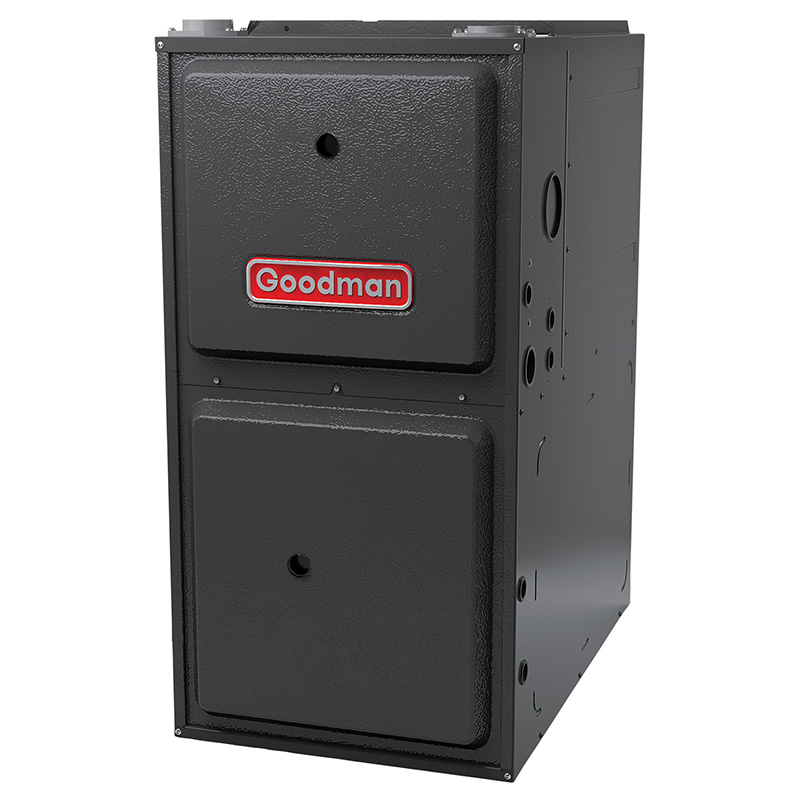
- 120,000 BTU 96% AFUE two-stage gas furnace with variable-speed ECM blower motor
- R-32 refrigerant with lower global warming potential than R-410A
- Two-stage cooling reduces short-cycling and improves humidity removal
- Upflow configuration suits basement and utility closet installations
- Variable-speed ECM fan lowers blower electricity costs and smooths airflow
About this system
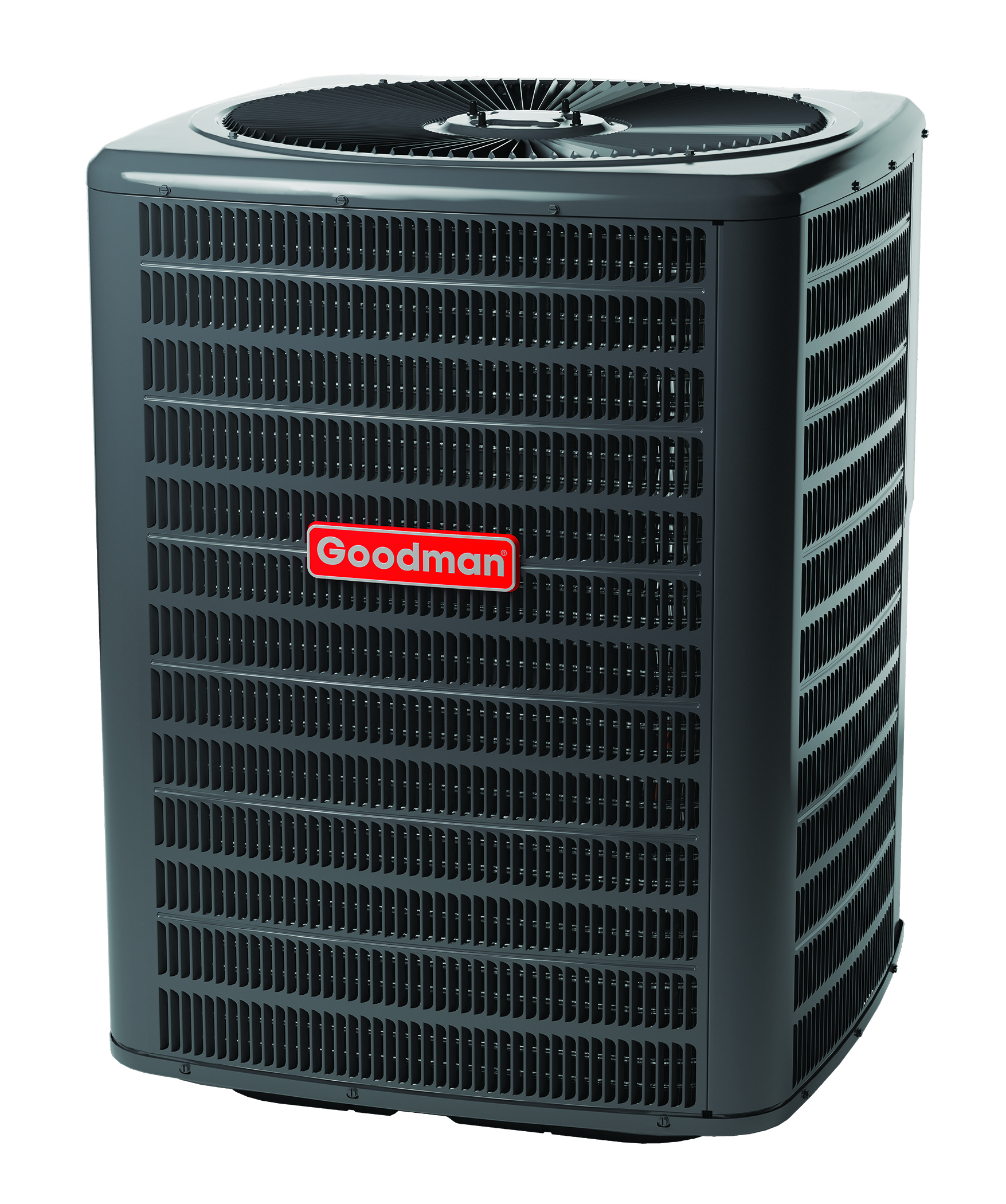
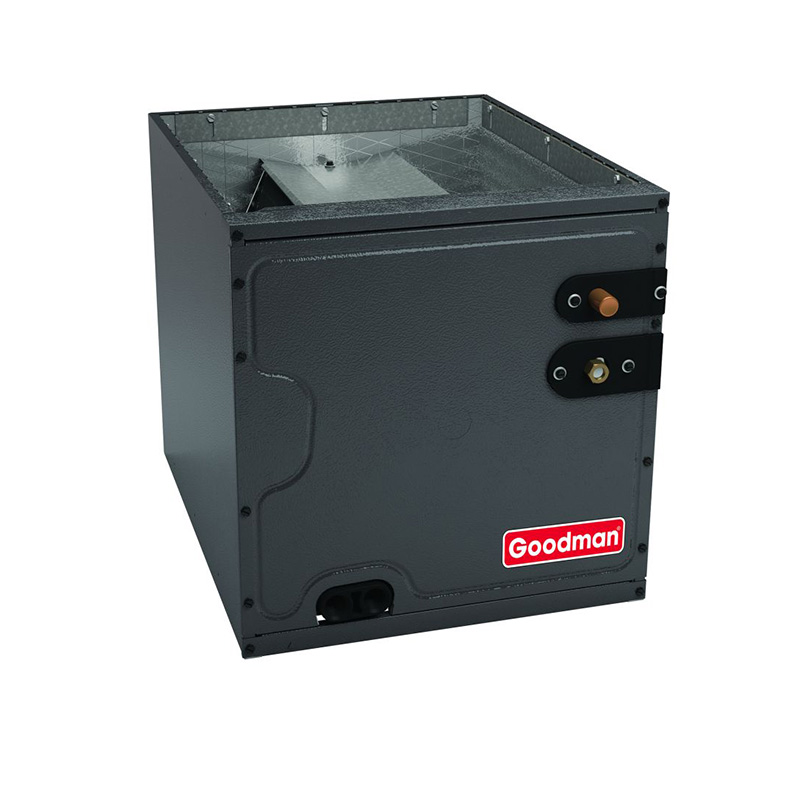
The Goodman GLXT7CA6010 pairs a 5-ton, 16 SEER2 two-stage central air conditioner running on R-32 refrigerant with a 120,000 BTU, 96% AFUE two-stage gas furnace equipped with a variable-speed ECM blower. That combination is aimed squarely at larger homes, typically in the 2,800 to 4,200 square foot range depending on climate and insulation, where a single-speed system would cycle on and off constantly and struggle to hold even temperatures. The two-stage compressor runs at low capacity most of the time, which means quieter operation, better humidity control, and steadier indoor comfort than a single-stage unit can deliver.
R-32 refrigerant is an important detail here. It carries a significantly lower global warming potential than the R-410A it replaces and is more energy-efficient to move heat with, which is part of how Goodman hits the 16 SEER2 rating at this tonnage. The 96% AFUE furnace with a variable-speed ECM motor means the blower ramps up and down based on demand rather than running full blast every cycle, cutting fan electricity costs and improving airflow consistency across large duct runs. The upflow configuration fits the most common residential installation: furnace in a basement or utility closet blowing heated or cooled air upward into supply ducts above.
This system suits homeowners who need to replace aging equipment in a larger home and want meaningful efficiency gains without paying the premium pricing of Trane, Carrier, or Lennox. The trade-off is that Goodman’s long-term reliability leans heavily on how well the system is installed and maintained, which should factor into any buying decision.
The Goodman GLXT7CA6010 delivers a strong feature set at a price that typically undercuts comparable Trane, Carrier, and Lennox systems by 15 to 25 percent, making it a legitimate option for budget-conscious buyers who prioritize upfront cost. The two-stage compressor and variable-speed furnace are real efficiency and comfort upgrades over entry-level equipment, but documented failure modes including capacitor failures, evaporator coil leaks, and compressor lifespans that average shorter than premium brands mean ongoing maintenance costs deserve a spot in your long-term budget. How long this system lasts will depend heavily on installation quality and routine servicing.
Overall score is the average of the five ratings above.
What we like
- Two-stage cooling provides better humidity control and quieter operation than single-stage alternatives
- 96% AFUE furnace with variable-speed ECM motor meaningfully reduces heating and blower electricity costs
- R-32 refrigerant is more environmentally responsible and slightly more efficient than R-410A
- Priced 15 to 25 percent below comparable Trane, Lennox, and Carrier systems
- 16 SEER2 rating is above the federal minimum and appropriate for a large-home two-stage system
Trade-offs
- Dual-run capacitors are the most commonly reported failure point, typically requiring a 300 to 600 dollar repair after several years
- Evaporator coil leaks appear in a meaningful share of owner reports and can be a costly mid-life repair
- Compressor lifespan averages 10 to 14 years versus 15 to 20 years typical of premium brands
- A minority of owners report refrigerant leaks in the first year, which is usually an installation or charge issue rather than a product defect, making contractor selection critical
What homeowners and pros say about Goodman
Homeowners who have lived with a Goodman system tend to land in one of two camps. Those who used a careful installer and kept up with annual maintenance often report years of trouble-free service and appreciate the lower purchase price. Those who experienced problems point most often to the dual-run capacitor, a relatively common failure across the brand that typically runs 300 to 600 dollars to repair, and to evaporator coil leaks that can become a more expensive mid-life headache. On ConsumerAffairs, Goodman scores around 2.5 out of 5, and that score is shaped heavily by owners dealing with repair costs that climb noticeably after roughly year 7. Google dealer reviews, which include a broader range of customer experiences, average around 3.8 out of 5, with affordability being the most frequent reason buyers say they chose Goodman.
HVAC technicians who service Goodman equipment regularly tend to view it as workable equipment that rewards good installation practices. They flag the dual-run capacitor as a known wear item worth inspecting at every tune-up, note that evaporator coil leaks do appear at a rate that distinguishes Goodman from the upper tier of the market, and point out that compressors on Goodman systems tend to average 10 to 14 years versus 15 to 20 years on premium brands. On a 5-ton two-stage system like this one, those technicians also emphasize that first-year refrigerant issues are almost always a charging or line set problem rather than a factory fault, which puts the weight of a successful installation squarely on the contractor doing the work.
Sources: ConsumerAffairs Goodman owner reviews, AHRI Directory of Certified Product Performance, U.S. DOE appliance and equipment efficiency standards, Goodman product specification sheets.
What it costs to run
At 16 SEER2, cooling this 5-ton system for a typical 1200-hour cooling season at the U.S. average electricity rate of $0.17/kWh works out to roughly $765 per year in cooling, about $148 less per year than a minimum-efficiency 13.4 SEER2 unit of the same size. Your real cost depends on your climate and local rate.
Method: (60,000 BTU/hr ÷ 16 SEER2) × 1200 hours ÷ 1000 × $0.17/kWh. Rate source: U.S. EIA average; cooling hours: moderate-climate estimate.
How it compares
| Brand | Comparable model | SEER2 | Stage | Price position |
|---|---|---|---|---|
| Goodman | GLXT7CA6010 | 16 | Two-stage | Value pick |
| Carrier | Comfort 16 (24ACC6) with 59TP6 furnace | 16 | Two-stage | Typically 15 to 25 percent more than Goodman |
| Trane | XR16 (4TTR6) with S9X2 furnace | 16 | Two-stage | Typically 15 to 25 percent more than Goodman |
| Lennox | Merit 16 (ML16XC1) with ML196 furnace | 16 | Two-stage | Typically 15 to 25 percent more than Goodman |
Competitor rows are comparable single-stage units at similar efficiency; price is relative position, not a quote.
Questions about this system
Is 5 tons the right size for my house, and can I just match what I had before?
Tonnage should be determined by a Manual J load calculation based on your home's square footage, insulation, window area, climate zone, and duct layout. Simply replacing what you had before is not reliable sizing, especially in a home that has been reinsulated or had windows replaced. Ask your installer to perform or provide a load calculation before committing to 5 tons.
What does two-stage cooling actually change day to day compared to a single-stage unit?
A two-stage compressor runs at low capacity the majority of the time, which means longer, gentler cycles that remove more moisture from the air and maintain more consistent temperatures room to room. In a 5-ton application, that steady low-stage operation also reduces the loud start-and-stop noise that single-stage systems produce during short cycling.
R-32 refrigerant is new to me. Will it be hard to service or more expensive to recharge?
R-32 is now widely stocked by HVAC distributors and is increasingly familiar to trained technicians, so availability is not a significant concern. It does require technicians certified to handle A2L mildly flammable refrigerants, so confirm your service contractor is equipped before scheduling any future refrigerant work.
Goodman has mixed reviews online. How worried should I be about reliability on a system this large?
Goodman holds around 2.5 out of 5 on ConsumerAffairs, a channel that skews toward complaints, with repair costs after roughly year 7 being the most common theme. Google dealer reviews average around 3.8 out of 5, where affordability is frequently praised. The documented failure points for this brand are dual-run capacitors, which are relatively inexpensive to fix, evaporator coil leaks, and compressor lifespans that tend to run shorter than premium brands. Budgeting for a service agreement and keeping up with annual maintenance reduces but does not eliminate those risks.
What should I look for in an installer to make sure this system performs well?
Because Goodman's performance is especially sensitive to install quality, look for a licensed contractor who will perform a Manual J load calculation, verify static pressure in your existing duct system, use a digital refrigerant scale for precise charging, and pressure-test the system before startup. First-year refrigerant leaks on Goodman systems are frequently traced back to improper charging or line set connections rather than factory defects, so this step matters more than with some premium brands.
Specifications
| Cooling capacity | 5 Ton |
| Efficiency | 16 SEER2 |
| Furnace output | 120000 BTU |
| Furnace efficiency | 96% AFUE |
| Configuration | Upflow |
| Refrigerant | R-32 |
| Model | GLXT7CA6010 |