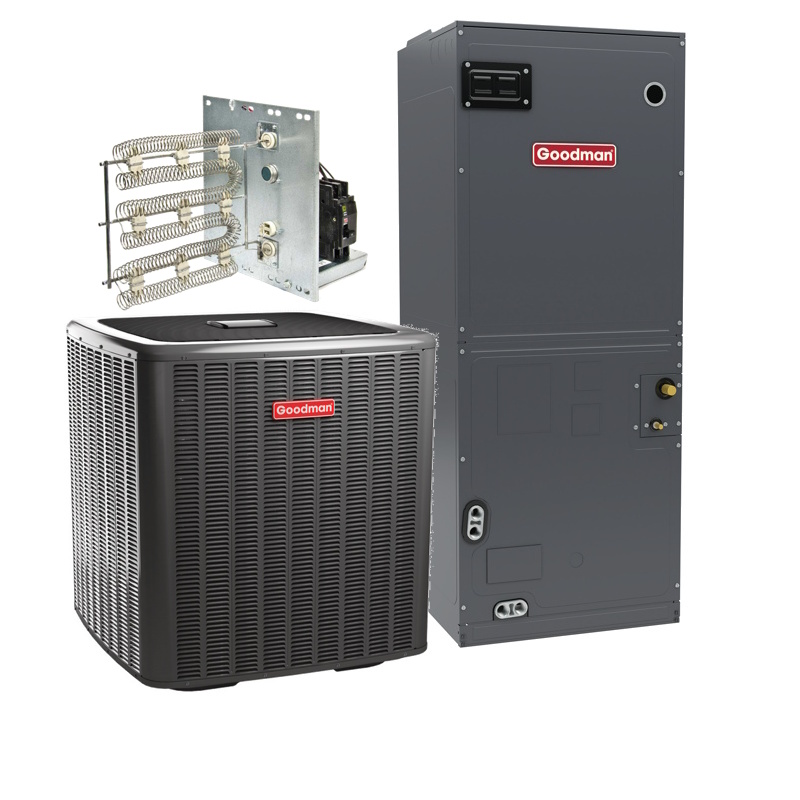
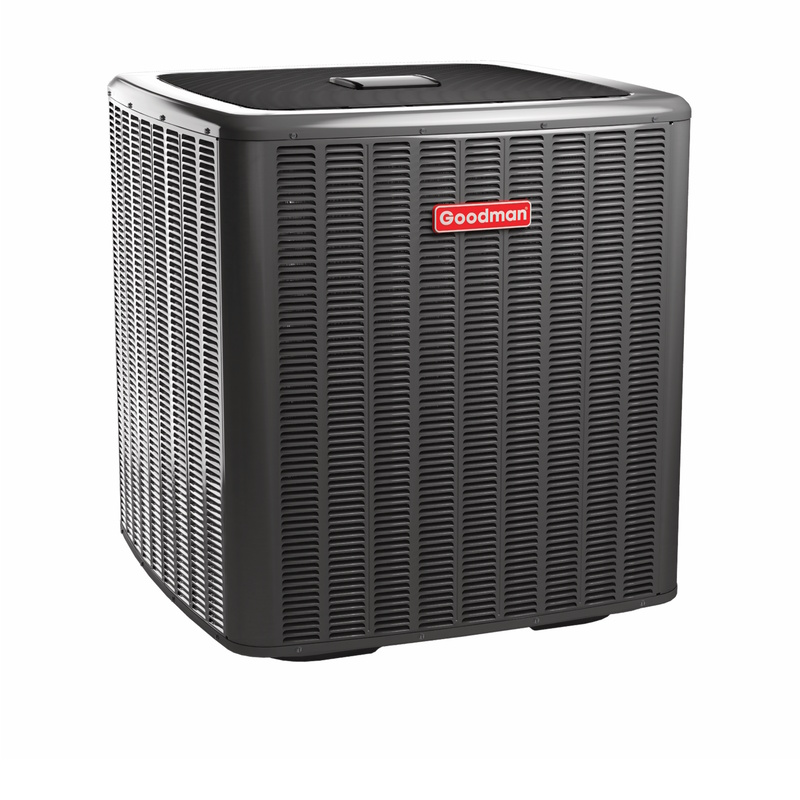
Goodman 5 Ton 19 SEER2 Heat Pump Split System Variable Speed
View on AC Direct see your lowest price →Check current price on AC Direct →
Key features
- 19 SEER2 efficiency rating under updated DOE test standards
- 5-ton capacity suited to larger homes, typically 2,400 to 3,000+ sq ft
- Variable-speed compressor for precise capacity modulation and humidity control
- Operates as both heating and cooling system, eliminating need for separate furnace in mild-to-moderate climates
- Priced 15 to 25 percent below comparable Trane, Lennox, and Carrier variable-speed heat pumps
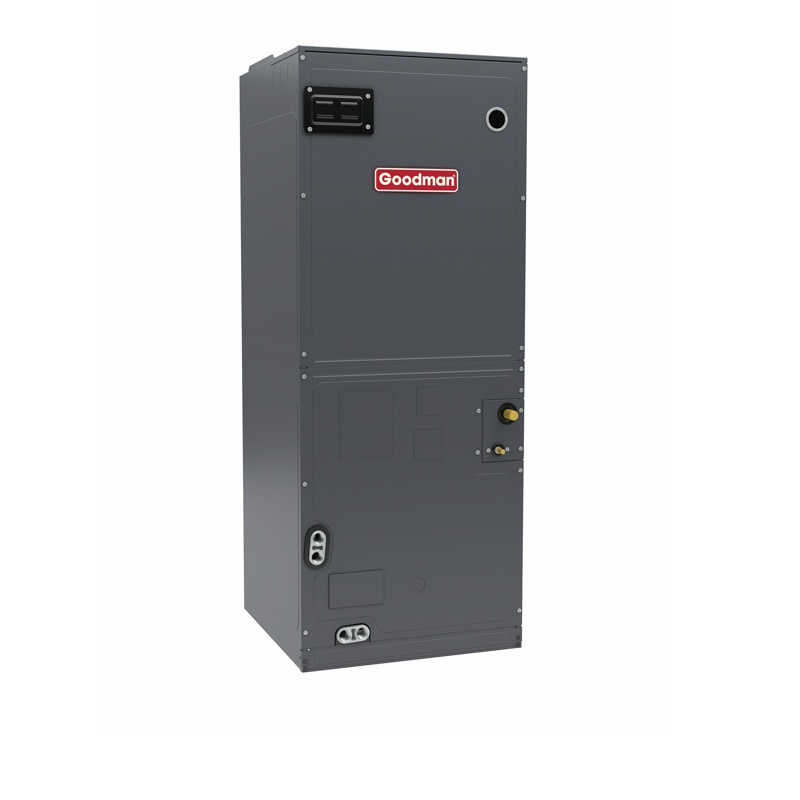
- Requires matched indoor air handler or coil for rated efficiency and warranty compliance
About this system
The Goodman 5-ton 19 SEER2 variable-speed heat pump split system sits at the upper end of Goodman’s efficiency lineup, offering genuine high-efficiency performance in a package priced well below comparable units from Trane, Lennox, or Carrier. At 5 tons, this system is sized for larger homes, typically in the 2,400 to 3,000 square foot range depending on climate, insulation, and local Manual J calculations. The 19 SEER2 rating reflects real-world efficiency under the updated DOE testing standard, meaning you can expect meaningful energy savings over a standard 14 or 15 SEER2 system, particularly in climates where the heat pump runs in both heating and cooling modes for extended seasons.
Variable-speed operation is the standout feature at this tier. Rather than switching on and off at full capacity, the variable-speed compressor modulates output to match the actual load in your home. This translates to more consistent indoor temperatures, better humidity control, and quieter operation compared to single-stage or two-stage systems. For a large home where comfort uniformity has been a problem, or in humid climates where dehumidification matters as much as cooling, those benefits are tangible. That said, variable-speed systems carry more complex electronics and controls, which raises the stakes on both installation precision and long-term service access.
The Goodman 5-ton 19 SEER2 variable-speed heat pump delivers legitimate high-efficiency performance at a price that can make a real budget difference on a large-home installation. The variable-speed platform earns its premium over entry-level Goodman tiers through meaningfully better comfort and humidity control. The honest trade-off is that Goodman's documented reliability record, including capacitor failures, evaporator coil leaks, and compressor longevity that trails premium brands, means the lower upfront cost can erode over a longer ownership window, especially without a strong service relationship in place.
Overall score is the average of the five ratings above.
What we like
- 19 SEER2 efficiency is genuinely high-tier and will produce real energy savings over standard-efficiency alternatives
- Variable-speed operation delivers superior humidity control and temperature consistency, especially important in a 5-ton application serving a large home
- Purchase price runs 15 to 25 percent below comparable variable-speed heat pumps from Trane, Lennox, and Carrier
- Widely distributed brand with broadly available parts and service technicians across most U.S. markets
- Heat pump configuration provides both heating and cooling from one system, reducing overall mechanical complexity for the right climate
Trade-offs
- Dual-run capacitors are the most frequently reported failure point and, while typically a low-cost fix, become more likely as the system ages past year 7
- Evaporator coil leaks appear in a meaningful share of owner reviews and can be costly repairs outside the warranty period
- Compressor lifespan averages 10 to 14 years versus 15 to 20 years for premium-brand compressors, which matters more at 5-ton scale where replacement costs are higher
- Variable-speed electronics increase system complexity, raising repair costs when controls or inverter boards fail and making install quality more critical than on simpler systems
What homeowners and pros say about Goodman
On Google dealer reviews, Goodman equipment averages around 3.8 out of 5 stars, with affordability consistently cited as the top reason buyers chose the brand. Homeowners who invest in a well-regarded local installer tend to report satisfaction early in the system’s life. On ConsumerAffairs, however, the score drops to roughly 2.5 out of 5, reflecting a channel weighted toward owners who sought out a place to report problems. The recurring theme in those negative reviews is repair costs climbing after roughly year 7, which aligns with the documented pattern of dual-run capacitor failures becoming more frequent as systems age. For a 5-ton variable-speed system, that pattern is worth taking seriously because service calls and component costs scale with system size and complexity.
HVAC technicians who work on Goodman equipment regularly point to two additional failure modes worth knowing before buying: evaporator coil leaks, which show up in a meaningful share of owner accounts and can be an expensive out-of-warranty repair, and compressor longevity that averages 10 to 14 years compared to 15 to 20 years for premium-brand compressors. On a 5-ton variable-speed unit, a compressor replacement is a significant cost event. Pros tend to agree that Goodman can deliver solid value when installed carefully and maintained consistently, but they are candid that the gap between Goodman and premium brands shows up more in years 10 through 15 than in years 1 through 5. A strong service contract and a trusted installer are not optional extras with this system; they are part of the real cost of ownership.
Sources: ConsumerAffairs Goodman owner reviews, AHRI Directory of Certified Product Performance, U.S. DOE appliance and equipment efficiency standards, Goodman product specification sheets.
What it costs to run
At 19 SEER2, cooling this 5-ton system for a typical 1200-hour cooling season at the U.S. average electricity rate of $0.17/kWh works out to roughly $644 per year in cooling, about $269 less per year than a minimum-efficiency 13.4 SEER2 unit of the same size. Your real cost depends on your climate and local rate.
Method: (60,000 BTU/hr ÷ 19 SEER2) × 1200 hours ÷ 1000 × $0.17/kWh. Rate source: U.S. EIA average; cooling hours: moderate-climate estimate.
How it compares
| Brand | Comparable model | SEER2 | Stage | Price position |
|---|---|---|---|---|
| Goodman | 5-Ton 19 SEER2 Variable-Speed Heat Pump Split System | 19 | Variable | Value pick |
| Carrier | Infinity 20 Heat Pump (25VNA0) | 20+ | Variable | Typically 15 to 25 percent more than Goodman |
| Trane | XV20i Heat Pump (4TWV0) | 20+ | Variable | Typically 15 to 25 percent more than Goodman |
| Lennox | Signature XP21 Heat Pump | 19-21 | Variable | Typically 15 to 25 percent more than Goodman |
Competitor rows are comparable single-stage units at similar efficiency; price is relative position, not a quote.
Questions about this system
Is 5 tons the right size for my home, or should I get a load calculation done first?
A Manual J load calculation is strongly recommended before committing to any 5-ton system. Oversizing a variable-speed heat pump reduces the humidity-control benefit that justifies its higher cost, and at 5 tons the stakes are significant. Have your installer run the numbers rather than sizing by square footage alone.
What is Goodman's warranty on this variable-speed heat pump, and are there conditions I need to meet?
Goodman typically offers a 10-year parts warranty when the system is registered within a set window after installation, usually 60 days. The warranty generally requires installation by a licensed contractor and use of matched Goodman components. Confirm the current registration terms at time of purchase, as coverage details can change and the compressor warranty is a key item to verify on a 5-ton unit.
How often do the capacitors actually fail, and what does it cost to fix?
Dual-run capacitor failure is the most commonly reported repair issue across Goodman equipment, and it tends to surface more frequently after roughly year 7 of operation. The repair itself is usually straightforward for any HVAC technician and typically falls in the 300 to 600 dollar range including labor, making it one of the more manageable failure modes to budget for.
Will this heat pump work well in a cold climate, or do I need a backup heat source?
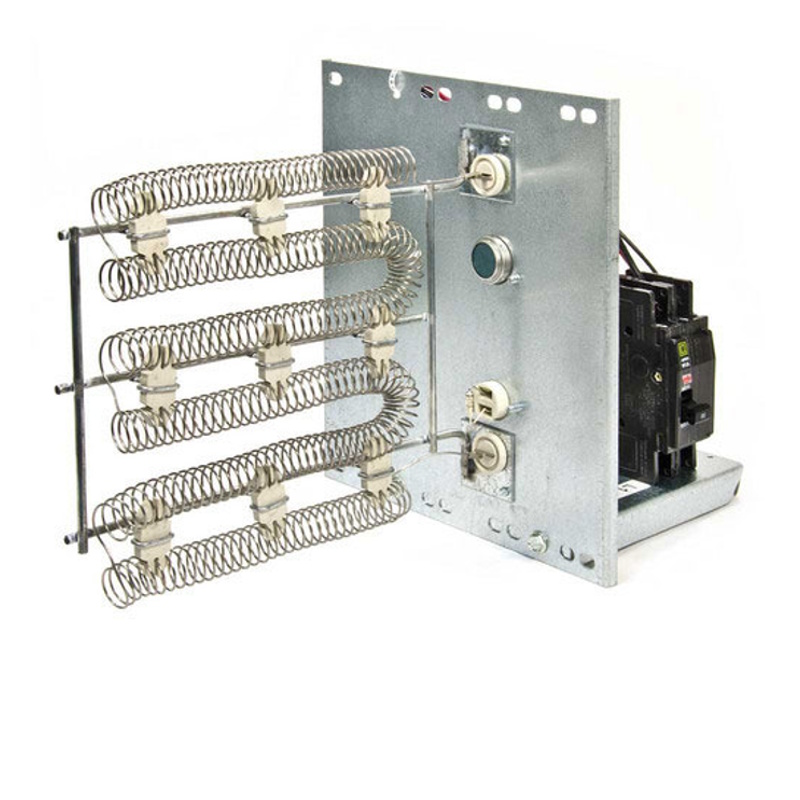
Most heat pumps, including variable-speed models, see efficiency and capacity drop as outdoor temperatures fall below 30 to 35 degrees Fahrenheit. In climates with regular hard winters, a supplemental heat strip or dual-fuel setup with a gas furnace is often recommended. Check the rated heating capacity and COP at low ambient temperatures in the product documentation before deciding whether backup heat is needed for your location.
Does install quality really matter more with a variable-speed system than with a standard unit?
Yes, noticeably so. Variable-speed systems depend on correct refrigerant charge, properly matched indoor and outdoor components, accurate airflow setup, and correct controls commissioning to deliver their rated efficiency and comfort performance. Technicians consistently cite install quality as the single biggest factor in how long a Goodman system lasts, and that effect is amplified with variable-speed equipment where electronics and sensors add additional points of sensitivity.
Specifications
| Cooling capacity | 5 Ton |
| Efficiency | 19 SEER2 |