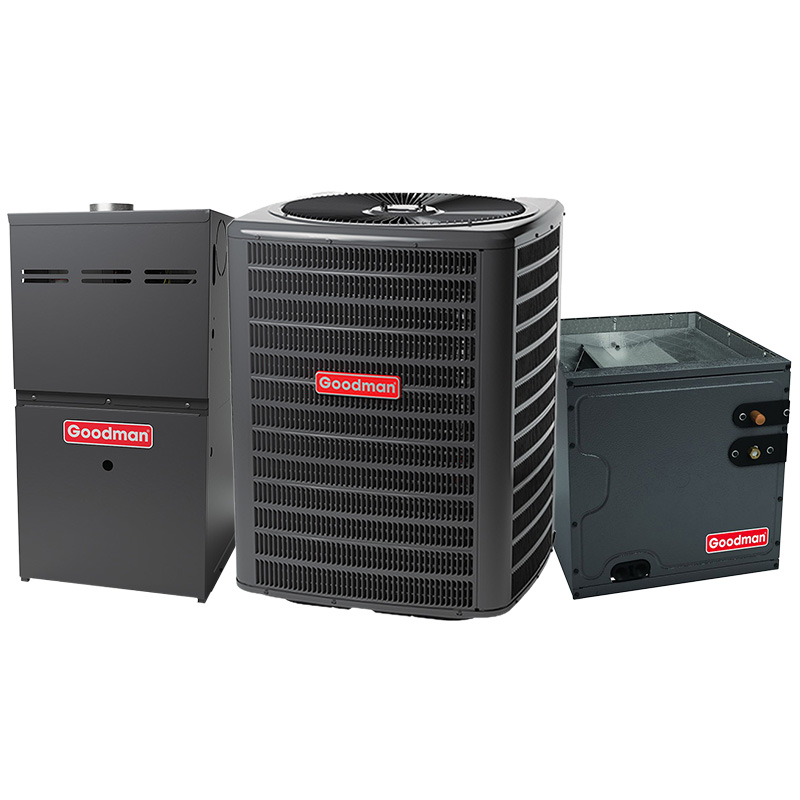
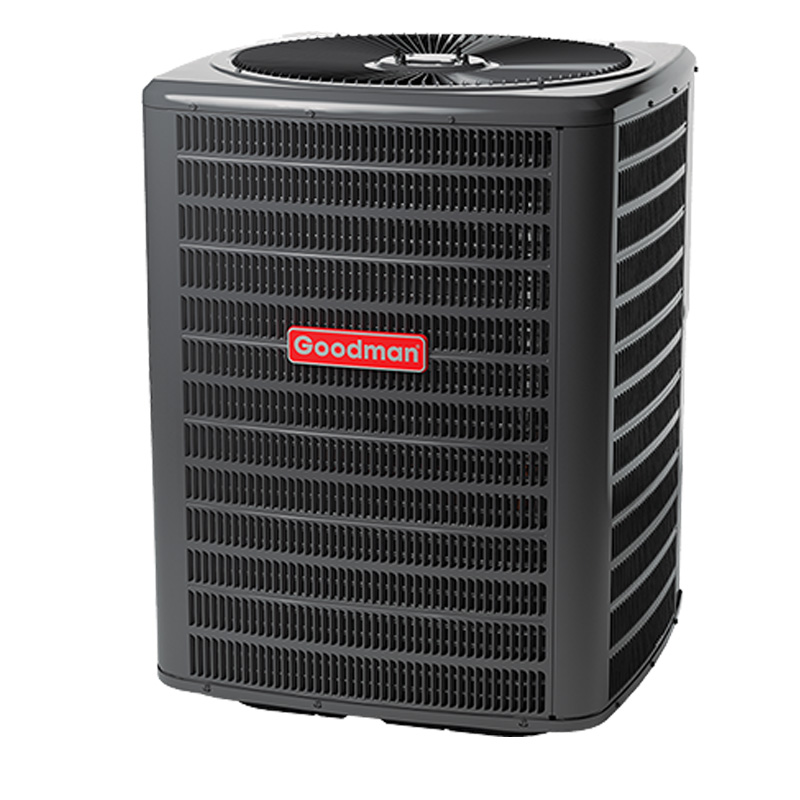
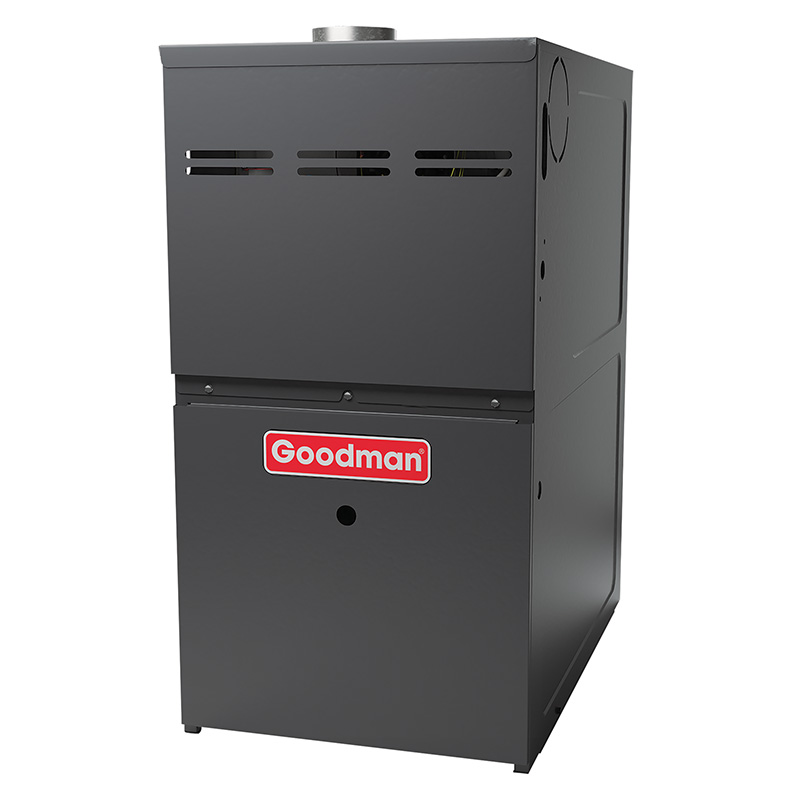
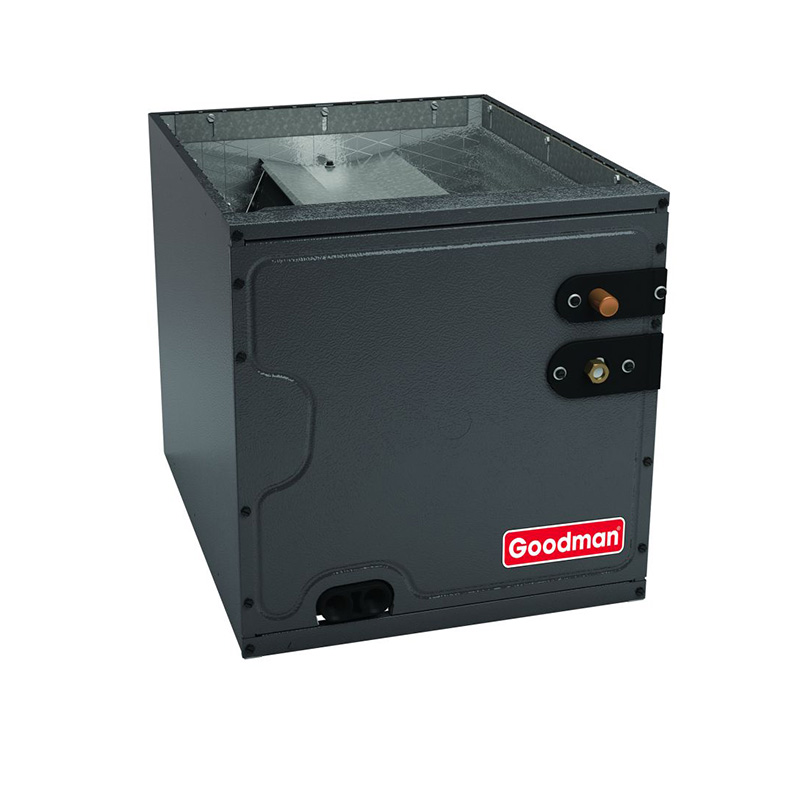
Goodman 5 Ton AC And 100000 BTU 80% AFUE Gas Furnace System | 14 SEER2 AC | Multi-Speed ECM Low NOx Furnace | Upflow | R32
View on AC Direct see your lowest price →Check current price on AC Direct →
Key features
- 5-ton, 14 SEER2 air conditioner meets current federal minimum efficiency requirements
- 100,000 BTU gas furnace at 80% AFUE, upflow configuration for basement and closet installs
- Multi-speed ECM blower motor reduces energy use and improves temperature consistency
- Low NOx burner meets California and strict-air-district emissions standards
- R-32 refrigerant with lower global-warming potential than legacy R-410A
- Goodman 10-year parts warranty on registered equipment (compressor and heat exchanger covered)
About this system
The Goodman 5-ton, 14 SEER2 air conditioner paired with a 100,000 BTU, 80% AFUE multi-speed ECM gas furnace is a straightforward workhorse bundle aimed at larger homes, typically in the 2,400 to 3,200 square foot range depending on climate zone and insulation. The 14 SEER2 rating sits at the current federal minimum efficiency threshold for most U.S. regions, meaning you get code-compliant cooling without paying a premium for higher-efficiency tiers. The furnace’s 80% AFUE converts 80 cents of every dollar of gas into usable heat, which is adequate for moderate-winter climates but will cost more to operate annually than a 96% AFUE unit in colder zones.
The multi-speed ECM blower motor is a genuine comfort upgrade over a single-speed PSC motor. It ramps airflow up or down to match demand, which reduces temperature swings, lowers blower electricity consumption, and improves humidity control compared to a basic on-off motor. The upflow configuration means warm air exits the top of the furnace, making this the correct choice for basement or closet installs where ductwork runs above the unit. The system uses R-32 refrigerant, a lower global-warming-potential option that is becoming more common in residential equipment and is easier to charge correctly than blended refrigerants, though it does require technicians to confirm their tools and certifications are R-32 compatible before any service work.
Low NOx burner design keeps nitrogen oxide emissions within California and other strict-air-quality-district standards, so this unit is a viable option in regions where standard furnaces fail air quality compliance. For buyers prioritizing upfront cost over long-term operating efficiency, and whose homes genuinely require 5-ton capacity confirmed by a Manual J load calculation, this bundle represents an honest entry point into a complete system replacement.
This Goodman bundle delivers a complete, code-compliant HVAC system at a price point noticeably below comparable Carrier, Trane, or Lennox equipment, and the ECM blower motor adds real day-to-day comfort value. The trade-off is a brand track record showing more owner-reported repair issues after year 7 and a compressor lifespan that tends to run shorter than premium competitors. For cost-focused buyers with a skilled installer, it earns its place; for buyers prioritizing long-term reliability above all else, the premium brands are a reasonable step up.
Overall score is the average of the five ratings above.
What we like
- Priced roughly 15 to 25 percent below comparable Carrier, Trane, and Lennox systems
- Multi-speed ECM motor improves comfort and lowers blower electricity costs versus single-speed alternatives
- Low NOx burner qualifies for use in California and other strict-emissions regions
- R-32 refrigerant has lower environmental impact and is straightforward to service for certified technicians
- 10-year registered parts warranty provides meaningful coverage on compressor and heat exchanger
Trade-offs
- 14 SEER2 is minimum-efficiency tier, meaning higher monthly cooling costs versus 16 SEER2 or above options
- 80% AFUE furnace loses 20% of fuel energy as exhaust, a notable operating-cost gap in cold climates
- Brand reliability data shows repair frequency climbing after year 7, with dual-run capacitors and evaporator coil leaks as the most cited failure points
- Compressor longevity averages 10 to 14 years in owner reports, shorter than the 15 to 20 years often cited for premium-brand compressors
What homeowners and pros say about Goodman
Homeowners who share feedback on Goodman equipment tend to split into two camps. The first group appreciates the lower purchase price and reports years of uneventful operation when the install was done well, which aligns with the roughly 3.8 out of 5 score seen across Google dealer reviews where affordability is consistently the most cited reason for satisfaction. The second group, more vocal on complaint-oriented channels like ConsumerAffairs where Goodman scores around 2.5 out of 5, reports frustration with repair bills climbing after roughly year 7. The specific failure modes that come up repeatedly in that feedback are dual-run capacitor failures, which are a relatively affordable fix in the 300 to 600 dollar range, and evaporator coil leaks, which are more involved and expensive. A smaller but notable share of owners report refrigerant leaks in the first year, a pattern that technicians generally attribute to installation or initial charge issues rather than a factory defect.
HVAC professionals who install Goodman regularly tend to frame it honestly: the equipment is not built to the same tolerance as Trane or Carrier premium lines, and compressor longevity in real-world owner data averages 10 to 14 years versus 15 to 20 years for top-tier brands. The consistent professional advice is that install quality closes much of that gap, and a poorly installed premium unit will underperform a correctly installed Goodman every time. For this 5-ton, 14 SEER2 system specifically, the R-32 refrigerant adds a variable that some older shops are still adapting to, so confirming your contractor has the right equipment and training for A2L refrigerants before the job starts is not a minor detail.
Sources: ConsumerAffairs Goodman owner reviews, AHRI Directory of Certified Product Performance, U.S. DOE appliance and equipment efficiency standards, Goodman product specification sheets.
What it costs to run
At 14 SEER2, cooling this 5-ton system for a typical 1200-hour cooling season at the U.S. average electricity rate of $0.17/kWh works out to roughly $874 per year in cooling, about $39 less per year than a minimum-efficiency 13.4 SEER2 unit of the same size. Your real cost depends on your climate and local rate.
Method: (60,000 BTU/hr ÷ 14 SEER2) × 1200 hours ÷ 1000 × $0.17/kWh. Rate source: U.S. EIA average; cooling hours: moderate-climate estimate.
How it compares
| Brand | Comparable model | SEER2 | Stage | Price position |
|---|---|---|---|---|
| Goodman | GMVC8 / GSXH5 Series (this system) | 14 | Single-stage AC, multi-speed furnace | Value pick |
| Carrier | Performance 14 Series (24ACC6 / 58TP Series) | 14 | Single-stage AC, single-stage furnace | Typically 15 to 25 percent more than Goodman |
| Trane | XR14 / S8X1 Series | 14 | Single-stage AC, single-stage furnace | Typically 15 to 25 percent more than Goodman |
| Lennox | Merit 14 Series (ML14XC1 / ML180 Series) | 14 | Single-stage AC, single-stage furnace | Typically 15 to 25 percent more than Goodman |
Competitor rows are comparable single-stage units at similar efficiency; price is relative position, not a quote.
Questions about this system
Is 5 tons the right size for my home, or should I size down to save money?
A 5-ton system is appropriate for roughly 2,400 to 3,200 square feet in most climates, but oversizing is a common and costly mistake. You should have a licensed contractor perform a Manual J load calculation before purchasing, because an oversized AC short-cycles, raises humidity, and accelerates wear on the compressor.
Does my technician need special equipment to work with R-32 refrigerant?
Yes. R-32 is mildly flammable and requires technicians to use compatible gauges, hoses, and recovery equipment rated for A2L refrigerants. Most established shops are already equipped or in the process of upgrading, but it is worth confirming before you book a service call.
The 80% AFUE furnace is cheaper upfront, but how much more will I spend on gas versus a 96% unit?
In a cold climate running the furnace heavily, the efficiency gap can add up to several hundred dollars per heating season. In mild climates with short heating seasons, the payback period on the premium unit stretches long enough that the 80% unit makes financial sense. Run the numbers against your local gas rates and average heating degree days.
What are the most likely repairs I should budget for over the first 10 years?
Based on documented owner experience with Goodman equipment, the dual-run capacitor is the most common failure, typically a 300 to 600 dollar repair. Evaporator coil leaks appear in a meaningful share of reviews and are more expensive to address. Budgeting for an annual maintenance visit and keeping a service fund available is practical advice for any brand at this price tier.
Does this furnace meet California air quality requirements?
Yes, the low NOx burner is designed to comply with California Air Resources Board and South Coast AQMD standards. If you are in another strict-emissions district, verify the specific NOx limit for your jurisdiction against the unit's rated output before purchase.
Specifications
| Cooling capacity | 5 Ton |
| Efficiency | 14 SEER2 |
| Furnace output | 100000 BTU |
| Furnace efficiency | 80% AFUE |
| Configuration | Upflow |
| Refrigerant | R-32 |