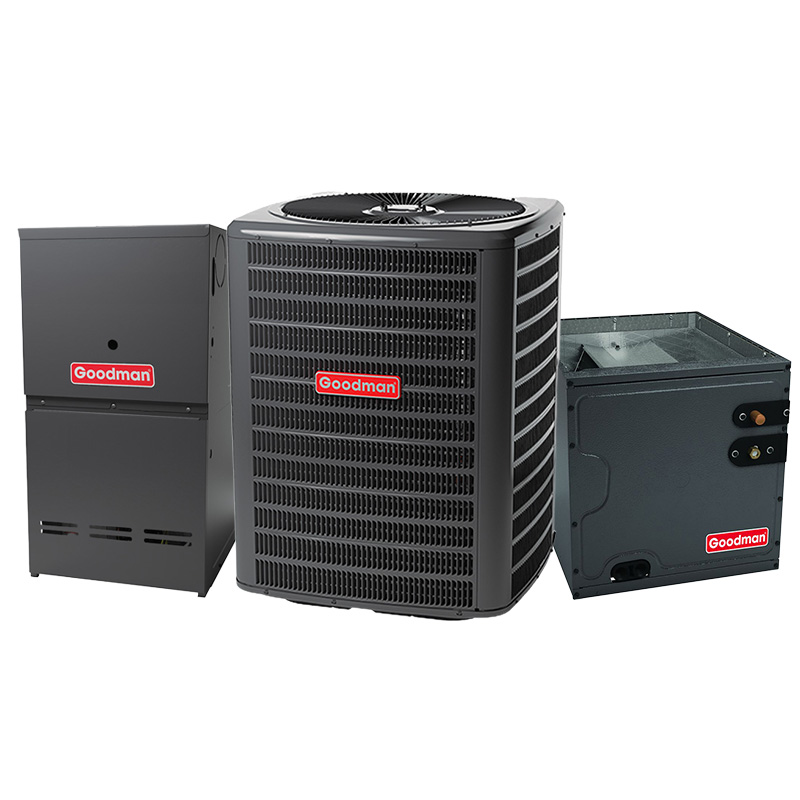
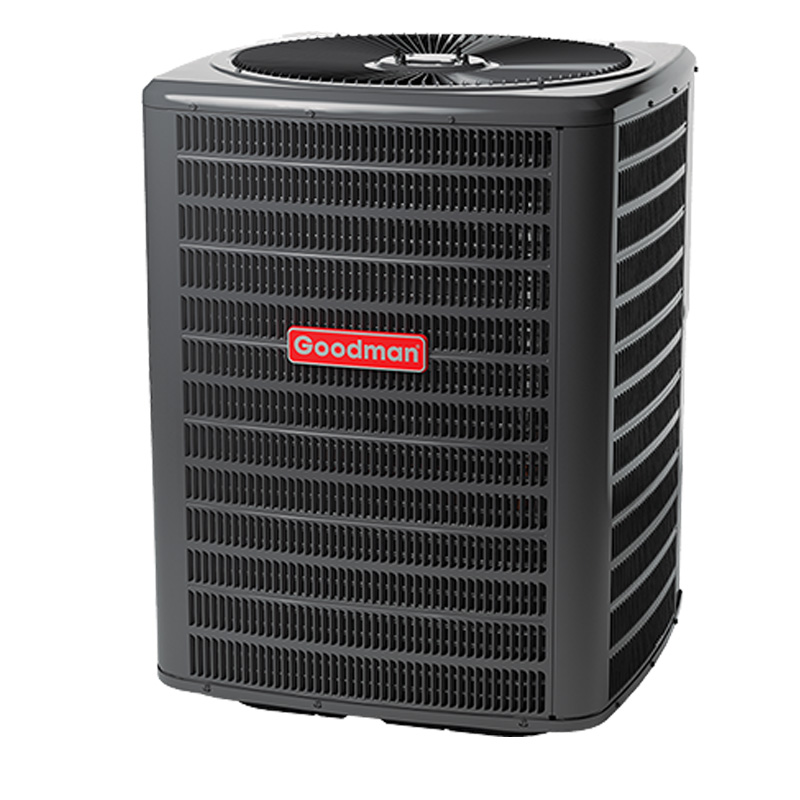
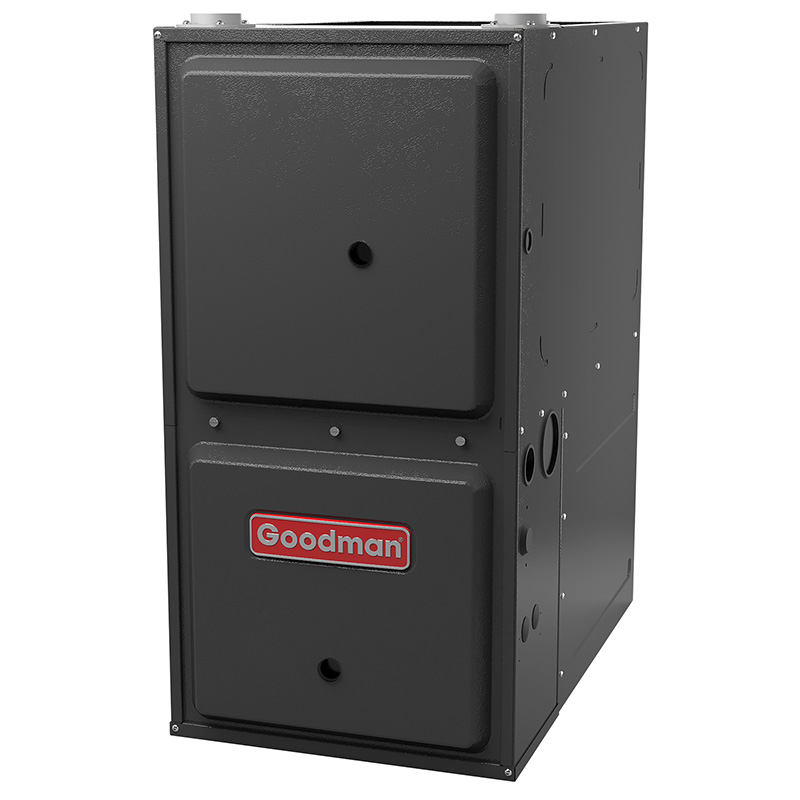
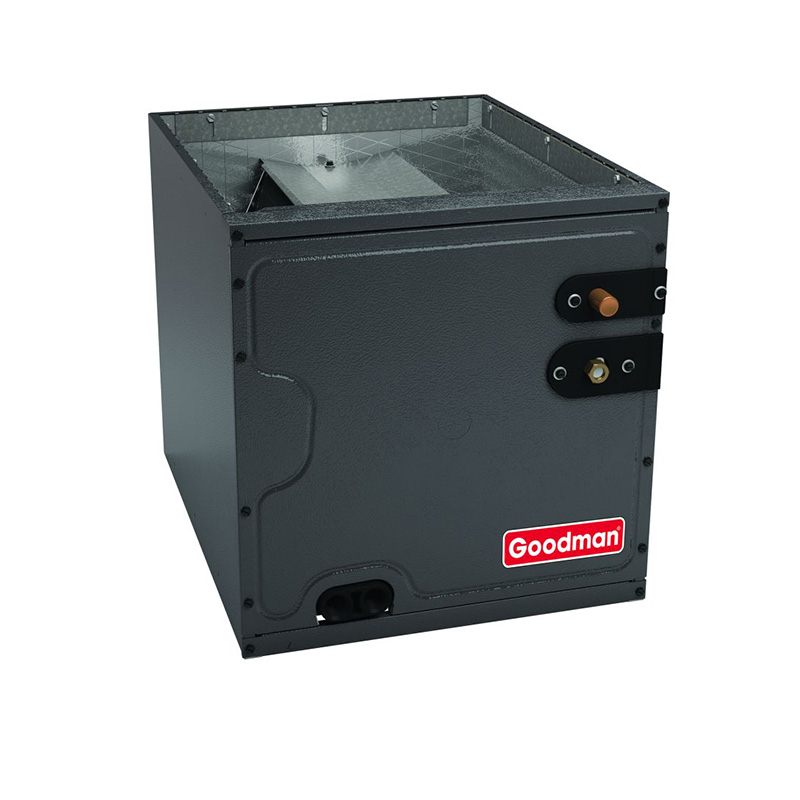
Goodman 5 Ton AC And 100000 BTU 80% AFUE Gas Furnace System | 15.5 SEER2 AC | Multi-Speed ECM Low NOx Furnace | Downflow | R32
View on AC Direct see your lowest price →Check current price on AC Direct →
Key features
- 5-ton cooling capacity paired with 100,000 BTU heating output for larger homes
- 15.5 SEER2 efficiency rating meets mid-tier federal standards and qualifies in most utility rebate programs
- 80% AFUE single-stage gas furnace with multi-speed ECM blower motor for quieter, more even airflow
- Downflow configuration designed for floor-supply duct systems over crawlspaces or basements
- R-32 refrigerant with lower global warming potential than R-410A and a smaller required charge
- Low NOx combustion design meets California Air Resources Board and other strict regional emissions standards
About this system
The Goodman 5-ton, 15.5 SEER2 air conditioner paired with a 100,000 BTU 80% AFUE downflow gas furnace is built for larger homes, typically in the 2,500 to 3,500 square-foot range, where heating and cooling loads are substantial. The 15.5 SEER2 rating sits at the entry point of the mid-efficiency tier, meaningfully above the federal minimum but well below variable-speed premium systems. The furnace’s multi-speed ECM blower improves airflow consistency and reduces electrical draw compared to older PSC motors, and the Low NOx design meets California and other strict-emissions-state requirements. R-32 refrigerant carries a lower global warming potential than the R-410A it replaces, and its higher energy density allows a smaller refrigerant charge.
The downflow configuration is important: this system is specifically designed for installations where the air handler sits above a crawlspace or basement and supplies conditioned air downward through the floor. That narrows the application to a specific set of homes, so buyers should confirm their ductwork orientation before purchasing. The 80% AFUE rating means 20 cents of every heating dollar exits through the flue, which is a real operating cost trade-off versus 96%+ condensing furnaces, but the lower upfront cost and simpler venting using standard B-vent can make it the practical choice in mild-to-moderate heating climates. Overall, this bundle is best suited to budget-conscious buyers in warmer or mixed climates who want a reliable, code-compliant system without paying a premium brand markup.
This Goodman bundle delivers a functional, code-compliant heating and cooling system at a price point that can run 15 to 25 percent below comparable Carrier, Trane, or Lennox configurations. The 15.5 SEER2 and 80% AFUE ratings are honest mid-tier numbers, not standout efficiency figures, but they work well for budget-focused buyers in warmer climates where heating costs are secondary. Long-term ownership costs depend heavily on install quality and the willingness to budget for component repairs, particularly capacitors and potentially the evaporator coil, after the first several years.
Overall score is the average of the five ratings above.
What we like
- Significantly lower upfront cost than premium brands offering equivalent capacity and efficiency
- Multi-speed ECM blower improves comfort and lowers blower motor electrical consumption versus single-speed PSC designs
- R-32 refrigerant reduces environmental impact and requires a smaller refrigerant charge by weight
- Low NOx burner design allows installation in emissions-restricted states like California
- Downflow furnace design suits a specific and common installation scenario where alternative configurations would require costly duct modifications
Trade-offs
- 80% AFUE loses 20% of fuel energy up the flue, adding measurable annual heating costs versus 96%+ condensing alternatives
- Compressor lifespan averages 10 to 14 years in documented owner experience, shorter than the 15 to 20 years reported for premium brands
- Evaporator coil leaks appear in a meaningful share of owner reports, a potential mid-ownership repair expense
- Dual-run capacitors are the most frequently reported failure point, and while repairs typically run $300 to $600, they become more likely after year 7
What homeowners and pros say about Goodman
Homeowners who share feedback on Goodman equipment tend to land in two distinct camps. Those who had a skilled installer and stayed current on maintenance often report years of trouble-free operation and highlight the lower purchase price as a genuine win. Others, particularly on complaint-weighted channels like ConsumerAffairs where Goodman scores around 2.5 out of 5, describe frustration with repair costs that begin compounding after roughly year 7. The recurring issues named in those reports align with what the industry documents: dual-run capacitor failures, evaporator coil leaks, and compressor lifespans that tend to run shorter than what premium brands deliver. Google dealer reviews tell a more balanced story, with Goodman landing around 3.8 out of 5 across a broad sample, where affordability draws consistent praise and the quality of the installing dealer appears to shape outcomes significantly.
HVAC technicians who work on Goodman equipment regularly tend to view it as a workable, serviceable product rather than a standout one. They frequently note that the capacitor on the condensing unit is worth inspecting at every tune-up because it is the most documented failure point on these systems. For a 5-ton downflow configuration like this one, pros also point out that proper refrigerant charge on R-32 equipment is critical, given that a small minority of owners report refrigerant leaks in the first year that trace back to installation rather than the equipment itself. The consensus among technicians is that Goodman performs closer to its potential when paired with a thorough commissioning process and a service contract that catches small issues before they become expensive ones.
Sources: ConsumerAffairs Goodman owner reviews, AHRI Directory of Certified Product Performance, U.S. DOE appliance and equipment efficiency standards, Goodman product specification sheets.
What it costs to run
At 15.5 SEER2, cooling this 5-ton system for a typical 1200-hour cooling season at the U.S. average electricity rate of $0.17/kWh works out to roughly $790 per year in cooling, about $123 less per year than a minimum-efficiency 13.4 SEER2 unit of the same size. Your real cost depends on your climate and local rate.
Method: (60,000 BTU/hr ÷ 15.5 SEER2) × 1200 hours ÷ 1000 × $0.17/kWh. Rate source: U.S. EIA average; cooling hours: moderate-climate estimate.
How it compares
| Brand | Comparable model | SEER2 | Stage | Price position |
|---|---|---|---|---|
| Goodman | GSZTO / GMVC / Downflow Bundle | 15.5 | Single-stage | Value pick |
| Carrier | Comfort 15 (24ACC6) with 58MCA Furnace | 15-16 | Single-stage | Typically 15 to 25 percent more than this Goodman bundle |
| Trane | XR15 (4TTR5) with S9X1 Furnace | 15.5-16 | Single-stage | Typically 15 to 25 percent more than this Goodman bundle |
| Lennox | Merit 16ACX with ML196E Furnace | 15.5-16 | Single-stage | Typically 15 to 25 percent more than this Goodman bundle |
Competitor rows are comparable single-stage units at similar efficiency; price is relative position, not a quote.
Questions about this system
Is a downflow furnace the right choice for my house, or can I use this in any installation?
A downflow furnace is specifically designed to pull return air from the top and discharge heated or cooled air downward into floor-level ductwork. It is the correct choice for homes where the furnace sits on the main floor or in a closet above a crawlspace or basement with floor registers. If your ductwork supplies air through ceiling or wall registers, you need a different configuration such as upflow or horizontal.
What does 80% AFUE actually mean for my heating bill compared to a higher-efficiency furnace?
An 80% AFUE furnace converts 80 cents of every dollar of gas burned into usable heat; the remaining 20 cents exits through the flue. A 96% AFUE condensing furnace wastes only 4 cents per dollar. On a $1,200 annual gas bill, that difference could approach $180 to $200 per heating season, though actual savings depend on local gas prices and climate. In warmer climates with short heating seasons, the payback period for the more expensive condensing unit often exceeds 10 years.
How does R-32 refrigerant affect service and maintenance compared to R-410A systems?
R-32 has a lower global warming potential than R-410A and requires a smaller refrigerant charge by weight, which can reduce recharge costs if a leak occurs. It is mildly flammable, classified as A2L, so technicians need appropriate certification and equipment to handle it safely. Most HVAC professionals in the U.S. are already working toward R-32 and R-454B certification as the industry transitions, but you should confirm your local service tech is qualified before scheduling maintenance.
What are the most common repairs Goodman owners report on systems like this, and when do they tend to happen?
The most frequently reported failure is the dual-run capacitor, which typically runs $300 to $600 to replace and becomes more likely after roughly year 7. Evaporator coil leaks appear in a notable share of owner reviews and can be a more significant expense. A small number of owners report refrigerant leaks within the first year, which is generally a sign of an installation or initial charge issue rather than a product defect. Compressors on Goodman systems average 10 to 14 years of service life based on documented owner experience.
Does the Goodman warranty on this system require professional registration, and what does it actually cover?
Goodman's full parts warranty requires the system to be registered online within a set window after installation, typically by the installing contractor. Without registration, coverage defaults to a shorter base warranty period. The warranty covers parts but not labor, which is an important distinction because labor on an out-of-warranty repair can represent the majority of the total cost. Reviewing the specific warranty certificate for this model configuration before purchase is strongly recommended.
Specifications
| Cooling capacity | 5 Ton |
| Efficiency | 15.5 SEER2 |
| Furnace output | 100000 BTU |
| Furnace efficiency | 80% AFUE |
| Configuration | Downflow |
| Refrigerant | R-32 |