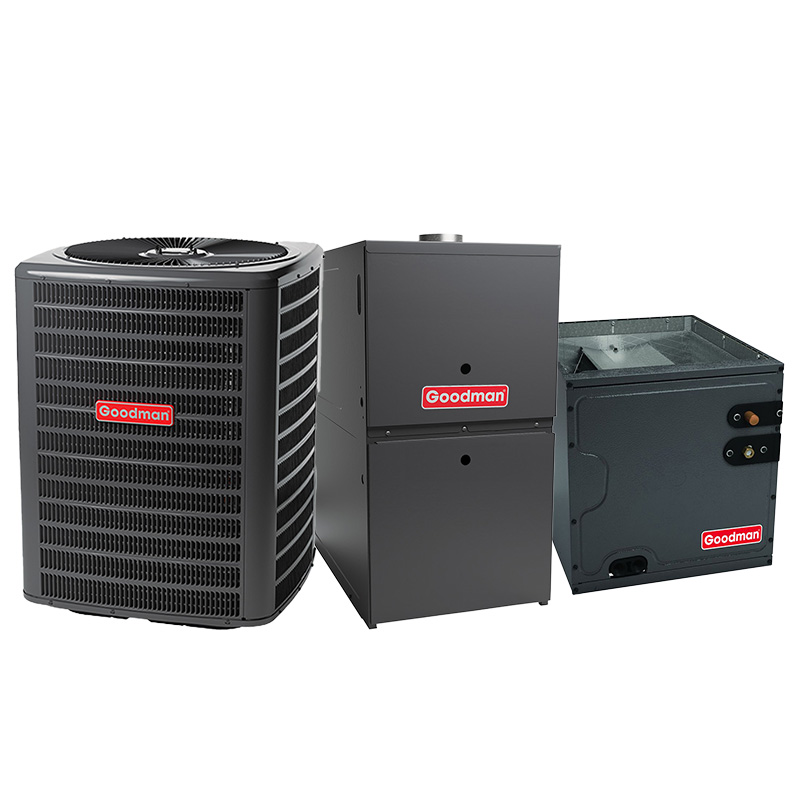
Goodman 5 Ton AC And 100000 BTU 80% AFUE Gas Furnace System | 16.2 SEER2 Two Stage AC | Variable Speed Two Stage Furnace | Upflow | R32
View on AC Direct see your lowest price →Check current price on AC Direct →
Key features
- Two-stage compressor runs at low and high capacity for better humidity control and fewer temperature swings
- 16.2 SEER2 efficiency meets current federal minimums and delivers measurable savings over single-stage equipment
- Variable-speed ECM furnace blower operates quietly and maintains steadier airflow than single-speed motors
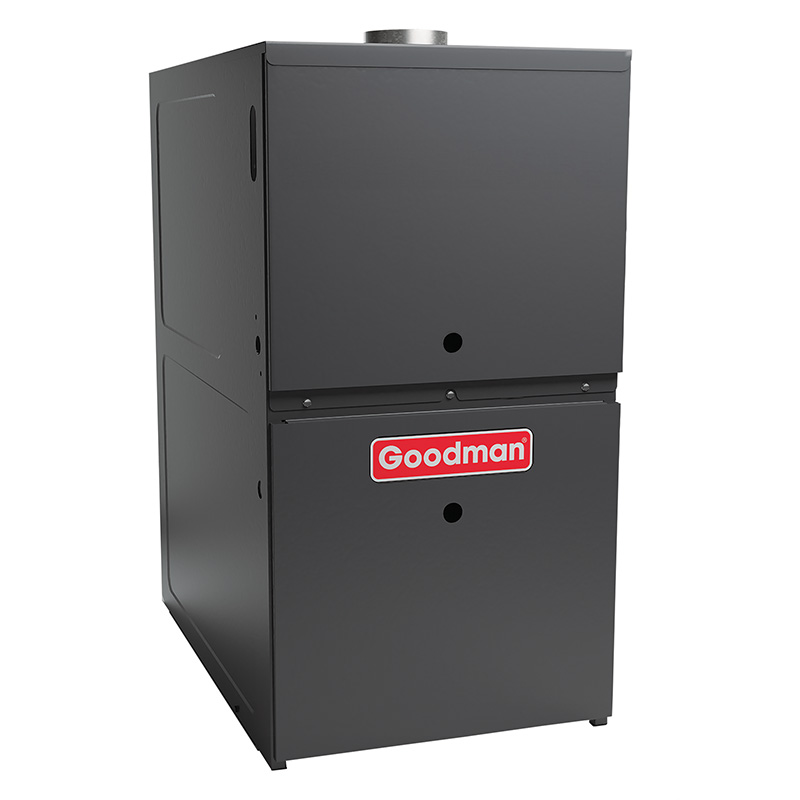
- 100,000 BTU 80% AFUE gas furnace suits larger homes in moderate to cold climates with existing non-condensing venting
- R-32 refrigerant has roughly 68% lower global-warming potential than R-410A and is the emerging industry standard
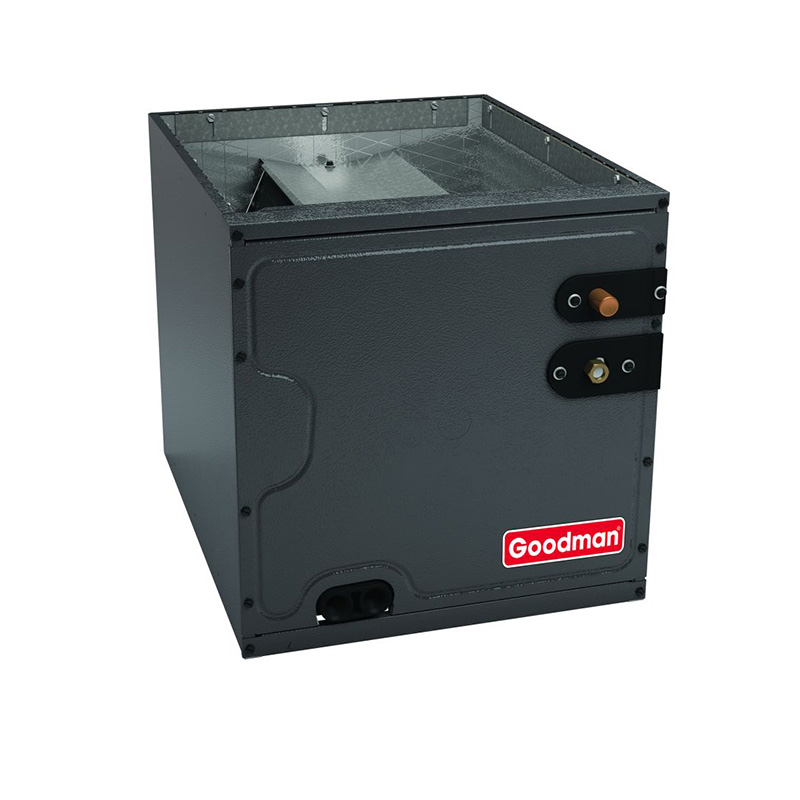
- Upflow configuration designed for basement or ground-floor installations with ductwork running up through the structure
About this system
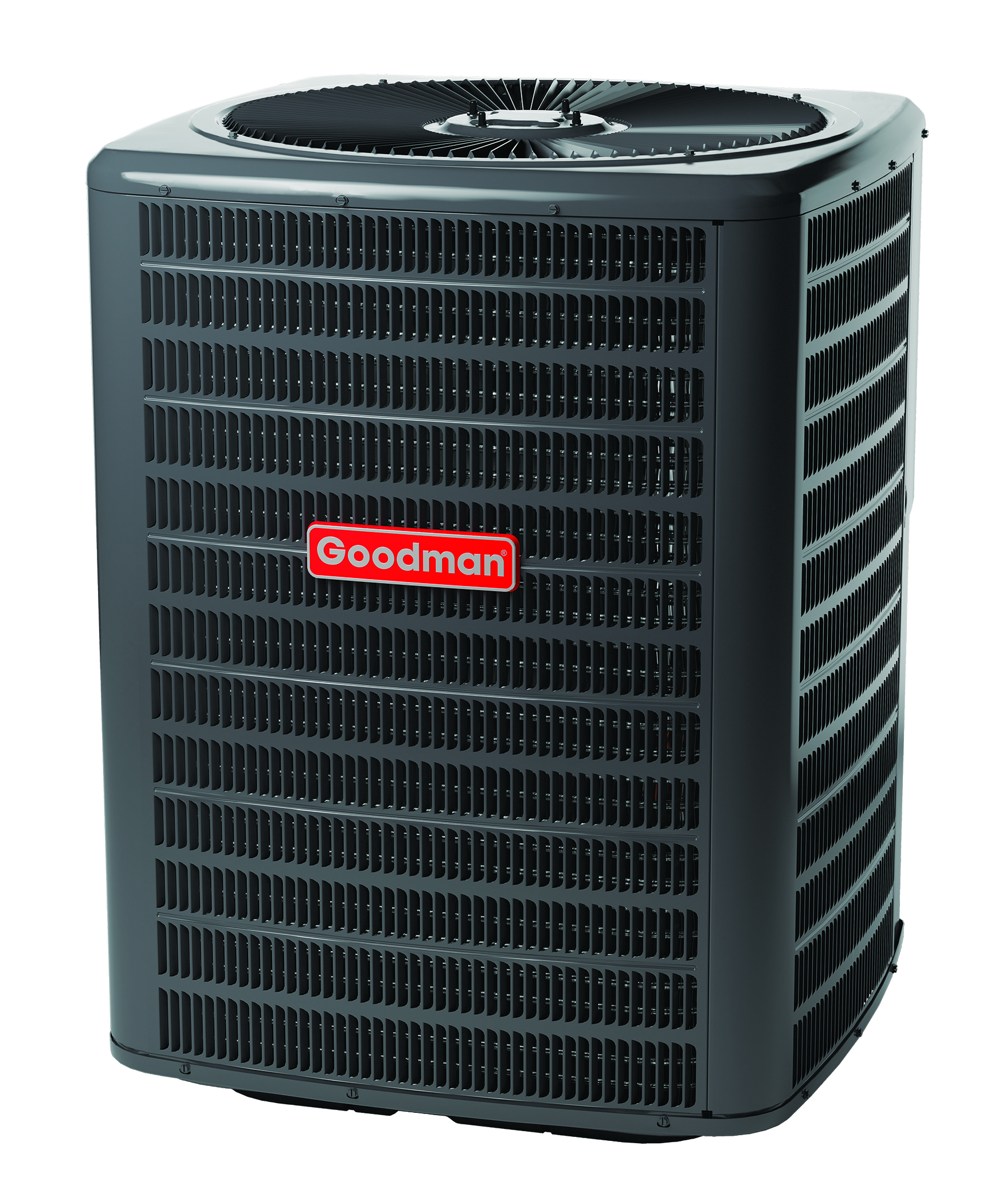
The Goodman 5-ton, 16.2 SEER2 two-stage air conditioner paired with a 100,000 BTU 80% AFUE variable-speed two-stage gas furnace is built for larger homes, typically in the 2,500 to 3,500 square-foot range, where a single-stage system would cycle on and off too aggressively and leave rooms with uneven temperatures. The two-stage compressor runs at a lower capacity on milder days, which reduces short-cycling, lowers humidity levels, and cuts energy consumption compared to a single-stage unit of the same size. The variable-speed furnace blower adds another layer of comfort by moving air more quietly and consistently than a fixed-speed motor.
At 16.2 SEER2, this system sits at the entry point of the mid-efficiency tier, meeting or exceeding current federal minimums for most U.S. climate regions. The 80% AFUE furnace means 20 cents of every gas dollar goes up the flue, which is a meaningful trade-off versus a 96% AFUE condensing unit, especially in colder climates with long heating seasons. The upflow configuration suits homes where the furnace sits in a basement or utility closet and ductwork runs upward into the living space. R-32 refrigerant has a lower global-warming potential than the R-410A it replaces and is becoming the new standard as the industry moves away from older blends.
This system is a strong candidate for homeowners who want genuine two-stage comfort and a variable-speed blower without paying Trane or Carrier prices. The trade-off is that Goodman’s long-term reliability record is more dependent on who installs it and how well it is maintained than is the case with top-tier brands, so installer selection matters as much as the equipment choice itself.
This Goodman system delivers genuine two-stage comfort and a variable-speed blower at a price point that undercuts comparable Carrier, Trane, and Lennox equipment by 15 to 25 percent. The efficiency and feature set are solid for the money, but Goodman's documented reliability record, particularly the brand's compressor longevity gap versus premium competitors and its known coil and capacitor failure modes, means long-term ownership costs can erode the upfront savings. The 80% AFUE furnace is also a real limitation for homeowners in colder climates where a condensing unit would pay back its higher cost over time.
Overall score is the average of the five ratings above.
What we like
- Two-stage cooling reduces short-cycling and improves whole-home humidity control versus single-stage alternatives
- Variable-speed blower runs quieter and more efficiently than standard multi-speed motors
- Priced 15 to 25 percent below comparable Trane, Lennox, and Carrier systems, making advanced features accessible at a lower entry cost
- R-32 refrigerant is forward-looking and aligns with the direction the industry is heading on environmental standards
- Upflow design is straightforward to replace in homes already configured for that layout, keeping retrofit labor costs reasonable
Trade-offs
- 80% AFUE furnace loses 20% of fuel energy to exhaust, which adds up significantly in climates with long or harsh winters compared to 95-96% AFUE alternatives
- Goodman compressors average 10 to 14 years in real-world reports, noticeably shorter than the 15 to 20 years commonly cited for premium-brand compressors
- Dual-run capacitors are the most frequently reported failure on Goodman equipment, and evaporator coil leaks appear in a meaningful share of owner accounts
- A minority of owners report refrigerant leaks within the first year, typically tied to installation or initial charge issues, which underscores how much performance depends on installer quality
What homeowners and pros say about Goodman
Homeowners who have lived with Goodman equipment tend to split into two camps. Those with good installs by experienced technicians often report years of unremarkable, reliable service and point to the lower purchase price as straightforward savings. Those who ran into problems cite a familiar pattern: the system runs fine for the first several years, then repair costs start climbing around year seven or eight. ConsumerAffairs gives Goodman roughly 2.5 out of 5, but that channel skews heavily toward people who had a problem and wanted to say so publicly. Google dealer reviews, which capture a broader cross-section of customers, land around 3.8 out of 5 across multiple locations, with affordability consistently cited as the leading reason buyers chose the brand.
HVAC technicians who work on Goodman units regularly point to dual-run capacitor failures as the most common service call, which is generally a quick and inexpensive fix. More consequential are the evaporator coil leaks that show up in a meaningful number of owner accounts and the compressor lifespan, which real-world reports put at 10 to 14 years on average compared to 15 to 20 years for premium brands. A small but documented share of owners also report refrigerant leaks within the first year, something technicians attribute more to installation quality and initial charge than to the equipment itself. The consistent professional advice is that Goodman equipment rewards careful installer selection more than most other brands, and that pairing it with a good service agreement can close much of the reliability gap with higher-priced alternatives.
Sources: ConsumerAffairs Goodman owner reviews, AHRI Directory of Certified Product Performance, U.S. DOE appliance and equipment efficiency standards, Goodman product specification sheets.
What it costs to run
At 16.2 SEER2, cooling this 5-ton system for a typical 1200-hour cooling season at the U.S. average electricity rate of $0.17/kWh works out to roughly $756 per year in cooling, about $157 less per year than a minimum-efficiency 13.4 SEER2 unit of the same size. Your real cost depends on your climate and local rate.
Method: (60,000 BTU/hr ÷ 16.2 SEER2) × 1200 hours ÷ 1000 × $0.17/kWh. Rate source: U.S. EIA average; cooling hours: moderate-climate estimate.
How it compares
| Brand | Comparable model | SEER2 | Stage | Price position |
|---|---|---|---|---|
| Goodman | GSXH5 / GMVC8 Series (this system) | 16.2 | Two-stage | Value pick |
| Carrier | Comfort 16 (24ACC6) Series | 16 | Single-stage | Typically 15 to 25 percent more than this Goodman system |
| Trane | XR16 Series | 16 | Single-stage | Typically 15 to 25 percent more than this Goodman system |
| Lennox | Merit 16ACX Series | 16 | Single-stage | Typically 15 to 25 percent more than this Goodman system |
Competitor rows are comparable single-stage units at similar efficiency; price is relative position, not a quote.
Questions about this system
Is 16.2 SEER2 high enough to qualify for federal energy efficiency tax credits?
For split systems, the current federal tax credit under the Inflation Reduction Act requires at least 16 SEER2 for central air conditioners, so this unit meets that threshold. You should confirm eligibility with a tax professional and keep your installation receipts, because the credit applies to the installed system, not just the equipment purchase.
What does 80% AFUE actually mean for my gas bill compared to a higher-efficiency furnace?
An 80% AFUE furnace converts 80 cents of every dollar of gas into usable heat and exhausts the rest. A 96% AFUE condensing furnace would save roughly 16 cents per dollar of gas burned. In a climate with significant heating demand, that gap can amount to hundreds of dollars per year and may close the upfront price difference within several heating seasons.
How does the two-stage compressor actually improve comfort over a standard single-stage unit?
A single-stage unit runs at full capacity whenever it is on, which can cool the space quickly but leads to short run cycles and humidity that never fully gets wrung out of the air. The two-stage compressor in this system runs at a lower stage during mild conditions, allowing longer, gentler cycles that pull more moisture from the air and keep temperatures more even from room to room.
What are the most common repairs I should budget for over the first ten years?
Dual-run capacitor failure is the most frequently reported issue on Goodman equipment and is typically a low-cost repair in the 300 to 600 dollar range. Evaporator coil leaks and refrigerant charge issues appear in a meaningful share of owner accounts, and the compressor, while warrantied, has a real-world average lifespan of 10 to 14 years, which is shorter than premium brands. Budgeting for one or two minor service calls in the first decade is realistic.
Does R-32 refrigerant affect how my existing HVAC technician can service this system?
R-32 requires technicians to use compatible recovery equipment and follow updated handling procedures, since it is mildly flammable at high concentrations. Most established HVAC companies are already equipped and trained for R-32 work as it becomes the new standard, but it is worth confirming that your service provider is certified and equipped for it before scheduling maintenance or repairs.
Specifications
| Cooling capacity | 5 Ton |
| Efficiency | 16.2 SEER2 |
| Furnace output | 100000 BTU |
| Furnace efficiency | 80% AFUE |
| Configuration | Upflow |
| Refrigerant | R-32 |