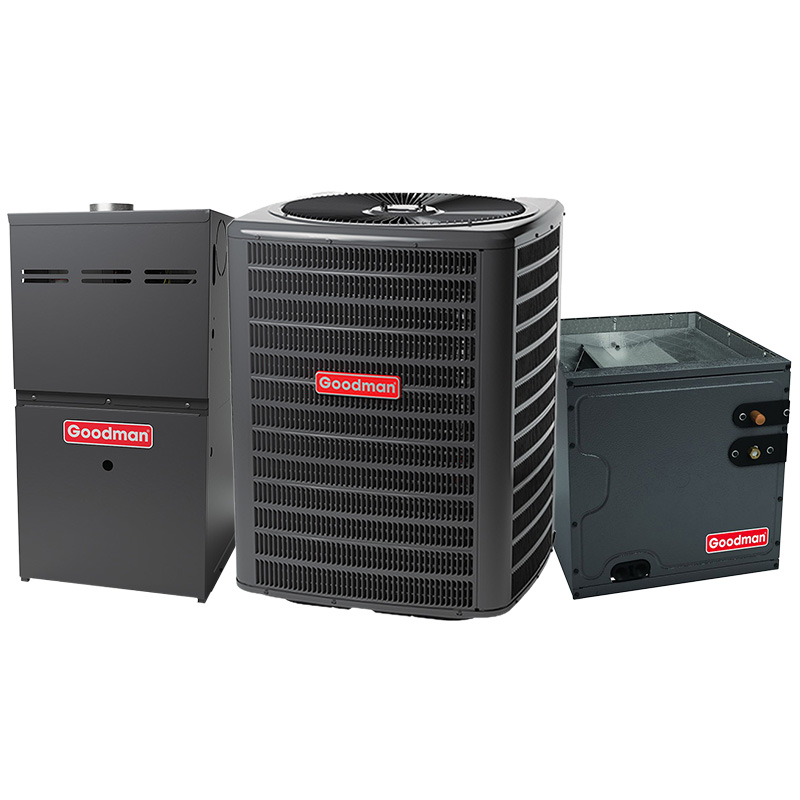
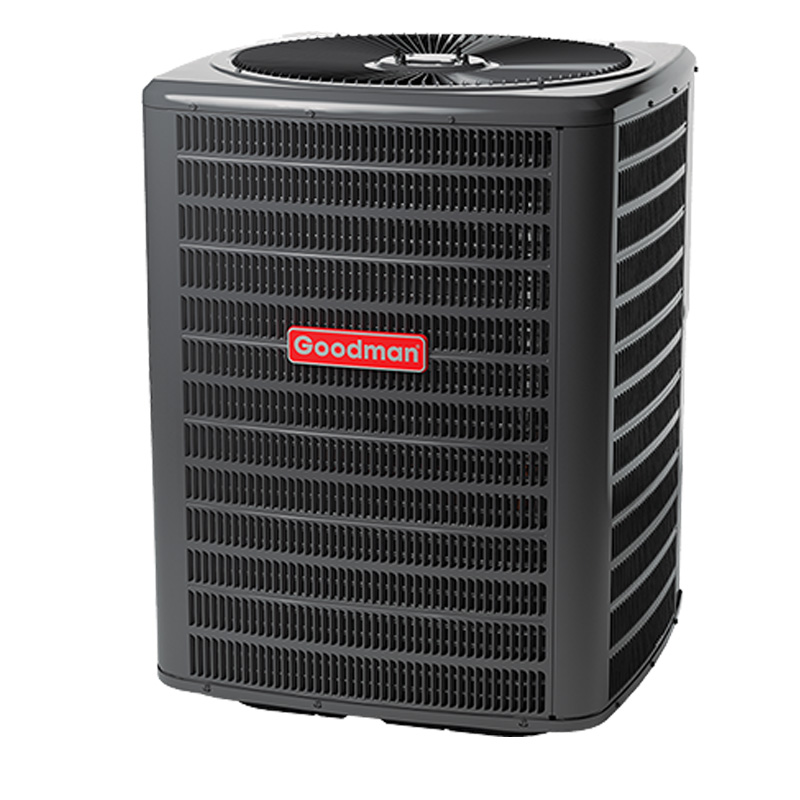
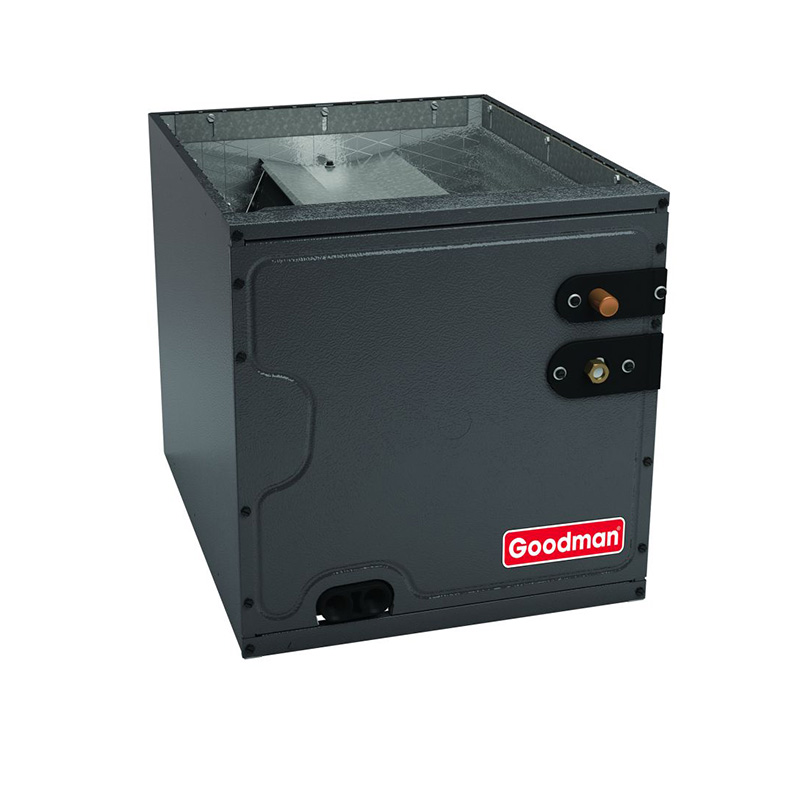
Goodman 5 Ton AC And 80000 BTU 80% AFUE Gas Furnace System | 14 SEER2 AC | Multi-Speed ECM Low NOx Furnace | Upflow | R32
View on AC Direct see your lowest price →Check current price on AC Direct →
Key features
- 5-ton cooling capacity rated at 14 SEER2, meeting current federal minimum efficiency standards
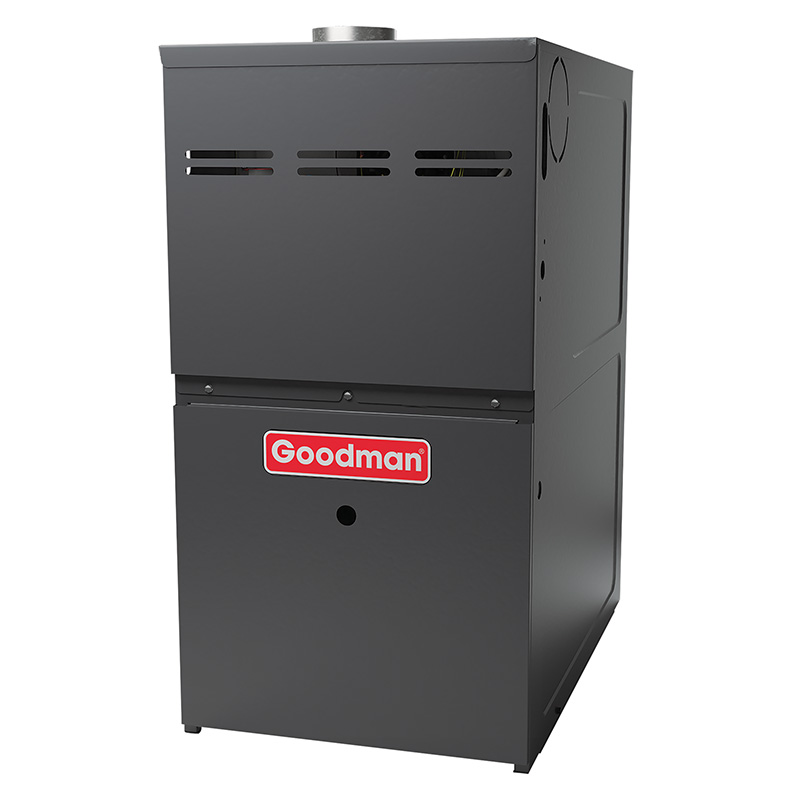
- 80,000 BTU output gas furnace at 80% AFUE, non-condensing upflow configuration
- Multi-speed ECM blower motor for more consistent airflow and lower fan electricity use versus PSC motors
- R-32 refrigerant, which carries a lower global-warming potential than R-410A
- Low NOx burner design meets stricter emissions requirements in California and other regulated markets
- Goodman factory warranty covers the compressor and heat exchanger for an extended term when registered within the required window
About this system
This Goodman bundle pairs a 5-ton, 14 SEER2 central air conditioner with an 80,000 BTU, 80% AFUE upflow gas furnace to cover larger homes, typically in the 2,400 to 3,200 square foot range depending on climate, insulation, and ceiling height. The 14 SEER2 rating sits at the federal minimum efficiency floor for most regions, so you get a system that meets code without paying for premium efficiency tiers you may not recover in energy savings over a reasonable payback window. The furnace runs on R-32 refrigerant on the cooling side, a lower global-warming-potential option compared to R-410A, and the multi-speed ECM blower motor improves airflow consistency and reduces electricity draw compared to a basic single-speed PSC motor.
The upflow configuration means warm air rises from the furnace cabinet through ductwork above it, which suits the most common residential installation layout where the air handler sits in a basement, utility closet, or ground-level mechanical room. The Low NOx furnace designation matters primarily to homeowners in California and other states with strict nitrogen oxide emissions standards. At 80% AFUE, roughly one dollar in five of your gas spend goes out the flue uncaptured, which is honest and typical for a non-condensing furnace. Homeowners in mild-winter climates or those prioritizing upfront cost over operating efficiency are generally better served by this tier than by paying extra for a 96% AFUE unit they may not recoup in fuel savings.
This Goodman bundle delivers a functional, code-compliant system at a price point that is genuinely hard to match from major-brand competitors. It is a reasonable choice for budget-conscious buyers who understand they are trading some long-term durability headroom and efficiency ceiling for lower upfront cost. Installation quality will matter more with Goodman than with premium brands, so choosing a skilled installer is not optional.
Overall score is the average of the five ratings above.
What we like
- Priced roughly 15 to 25 percent below comparable Carrier, Trane, and Lennox systems, a real and meaningful upfront saving on a large system
- Multi-speed ECM blower reduces fan electricity consumption and improves comfort versus basic single-speed motors
- R-32 refrigerant is a forward-looking choice with a lower environmental impact than R-410A
- Low NOx furnace meets California air quality rules and similar state-level standards without a separate upgrade
- Upflow layout is the most widely supported configuration, making installer familiarity and future service calls straightforward
Trade-offs
- Dual-run capacitors are the most frequently reported failure point and typically need replacement within 5 to 10 years, a low-cost but real inconvenience
- Compressor lifespan averages 10 to 14 years versus 15 to 20 for premium-brand compressors at similar duty cycles
- A minority of owners have reported refrigerant leaks in the first year, most traceable to installation or initial charge issues rather than manufacturing defects
- ConsumerAffairs reviews average around 2.5 out of 5, with repair cost complaints clustering after year 7, suggesting total cost of ownership can close the gap with pricier brands over time
What homeowners and pros say about Goodman
Homeowners who have lived with Goodman equipment tend to split into two camps. Those who had a skilled installer and kept up with basic maintenance, mainly annual tune-ups and filter changes, often report years of trouble-free operation and point to the lower purchase price as a genuine win. Those who ran into problems more commonly flag repair costs starting around the 7-to-8-year mark, which aligns with what ConsumerAffairs reviewers note in the platform’s roughly 2.5 out of 5 aggregate score. That score reflects a complaint-heavy audience, so it overstates failure rates relative to the full installed base, but the pattern of escalating repair costs after year 7 is consistent enough to take seriously. Google dealer reviews average closer to 3.8 out of 5, where affordability is the praise that comes up most often.
HVAC technicians who service Goodman equipment are consistent about a few specifics. Dual-run capacitor failures are the single most common service call they make on these systems, typically a fast and inexpensive fix in the $300 to $600 range but an almost routine occurrence over a 10-plus-year lifespan. Evaporator coil leaks show up in a meaningful share of owner reports and are a more expensive repair. Compressor longevity on Goodman units tends to land in the 10-to-14-year range, noticeably shorter than the 15-to-20-year window technicians cite for Trane, Carrier, and Lennox compressors under comparable conditions. For this specific 5-ton system, where the compressor works harder than on smaller units, that gap in expected lifespan is worth factoring into a total cost-of-ownership estimate before committing to the lower sticker price.
Sources: ConsumerAffairs Goodman owner reviews, AHRI Directory of Certified Product Performance, U.S. DOE appliance and equipment efficiency standards, Goodman product specification sheets.
What it costs to run
At 14 SEER2, cooling this 5-ton system for a typical 1200-hour cooling season at the U.S. average electricity rate of $0.17/kWh works out to roughly $874 per year in cooling, about $39 less per year than a minimum-efficiency 13.4 SEER2 unit of the same size. Your real cost depends on your climate and local rate.
Method: (60,000 BTU/hr ÷ 14 SEER2) × 1200 hours ÷ 1000 × $0.17/kWh. Rate source: U.S. EIA average; cooling hours: moderate-climate estimate.
How it compares
| Brand | Comparable model | SEER2 | Stage | Price position |
|---|---|---|---|---|
| Goodman | GSXH5 / GMVC8 Series (this bundle) | 14 | Single-stage | Value pick |
| Carrier | Comfort 14 (24ACC6) with 58MCA Furnace | 14 | Single-stage | Typically 15 to 25 percent more than this Goodman bundle |
| Trane | XR14c with S8X1 Furnace | 14 | Single-stage | Typically 15 to 25 percent more than this Goodman bundle |
| Lennox | Merit 14ACX with ML180 Furnace | 14 | Single-stage | Typically 15 to 25 percent more than this Goodman bundle |
Competitor rows are comparable single-stage units at similar efficiency; price is relative position, not a quote.
Questions about this system
Will this 5-ton system actually be the right size for my house, or do I need a load calculation?
A Manual J load calculation is the only reliable way to confirm sizing. Running an oversized 5-ton system in a house that needs 3.5 tons causes short cycling, excess humidity, and accelerated wear. Ask your installer to perform and document the load calculation before purchasing.
What is the actual Goodman warranty on this system, and what do I have to do to activate it?
Goodman typically offers a 10-year parts warranty on registered equipment, which includes the compressor and heat exchanger, but you must register the product within a specified window after installation to receive the full term. Without registration, the warranty period is shorter. Confirm current warranty terms at Goodman's website or with your dealer, as terms can change.
The capacitor failures I keep reading about, how worried should I be and what does it cost to fix?
Dual-run capacitor failure is the most commonly reported issue with Goodman equipment and is widely documented by technicians. When one fails, the repair typically runs between $300 and $600 including the service call, and it is generally a straightforward fix that a qualified technician can complete in under an hour.
Is 80% AFUE good enough, or should I spend more on a 96% AFUE furnace?
The answer depends on your climate and fuel costs. In mild-winter regions or if your home is well-insulated, the energy savings from a 96% AFUE unit rarely offset its higher upfront cost within a realistic ownership window. In cold climates where the furnace runs heavily for months, a condensing unit can pay back the difference, so get a rough payback estimate based on your actual heating degree days and local gas prices.
Can any HVAC contractor install this system, or does it require someone with specific R-32 experience?
R-32 is mildly flammable, classified A2L, which means installers need to follow specific handling and equipment requirements compared to R-410A work. Not all technicians are currently trained or equipped for A2L refrigerants, so confirm that your chosen installer has R-32 experience and the appropriate tools before booking.
Specifications
| Cooling capacity | 5 Ton |
| Efficiency | 14 SEER2 |
| Furnace output | 80000 BTU |
| Furnace efficiency | 80% AFUE |
| Configuration | Upflow |
| Refrigerant | R-32 |