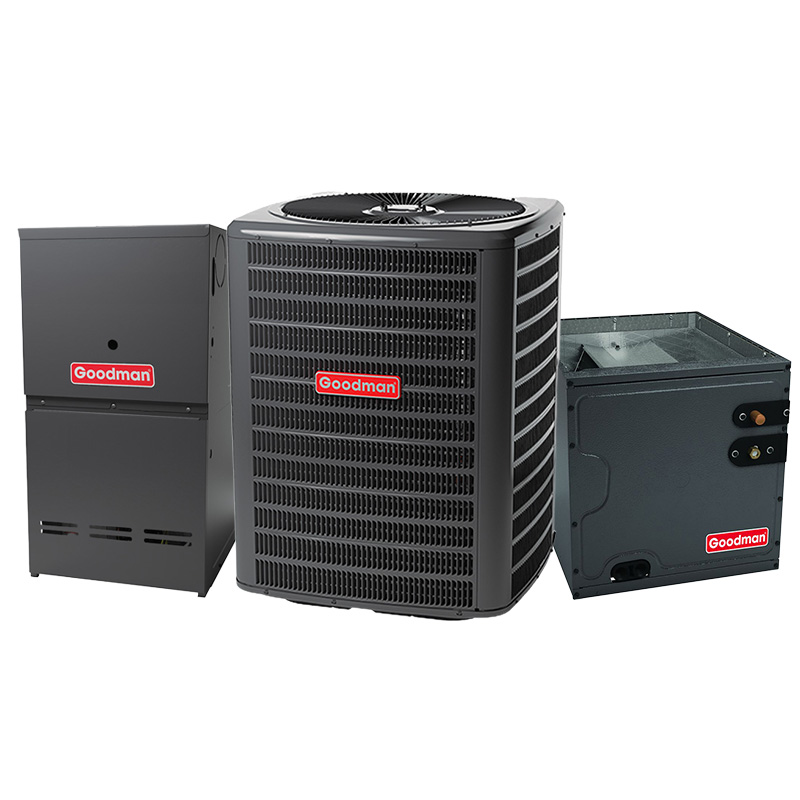
Goodman 5 Ton AC And 80000 BTU 80% AFUE Gas Furnace System | 15.5 SEER2 AC | Multi-Speed ECM Low NOx Furnace | Downflow | R32
View on AC Direct see your lowest price →Check current price on AC Direct →
Key features
- 5-ton, 15.5 SEER2 central air conditioner using R-32 refrigerant
- 80,000 BTU gas furnace rated at 80% AFUE for standard-efficiency heating
- Multi-speed ECM blower motor for quieter, more efficient airflow control
- Low NOx burner design meets California and other strict-emission-state requirements
- Downflow configuration suits closet or platform installations with floor-level supply ducts
- Priced approximately 15 to 25 percent below comparable Carrier, Trane, and Lennox systems
About this system
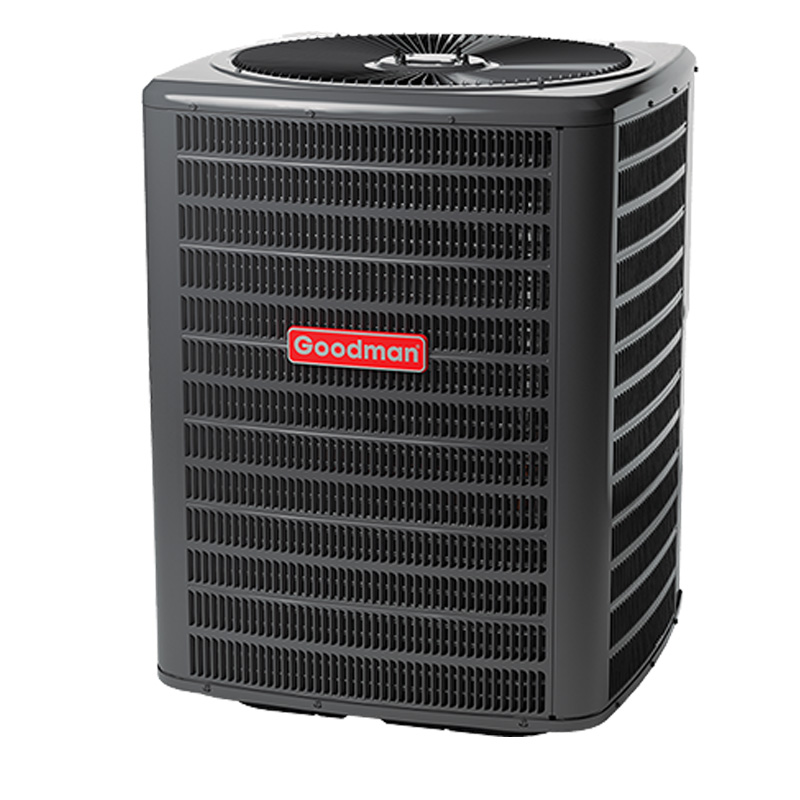
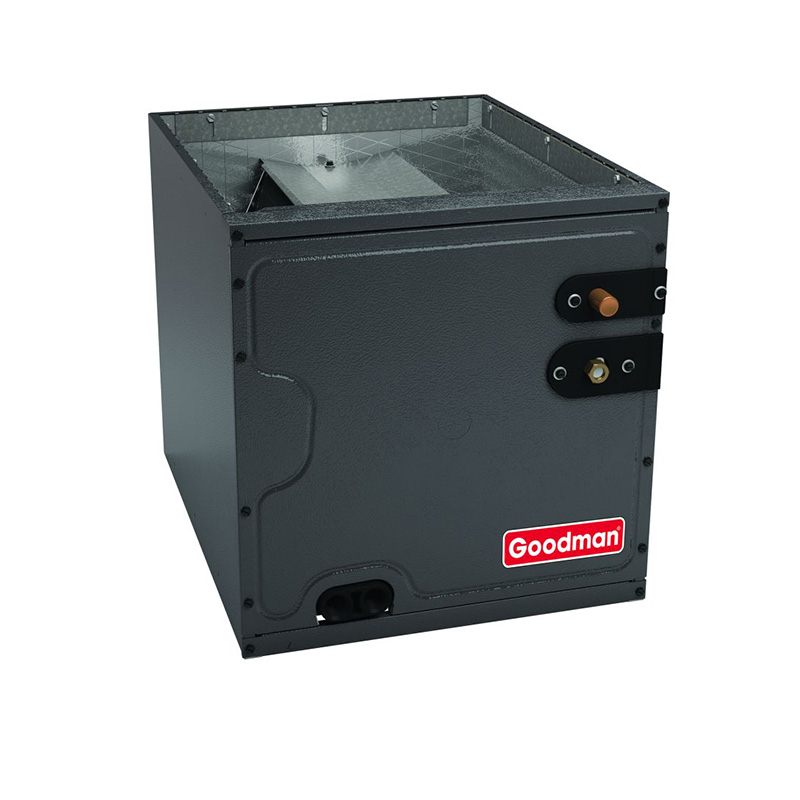
This Goodman bundle pairs a 5-ton, 15.5 SEER2 split-system air conditioner with an 80,000 BTU, 80% AFUE gas furnace in a downflow configuration, making it a practical choice for homes where the air handler sits in a closet or utility space above a crawlspace or on the main floor with supply ducts running downward. The AC side uses R-32 refrigerant, which carries a lower global warming potential than the R-410A it replaces and is becoming the new industry standard. At 15.5 SEER2, the cooling efficiency clears the federal minimums for most U.S. climate zones and sits in the mid-tier range, meaning real-world utility savings over an older 13 SEER unit are noticeable but not dramatic.
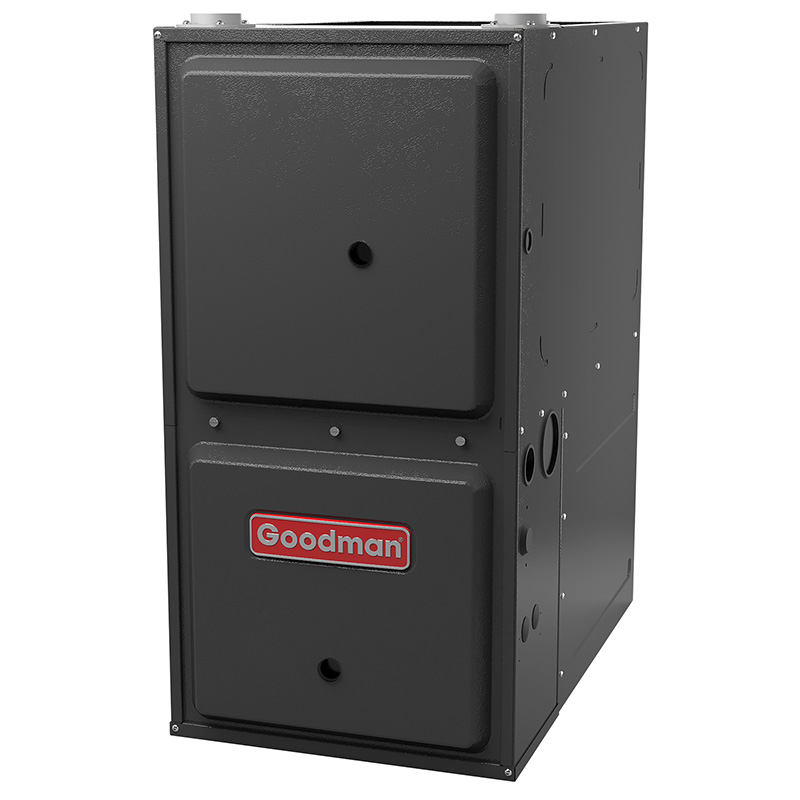
The furnace is an 80% AFUE unit with a multi-speed ECM blower motor, which improves airflow control, reduces electricity consumption at the blower compared to a standard PSC motor, and tends to run quieter at lower speeds. The Low NOx designation means it meets stricter nitrogen oxide emissions limits required in California and a handful of other states. An 80% AFUE furnace exhausts through a standard B-vent, so it works well in retrofit situations where a dedicated PVC condensate drain for a 90%+ unit is not practical. This system is best suited to homeowners in moderate climates who want a solid, code-compliant upgrade without the upfront cost of premium brands or modulating equipment.
This Goodman system delivers honest mid-tier efficiency and a furnace motor upgrade at a price point that undercuts the major premium brands by a meaningful margin. The trade-off is a compressor and coil track record that lags behind Trane and Carrier, and long-term costs depend heavily on how well it is installed and maintained. Buyers who prioritize upfront affordability and can absorb the occasional repair will find reasonable value here; those who want maximum long-term reliability should budget up.
Overall score is the average of the five ratings above.
What we like
- Significantly lower purchase price than comparable Carrier, Trane, or Lennox systems
- 15.5 SEER2 efficiency meets or exceeds federal minimums for all U.S. climate zones
- ECM multi-speed blower reduces electricity use and noise compared to single-speed PSC motors
- R-32 refrigerant is a forward-looking choice with lower environmental impact than R-410A
- Low NOx furnace is California-compliant, widening its usable geography
Trade-offs
- Compressors average 10 to 14 years, roughly 3 to 6 years shorter than premium-brand counterparts
- Evaporator coil leaks appear in a meaningful share of owner reports, which can mean costly refrigerant loss
- Dual-run capacitors are the most commonly reported failure, adding $300 to $600 repair costs usually after year 3 to 7
- 80% AFUE furnace wastes 20 cents of every heating dollar, a real cost in colder climates where a 96%+ unit would pay back faster
What homeowners and pros say about Goodman
Homeowners who share their experiences with Goodman equipment online tend to cluster at the extremes. On ConsumerAffairs, where the platform attracts people motivated by problems, Goodman scores around 2.5 out of 5, with the most common thread being repair bills that start accumulating after roughly year 7. The specific failure modes that come up repeatedly are dual-run capacitor failures, which are relatively inexpensive fixes in the $300 to $600 range, and evaporator coil leaks, which are more disruptive and costly. A smaller but consistent group of owners also reports refrigerant loss within the first year, something that experienced installers tend to attribute to charging errors rather than factory defects. Compressor longevity is another honest concern: Goodman compressors tend to average 10 to 14 years of service life, which is a real gap compared to the 15 to 20 years more commonly seen on premium-brand equipment.
On the trade side, HVAC technicians who leave Google reviews for dealers selling Goodman equipment rate those dealers around 3.8 out of 5 across hundreds of reviews, with affordability cited as the most consistent reason buyers choose Goodman in the first place. Pros who install this equipment regularly note that Goodman’s performance is more installation-dependent than brands like Trane or Carrier, meaning a properly sized, well-charged, and carefully commissioned Goodman system can run reliably for well over a decade, while a rushed or sloppy install amplifies every one of those documented failure risks. For this 5-ton, 15.5 SEER2 downflow system specifically, the R-32 refrigerant adds a layer of installer competency that buyers should vet before signing a contract, since not every technician in every market has completed R-32 handling training yet.
Sources: ConsumerAffairs Goodman owner reviews, AHRI Directory of Certified Product Performance, U.S. DOE appliance and equipment efficiency standards, Goodman product specification sheets.
What it costs to run
At 15.5 SEER2, cooling this 5-ton system for a typical 1200-hour cooling season at the U.S. average electricity rate of $0.17/kWh works out to roughly $790 per year in cooling, about $123 less per year than a minimum-efficiency 13.4 SEER2 unit of the same size. Your real cost depends on your climate and local rate.
Method: (60,000 BTU/hr ÷ 15.5 SEER2) × 1200 hours ÷ 1000 × $0.17/kWh. Rate source: U.S. EIA average; cooling hours: moderate-climate estimate.
How it compares
| Brand | Comparable model | SEER2 | Stage | Price position |
|---|---|---|---|---|
| Goodman | GLXS6BN60 / GMVC8 series (this system) | 15.5 | Single-stage | Value pick |
| Carrier | Performance 16 (24ACC6) | 15.2 to 16 | Single-stage | Typically 15 to 25 percent more than this Goodman bundle |
| Trane | XR15 | 15 to 15.6 | Single-stage | Typically 15 to 25 percent more than this Goodman bundle |
| Lennox | Merit ML15XC1 | 15.5 | Single-stage | Typically 15 to 25 percent more than this Goodman bundle |
Competitor rows are comparable single-stage units at similar efficiency; price is relative position, not a quote.
Questions about this system
Is 15.5 SEER2 efficient enough to justify this system, or should I pay more for a higher-SEER2 unit?
For most homes, 15.5 SEER2 provides a meaningful improvement over aging 13 or 14 SEER equipment and meets current federal standards. Stepping up to 18 or 20 SEER2 adds upfront cost that can take 8 to 12 years to recover in utility savings, so 15.5 SEER2 is a reasonable stopping point unless you run your AC heavily for six or more months per year.
What does the downflow configuration mean, and how do I know if my home needs it?
Downflow means the furnace takes in air at the top and discharges heated or cooled air downward into the supply ducts below. This is the correct choice when the air handler sits in a main-floor closet or utility room with ductwork running under the floor. If your ducts run overhead from an attic unit, you would need an upflow or horizontal configuration instead.
How serious is the R-32 refrigerant change, and will it affect service costs?
R-32 is mildly flammable, which means technicians need specific training and tools to service it safely, and not every HVAC contractor is yet equipped for it. This is worth confirming with your installer before purchase. On the positive side, R-32 is widely available and not subject to the phase-down pressures affecting R-410A, so long-term supply costs should be stable.
What are the most likely repairs on this Goodman system, and what do they cost?
The dual-run capacitor is the most commonly reported failure point on Goodman AC units, typically running $300 to $600 to replace and often surfacing after year 3 or 4. Evaporator coil leaks are the more expensive concern, as refrigerant recharge and coil replacement can run well into four figures. A small minority of owners have reported refrigerant leaks in the first year, which is usually traceable to installation rather than a manufacturing defect.
Should I be concerned that this furnace is only 80% AFUE instead of 90% or higher?
If you are in a climate where the furnace runs four months or fewer per year, the 80% AFUE rating is a reasonable cost-conscious choice and the simpler venting is a real installation advantage. In colder climates with heating seasons of five months or more, a 96% AFUE furnace can recover its price premium in fuel savings over 8 to 12 years, making the upgrade worth calculating before you commit.
Specifications
| Cooling capacity | 5 Ton |
| Efficiency | 15.5 SEER2 |
| Furnace output | 80000 BTU |
| Furnace efficiency | 80% AFUE |
| Configuration | Downflow |
| Refrigerant | R-32 |